

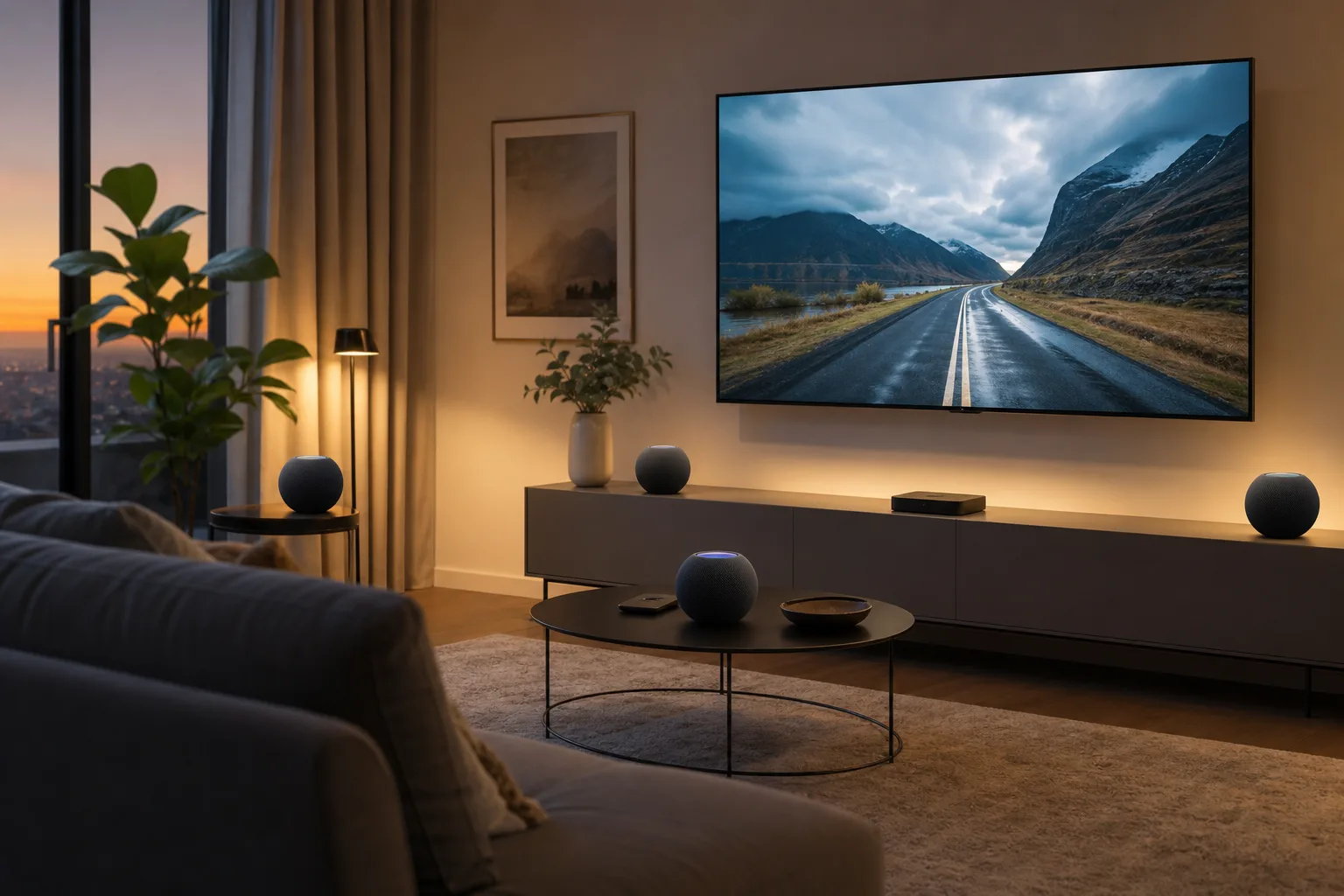
- HomePod mini 2 costs $149 and adds faster wireless connectivity, direct Mac audio, Sound Glow lighting, and future Siri AI support.
- The HomePod mini 2 is the sensible new purchase unless retailers sharply discount the original model below Apple’s former $129 price.
- Existing owners should wait unless they want Mac audio or Apple’s new four-speaker surround system.
- Apple still requires matching HomePod models for stereo pairs, limiting the upgrade path for owners of the first mini.
Table of Contents
HomePod mini 2 arrives six years after Apple got the basics right
The HomePod mini 2 is Apple’s first meaningful refresh of its smallest smart speaker in six years, and that long pause tells you almost everything about the product. The original was already a competent little orb for music, timers, HomeKit commands, and Apple’s Intercom feature. Apple hasn’t reinvented it. Instead, it has fixed the edges where the mini felt conspicuously behind the rest of its ecosystem.
At $149 in the US, the new model costs $20 more than Apple’s last listed price for the outgoing HomePod mini, which itself began life at $99 in 2020. That price history matters. A $149 speaker needs to do more than look pleasant beside a lamp and tell you whether it will rain. Apple’s answer is a faster S10 processor, faster wireless connectivity, updated Ultra Wideband hardware, a new lighting effect called Sound Glow, and several capabilities that point squarely at the Mac and Apple TV.
Pre-orders are open now, with retail availability set for October 30. Apple’s own HomePod mini page still frames the speaker as a room-to-room audio and smart-home accessory, but the new version is quietly more ambitious than that.
What hasn’t changed is equally revealing. The HomePod mini 2 keeps the same 3.3-inch-tall spherical body, full-range driver, dual passive radiators, acoustic waveguide, temperature and humidity sensors, Thread radio, AirPlay multiroom audio, Sound Recognition, and 20W power adapter. Apple clearly believes the physical speaker design had enough headroom. Whether its new processor makes a dramatic audible difference, though, is another question entirely.
Sound upgrades are plausible, but Apple hasn’t made the case yet
The HomePod line uses computational audio, which is credible in the narrow technical sense. Its onboard processing adjusts output based on what it is playing and the environment it detects. But there’s no published measurement here: no claimed bass extension, no volume figure, no distortion comparison, and no direct promise that the HomePod mini 2 will beat its predecessor in a blind listening test.
That omission is frustrating because sound remains the whole point of a speaker. The original mini has always punched above its physical size, with a fuller presentation than Amazon’s Echo Dot or Google’s Nest Mini, but it cannot outrun physics. A device smaller than a grapefruit won’t give you the low-end authority of Apple’s full-size HomePod, Sonos’s Era 100, or a pair of proper bookshelf speakers. If you’re replacing a kitchen radio, it’s charming. If you’re building a serious living-room system, it’s still a compromise.
Sound Glow is more straightforward. It expands the light beneath the top touch surface to respond more visibly to music and Siri activity. Nice? Sure. A reason to replace a half-dozen working speakers around a house? Frankly, no. It feels like the kind of feature Apple is very good at making look delightful in a 20-second launch video, then mostly disappear into daily life.
Mac audio and four-speaker theater are the real HomePod mini 2 story
The most concrete change is that the HomePod mini 2 can function as a default speaker for compatible Macs with Wi-Fi 6E or newer wireless hardware. That’s a bigger deal than it sounds. AirPlay has long worked for occasional audio, but anyone who has tried using it as their everyday Mac output knows the familiar irritations: connection delays, fiddly handoffs, and occasional sync weirdness. Games, video calls, and system audio expose those weaknesses fast.
If Apple has made this feel more like selecting a normal audio output than tossing music across the network, it could turn the mini into a far more practical desk accessory. Not everyone wants cables, powered monitors, and an audio interface beside a MacBook. For that crowd, two small Apple speakers could be a wonderfully tidy setup.
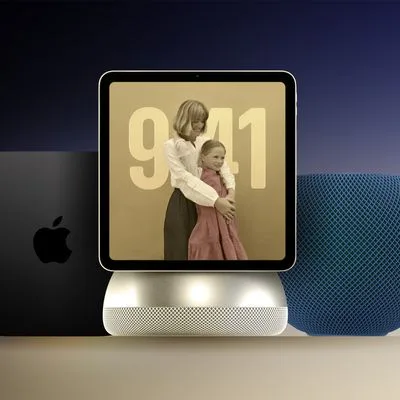
The other headline feature is four-speaker surround audio through Apple TV 4K. With the fourth-generation Apple TV 4K and current software, users can deploy either four HomePod mini 2 units or a mini 2 stereo pair alongside two second-generation full-size HomePods. That could create a convincing front-and-rear arrangement without running speaker wire across a rental apartment.
There are caveats. The first-generation mini is left out, and Apple requires matching models within the front and rear pairs. This is Apple doing Apple things: the setup may be elegant once it works, but its compatibility rules are a tidy little maze. Still, for people already committed to Apple TV and HomeKit, the HomePod mini 2 may be the company’s most accessible home-theater building block yet.
Siri AI could matter most, but it is still a promise
Apple is also promising Siri AI support through a future software update. The pitch is familiar after Apple Intelligence: more natural back-and-forth conversation, better answers from general knowledge, stronger music discovery, and the ability to use personal context across supported apps. On paper, that addresses the exact complaint many people have had about Siri for years: it is fine at setting a timer but alarmingly brittle the moment you phrase a request like a human being.
There’s a catch large enough to print on the box. Siri AI will not be ready at launch, and Apple has not provided a release date. Setup also requires an Apple Intelligence-compatible iPhone or iPad with Siri AI enabled. Personal-context requests require each individual’s paired compatible device. General knowledge and conversational functions can be used by other household members after setup, initially in English across the US, UK, Australia, Canada, India, New Zealand, Singapore, and South Africa.
My read: don’t buy the HomePod mini 2 solely for Siri AI. Apple has earned skepticism here. The company’s first wave of Apple Intelligence features arrived in pieces, and voice assistants are notorious for impressive demos followed by very ordinary real-world failures. Buy it for what it can do in October; treat smarter Siri as upside if Apple actually ships it on schedule.
Should existing owners upgrade?
For most current HomePod mini owners, the answer is no. Your existing speaker still handles music, smart-home controls, Intercom, stereo audio with an identical partner, temperature sensing, and voice requests. Those are the jobs that make a small speaker useful every day, and the first mini still does them perfectly well.
There are two strong exceptions. First, buy the newer model if you want a wireless speaker setup for a compatible Mac. Second, choose it if you are planning Apple’s new four-speaker Apple TV layout. Outside those scenarios, the upgrade amounts to fresher networking, nicer lights, and a future AI feature whose practical value remains unproven.
New buyers have a simpler choice. If an original HomePod mini is sitting at $129, spend the additional $20 on the HomePod mini 2. The extra flexibility is worth it. If retailers push the older model down toward $79 or $89, however, it becomes a very reasonable bedroom, kitchen, or HomeKit-room controller — especially for anyone who needs a matching partner for an existing mini.
Apple’s speaker strategy has always been oddly cautious, particularly beside Amazon’s relentless Echo lineup and Google’s increasingly AI-first Nest ambitions. This update suggests Apple sees the HomePod less as a standalone smart speaker and more as connective tissue between a Mac, an Apple TV, and a HomeKit home. That’s smart, provided Siri can finally stop being the least reliable person in the room.
Frequently Asked Questions
Is the HomePod mini 2 worth buying over the original?
For most first-time buyers, yes, provided the price gap is only $20. The newer speaker brings Wi-Fi 6E, Mac speaker support, future Siri AI eligibility, and compatibility with Apple’s four-speaker home theater setup. The original makes sense only at a meaningful discount.
Can a HomePod mini 2 stereo pair with the first HomePod mini?
No. Apple requires two matching HomePod mini generations for a stereo pair. If you own one first-generation mini and want stereo sound, buying another original model is the practical option while stock remains available.
What Apple TV is needed for four HomePod speakers?
Apple’s four-speaker surround configuration requires a compatible Apple TV 4K, current software, and matching pairs of supported HomePods. Users can choose four HomePod mini 2 speakers or combine a mini 2 pair with a pair of second-generation full-size HomePods.