

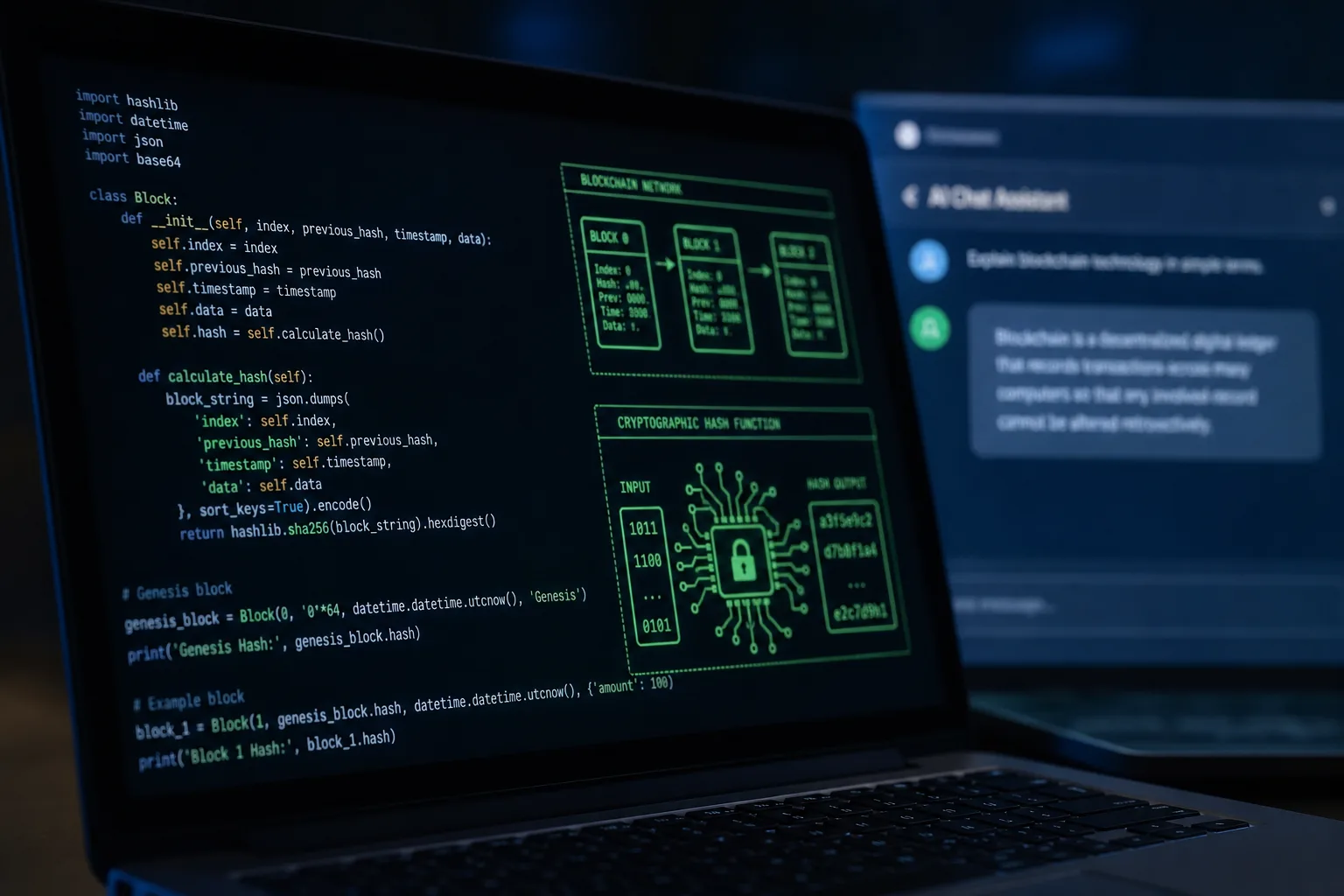
- An AI crypto vulnerability in Zcash’s Orchard privacy pool went undetected for four years before Claude Opus 4.8 helped expose it in days.
- The AI crypto vulnerability discovery caused ZEC to drop roughly 38%, highlighting how AI-found bugs can trigger immediate market panic.
- Frontier AI models can now reason about software intent, not just spot obvious code errors — a critical shift for blockchain security teams.
- Experts warn that AI-assisted exploit discovery is accelerating faster than most protocols can patch the software they already depend on.
Table of Contents
The AI Crypto Vulnerability That Shook Zcash
The discovery of an AI crypto vulnerability inside Zcash’s Orchard privacy pool this May didn’t just rattle one project — it sent a signal to the entire blockchain industry that the rules of security research have quietly, fundamentally changed. In a matter of days, security researcher Taylor Hornby, working for Shielded Labs, used Anthropic’s Claude Opus 4.8 to surface a critical flaw that had somehow survived more than four years of scrutiny from some of the best zero-knowledge cryptographers in the world. The market’s reaction was immediate and brutal: ZEC shed roughly 38% of its value on Thursday as the disclosure spread.
The flaw itself was deceptively compact. Buried in just two lines of code inside Zcash’s Orchard circuit, it involved a validation check that looked, on the surface, like it was doing exactly what it was supposed to — verifying transaction inputs. It wasn’t. An attacker who understood the flaw could have exploited it to mint counterfeit ZEC inside the shielded pool without leaving any detectable trace. Hornby didn’t just flag the bug theoretically; he built a working exploit to confirm it before reporting to developers. An emergency patch landed on June 1.

The detail that really stings isn’t the bug itself — it’s the timeline. Four years. Multiple expert audits. Peer review from specialists in a field, zero-knowledge cryptography, that most software developers never encounter at all. And yet it took an AI assistant and a few days of focused research to find what all of that missed. This single AI crypto vulnerability case has forced the entire industry to reassess how it thinks about code review.
What’s Actually Changed: Intent, Not Just Syntax
It would be easy to frame this as ‘AI found a bug, which is cool.’ That framing misses the point entirely. Ben Goertzel, founder and CEO of SingularityNET, put it plainly:
‘The significance isn’t really that AI can find bugs. It’s that the kind of bug it can now find has changed.’
Goertzel’s distinction matters. For years, automated security tools have been reasonably good at catching surface-level problems — memory overflows, obvious injection vectors, uninitialized variables. The Zcash AI crypto vulnerability belongs to a different category entirely. It wasn’t a syntactic error or a careless omission. It was a logic bug: code that compiled cleanly, passed tests, and looked correct to human reviewers, but didn’t actually enforce the behavior its designers intended. That class of bug requires something closer to genuine reasoning about a system’s purpose — understanding not just what code does, but what it was supposed to do and whether those two things actually match.
Frontier models are increasingly capable of exactly that kind of reasoning. And that’s what makes the current moment different from the slow, incremental progress in automated code analysis that the industry has watched for the past two decades.
AI Crypto Vulnerability Research Is Becoming the New Standard
What Shielded Labs did — deliberately hiring a researcher to hunt for protocol-level flaws using a frontier model — may look like a proactive edge case today. Goertzel thinks it’s the template.
‘Proactive, AI-augmented, adversarial-by-design review becomes table stakes, and the protocols that don’t adopt it will increasingly be the ones learning about their vulnerabilities from the attacker rather than from a friendly.’

The traditional model of blockchain security — periodic manual audits by small, expensive teams of specialists — hasn’t disappeared. But it’s no longer sufficient on its own. The math doesn’t work anymore. Human auditors are limited by hours in the day, the depth of focus any individual can sustain, and the sheer volume of code that modern protocols ship. AI-assisted review can run continuously, cover entire codebases at depth, and do it faster than any team of people possibly could. The human specialists don’t go away; they shift toward oversight, triage, and judgment calls rather than line-by-line manual inspection. Every team that has experienced an AI crypto vulnerability disclosure firsthand reports the same lesson: continuous review is no longer optional.
Sean Ren, CEO of Sahara AI and a computer science professor at USC, frames the challenge in terms of the attacker-defender balance. The same AI crypto vulnerability discovery tools available to defenders are, inevitably, available to anyone else too.
‘In order to build up better defense, we have to use these frontier AI models as the potential attackers to stress test these systems.’It’s a controlled form of adversarial thinking — using AI to simulate what a sophisticated attacker might try, before a real one does.
Blockchain’s Specific Exposure — and Its Potential Advantage
Ren points to something that makes blockchain networks a uniquely attractive target for AI-driven security analysis: the code is open. Unlike a bank’s internal infrastructure or a closed enterprise system, most blockchain protocols publish every line of their codebase publicly. That openness is philosophically core to the ethos of decentralized systems. It also means any frontier model — friendly or hostile — can read and analyze it without needing privileged access. The risk of an AI crypto vulnerability being found by a malicious actor before a friendly researcher is therefore higher in crypto than in almost any other sector.
‘If you think about frontier model labs like OpenAI, Anthropic, and Google DeepMind, they have earlier access to the strongest unpublished models,’ Ren noted. ‘If someone with malicious intent had access to those capabilities, they could conduct attacks and create vulnerabilities.’ The window between a new AI capability emerging inside a top lab and that capability becoming more broadly accessible has historically been measured in months, sometimes less.

That said, the same openness that exposes blockchains also creates an unusual structural advantage. Security researchers don’t need to reverse-engineer anything — the code is right there. Communities that have built their culture around adversarial thinking and public disclosure are arguably better placed to run AI-assisted bug hunts at scale than industries where code is proprietary and vulnerability disclosure is politically fraught. Goertzel made exactly this argument, suggesting crypto may adapt faster than sectors that are more closed.
The Acceleration Problem No One Has a Clean Answer For
Danny Jenkins, CEO and co-founder of cybersecurity firm ThreatLocker, raises the concern that cuts across all of this: speed. AI isn’t introducing a new category of threat so much as it’s dramatically compressing the time required to execute the old ones. Tasks that once took skilled researchers hours or days — reading codebases, reverse engineering binaries, building proof-of-concept exploits — now take minutes.
‘We have this huge gap that’s going to take years and years to get through. All of this software is going to have all of these vulnerabilities, we’re not going to have fixes or updates for it for a long time, and people are going to be able to find those vulnerabilities very quickly.’
The other dimension Jenkins highlights is democratization. Pre-AI security research required deep expertise; the barrier to entry was high enough to keep the population of capable attackers relatively small. That’s no longer true. ‘You don’t have to be a script kiddie now,’ Jenkins said. The combination of lower skill requirements and faster execution means the number of people who can conduct meaningful AI crypto vulnerability research — on either side of the ethical line — has grown substantially.
The Zcash incident is probably best read as an early, public data point in a trend that’s been building quietly for some time. AI crypto vulnerability discovery is moving from theoretical concern to demonstrated reality. The protocols that treat that seriously now — building continuous AI-assisted review into their security practice rather than relying on periodic human audits — are the ones most likely to catch their own flaws before someone else does. The ones that don’t are running a bet that gets harder to justify with every passing month.
Frequently Asked Questions
How was the AI crypto vulnerability in Zcash actually found?
Security researcher Taylor Hornby, hired by Shielded Labs, used Anthropic’s Claude Opus 4.8 to identify a flaw hidden in two lines of Zcash’s Orchard circuit code. The bug allowed a check to appear valid without actually enforcing its intended rules, potentially enabling counterfeit ZEC creation inside the shielded pool undetected.
How much did Zcash’s price drop after the vulnerability was disclosed?
ZEC fell roughly 38% following public disclosure of the Orchard flaw. The sharp sell-off reflected not just the severity of the bug itself, but the alarming fact that it had survived over four years of expert review before AI-assisted research uncovered it.
Does AI make crypto more dangerous to attack or easier to defend?
Both, simultaneously. Frontier AI models can find vulnerabilities faster than human auditors, which benefits defenders who deploy them proactively. But the same capabilities in malicious hands could accelerate attacks. Experts argue the answer is to use AI offensively in controlled research settings before real attackers do.
What makes blockchain networks especially exposed to AI-driven security threats?
Blockchain code is typically open-source, meaning frontier AI models can analyze it directly without any special access. This dramatically lowers the barrier for both security researchers and attackers to scan for weaknesses at scale, faster than traditional human-led audits can keep up.

