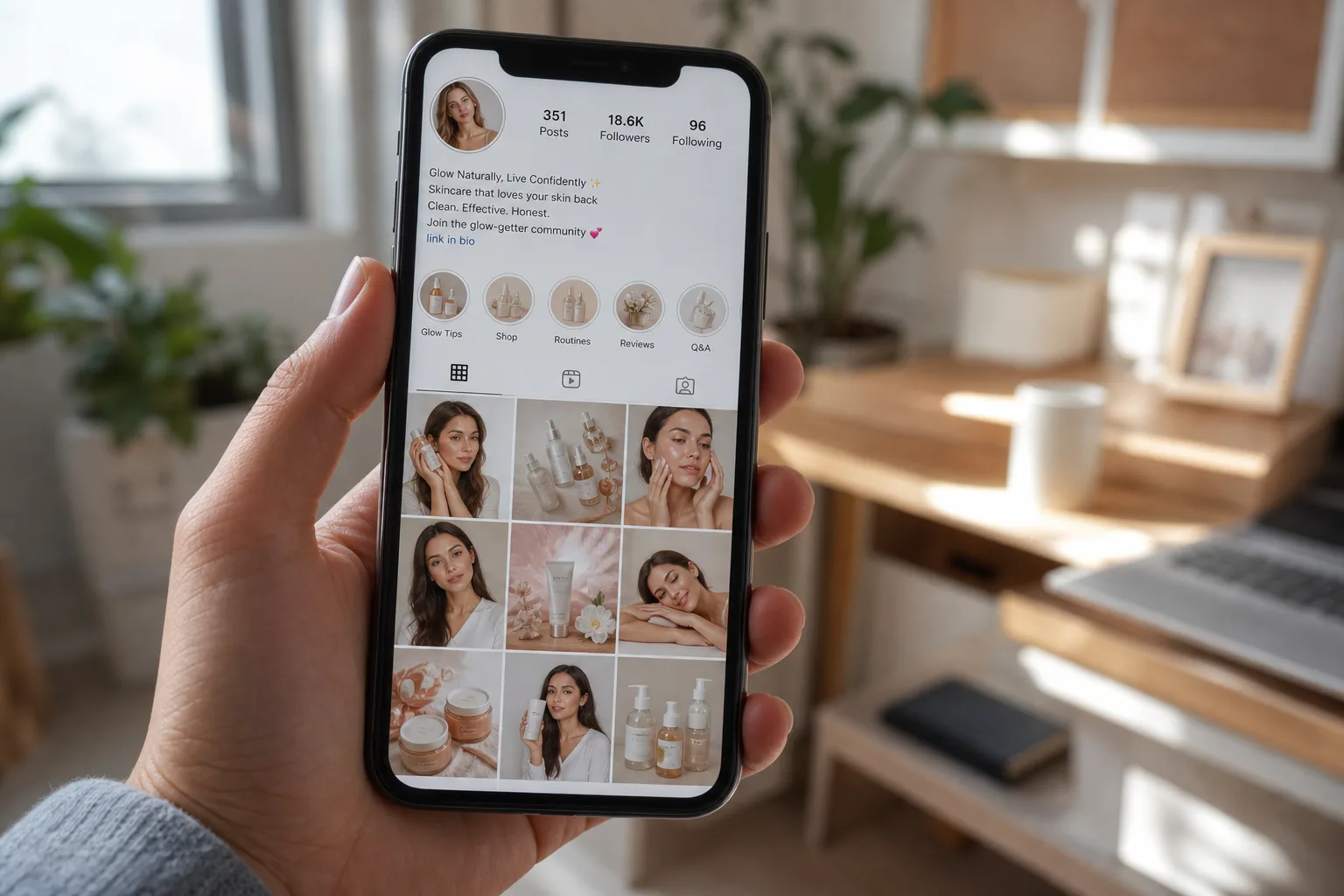
Somewhere in your social media feed right now, a flawless face is recommending a moisturiser, a protein powder, or a new pair of trainers. The photos are polished. The caption is on-brand. The engagement looks real. What you might not realise is that the person selling to you was never actually a person at all. AI-generated influencers have moved from a novelty experiment to a genuine marketing strategy — and the brands behind them aren’t always rushing to tell you.
- AI-generated influencers are being used by brands to promote products without always disclosing their synthetic nature to audiences.
- Major companies see AI-generated influencers as cheaper and more controllable than human creators, reducing reputational and logistical risk.
- Regulators and consumer advocates are raising questions about transparency and whether audiences can tell what’s real.
- The trend signals a deeper shift in how brands think about identity, authenticity, and trust in digital advertising.
Table of Contents
The Rise of AI-Generated Influencers in Brand Marketing
Virtual influencers aren’t entirely new. Lil Miquela, a CGI persona who attracted millions of followers and brand deals with Prada and Calvin Klein, emerged years before generative AI made the whole thing dramatically cheaper and faster to produce. What’s changed is the barrier to entry. Creating a convincing digital persona once required a dedicated team of animators and 3D artists. Today, with tools built on diffusion models and large language models, a brand or agency can spin up a photorealistic synthetic character in a fraction of the time and cost.
That shift has opened the door for brands of all sizes — not just luxury houses with deep pockets — to experiment with AI-generated influencers as a content and promotion channel. Fashion labels, supplement companies, consumer tech brands, and beauty retailers have all reportedly explored or adopted the approach, according to reporting by The Guardian. Some are building proprietary virtual personas tied closely to their own identity. Others are working with agencies that maintain a roster of synthetic characters available for hire.
Why Brands Find the Model So Appealing
The appeal isn’t hard to understand if you’ve spent any time on the brand side of influencer marketing. Human creators are expensive, unreliable, and increasingly powerful negotiators. A mid-tier influencer with a genuinely engaged audience can command thousands of pounds per post, and there’s no guarantee they won’t post something controversial the week your campaign goes live. AI-generated influencers don’t have bad days. They don’t have opinions about politics, get photographed in compromising situations, or demand a higher rate because a competitor just offered one.
There’s also the question of control. A synthetic persona can be dressed, lit, posed, and scripted to match a brand’s aesthetic with pixel-level precision — no mood boards, no lengthy creative briefings, no negotiating over usage rights for content the influencer technically owns. For brands obsessed with consistency, that’s a genuinely attractive proposition.
Cost is the other major driver. Influencer Marketing Hub’s annual benchmark report has tracked consistent year-on-year increases in influencer fees as the market has matured. AI-generated influencers, once the tooling is in place, can produce content at a fraction of the ongoing cost — no per-post fees, no exclusivity windows to manage, no agents in the loop.
The Transparency Problem
Here’s where it gets uncomfortable. Many consumers have no idea they’re looking at a synthetic persona. The photorealism of modern AI-generated imagery has reached a point where the tell-tale signs — strange lighting, slightly-off hands, too-perfect skin — are disappearing fast. If a brand doesn’t volunteer that their spokesperson is entirely computer-generated, plenty of followers won’t ask the question.
That raises real issues around consumer trust and advertising standards. In the UK, the Advertising Standards Authority requires that paid promotions are clearly disclosed. Most major markets have equivalent rules. But those frameworks were written for human creators. The question of whether an AI-generated influencer must be disclosed as synthetic — rather than just flagged as a paid promotion — sits in regulatory grey territory that most watchdogs haven’t caught up with yet.
Consumer advocates argue that audiences have a right to know when the person endorsing a product doesn’t exist. There’s a meaningful difference, they say, between a human being who genuinely uses and likes a product and an algorithmically generated persona whose enthusiasm is entirely fabricated. Critics also point to the downstream effects on real human creators, who are competing for brand budgets against entities that don’t sleep, don’t age, and don’t require a day rate.
What AI-Generated Influencers Signal About Advertising’s Direction
The growth of AI-generated influencers reflects something broader happening in marketing: brands are increasingly willing to prioritise control and efficiency over authentic human connection — and betting that audiences either won’t notice or won’t care enough to push back. Whether that bet pays off is genuinely unclear.
There’s an argument that audiences, particularly younger ones on TikTok and Instagram, are more media-literate than brands give them credit for. The backlash when a beloved creator is revealed to have been synthetic all along could be significant — and the reputational damage to the brand behind the curtain could outweigh whatever was saved on production costs. Trust, once broken, is expensive to rebuild.
But there’s also evidence that virtual influencers can build real, engaged communities. Lil Miquela has attracted a large following of Instagram followers who engage with her content despite openly knowing she’s CGI. The question may not be whether audiences accept synthetic personas — some clearly do — but whether brands can maintain that acceptance when the disclosure is buried or absent entirely.
Where Regulators Need to Catch Up
The advertising industry has self-regulatory mechanisms, but they tend to move slowly and reactively. AI-generated influencers are scaling faster than the rulebooks can keep pace. Calls are growing — from consumer groups, from human creators, and from some corners of the industry itself — for explicit disclosure requirements that make synthetic personas unmistakably identifiable.
The EU’s AI Act, which is now being phased in, includes provisions around transparency for AI-generated content interacting with humans. Whether those provisions will extend clearly to commercial influencer personas remains to be tested in practice. In the US, the Federal Trade Commission has updated its endorsement guidelines in recent years, but again, the application to fully synthetic identities is not yet settled.
What’s certain is that the intersection of generative AI and social media advertising is only going to get more complex. As the tools improve, the content will get harder to distinguish, the personas will get more sophisticated, and the brand incentives to use AI-generated influencers will only grow. The harder question — who’s responsible for telling audiences the truth — is one the industry and regulators can’t afford to leave unanswered much longer.
Frequently Asked Questions
What are AI-generated influencers and how do brands use them?
AI-generated influencers are computer-created personas used by brands to promote products on social media platforms. They can post content, engage with followers, and endorse products without the unpredictability or cost that comes with human talent.
Are AI-generated influencers required to disclose that they’re not real?
Disclosure rules vary by country, but most advertising standards bodies require that sponsored content be clearly labelled. Whether an AI persona itself must be identified as synthetic is a grey area many regulators are only beginning to address.
Why are brands choosing AI-generated influencers over human ones?
Human influencers come with PR risk, scheduling demands, and rising fees. AI-generated alternatives can be tailored precisely to a brand’s image and deployed more flexibly.
Which brands are using AI-generated influencers?
A growing number of consumer-facing brands have experimented with virtual personas to promote their products on social media. Some work with specialist agencies to build proprietary AI influencers, while others licence existing synthetic characters with established followings.