

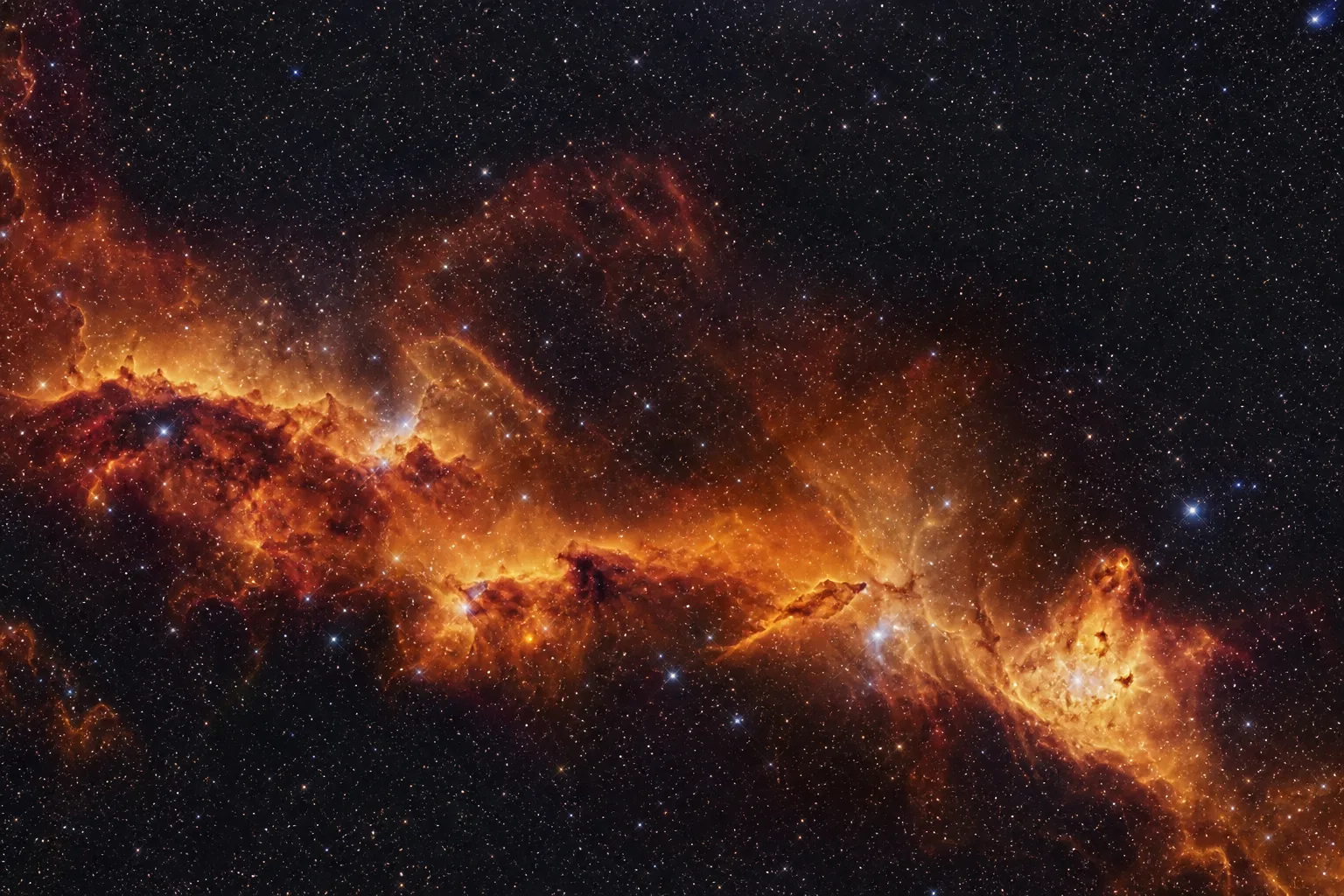
Every month, the James Webb Space Telescope releases a single image that quietly reframes what we thought we understood about the universe. June’s Picture of the Month is no exception — a sweeping, intricately detailed portrait of Orion A, a giant molecular cloud sitting just 1,300 light-years from Earth, practically next door in cosmic terms. It’s the kind of image that makes you stop scrolling.
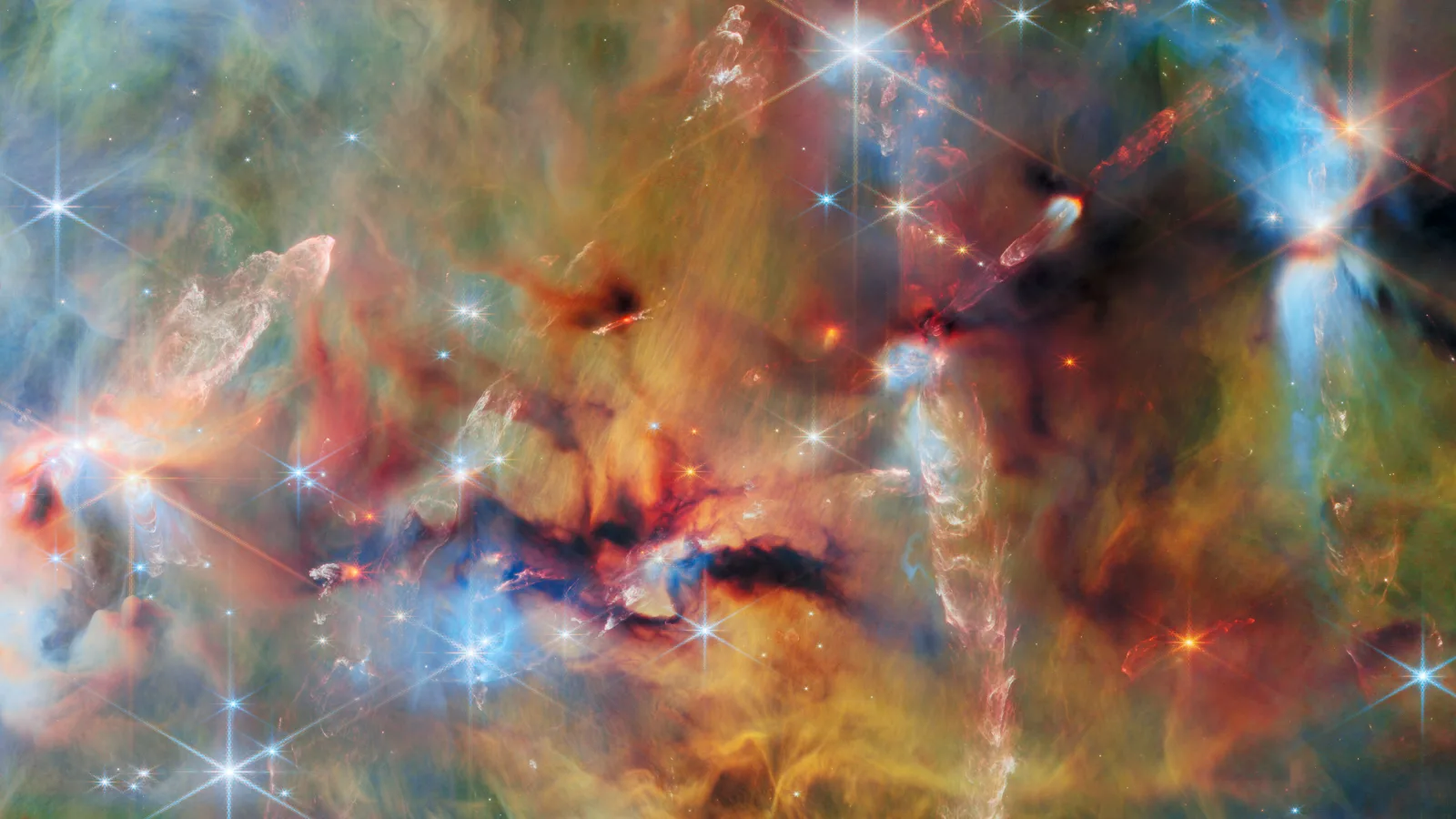
- The James Webb Space Telescope captured Orion A, one of the closest star-forming clouds to Earth, in its June Picture of the Month.
- The James Webb Space Telescope image reveals a 290-light-year filament that has produced roughly 3,000 stellar objects over the last few million years.
- Orion A sits around 1,300 light-years away and contains young protostars surrounded by protoplanetary disks that could eventually form planets.
- Studying Orion A may help scientists understand how our own solar system formed around 4.6 billion years ago.
Table of Contents
What Is Orion A and Why Does It Matter?
Orion A is one of the largest and closest molecular clouds to our planet. It hangs to the south of Orion’s Belt in the night sky — a region amateur astronomers know well, though they’ve never seen it quite like this. The cloud is shaped like an enormous filament, stretching roughly 290 light-years from end to end. That’s a structure so large that light itself would take three centuries to cross it.
Part of the broader Orion molecular cloud complex, Orion A is, in the most literal sense, a factory for stars. Over the past few million years, astronomers estimate it has produced around 3,000 stellar objects. That’s not ancient history by cosmic standards — on the universe’s timeline, a few million years is practically this morning. Which means Orion A is actively working, churning out new suns at a pace that gives researchers a real-time window into the mechanics of stellar birth.
James Webb Space Telescope and the Power of Infrared Vision
The reason the James Webb Space Telescope can capture Orion A in this level of detail comes down to physics. Molecular clouds like Orion A are, by definition, thick with gas and dust — the very material that makes them productive stellar nurseries also makes them maddeningly opaque to visible-light telescopes. Hubble, for all its brilliance, largely bounces off that dust. JWST doesn’t. Its primary instruments observe in infrared wavelengths, which pass through dust clouds the way radio waves pass through walls.
The $10 billion telescope has been operating since July 2022, and in the roughly four years since, it has consistently punched through barriers that previous observatories couldn’t touch. Orion A is another demonstration of that capability — except this time, the payoff isn’t just aesthetic. What the James Webb Space Telescope is revealing inside that cloud has direct implications for understanding how solar systems form.
Protostars, Protoplanetary Disks, and What They Tell Us
Buried inside Orion A are young protostars — infant stars still in the process of accreting mass from their surroundings. Many of them are encircled by protoplanetary disks: flat, rotating platters of gas and dust that, given enough time and the right conditions, will coalesce into planets. The James Webb Space Telescope can resolve these disks in enough detail to study their composition, their temperature gradients, and the gaps where planets might already be forming.
This is where the science gets genuinely consequential. Our own solar system formed from a similar disk around 4.6 billion years ago. By studying Orion A’s collection of protoplanetary disks at different stages of development, researchers can essentially reconstruct the evolutionary playbook — working out the sequence of events that transformed a cloud of interstellar gas into eight planets, dozens of moons, and an asteroid belt capable of occasionally pelting Earth.

The Bigger Picture: JWST’s Cumulative Impact
It’s easy to treat each JWST release as a standalone spectacle. But the smarter way to read them is as a growing archive. Since operations began, the James Webb Space Telescope has imaged the earliest galaxies ever observed, peered into the atmospheres of exoplanets, and now delivered what may be the most detailed portrait of a nearby star-forming region ever assembled. Each image adds a data point to a much larger map.
For context, NASA’s Webb mission was designed with a science lifetime of at least ten years, though the telescope’s fuel efficiency during launch means it could operate significantly longer. That’s a decade-plus of monthly flagship images, each one built on the last. The Orion A portrait isn’t a one-off triumph — it’s instalment 47-odd in a series that’s only getting more sophisticated as the science teams refine their observing strategies.
There’s also a competitive dimension worth acknowledging. The James Webb Space Telescope operates in a landscape where space-based observatories are proliferating. ESA’s Euclid mission launched in 2023. NASA’s Nancy Grace Roman Space Telescope is slated for the late 2020s. The era of JWST as the sole large-aperture space telescope won’t last forever. But right now, in the specific business of peering into star-forming regions, JWST has no real rival.
Why Orion A Is the Perfect Target
The choice of Orion A as a Picture of the Month subject isn’t arbitrary. Proximity matters in astronomy — the closer a target, the finer the detail you can resolve at a given aperture. At 1,300 light-years, Orion A is close enough for the James Webb Space Telescope to distinguish individual protoplanetary disks that would be smeared into an indistinct blur in a more distant cloud. It’s also scientifically diverse: a single field of view contains protostars of different ages, masses, and disk configurations, essentially offering a comparative study in one frame.
That diversity is exactly what theorists need. Planet formation models have historically been built on inferences from our own solar system — a sample size of one. Orion A’s 3,000-plus stellar objects give researchers a statistically meaningful population to test those models against. Some disks will confirm the standard picture. Others, almost certainly, won’t — and those anomalies are where the most interesting science lives.
As the James Webb Space Telescope continues working through its observing schedule, regions like Orion A are likely to get revisited at different wavelengths and with different instrument configurations. Each pass adds another layer of data. The image released this week is striking on its own terms, but it’s also the opening chapter of a much longer investigation — one that may ultimately tell us something fundamental about whether the conditions that produced Earth are common, rare, or somewhere messily in between.

