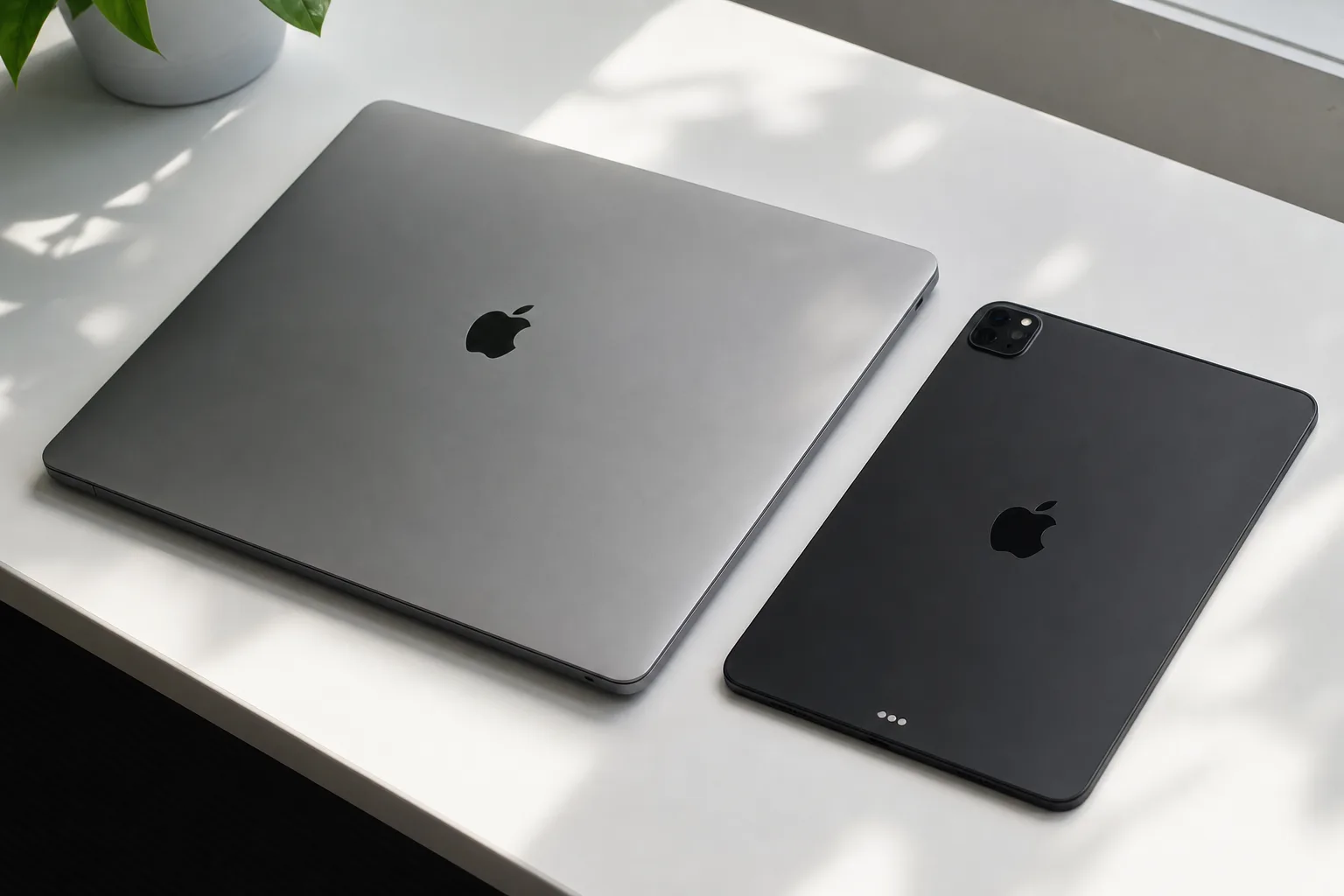
Apple is reportedly gearing up for a significant hardware push in the first half of 2026, with a new iPad Pro lineup and a fresh MacBook Pro both said to be in active development. According to a Bloomberg report, the company is working on four distinct iPad Pro models, all set to arrive with faster chips — and a new entry-level MacBook Pro is coming along for the ride.
- Apple is developing a new iPad Pro lineup with four models, all expected to arrive in the first half of 2026.
- A new entry-level MacBook Pro, codenamed K104, is also in development alongside the new iPad Pro release window.
- Apple’s first M7 processor is reportedly targeting the same 2026 launch period as these new devices.
- Recent price hikes — including a $300 jump on the 1TB MacBook Pro — make more affordable options increasingly important.
Table of Contents
Four New iPad Pro Models on the Way
The new iPad Pro refresh would mark Apple’s first update to the tablet since October of last year. That’s not an unusually long gap by Apple’s standards, but it does mean the current models have been sitting on shelves for the better part of a year — an eternity in the tablet market, even if competition from Samsung and Google hasn’t exactly been fierce in the premium segment.
Bloomberg’s report doesn’t detail what distinguishes the four models from one another, but it’s a reasonable bet that Apple will maintain its existing split between 11-inch and 13-inch screen sizes, potentially with storage or connectivity tiers driving further differentiation. What’s more interesting is what’s under the hood: the new iPad Pro is expected to be powered by the M7 chip, which would represent Apple’s first next-generation silicon debut in the tablet space.
Apple’s iPad Pro has long been the benchmark for what a tablet can do, particularly since the transition to Apple Silicon. The M4-equipped models released in 2024 were genuinely impressive — thin to an almost absurd degree, and powerful enough to handle workloads that would have required a laptop just a few years ago. An M7 upgrade to the new iPad Pro would push that even further, though Apple still has work to do convincing professionals that iPadOS can keep pace with the hardware’s potential.
The New MacBook Pro Entry-Level Push
Alongside the new iPad Pro, Apple is reportedly developing what Bloomberg describes as an ‘entry-level’ MacBook Pro, referred to internally as K104. The distinction here matters: this isn’t another MacBook Air or a budget machine running mobile chips. Earlier this year, Apple launched the MacBook Neo — a cheaper laptop option that, notably, runs the A18 chip originally built for the iPhone. That compromise drew mixed reactions from buyers who expected full Mac-class performance.
The K104, by contrast, is expected to be a genuine MacBook Pro. That means a Pro-grade chip, Pro-tier performance, and presumably the full suite of ports and display features that define the Pro line. Think of it as the on-ramp to the Pro family — something priced more accessibly than the high-end configurations, but without the architectural compromises of the Neo.
In March, Apple released an updated high-end MacBook Pro alongside the Neo, so the company is clearly willing to segment its laptop lineup more aggressively than it has in the past. A true entry-level Pro model would fill a gap that’s grown more visible as prices across the lineup have climbed.
The M7 Chip: Apple’s Next Silicon Leap
Underpinning all of this is the M7 processor, which Apple is reportedly targeting for the same first-half 2026 window. If that timeline holds, it would be a meaningful moment — the M-series chips have been the backbone of Apple’s hardware dominance since the M1 upended the laptop market in late 2020. Each generation has brought measurable gains in performance and efficiency, and the M4 generation set a high bar. The new iPad Pro is widely expected to be among the first devices to ship with M7 silicon.
What the M7 brings specifically isn’t detailed in the Bloomberg report, but the trajectory of Apple Silicon suggests continued improvements in the Neural Engine — relevant for on-device AI tasks — alongside the usual CPU and GPU performance bumps. As Apple pushes deeper into on-device intelligence features with Apple Intelligence, having more powerful local processing isn’t just a spec-sheet exercise. It’s becoming central to the product experience.
Why Pricing Makes This Refresh More Critical Than Usual
Here’s the uncomfortable context sitting behind all of this: Apple has been raising prices. Significantly. The MacBook Pro with 1TB of storage recently jumped from $1,699 to $1,999 — a $300 increase that would have caused considerably more outrage in a different economic climate. Apple CEO Tim Cook has attributed the hikes to supply chain pressures, and the company isn’t alone in passing those costs on to consumers. But Apple’s premium positioning means every price increase gets scrutinized more than most.
That makes the timing of a more affordable MacBook Pro genuinely interesting. If Apple can introduce a K104 model that sits meaningfully below the current entry price while delivering real Pro-class hardware, it gives the company a pressure valve — a way to keep aspirational buyers in the ecosystem without forcing them to choose between underpowered budget options and configurations that now breach the $2,000 mark. Whether Apple prices the K104 aggressively enough to make that argument is another question entirely. The same pressure applies to the new iPad Pro, where the top-tier 1TB configurations have also crept into laptop pricing territory.
The Bigger Picture: Apple in Transition
It’s hard to look at Apple’s current product cadence without acknowledging the broader context the company is operating in. Tim Cook’s tenure as CEO is winding down — not imminently, but the succession conversation is real and ongoing in industry circles. Meanwhile, Apple is navigating supply chain disruption, regulatory pressure in multiple jurisdictions, and the competitive heat from AI-first rivals who are reshaping expectations around what software and hardware can do together.
A foldable iPhone is also reportedly somewhere in Apple’s pipeline, which would mark the company’s most dramatic form factor shift since the original iPhone. Taken together, the product roadmap Apple appears to be building toward — new iPad Pro, new MacBook Pro, new chip, potentially a foldable — reads like a company trying to reassert its hardware narrative at a moment when the software and AI story is still coming into focus.
The first half of 2026 is still months away, and Apple declined to comment when asked about these plans. But if Bloomberg’s reporting holds up, the spring hardware season could be one of the more consequential Apple has had in years — not just because of what’s new, but because of what the pricing and positioning of these products says about where Apple thinks its market is heading.