
July 2026 skywatching delivers one of the more interesting monthly lineups NASA has flagged in recent years — a predawn parade of planets, a returning periodic comet, the summer Milky Way at its darkest, and a Saturn that looks subtly but unmistakably different through a telescope. You don’t need to be an astronomer to enjoy any of it, but knowing what to look for and when makes all the difference.
- July 2026 skywatching kicks off with a predawn Moon, Mars, Saturn, and Uranus alignment on July 11 and 12.
- The July 14 New Moon creates ideal dark skies for July 2026 skywatching of Comet 10P/Tempel 2 in Capricornus.
- Saturn’s rings appear unusually thin this month, giving telescope users a rare and rewarding perspective.
- The Milky Way’s galactic core is at its most visible this July from any properly dark location.
Table of Contents
A Predawn Planet Parade on July 11 and 12
Set your alarm early. On the mornings of July 11 and 12, the eastern sky before sunrise will hold one of the more visually satisfying arrangements of the month: a waning crescent Moon lined up alongside Mars, Saturn, and — for those with optical help — Uranus. July 2026 skywatching doesn’t get much more accessible than this scene, because the Moon essentially acts as a built-in pointer. Find the crescent, and you’ve found the neighbourhood.
Mars shows up as a small, distinctly reddish point of light. It won’t be especially bright, but the colour is unmistakable once you know what you’re looking for. Saturn is considerably easier — brighter, steadier, and with none of the twinkling that stars produce near the horizon. Uranus is a different story entirely. It sits near the edge of naked-eye visibility under ideal conditions, but in practice you’ll want binoculars or a small telescope to pick it out in the brightening twilight sky.
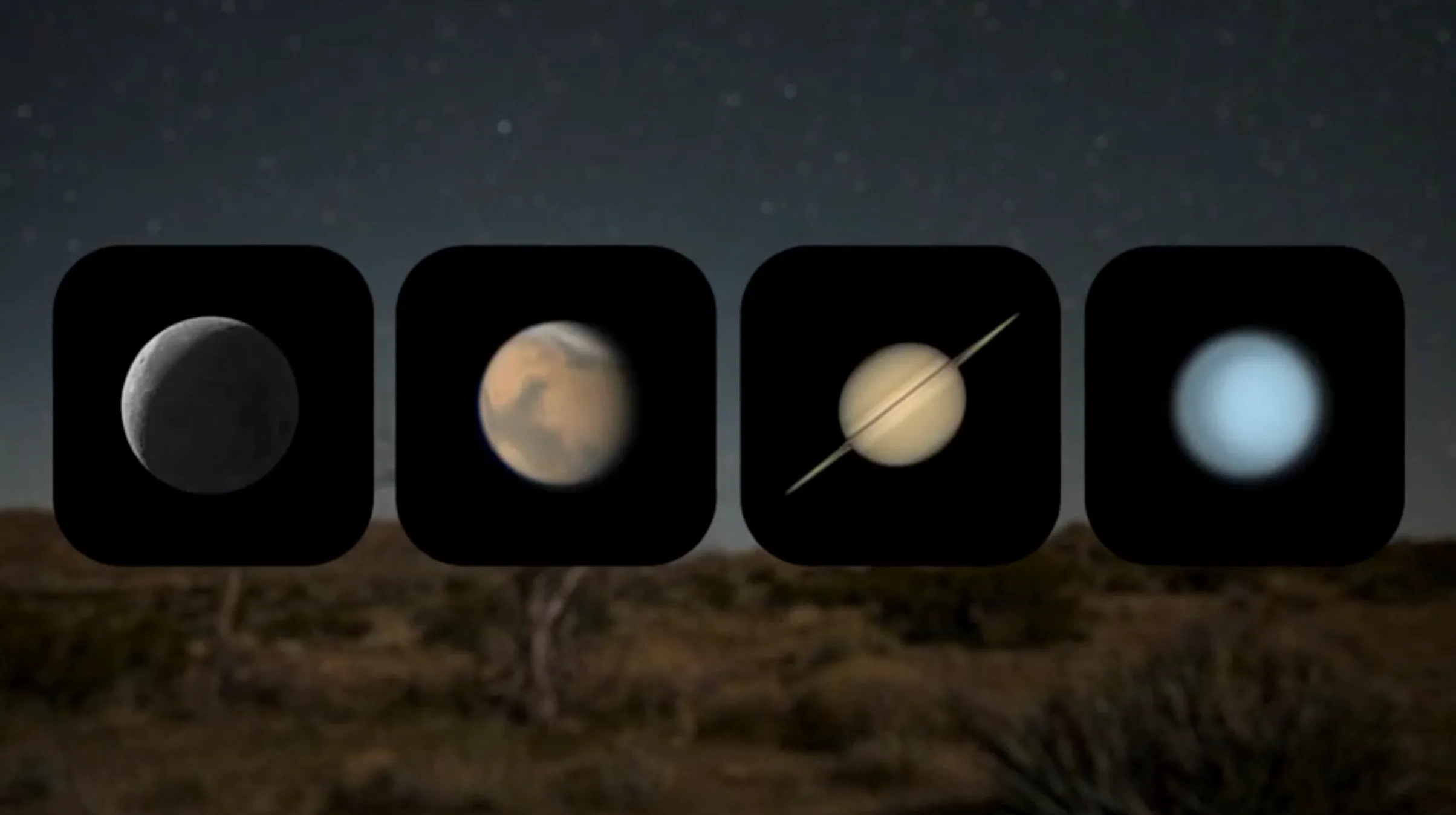
This kind of multi-planet morning alignment isn’t rare in an astronomical sense, but it’s uncommon enough that it’s worth dragging yourself out of bed for. The Moon’s presence is the key practical detail — without it, locating fainter planets like Uranus in a brightening twilight sky would require a star chart and patience most casual observers don’t have at 4 a.m. For anyone just beginning July 2026 skywatching, this predawn lineup is an ideal first target.
Comet 10P/Tempel 2: A Returning Visitor Near New Moon
Comets rarely arrive with the drama their reputation promises, and Comet 10P/Tempel 2 is no exception to that rule. But context matters: this is a periodic comet on a roughly 5.5-year orbit, meaning it has made this same inner-solar-system swing before and will do so again. Discovered by Ernst Tempel in the 19th century, 10P is part of the Jupiter-family comet group — icy bodies whose orbits have been shaped over time by Jupiter’s gravity into shorter, more predictable loops around the Sun.
Around the New Moon on July 14, the comet swings by and will be best placed for observation. July 2026 skywatching of this target centres on Capricornus, low in the southern sky after dark. What you’re looking for is a faint, fuzzy smudge — not a brilliant streak, but a small diffuse glow that may show a brighter central condensation and a short, broad, fan-shaped tail spreading away from the Sun. NASA describes it as potentially visible through binoculars or a small telescope under dark skies, starting roughly 45 to 60 minutes after sunset once the sky has fully darkened.
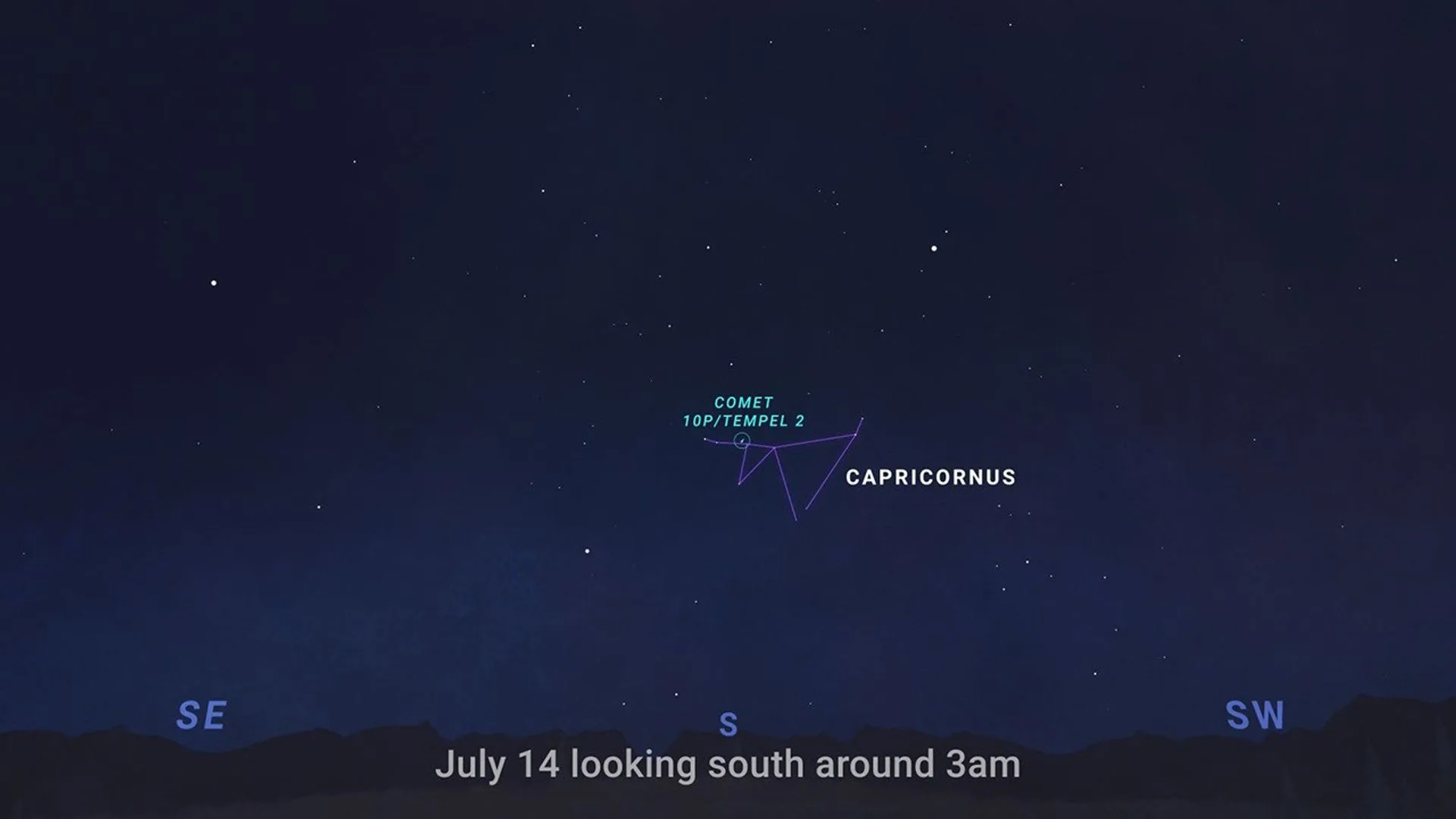
The practical advice here is straightforward but non-negotiable: get away from city lights. Light pollution doesn’t just dim faint objects — it obliterates them. A comet that’s easily visible from a rural field becomes effectively invisible from a suburban backyard. Apps like Light Pollution Map can help you find genuinely dark sites within driving distance. And patience matters — give your eyes a full 20 minutes to dark-adapt before you start hunting.
The Milky Way’s Best Window This Month
The same New Moon that helps with comet hunting on July 14 also unlocks the month’s best opportunity to see our own galaxy. July 2026 skywatching enthusiasts who’ve never actually seen the Milky Way with their own eyes — not in a photograph, but standing in a field looking up — tend to find the experience unexpectedly moving. A pale, cloud-like band arching across the sky doesn’t sound impressive until you’re actually under it, and you realise you’re looking at hundreds of billions of stars compressed by distance into something that resembles luminous fog.
The densest, brightest region visible this time of year lies toward the galactic centre — the direction of Sagittarius and neighbouring Scorpius, which sits low in the southern sky shaped like a hook or a scorpion’s tail. That concentrated glow isn’t just stars; it’s stars behind dark molecular clouds of cosmic dust, the same raw material from which future stellar systems will eventually form. The fact that it looks ‘cloudy’ is because there are so many stars that individual points blur together at this distance.
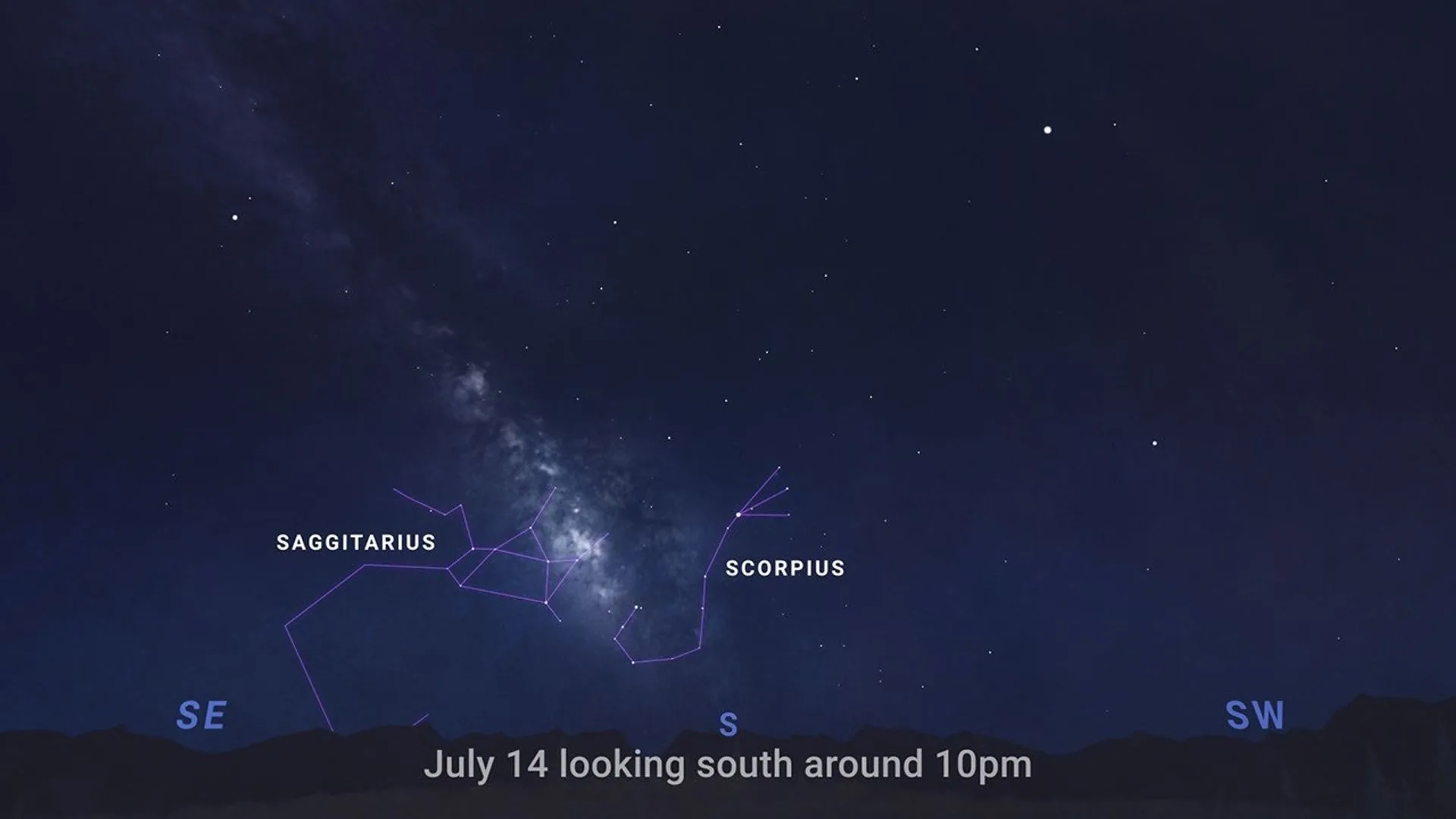
For observers in the northern hemisphere, July and August represent the peak window for this view. July 2026 skywatching takes full advantage of the galactic centre being highest in the sky during summer evenings, though the shorter nights mean you need clear, dark conditions to catch it properly. New Moon is essentially mandatory — even a quarter Moon washes out the faintest detail significantly.
Saturn’s Unusually Thin Rings: A Telescope Target Worth Your Time
Later in July, Saturn becomes one of the most compelling telescopic targets of the month — not because it’s particularly close to Earth, but because its ring geometry is doing something unusual. The rings are currently tilted at an extremely shallow angle relative to our line of sight, making them appear almost edge-on. From a telescope eyepiece, the planet looks almost ring-less at first glance: a flattened disc with what appears to be a thin line bisecting it rather than the sweeping, inclined halo most people picture.
This is a natural consequence of orbital mechanics. Saturn’s rings are tilted at an angle relative to its orbital plane, and as Saturn moves through its roughly 29-year orbit, Earth’s viewing angle to those rings cycles between nearly edge-on and fully open. We’re currently near the edge-on extreme of that cycle. The rings haven’t shrunk or thinned in reality — they’re the same broad disc of ice and rock they’ve always been. It’s purely a matter of geometry, but the visual effect is striking enough that even experienced observers find it worth a second look.
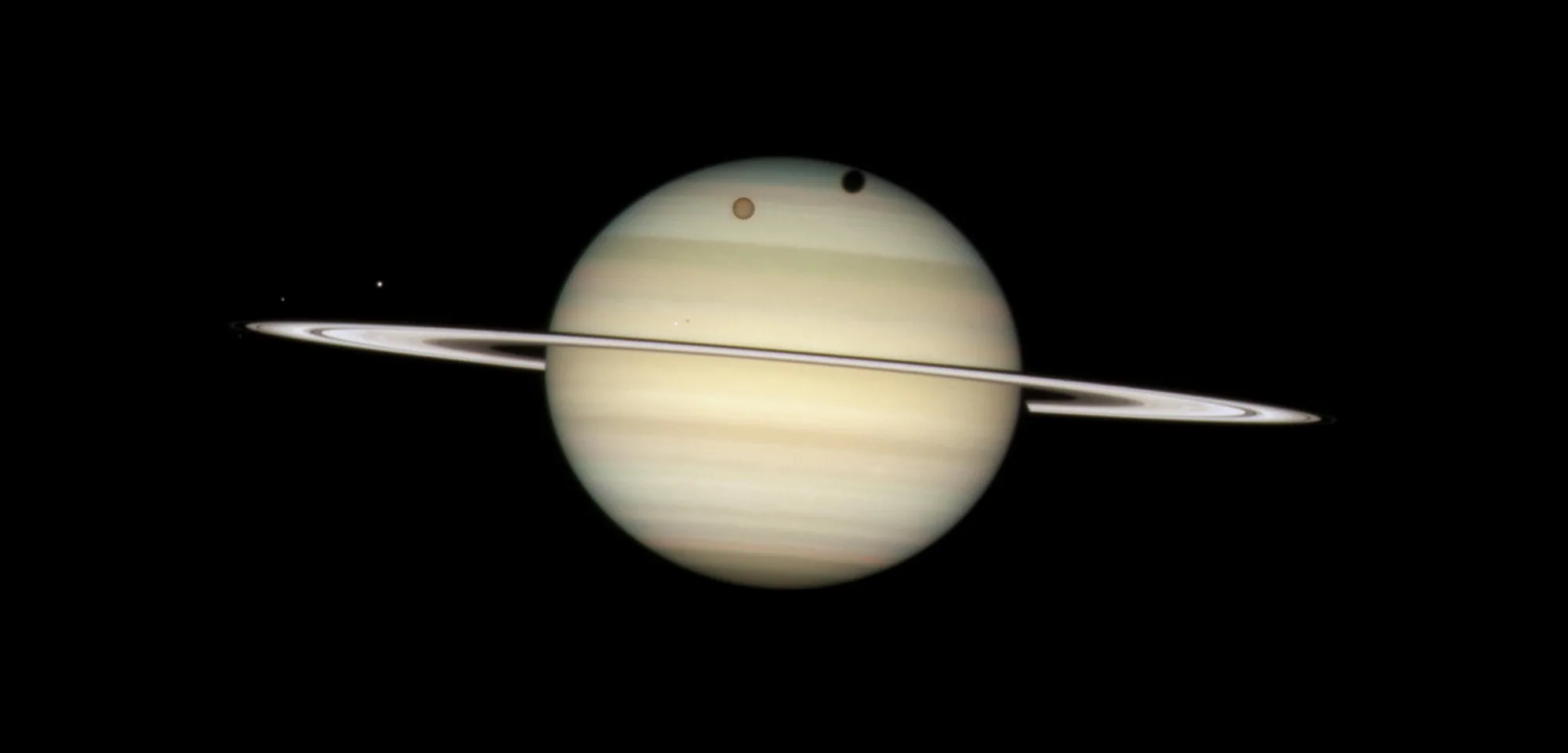
If you have access to even a modest 70mm or 80mm refractor, Saturn at this ring angle is a genuinely interesting sight. The contrast between the familiar image you expect and what you actually see through the eyepiece captures something fundamental about July 2026 skywatching broadly: the solar system is always in motion, our view of it is always changing, and the same objects can look meaningfully different from one year to the next.
July Moon Phases at a Glance
Planning your observing sessions around the Moon’s phase is one of the most practical habits any skywatcher can develop. A full Moon floods the sky with reflected sunlight and wipes out faint targets; a new Moon opens up the night completely. July 2026 skywatching rewards those who plan around these windows, and here’s how the month breaks down:
- July 7: Last Quarter Moon
- July 11–12: Waning crescent — ideal for the predawn planet lineup
- July 14: New Moon — best dark-sky window of the month
- July 21: First Quarter Moon
- July 29: Full Moon
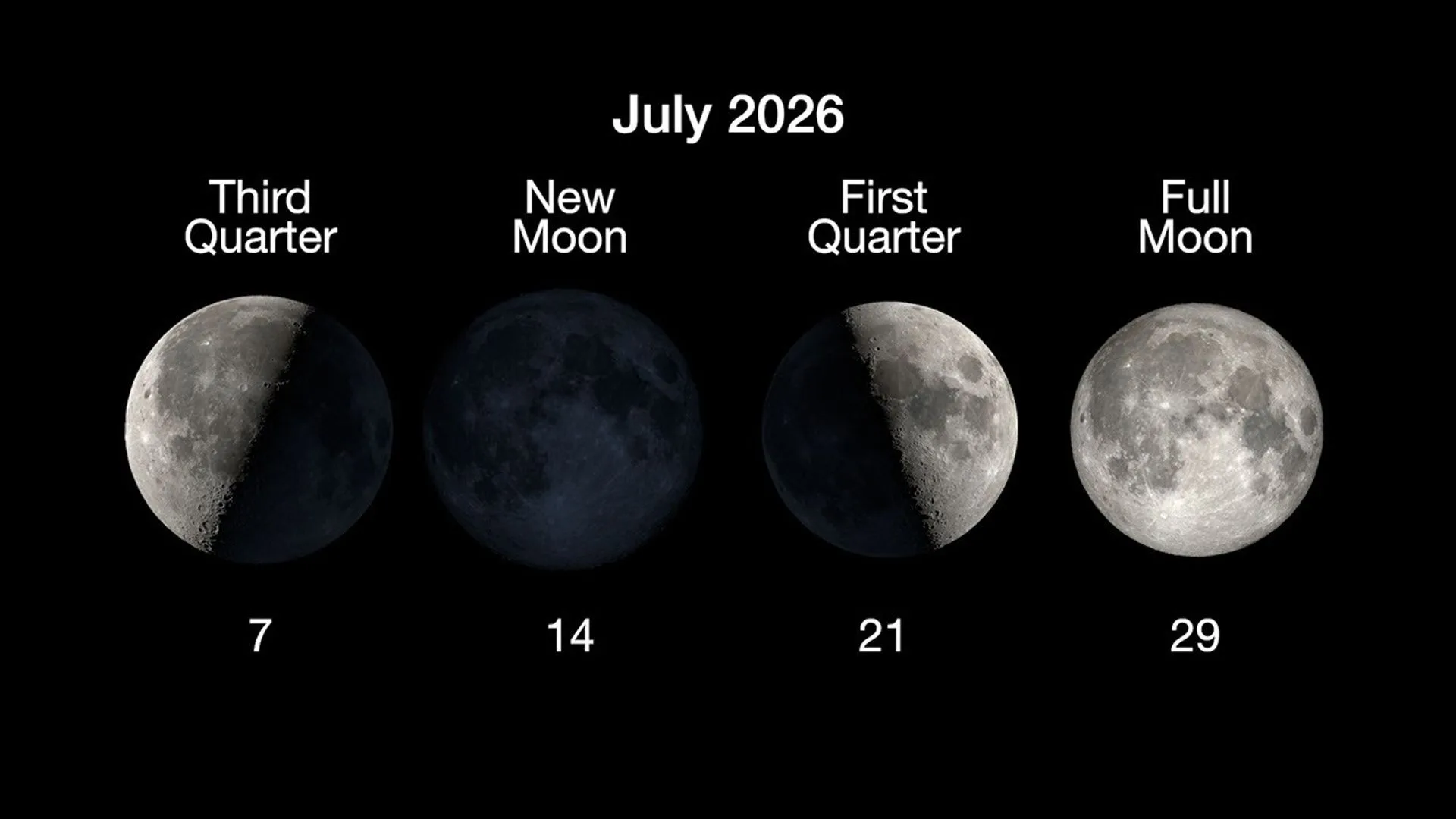
The two-week stretch between the Last Quarter on July 7 and the First Quarter on July 21 — centred on the New Moon — is when the sky is at its darkest for any given night. That’s your primary target window for comet hunting and Milky Way viewing. After the 21st, the growing Moon progressively reclaims the night sky, and by the July 29 Full Moon, deep-sky observing becomes significantly harder. Structuring your July 2026 skywatching sessions around this dark-sky window will make a noticeable difference to what you can actually see.
Why Skywatching Still Matters in 2026
It’s easy to assume that amateur skywatching has been rendered irrelevant by professional observatories, space telescopes, and the constant stream of processed imagery from missions like JWST. That assumption misses something important. What observatories and space missions provide is data and imagery at resolutions no human eye can match. What stepping outside on a clear July morning and watching the Moon sit between Mars and Saturn provides is something different — a direct, embodied sense of scale, motion, and place within the solar system that no image on a screen can quite replicate.
NASA’s monthly skywatching series, presented this month by Raquel Villanueva from the Jet Propulsion Laboratory, has done a quiet but consistent job of bridging that gap — translating orbital mechanics and astronomical calendars into practical, accessible guidance for people who might otherwise never look up. July 2026 skywatching is a genuinely good pursuit to start, or to return to, this month. The equipment requirements are minimal: binoculars cover most of it, and the planet lineup on July 11 and 12 needs nothing at all beyond clear skies and an early alarm. Whether you’re a first-timer or a returning observer, July 2026 skywatching offers something worth getting up early for.
Frequently Asked Questions
What are the best dates for July 2026 skywatching events?
The standout dates for July skywatching are July 11 and 12 for the predawn planet lineup, and July 14 for the New Moon — which is the best window to spot Comet 10P/Tempel 2 and the Milky Way’s galactic core from a dark location.
Do I need a telescope to see Comet 10P/Tempel 2?
Yes. Comet 10P/Tempel 2 isn’t visible to the naked eye. You’ll need binoculars or a telescope to find the faint fuzzy glow near Capricornus. A dark site, away from city light pollution, gives you the best chance of spotting its fan-shaped tail.
Why do Saturn’s rings look so thin in July 2026?
Saturn’s rings are tilted at a very shallow angle relative to Earth’s line of sight this month. The rings themselves haven’t changed — it’s purely our shifting viewing geometry, a great reminder that our view of the solar system is always in motion.
How can I see the Milky Way clearly this July?
Get away from city lights, give your eyes time to adjust, and avoid looking at your phone screen. The New Moon on July 14 offers the darkest skies of the month. Look south for Scorpius and Sagittarius — the bright galactic core sits right in that region.