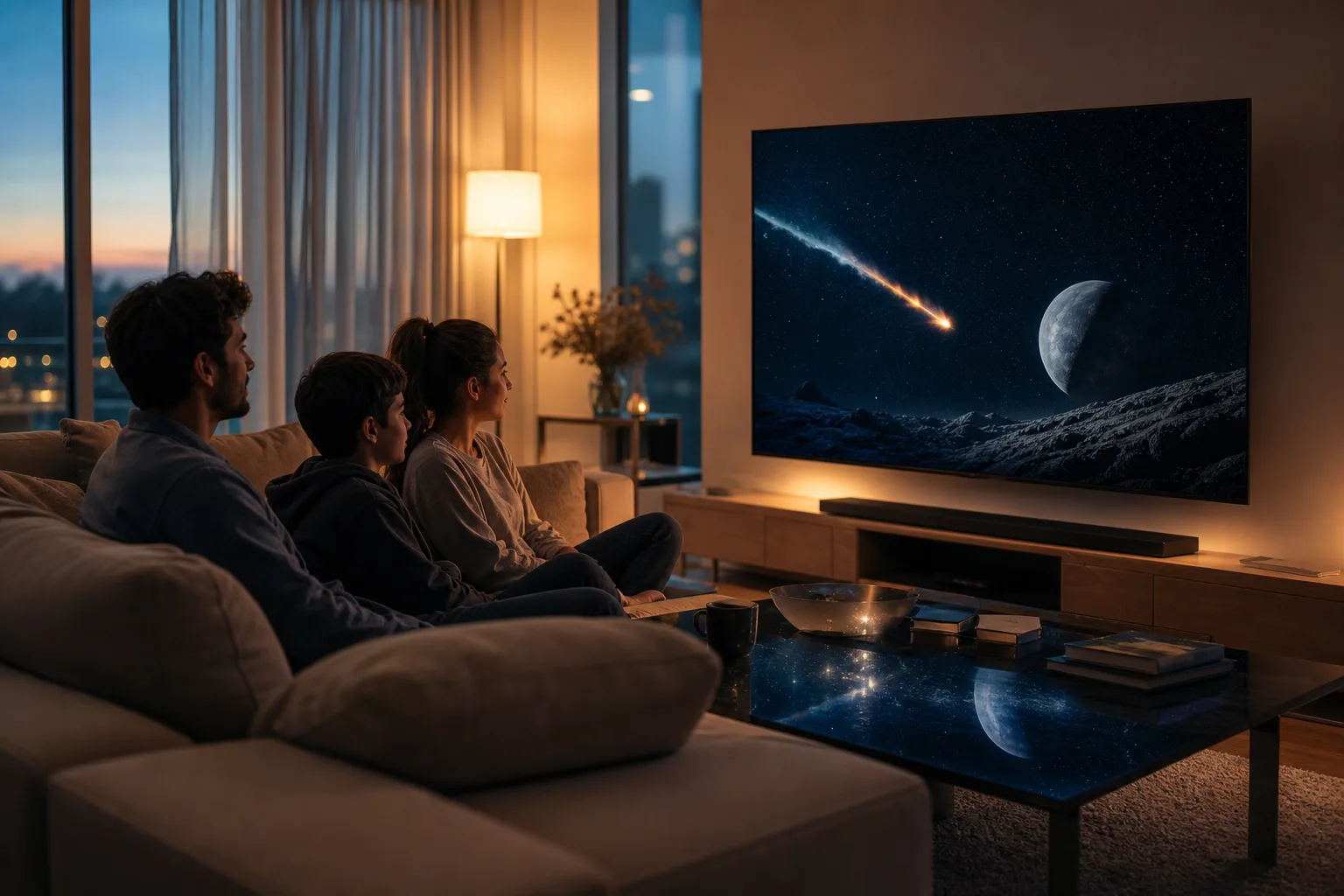
- OLED TVs 2026 remain the picture-quality choice because self-lit pixels produce perfect blacks, precise contrast, and exceptionally clean motion.
- For OLED TVs 2026, the premium makes most sense in dim rooms where films, prestige television, and console games are priorities.
- Mini-LED LCD televisions now offer serious competition, particularly for sunny living rooms, lower prices, and viewers concerned about static graphics.
- Buy the panel technology that suits your room and viewing habits, rather than assuming the most expensive screen is automatically the right one.
Table of Contents
OLED TVs 2026 are still the movie lover’s choice
OLED TVs 2026 still command a premium, and for plenty of people that extra money remains justified. Put a good OLED beside a typical LCD television in a dark room, cue up a night scene from a film, and the argument is basically over: OLED’s blacks look black, not charcoal gray with a flashlight shining behind them.
That advantage comes from the underlying hardware. Every pixel in an OLED panel makes its own light and can shut itself off completely. LCD TVs, by contrast, put a backlight behind the screen and try to control where that light goes. Even an excellent LCD is managing light in zones rather than at the individual-pixel level. It’s the difference between turning off one lamp in a room and trying to darken one corner with blinds. That is the fundamental advantage behind OLED TVs 2026.
For movies, high-end streaming shows, and games built around moody lighting, that control matters more than spec-sheet chest beating. Bright subtitles against a black letterbox bar stay crisp. A spaceship against a starfield doesn’t arrive with a glowing halo around it. Shadows have detail without turning the whole image into gray soup. Frankly, once you get used to that, stepping back to a middling edge-lit LCD can feel like watching through a lightly fogged window.

OLED also retains a real edge in response time. Fast pixel transitions reduce blur in action scenes, sports, and gaming, while OLED’s viewing angles are generally excellent. If your sofa stretches wide across the room, the person stuck at the far end doesn’t have to accept a washed-out picture as punishment for arriving late.
Manufacturers have spent the past several years attacking OLED’s historical weak spots, particularly brightness. LG’s recent OLED generations have pushed brighter panels and smarter processing, while Samsung has backed QD-OLED, a variation designed to pair OLED’s per-pixel contrast with rich color output. The ceiling is higher than it was even a few years ago. LG’s OLED lineup shows how thoroughly the technology has moved from a specialist luxury into the company’s mainstream premium-TV strategy.
My read: if absolute picture quality is the job, OLED is still the benchmark. But that does not mean every household should buy one.
The Mini-LED counterargument has become much stronger
The biggest change in the OLED TVs 2026 conversation is not that OLED got worse. It’s that Mini-LED LCD got good enough to make the decision genuinely difficult. A Mini-LED set uses a dense array of tiny LEDs behind the LCD layer and divides them into local dimming zones. More zones allow the television to dim and brighten different areas with much more precision than older LCD designs.
This doesn’t erase LCD’s structural limitation. A bright object on a dark background can still cause blooming because one dimming zone covers many pixels. You may notice it around white credits, subtitles, or a bright moon in a nearly black sky. OLED has no such issue because it can control each pixel separately.
The best Mini-LED models have narrowed that gap dramatically in ordinary living-room viewing. They can hit harder with sunlit scenes, maintain eye-searing brightness across large portions of the screen, and often cost materially less than a comparable OLED. Shoppers comparing OLED TVs 2026 with Mini-LED options should take those bright-room strengths seriously. In a bright room, they’re the difference between seeing a soccer match clearly at 2 p.m. and spending the afternoon pulling curtains like you’re preparing a Victorian séance.
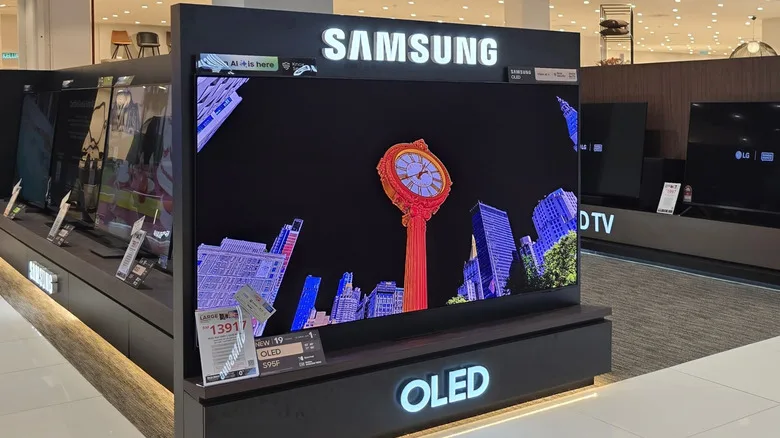
An expensive Mini-LED from Samsung, Sony, TCL, or Hisense can therefore be a smarter purchase than a cheaper OLED. Do not shop by panel label alone. Processing, anti-reflection treatment, dimming behavior, screen uniformity, HDMI support, and the size you can actually afford all matter. A 75-inch Mini-LED that fits the room may deliver more enjoyment than a compromised 55-inch OLED, even if the smaller screen wins a black-level shootout.
Brightness and burn-in are not footnotes
Before pulling out a card for OLED TVs 2026, ask two blunt questions: How bright is the room, and what stays on screen all day?
OLED brightness has improved, but LCD remains the technology built for brute-force luminance. With OLED TVs 2026, that improvement is meaningful, but it does not overturn LCD’s bright-room advantage. If your television faces windows, serves a covered patio, or lives in a room where daylight floods every surface, a Mini-LED display is usually the easier recommendation. It has more headroom to punch through ambient light, especially during bright sports broadcasts and daytime television.
Then there’s burn-in. The internet often talks about it as if every OLED panel will permanently display a ghost of a news channel’s logo after a weekend. That’s overstated. Modern sets use compensation cycles, logo dimming, pixel shifting, and screen savers to reduce risk. Normal mixed use — movies, games, streaming, some sports — should not make most buyers panic.
Still, the risk is not imaginary. OLED materials age with use, and static elements can contribute to uneven wear over time. If your TV regularly displays static content for long periods, LCD offers valuable peace of mind. That is especially true for a household TV that doubles as background noise rather than a screen used deliberately for a film or game.
This is where the old advice that ‘OLED is always better’ falls apart. Better for whom? A cinephile watching at night and a restaurant owner showing static menus have entirely different needs.
Where the OLED premium actually pays off
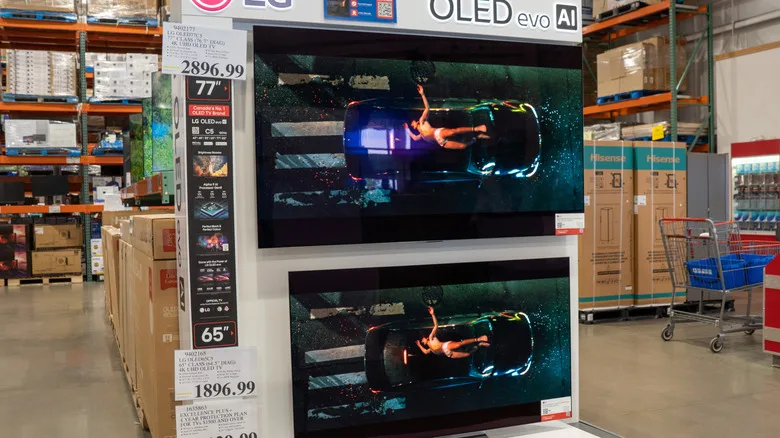
OLED TVs 2026 make the clearest financial sense for viewers who care about films and scripted television, play current consoles or PCs, and can control at least some of the room’s light. They are also a terrific fit for people who sit off-center, hate LCD blooming, or simply want a very thin, premium-looking set without turning their living room into a home theater project.
Gaming deserves a specific mention. Many premium OLED models offer modern connectivity options and fast response times. Those features exist on competing LCD televisions too, but OLED’s near-instant pixel response gives motion a distinctive clarity. For someone playing fast racers, shooters, or sports games, that’s visible. Anyone shopping OLED TVs 2026 primarily for gaming should still compare HDMI support and the specific model’s feature set. It won’t turn a bad player into a good one, sadly, but it does make the image look more locked in.
On the other hand, skip the OLED tax if you mostly watch daytime TV in a bright space, leave static channels running for hours, or need the largest screen possible on a fixed budget. In those cases, a well-reviewed Mini-LED is not a consolation prize. It is often the rational choice.
Don’t buy a technology badge
Start with the room, then your habits, then the price when shopping for OLED TVs 2026. Watch dark movies at night? OLED. Host Sunday sports in a bright open-plan room? Mini-LED deserves a long look. Need a television for a PC desktop or all-day news channel? LCD remains the low-anxiety option.
And check the actual deal, not the launch price. Premium TVs have a habit of falling sharply after their first few months, while last year’s flagship can become the sweet spot once retailers need the shelf space. Remember when everyone treated 4K as an extravagant add-on? The market has a way of turning luxury features into normal expectations.
OLED will probably keep leading the picture-quality race because its basic advantage is so fundamental: total control of every pixel. But Mini-LED is making that lead more conditional, more room-dependent, and more interesting. In 2026, the best TV isn’t the one with the fanciest panel. It’s the one you’ll still enjoy when the sun is up, the game is on, and the credit-card bill arrives.
Frequently Asked Questions
Are OLED TVs 2026 worth buying for a bright room?
They can be, especially newer premium models with improved brightness and reflection handling. But a strong Mini-LED LCD often remains the safer value in a sun-filled room because LCD technology can produce more sustained full-screen brightness.
Does OLED burn-in still happen on modern TVs?
Permanent image retention remains possible when static logos, scoreboards, or interface elements stay on screen for very long periods. Modern OLED televisions include pixel-shifting and panel-care features, so ordinary mixed viewing is far less risky than it was on early models.
Is Mini-LED better than OLED for sports?
Mini-LED can be the better practical choice for sports in a bright family room, thanks to high brightness and no meaningful burn-in concern from persistent score graphics. OLED still has an edge in motion clarity, uniformity, and dark-room contrast.