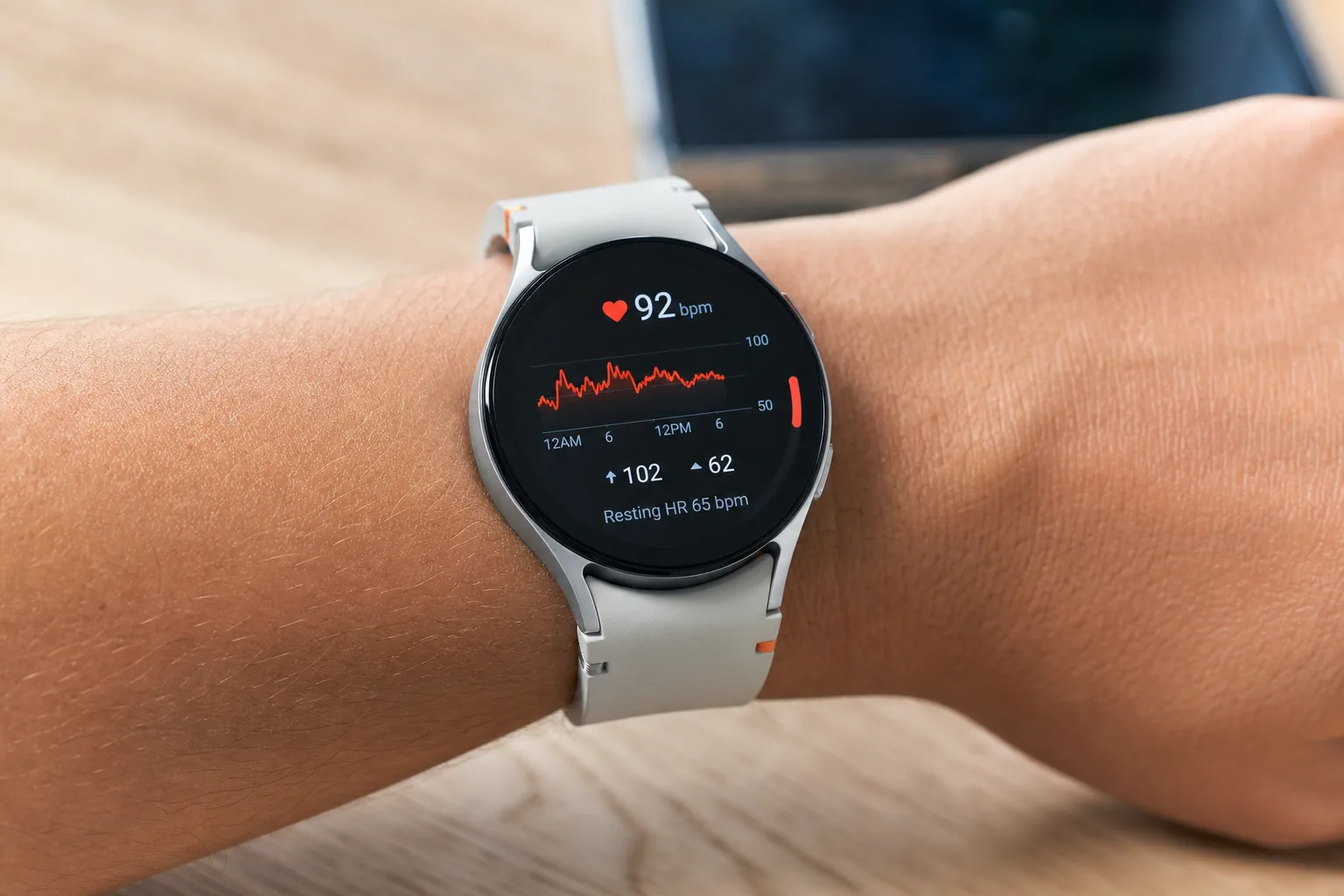
Samsung is pulling the plug on its Galaxy Watch Vascular Load feature in the United States — quietly, as is often the company’s style when it comes to trimming health features that sit in regulatory grey zones. The removal is set for late July, bundled into the One UI Watch 9 update and Samsung Health app version 7.0. In its place, Samsung is introducing something called Blood Pressure Trend. The swap sounds straightforward, but there’s a lot worth unpacking here about where wearable health tech stands in the US right now.
- Galaxy Watch Vascular Load is being discontinued in the US in late July 2025 as part of the One UI Watch 9 update.
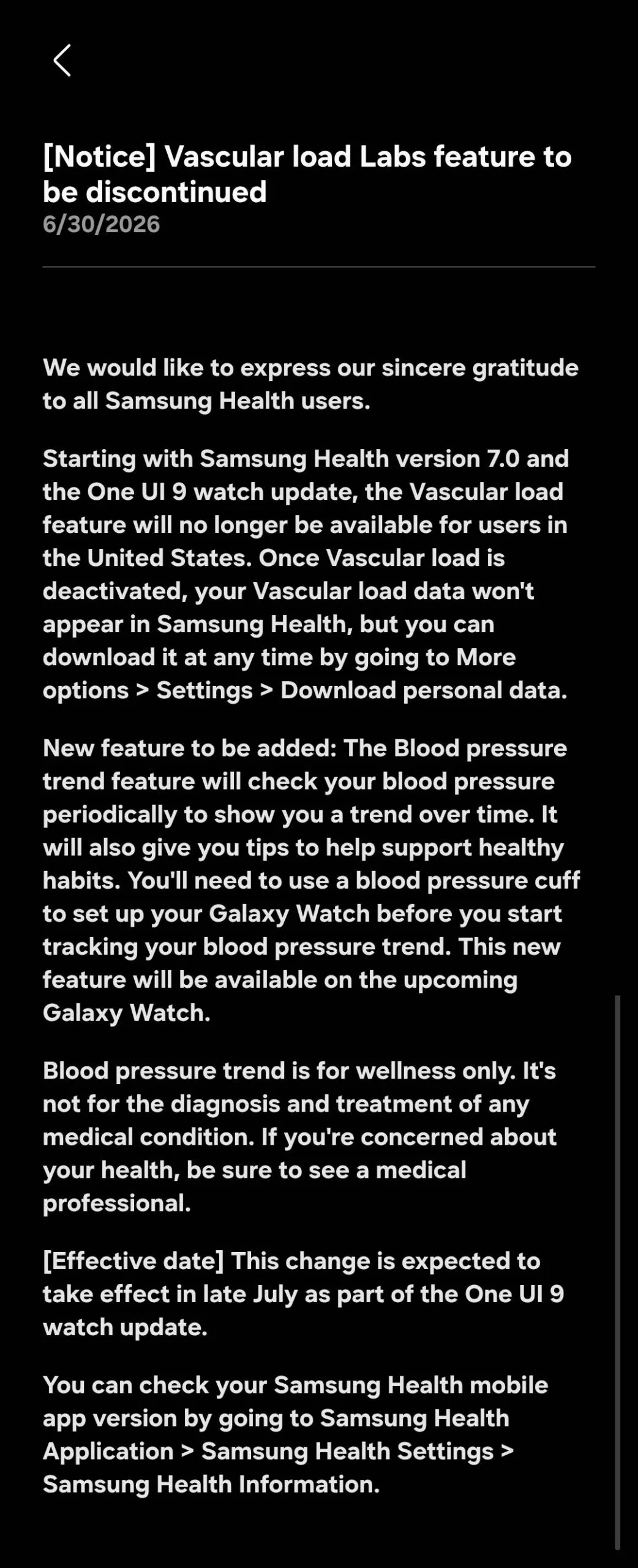
- Samsung is replacing Galaxy Watch Vascular Load with a new Blood Pressure Trend feature requiring a blood pressure cuff for setup.
- The removal is currently US-only, which strongly hints at regulatory considerations rather than a technical decision.
- Samsung only brought blood pressure monitoring to Galaxy Watches in the US earlier this year, making the timing of this change notable.
Table of Contents
What Galaxy Watch Vascular Load Actually Did
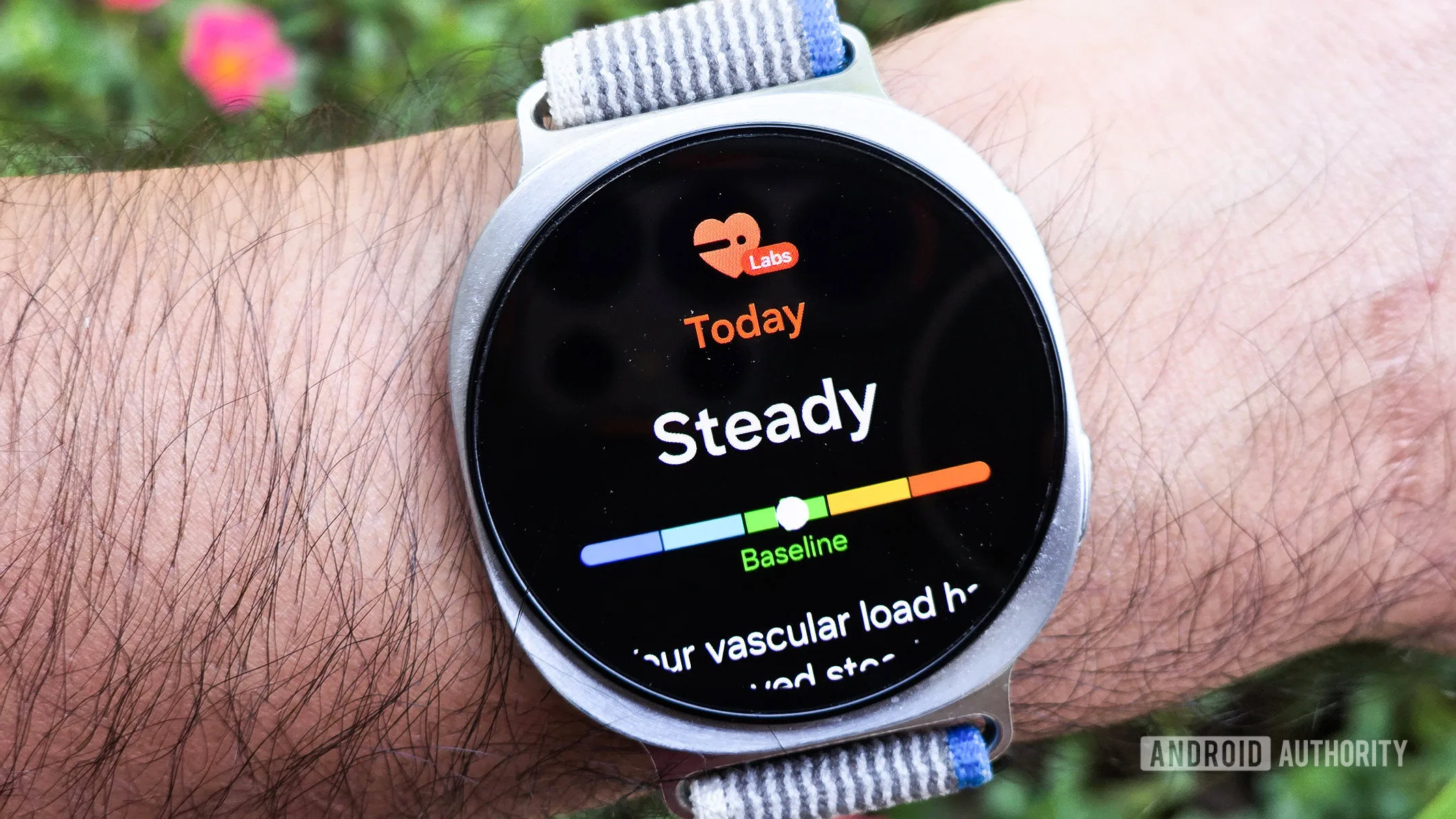
Launched as an experimental capability last year, Galaxy Watch Vascular Load was designed to give users a picture of vascular stress — essentially tracking how hard your blood vessels are working over time. It was the kind of feature that sounds impressive in a spec sheet and genuinely useful in theory, particularly for people monitoring cardiovascular health between doctor visits. Samsung positioned it as part of its broader push to make Galaxy Watches meaningful health companions rather than glorified notification mirrors.
That said, ‘experimental’ was always the operative word. Samsung never made grand clinical claims for Vascular Load, which matters given how closely the FDA watches health-adjacent wearable features in the US market. Users started receiving in-app notifications recently — flagged initially by Samsung-focused community SammyGuru — informing them the feature would disappear entirely with the upcoming software update.
Why the US, and Why Now?
The most telling detail here is geography. Galaxy Watch Vascular Load is only being discontinued in the United States. That’s not a small caveat — it’s almost certainly the biggest clue about why this is happening at all.
The FDA has a complicated relationship with health monitoring features on consumer wearables. Apple learned this firsthand with its ECG feature, which required formal 510(k) clearance before it could appear on Apple Watch in the US market. Samsung has navigated this terrain carefully, sometimes launching features internationally first and bringing them stateside only after regulatory groundwork is laid — or not at all.
What makes the Galaxy Watch Vascular Load situation slightly puzzling is that Samsung’s existing blood pressure monitoring, which came to Galaxy Watches in the US only a few months ago, doesn’t carry FDA clearance either. That feature requires users to re-calibrate against a traditional blood pressure cuff every 28 days — a design choice that arguably keeps it positioned as a wellness tool rather than a medical device, sidestepping the strictest FDA oversight categories. So if blood pressure monitoring cleared that bar without FDA sign-off, why couldn’t Vascular Load? Samsung hasn’t said.
One plausible read: the FDA may be looking more closely at the specific claims or methodology behind Vascular Load specifically, or Samsung may have faced informal guidance that made continuing the feature in the US market more trouble than it’s worth. Another possibility is simpler — Vascular Load may simply be getting retired in every market where Blood Pressure Trend is launching as a replacement, and the US rollout just happens to be announced first.
Galaxy Watch Vascular Load’s Replacement Explained
The incoming Blood Pressure Trend feature is Samsung’s attempt to deliver something arguably more practical for the average user: a longitudinal view of where your blood pressure is heading, rather than a snapshot. Instead of telling you your blood pressure at a given moment, it’s designed to surface patterns — whether readings are creeping upward over weeks, stabilising, or improving.
The setup process mirrors what’s already required for the existing blood pressure feature. You’ll need a traditional blood pressure cuff to calibrate the watch before tracking begins. That’s a minor friction point, but it’s the same trade-off Samsung has already asked users to accept, and it serves a dual purpose: improving accuracy and maintaining the ‘wellness, not medical’ classification that keeps the feature out of FDA device territory.
Samsung says Blood Pressure Trend will also debut on its upcoming Galaxy Watch — almost certainly the Galaxy Watch 8 series expected later this year — which signals the company sees this as a forward-looking flagship capability, not just a consolation feature for users losing Galaxy Watch Vascular Load. The FDA’s evolving digital health guidance will continue to shape exactly how Samsung — and rivals like Apple, Fitbit, and Garmin — can market and position these capabilities in the US.
The Bigger Picture for Wearable Health Tech
Samsung’s situation here reflects a tension every major wearable maker is navigating. There’s massive consumer appetite for health data on the wrist — blood pressure, ECG, blood glucose, even stress indicators — but the regulatory pathway for anything that starts to resemble a medical device is slow, expensive, and uncertain. Companies either invest in the full FDA clearance process (Apple’s approach with ECG and, more recently, its hearing aid feature) or they design around the edges of what counts as a medical claim.
The disappearance of Galaxy Watch Vascular Load from the US, whatever the precise reason, is a reminder that the wearable health features you have today aren’t guaranteed to stick around. Software updates giveth and software updates taketh away — and when a feature sits in contested regulatory territory, users can find themselves on the wrong side of that equation without much warning.
For Samsung, the more interesting question is whether Blood Pressure Trend can become a genuine differentiator. Blood pressure is consistently one of the most requested health metrics users want from wearables, and a long-term trend view addresses a real gap — most people only get their blood pressure measured in a doctor’s office, where the anxiety of the environment can skew readings anyway. If Samsung executes the feature well and the data proves reliable, it could be a meaningful step forward. But execution has to match the ambition, and Samsung’s health features have had a mixed track record when it comes to accuracy that holds up outside controlled conditions.