The vivo X300 FE vs Pixel 10 Pro might sound like a lopsided fight — one is a globally recognised flagship from Google, the other a compact China-market phone most people outside Asia have never touched. But after a month of real-world side-by-side testing, the result isn’t what you’d expect.
Table of Contents
Why the Pixel 10 Pro Is Starting to Feel Like a Disappointment
Google’s Pixel 10 Pro arrived with a lot of goodwill behind it. It shares the same core specifications as the larger Pixel 10 Pro XL — same chip, same cameras, same software — just in a smaller body. For anyone who wanted big-phone power without the unwieldy footprint, it seemed like the obvious choice.
The cracks, though, are hard to ignore. Performance feels middle-of-the-road for a phone at this price point. And increasingly, the promise of a rich, exclusive Android experience — once Pixel’s strongest selling point — feels like it’s been quietly diluted. Features that used to feel special now feel incremental. Meanwhile, competitors haven’t been standing still. The vivo X300 FE vs Pixel 10 Pro dynamic is a useful lens through which to examine exactly how much ground Google has ceded.
What Even Is the Vivo X300 FE?
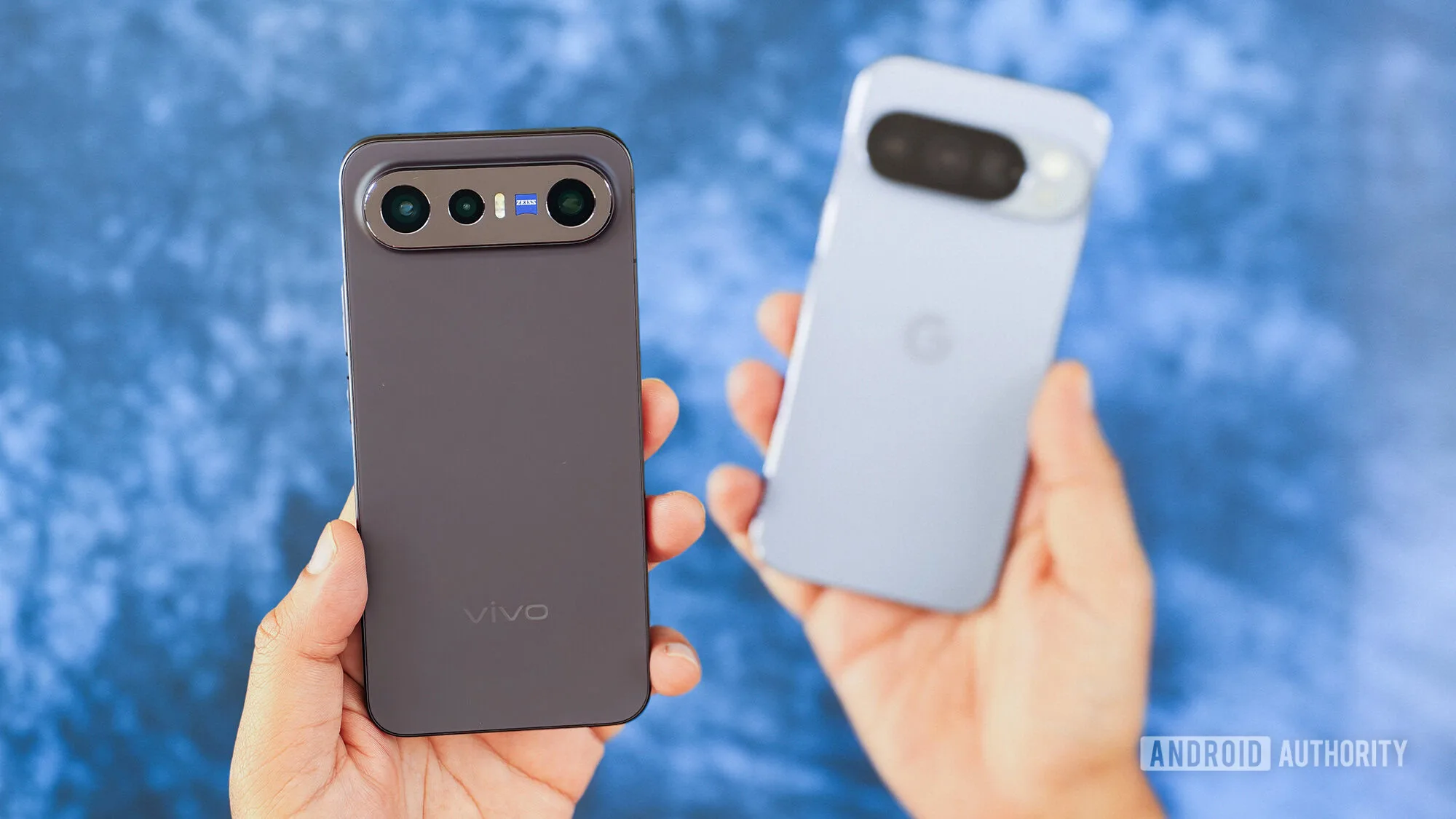
The vivo X300 FE sits in an unusual position. It inherits the camera architecture from vivo’s X300 Pro and X300 Ultra — genuinely impressive hardware — while shrinking into a pocketable form factor. Think of it as the compact distillation of a pro camera system, rather than a cost-cut compromise.
The catch: it’s currently a China-exclusive. You probably can’t walk into a store and buy one. That’s a real limitation, and it’s worth being honest about. But for anyone willing to import, or simply curious about where Android camera hardware is heading, the vivo X300 FE vs Pixel 10 Pro story tells an important story about what Google’s Pixel team is up against.
Vivo X300 FE vs Pixel 10 Pro: What the Cameras Actually Do
On a spec sheet, the Pixel 10 Pro looks competitive. Its primary and ultrawide sensors are technically superior by raw numbers. But specs don’t take photos — tuning does. And this is where the vivo X300 FE vs Pixel 10 Pro comparison gets genuinely interesting.
In standard daylight scenes, the X300 FE captures brighter shadow detail, pulling out texture in darker areas of a frame where the Pixel tends to let things fall into grey murk. Edge sharpness on subjects like flower petals skews noticeably cleaner on the vivo, and colour rendering stays truer to what the eye actually sees. The Pixel has a tendency to add a cool, slightly bluish cast to colours — not unpleasant, but not accurate either.
Both phones support full 50MP capture, and at 1x they’re broadly comparable in sharpness. Push to 5x, and it gets more complicated. The vivo’s optical zoom tops out at 3x, so hitting 5x means digital processing on top — and you can spot the AI reconstruction in jagged edges and over-sharpened textures on close inspection. The Pixel has a native 5x sensor, but its output at that focal length isn’t noticeably cleaner. Neither phone impresses at extreme crop distances. Shooting at full 50MP and cropping manually remains the more reliable approach on both.
The Portrait Gap Nobody Is Talking About
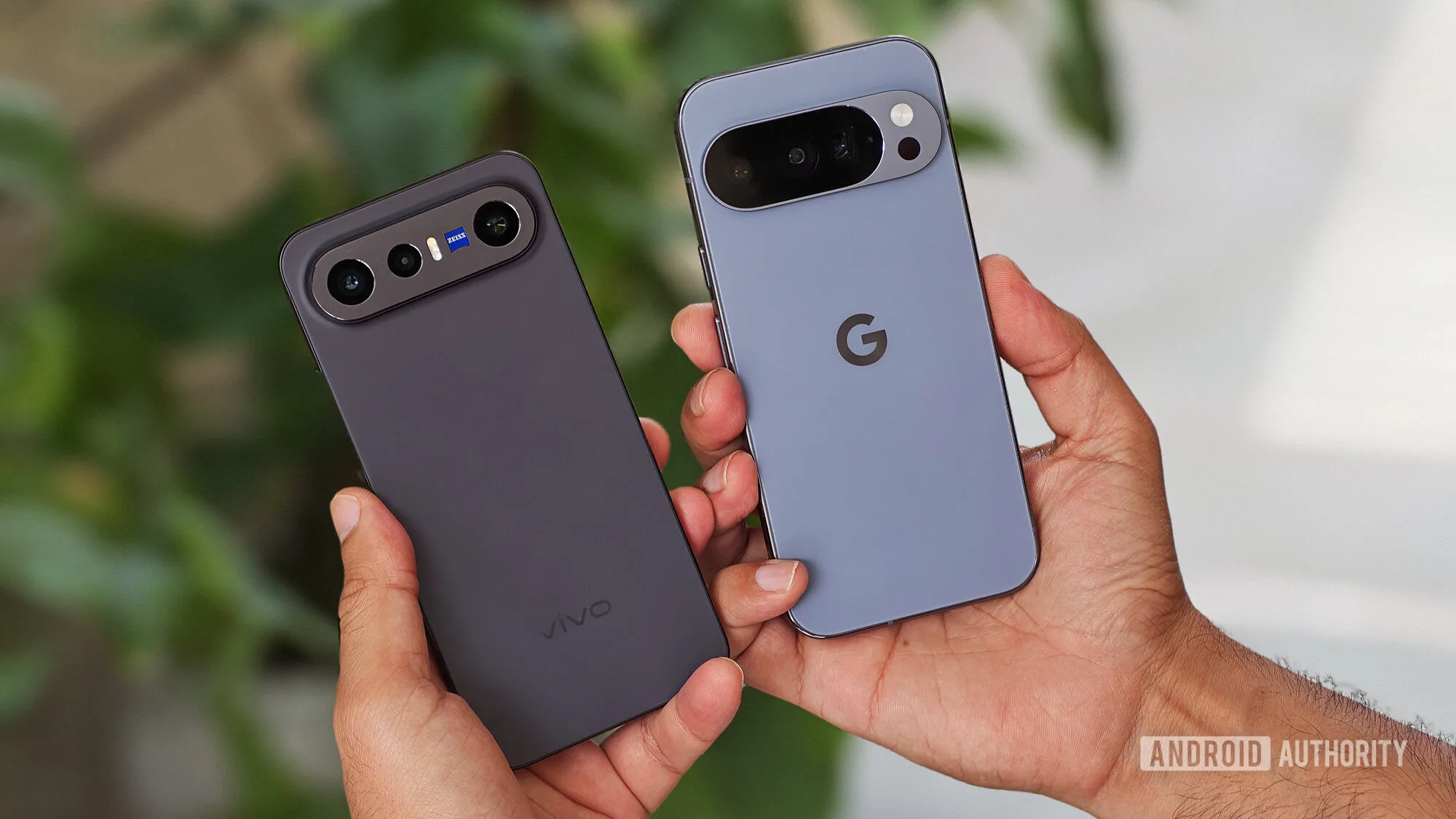
Here’s where things get sharper — literally. In portrait mode, the vivo X300 FE vs Pixel 10 Pro gap becomes particularly visible. The X300 FE does something the Pixel 10 Pro simply doesn’t: it uses the right lens for the job. At 3x, the X300 FE delivers portrait shots with noticeably finer skin texture, natural colour rendering, and a compression that just looks flattering in a way wide-angle portraits rarely do.
The Pixel 10 Pro, by contrast, restricts portrait mode to its primary sensor only. It doesn’t use the 5x telephoto for portraits — a decision that seems baffling given the hardware sitting right there. Even if it did, a 5x portrait would require subjects to stand awkwardly far away, making 3x the more practical sweet spot anyway.
There’s a broader point here about portrait mode philosophy in modern smartphones: the best results come from optical compression at medium telephoto lengths, not from cropping or software simulation. Vivo understands this. Google, seemingly, has made a different call.

Low Light: Where the Pixel’s Advantage Evaporates
Low-light photography is traditionally Pixel territory. Google has spent years refining Night Sight, and the Pixel’s larger sensor should, in theory, capture more light per pixel. Theory and practice diverge here in ways that are hard to dismiss as cherry-picking.
In the vivo X300 FE vs Pixel 10 Pro night mode tests — conducted across multiple scenarios with equivalent exposure times — the vivo consistently produced better-detailed results. In one comparison, the Pixel captured a brighter sky but lost fine detail on a nearby subject. The X300 FE got both. In another, shot in near-darkness with the light source directly in frame, the Pixel struggled to lock focus while the vivo resolved the scene clearly.
The X300 FE does lean on AI reconstruction in some of these shots — there’s visible regeneration on fine text and small surface textures — but it’s producing usable images where the Pixel is producing blurry ones. That’s the more important result. For anyone who shoots frequently after dark, the vivo X300 FE vs Pixel 10 Pro low-light verdict is a genuine surprise.

The Zeiss Extender: A Trick the Pixel Simply Can’t Match
One area where the vivo X300 FE vs Pixel 10 Pro comparison becomes genuinely one-sided is hardware ecosystem. The X300 FE is compatible with the Zeiss Telephoto Extender Gen 2 — a clip-on external lens that pushes the effective focal length to 200mm equivalent. It’s the same accessory that works with the flagship X300 Ultra, and hands-on testing with the X300 Pro reportedly showed it delivering serious reach for a pocket-sized device.
Google has no equivalent accessory ecosystem for Pixel. There’s no official add-on lens, no modular hardware story. For most users that won’t matter. But for photographers who want to occasionally extend their reach — wildlife, sport, architecture — it’s a meaningful differentiator, and one that speaks to how differently vivo and Google are thinking about the Pixel-sized phone.
What This Actually Means for the Android Market
The deeper story here isn’t really about two individual phones. It’s about where the premium Android market is heading. Chinese manufacturers — vivo, Xiaomi, and to a lesser extent OnePlus — have been closing the camera gap with Google for a couple of years. What’s changed recently is that they’re not just closing it, they’re starting to pull ahead in specific, meaningful ways.
Google’s response so far has been to double down on software and the Pixel-exclusive AI feature set. That strategy made sense when the camera hardware lead was unambiguous. It’s a harder sell when the competition is matching or beating Pixel on actual image quality while also shipping more flexible hardware. The vivo X300 FE vs Pixel 10 Pro matchup illustrates that tension more clearly than almost any other pairing in the current market.
Whether the vivo X300 FE ever reaches a global audience at scale is a separate question — and honestly, it might not. But the fact that a compact, camera-focused phone from a brand with limited Western market presence can credibly challenge the Pixel 10 Pro in 2025 says something worth paying attention to. The vivo X300 FE vs Pixel 10 Pro result is a signal that Google’s camera moat is narrower than it used to be, and the Pixel team is going to need more than incremental improvements to widen it again.
Frequently Asked Questions
How does the vivo X300 FE vs Pixel 10 Pro camera performance compare in low light?
In real-world night mode testing, the vivo X300 FE consistently outperformed the Pixel 10 Pro across all lenses tested. Despite the Pixel having a larger primary sensor on paper, it struggled with focus in very low light situations where the X300 FE still resolved detail clearly.
Can you buy the vivo X300 FE outside of China?
The source describes the vivo X300 FE as a phone that most people probably can’t buy, suggesting limited availability. No specific details about regional exclusivity, launch dates, or purchasing options are provided.
What is the Zeiss Telephoto Extender and does it work with the X300 FE?
The Zeiss Telephoto Extender Gen 2 is an external lens accessory that extends the X300 FE’s telephoto to the equivalent of 200mm. It is the smaller of two external lenses that also work with the vivo X300 Ultra, and a colleague previously tested it with the X300 Pro.
Does the Pixel 10 Pro use its 5x telephoto lens for portrait shots?
No. The Pixel 10 Pro limits portrait mode to the primary sensor, leaving the 5x telephoto unused for portraits. This restricts flexibility compared to the vivo X300 FE, which uses its 3x telephoto for portraits with notably sharp results.