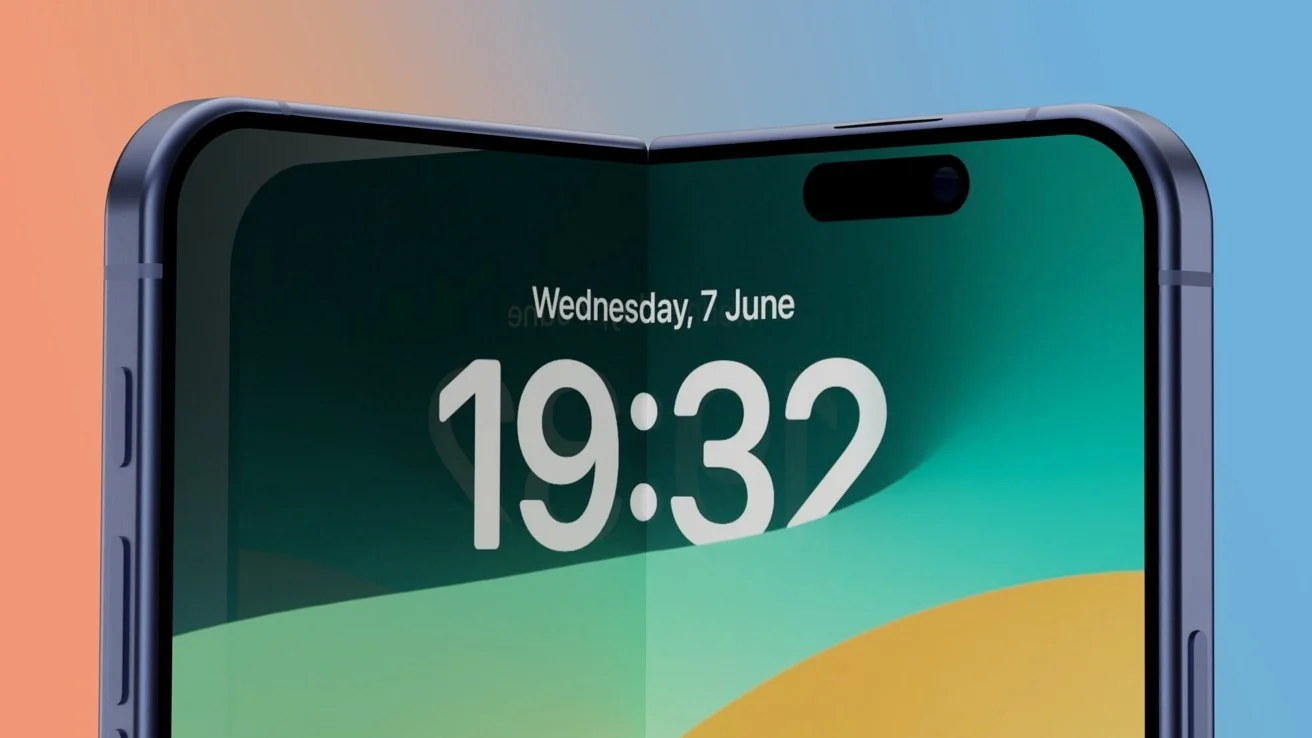
Reports from Korea indicate that Apple will rely exclusively on Samsung Display for its foldable OLED panels over the next three years. That is a notable departure from Apple’s usual multi-vendor strategy. The company commonly divides component orders among suppliers, a practice that can strengthen its negotiating position while reducing exposure if one manufacturer encounters production trouble.
For a first foldable iPhone, however, the priorities appear different. Apple seems prepared to trade some sourcing flexibility for consistency and technical maturity. A foldable display is not simply a conventional phone panel that bends in the middle. It has to perform under repeated movement while meeting the visual expectations attached to an iPhone. The screen, its protective layers, the hinge area and the surrounding hardware all have to work as one system.
That makes a single supplier less surprising than it first sounds. When the part at issue is central to the product’s identity, variation between suppliers can create difficult calibration work and uneven results. Apple’s decision, if the reports prove accurate, suggests that it sees Samsung Display’s experience as more valuable at this stage than the cost and supply-chain advantages that come with splitting orders.
Samsung Display remains the most experienced manufacturer in foldable panels, having supported devices across the Samsung Electronics ecosystem for years. That experience matters because foldables are still judged on a handful of visible, practical questions: how noticeable the crease is, whether the display feels durable in everyday use, how it holds up over time, and whether the device introduces compromises that conventional phones do not demand.
Those concerns help explain why foldables have drawn interest without yet becoming an automatic choice for mainstream buyers. The appeal is obvious: a device that changes shape can offer a larger working or viewing area without permanently increasing the phone’s footprint. The harder part is convincing buyers that the folding mechanism and flexible display will remain dependable long after the novelty wears off. Apple’s reported supply choice reads as an attempt to address that harder part before asking customers to accept a new form factor.
Table of Contents
Why Apple Chose a Single Supplier
The decision to standardize foldable iPhone screens around one supplier reflects both technical and strategic considerations. In a mature phone category, Apple has built much of its reputation on making hardware feel predictable: displays should look consistent, software should behave consistently, and the physical product should avoid feeling like an unfinished experiment. A foldable iPhone would face a tougher version of that test. Customers will compare it not only with existing foldables, but with the established expectations of the iPhone lineup.
Industry sources suggest that production could begin in the second quarter, with initial shipments reaching around three million units. That volume points to a controlled but confident rollout rather than an experimental release. It is large enough to signal real commercial intent, yet it does not imply that Apple is trying to force immediate mass-market scale before the product has found its place in the lineup.
There is discipline in that approach. Foldable devices involve more variables than a familiar slab-style phone, from display yield to physical assembly and the way software uses an expanded screen. Starting with proven manufacturing capabilities gives Apple room to focus on those details instead of asking an emerging supply base to solve them at the same time. It also gives the company a clearer line of responsibility if quality issues arise.
Apple appears to be aligning its hardware roadmap with proven manufacturing capabilities rather than pushing aggressive scale from day one. This also allows tighter optimization between hardware and software, which is central to Apple’s product philosophy. A folding screen creates obvious software questions: which interfaces benefit from extra space, when an app should change layout, and how the device should behave as it opens or closes. Hardware and software integration cannot erase a poor display, but it can determine whether the larger canvas feels useful rather than merely impressive in a product demonstration.
The display technology itself reinforces this direction. Apple is expected to use CoE, or Color on Encapsulation, which removes the need for a polarizer layer. In simple terms, eliminating a layer can help reduce the stack of materials needed for the panel. That is particularly relevant in a foldable design, where internal space is constrained and every layer has consequences for thickness, movement and the room left for the rest of the device.
CoE reduces panel thickness and improves power efficiency, both critical for foldable designs where internal space is constrained. Thinness is not just an aesthetic concern here. A device that folds must account for the display on both sides of its bend, and added bulk can quickly make a larger form factor feel awkward when closed. Power efficiency matters for much the same reason: a bigger or more complex display system puts pressure on the overall design.
In addition, Samsung’s M14 luminescent material may be used to enhance brightness and energy performance. The combination of CoE and M14 points to a familiar Apple instinct: focus on the less glamorous engineering decisions that shape day-to-day use. These choices suggest Apple is focusing on refinement rather than novelty. The goal is to match or exceed the display quality seen in flagship devices like the iPhone Pro lineup while adapting to a foldable form factor.
Market Impact and Launch Outlook
The foldable iPhone screens strategy also carries broader implications for the smartphone market. Apple’s entry is expected to validate the foldable category, which has seen steady growth but limited mainstream adoption. That does not mean an Apple foldable would automatically settle the category’s open questions. Durability and price remain concerns for consumers, and neither is solved simply by attaching a familiar logo to a new type of device.
Still, Apple’s involvement would change the conversation. Competitors have already explored multiple form factors, yet the category has often been defined by the trade-offs required to make those forms possible. Apple’s controlled approach may help address those concerns by emphasizing reliability and long-term usability over experimentation. If it can deliver a foldable that feels as considered as its conventional phones, the pressure on rivals will be less about being first and more about being dependable.
Reports point to a possible September launch window, potentially alongside future Pro models. The timing would place the device within Apple’s established high-end product conversation rather than presenting it as an isolated side project. That framing matters. A foldable positioned near future Pro models would invite direct comparison on display quality, performance expectations and the coherence of the overall experience.
While the final branding remains uncertain, with names like iPhone Fold or iPhone Ultra under consideration, the direction is clear. Apple is no longer observing from the sidelines. Instead, it is preparing a calculated entry backed by a stable supply chain and mature display technology.
From our editorial perspective at SquaredTech.co, this is the more interesting part of the story. Apple does not appear to be treating foldability as a novelty feature in search of a purpose. The reported Samsung Display arrangement suggests that the company is trying to remove the category’s most obvious weaknesses before it asks buyers to embrace its strengths.
Foldable devices are shifting from niche innovation to a structured product category. Apple’s involvement will likely accelerate this shift, setting new expectations for design consistency, display quality, and ecosystem integration in the next phase of smartphone evolution. The real test will not be whether a foldable iPhone can attract attention. It will be whether Apple can make the form factor feel ordinary in the best sense: reliable enough that buyers stop thinking about the fold and start thinking about what the device lets them do.