Table of Contents
As editors at Squaredtech.co, we dissect foldable phone trends and their market realities. Samsung Galaxy Z TriFold offers a final buying window on April 10, 2026. This limited restock targets enthusiasts willing to pay nearly $3,000 for a tri-fold pioneer. Samsung launched the device earlier this year, priced at $2,900. Demand proved low, leading to discontinuation after three months. Reports indicate Samsung clears remaining inventory now. We break down the device’s specs, sales history, design innovations, and why this last chance matters for collectors and tech fans.
Samsung Galaxy Z TriFold: Final Sale Details and Access
Samsung Galaxy Z TriFold hits US shelves one last time this Friday. Buyers visit Samsung’s official page for the device. A countdown timer tracks availability. Stock arrives April 10, likely in small batches. Previous drops sold out fast, per Android Police reports. Samsung ends sales permanently after this shipment. The phone carries a $2,900 sticker, unchanged from launch.
This restock follows quick discontinuation. Samsung debuted Galaxy Z TriFold in early 2026. Retail sales began shortly after CES 2026 demos. Units vanished from stores within three months. Low volume defined the rollout from the start. Samsung limited production to test tri-fold viability. Buyers needed luck to secure one. Now, Samsung Galaxy Z TriFold gives stragglers a shot at ownership.
Family plans or carrier deals do not apply here. Direct purchase from Samsung rules. Premium perks like extended warranty come standard. Shipping reaches US addresses within days of order. International fans face hurdles; US exclusivity persists. From our analysis, this scarcity boosts collector appeal. Resale values already climb on secondary markets like eBay.
Samsung Galaxy Z TriFold demands serious cash. Base models pack 512GB storage and 16GB RAM. Colors include Phantom Black and Silver Shadow. No trade-ins sweeten the deal. Buyers commit fully to this experimental foldable.
Samsung Galaxy Z TriFold: Design, Features, and Hands-On Insights
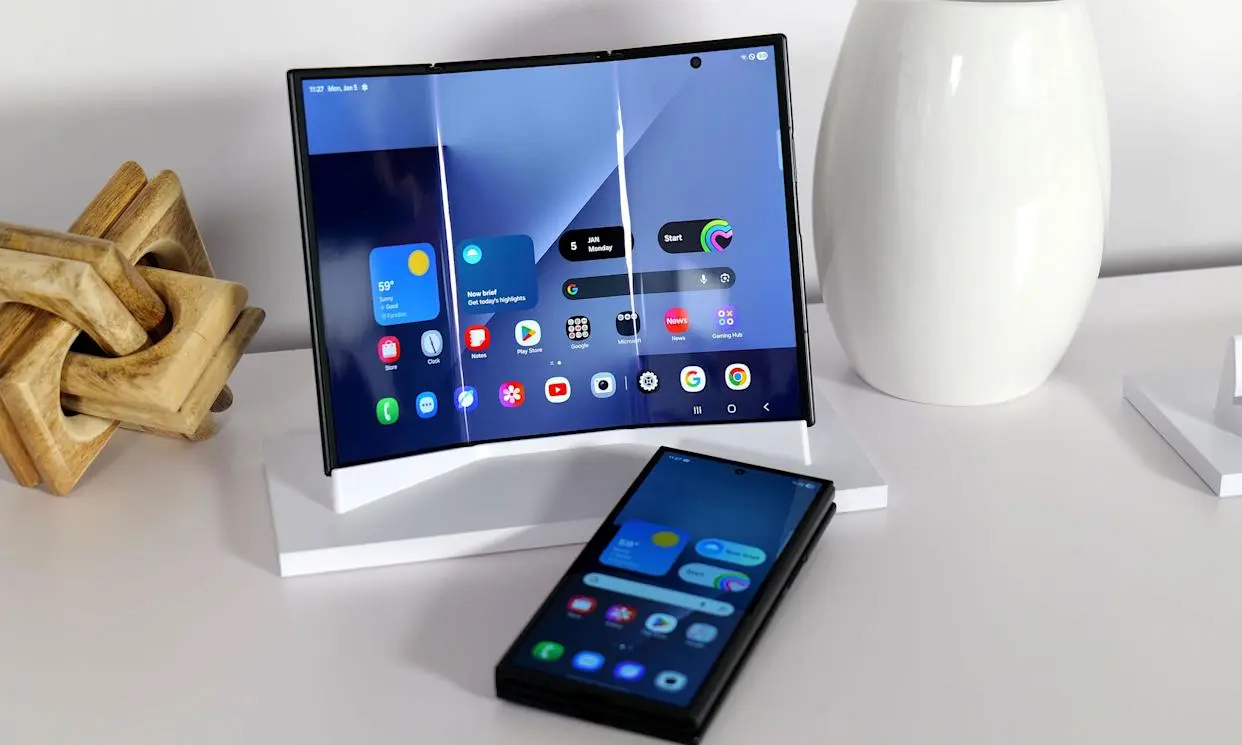
Samsung Galaxy Z TriFold redefines folding screens. It unfolds into a 9.9-inch tablet-like display from a compact phone form. Three hinges enable tri-fold action. The inner screen measures 9.9 inches at full extension. Outer cover display hits 6.5 inches for quick checks. Users fold it once for a 6.8-inch dual-screen mode or fully for phone size.
Hinges use advanced materials for smooth operation. Samsung engineers tested over 200,000 cycles. Flexing demonstrates durability in hands-on sessions at CES 2026. The device weighs 260 grams, lighter than expected for its size. IPX8 water resistance protects against spills. S Pen support adds productivity; stylus docks magnetically.
Power comes from Snapdragon 8 Gen 4 chip. It handles multitasking across screens seamlessly. Battery capacity reaches 4,500mAh with 45W charging. Cameras include a 200MP main sensor, 12MP ultrawide, and 10MP telephoto. Selfies use a 40MP under-display front cam. Software runs One UI 7 based on Android 16, optimized for multi-panel use.
Our CES 2026 hands-on revealed strengths. Flexing feels natural; screens align perfectly. Multitasking shines with three apps open side-by-side. Video calls span panels for immersive views. Gaming leverages the large canvas without lag. Yet the $2,900 price raises questions. Single foldables like Galaxy Z Fold 7 cost half as much with similar power.
Samsung Galaxy Z TriFold balances ambition and practicality. It shrinks tablets into pockets while offering expansive views. Drawbacks include crease visibility and high repair costs. Samsung warranties cover one year, but hinge fixes exceed $1,000 post-warranty.
Samsung Galaxy Z TriFold: Sales Struggles and Market Analysis
Samsung Galaxy Z TriFold faced profit woes from day one. South Korean outlet Dong-A Ilbo reports minimal margins. High production costs stemmed from complex hinges and custom screens. Samsung produced limited units, avoiding mass losses. Each batch sold out, but total volume stayed low. Discontinuation hit three months post-launch.
Market dynamics explain the flop. Foldables represent under 5 percent of global smartphone sales in 2026. Consumers prefer slabs under $1,000. Galaxy Z TriFold targeted ultra-premium niches like executives and gadget collectors. Competitors like Huawei’s tri-fold prototypes lag in availability. Oppo and Vivo test similar designs in Asia.
Samsung tests waters with Galaxy Z TriFold. Success metrics focus on tech validation over revenue. Data informs future mass-market tri-folds, perhaps by 2028. Patent filings show ongoing hinge refinements. Analysts predict price drops as yields improve.
From Squaredtech.co’s lens, Galaxy Z TriFold signals caution. Samsung dominates foldables with 60 percent market share via Z Fold and Flip lines. Tri-folds risk cannibalizing those hits. Low profits deter scaling. Yet innovation persists; CES demos wowed crowds.
This final sale cements legacy status. Owners gain a piece of foldable history. Resale potential soars as stock dries up. Tech enthusiasts debate its place beside early Motorola Razrs or Surface Duos.
Samsung Galaxy Z TriFold vanishes after April 10. Act fast if $2,900 fits your budget. Bookmark the page and watch the countdown. Squaredtech.co will track foldable evolutions ahead.
Stay Updated: Gadgets