

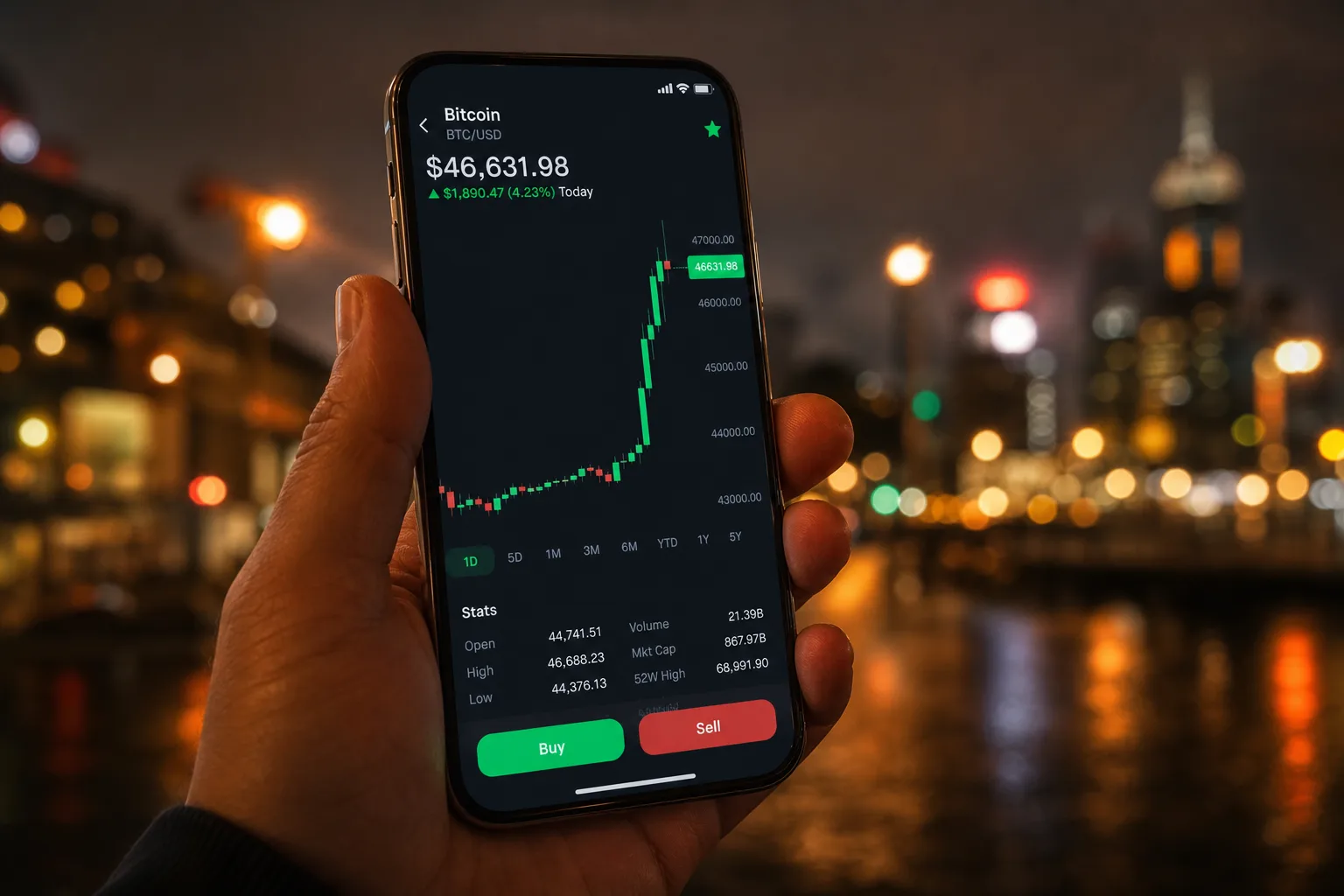
- The Bitcoin relief rally pushed BTC back above $63,000 after weeks of heavy selling pressure across crypto markets.
- Analysts describe the Bitcoin relief rally as an oversold bounce rather than a confirmed start of a new bull run.
- South Korea’s KOSPI index dropped roughly 8%, one of its sharpest single-day falls in recent memory.
- Presto analyst Min Jung says the KOSPI crash may have nudged crypto sentiment, but wasn’t the primary driver.
Table of Contents
The Bitcoin Relief Rally Everyone Was Waiting For
The Bitcoin relief rally that traders had been pencilling in for weeks finally arrived, lifting BTC back above the $63,000 mark after a punishing stretch of selling that left the asset looking technically battered. It wasn’t a moon shot — but it didn’t need to be. After the kind of relentless downward pressure that drains both retail confidence and leveraged positions, even a sharp bounce back to familiar ground is enough to reset the conversation.
The move was widely characterised by analysts as an ‘oversold relief rally’ — market shorthand for what happens when an asset has been sold so aggressively, and so indiscriminately, that buyers start to see value again. It’s not conviction buying. It’s more like the market catching its breath. And that distinction matters enormously for anyone trying to figure out whether $63,000 is a floor or just a pit stop on the way back down.
To understand why this Bitcoin relief rally happened when it did, you have to look at the technical picture that had been building over the past several weeks. Bitcoin’s Relative Strength Index — the momentum indicator traders use to gauge whether an asset is overbought or oversold — had been flashing warning signals deep in oversold territory. When RSI readings get that low for long enough, it tends to attract short-term traders looking for a quick snapback. That’s exactly what appears to have happened here.
What the KOSPI Plunge Has to Do With It
Happening almost simultaneously, South Korea’s benchmark equity index — the KOSPI — suffered one of its most dramatic single-session selloffs in years, shedding around 8% in what can only be described as a brutal day for Korean investors. That kind of equity market shock has a way of rippling outward, particularly into assets that attract retail participation — and crypto, with its massive South Korean retail base, sits squarely in that frame.
So did the KOSPI crash fuel the Bitcoin relief rally? It’s an intriguing question, and the honest answer is: a bit, but probably not as much as the timing implies. Presto Research analyst Min Jung addressed this directly, telling The Block that while the KOSPI’s crash ‘may have had some impact on bitcoin’s recovery,’ it was ‘not substantially’ responsible for the move. That’s a careful, precise read — and it aligns with what we know about how Korean equity shocks typically filter into crypto markets.
The mechanism, when it does exist, usually works like this: a sharp drop in Korean equities forces some retail participants to liquidate crypto holdings to cover losses or margin calls elsewhere, which adds selling pressure to BTC. Conversely, when the initial shock stabilises, some of that freed capital can rotate back. It’s a secondary effect at best — not the primary driver of a multi-thousand-dollar Bitcoin relief rally.
Reading the Room: Oversold Bounce or Something More?
Here’s the critical question that every crypto investor is sitting with right now: is this Bitcoin relief rally the beginning of a genuine recovery, or is it just a dead-cat bounce dressed up in technical language?
The honest answer is that nobody knows yet — and anyone who tells you otherwise is selling something. What we do know is that relief rallies born out of oversold conditions have a mixed track record. Sometimes they mark the exact bottom and transition cleanly into a sustained uptrend. Other times, they’re a brief exhale before the market rolls over and tests new lows. The difference usually comes down to whether the underlying selling pressure — macro headwinds, regulatory uncertainty, ETF outflows, whatever the proximate cause was — has actually resolved or merely paused.
In bitcoin’s case right now, the macro backdrop remains genuinely complicated. Interest rate expectations continue to shift. Spot Bitcoin ETF flows in the US have been inconsistent, with some sessions seeing notable outflows from products like those managed by major asset managers. And broader risk appetite across global markets — as illustrated vividly by the KOSPI’s 8% drop — is far from settled.
That said, the fact that buyers showed up at all in sufficient size to push BTC back through $63,000 isn’t nothing. It suggests there’s a baseline of demand that’s willing to absorb selling at these levels. Whether that demand can sustain a move meaningfully higher is the next test for this Bitcoin relief rally.
The Bigger Picture: Crypto and Global Markets Are More Entangled Than Ever
One of the more interesting subplots in the KOSPI-bitcoin story is what it reveals about how deeply crypto has become entangled with traditional financial markets. This wasn’t always the case. In bitcoin’s early years, the asset moved almost entirely on its own internal logic — adoption narratives, halving cycles, exchange hacks. Global equity markets were largely irrelevant.
That’s changed substantially. The arrival of institutional money — through spot ETFs, corporate treasury allocations, and derivatives markets — has tightened the correlation between bitcoin and broader risk assets. When equity markets panic, crypto often gets caught in the crossfire, not because of any fundamental connection, but because the same investors hold both. When those investors need liquidity, everything gets sold.
South Korea is a particularly vivid example of this dynamic. The country has one of the highest rates of crypto ownership per capita in the world, and Korean retail traders are historically active and reactive. A sudden 8% drop in the KOSPI doesn’t just hurt stock portfolios — it changes the mood of an investor class that’s also holding significant bitcoin and altcoin positions. Even if the direct capital flows are modest, the sentiment contagion can be real, and it can shape the conditions that either sustain or undermine a Bitcoin relief rally in the days that follow.
What Comes Next for Bitcoin
The immediate question for the market is whether this Bitcoin relief rally has legs. Technically, holding above $63,000 with meaningful volume would be an encouraging sign — it would suggest that buyers aren’t just stepping in for a quick flip but are prepared to defend the level. A failure to hold, on the other hand, would likely reignite fears that the broader correction isn’t finished.
Beyond the short-term price action, the more important story is the macro environment that bitcoin has to navigate over the coming weeks. Central bank policy signals, the pace of ETF inflows, and the stability of global equity markets — particularly in Asia — will all shape whether this bounce turns into something more durable or fades into the noise of a choppy market.
The KOSPI’s sharp decline is a reminder that the risks to global risk appetite haven’t disappeared. And until they do, bitcoin’s path higher is likely to remain uneven — punctuated by exactly these kinds of sharp, sentiment-driven bounces that feel significant in the moment but need to be validated by what comes next.
Frequently Asked Questions
What triggered the Bitcoin relief rally above $63,000?
The Bitcoin relief rally was largely driven by oversold technical conditions after a prolonged selloff. Analysts at Presto suggest it was a natural bounce from suppressed price levels rather than a single macro catalyst, though broader market turbulence including South Korea’s KOSPI crash may have played a minor supporting role.
Is the Bitcoin relief rally a sign the bull market is back?
Most analysts are cautious about calling it a trend reversal. An oversold relief rally typically reflects short-term buying pressure after extreme selling, not a fundamental shift in market direction. Traders should watch whether BTC can hold above $63,000 with sustained volume before drawing bigger conclusions.
How did South Korea’s KOSPI crash affect crypto prices?
According to Presto’s Min Jung, the KOSPI’s crash may have had some impact on bitcoin’s recovery, but not substantially. The correlation between Korean equity market shocks and crypto movements exists but tends to be modest unless the macro disruption is severe and prolonged.
What does ‘oversold’ mean in the context of Bitcoin?
An oversold condition occurs when an asset has been sold down so aggressively that technical indicators — like the Relative Strength Index (RSI) — signal that selling may be exhausted. This often prompts short-term buyers to step in, producing a relief rally that doesn’t necessarily reflect improving fundamentals.

