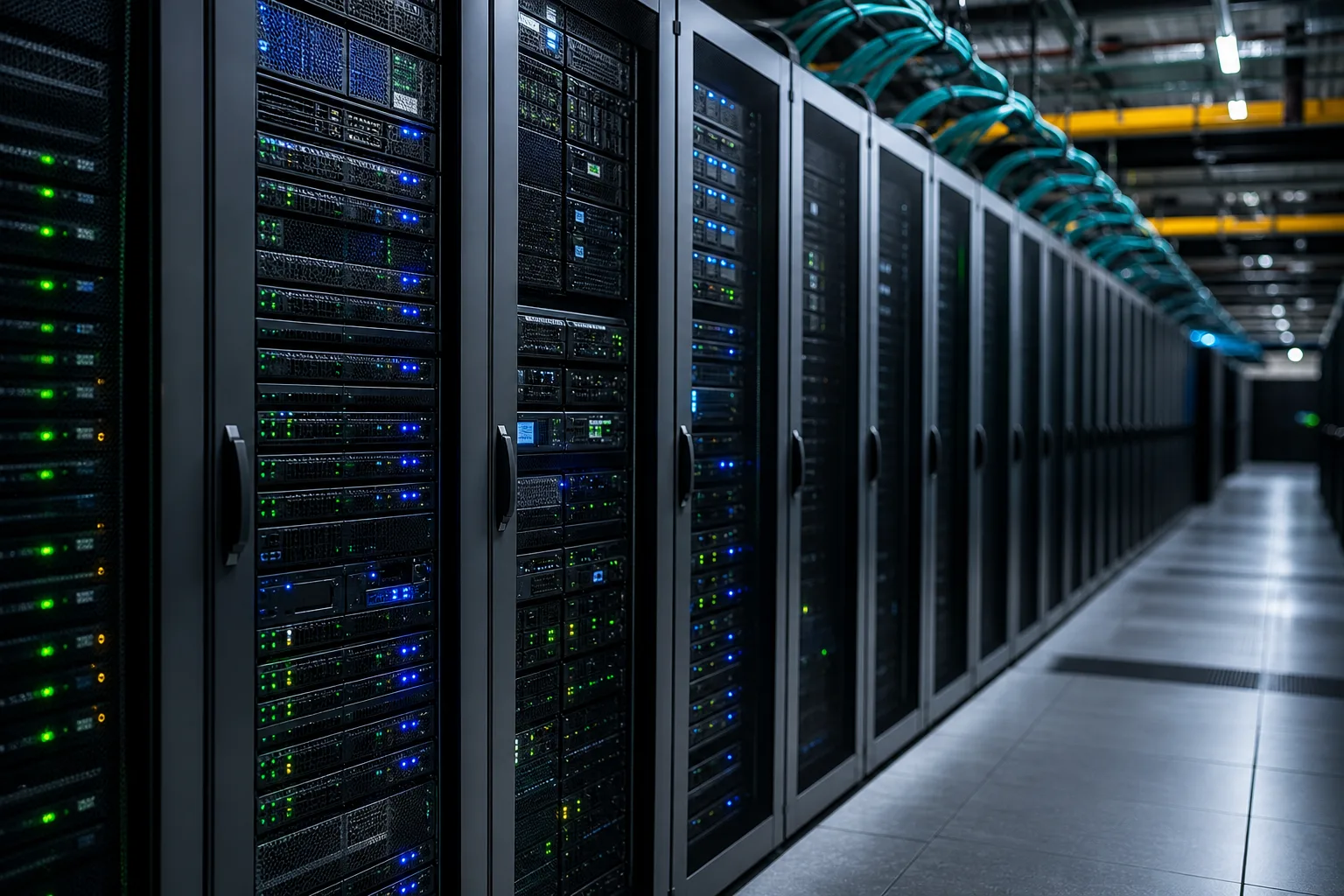
When InstaDeep — the AI research firm that BioNTech acquired — needed to stop fighting its own infrastructure and get back to doing actual science, it turned to Dell AI Factory with NVIDIA. The result, the company says, was a measurable improvement in how its R&D teams operate day to day. It’s a case study that tells you a lot about where serious AI development is heading.
- InstaDeep deployed Dell AI Factory with NVIDIA to reduce bottlenecks across its core AI research and development pipeline.
- Dell AI Factory gave InstaDeep faster model iteration cycles, letting researchers spend more time on science and less on infrastructure.
- The partnership reflects a broader enterprise shift toward tightly integrated hardware and software stacks for serious AI workloads.
- InstaDeep’s experience shows that off-the-shelf cloud compute alone often can’t meet the demands of frontier AI research teams.
Table of Contents
What Dell AI Factory Actually Is
Dell AI Factory is Dell Technologies’ answer to a problem that’s been quietly frustrating enterprise AI teams for years: the gap between buying powerful hardware and actually running productive AI workloads on it. The platform bundles Dell’s PowerEdge servers and storage with NVIDIA GPUs — typically H100s or A100s — along with NVIDIA’s networking fabric and software stack, all pre-validated to work together. The pitch is simple: instead of spending weeks integrating components and debugging mismatches, you get a stack that’s already been tested end-to-end.
That matters more than it might sound. Anyone who’s watched a well-funded AI team lose weeks to driver conflicts, storage bottlenecks, or networking misconfiguration knows that raw GPU count isn’t the whole story. Dell AI Factory is trying to collapse that integration tax down to something manageable. And for a company like InstaDeep, which operates at the frontier of biological sequence modelling and decision-making AI, that kind of operational smoothness isn’t a nice-to-have — it’s a competitive necessity.
InstaDeep’s Infrastructure Challenge
InstaDeep’s work spans some genuinely demanding AI territory. The company builds systems for drug discovery, genomics, and logistics optimisation — domains where models are large, training runs are long, and the cost of a wasted compute cycle compounds quickly. Before adopting Dell AI Factory, the friction in their R&D pipeline was showing up in the places it hurts most: slower iteration, more time spent on infrastructure management, and researchers doing work that shouldn’t be their job.
This isn’t an unusual story. Talk to the engineering leads at any mid-to-large AI research shop and you’ll hear a version of it. The public cloud promised to make this all someone else’s problem, and for many workloads it does. But at the scale and specialisation that frontier AI research demands, cloud compute has real limits — cost volatility, GPU availability squeezes (anyone trying to reserve H100 capacity in 2023 knows exactly what that felt like), and the latency overhead that comes from pushing large datasets across someone else’s network.
On-premises or co-located infrastructure built around a validated platform like Dell AI Factory starts to look a lot more attractive when you’re running the kind of workloads InstaDeep runs. The trade-off is upfront capital expenditure versus operational predictability, and for InstaDeep, the calculus clearly came down on the side of owning the stack.
Dell AI Factory in Practice: What Changed
After deploying Dell AI Factory with NVIDIA, InstaDeep reported tangible improvements in both the speed of its research cycles and the smoothness of its internal processes. Model iteration got faster. The infrastructure management burden on research teams dropped. And crucially, the people who should be thinking about AI architecture were able to actually do that, rather than triaging compute problems.
There’s a specific dynamic worth paying attention to here. AI research organisations often have a split between the people who build and train models and the people who manage the infrastructure those models run on. When the infrastructure is fragile or poorly integrated, that boundary blurs — researchers end up doing ops work, and ops teams end up making decisions that affect model quality. A stable, well-integrated platform like Dell AI Factory helps restore that separation. It’s not glamorous, but it’s the kind of thing that compounds over months into a real productivity advantage.
InstaDeep also benefits from NVIDIA’s software ecosystem — including frameworks like CUDA and tools that sit on top of it — being properly optimised for the underlying hardware. That optimisation doesn’t happen automatically when you assemble a system from parts; it’s baked into what Dell and NVIDIA ship together as a validated stack.
The Bigger Picture: Enterprise AI Is Getting Serious About Infrastructure
InstaDeep’s adoption of Dell AI Factory fits into a pattern that’s been accelerating across the enterprise AI landscape over the past 18 months. Companies that started their AI journeys on public cloud — attracted by the low barrier to entry and the ability to scale on demand — are increasingly asking harder questions about cost, control, and long-term performance as their workloads mature.
That’s created an opening for platform plays like Dell AI Factory. Dell isn’t the only one pursuing this angle: HPE has its own AI-optimised systems, and vendors like Supermicro have been growing fast on the back of demand for NVIDIA-powered rack infrastructure. But Dell brings something that pure-play hardware vendors can’t always match: enterprise relationships, support infrastructure, and the credibility that comes from being a vendor that large organisations have trusted for decades.
The NVIDIA angle is equally important. NVIDIA’s dominance in AI training hardware means that any serious enterprise AI platform needs to be tightly coupled with NVIDIA’s ecosystem to be credible. Dell AI Factory is, by design, exactly that.
What InstaDeep’s experience illustrates is that the infrastructure layer of AI is becoming a strategic differentiator, not just a commodity input. The teams that get this right — who build or buy infrastructure that actually matches the demands of their research — move faster, waste less, and ultimately produce better science. Those that treat compute as an afterthought keep finding out the hard way that GPUs alone don’t make an AI team productive.
What This Means Going Forward
For InstaDeep, the next chapter involves continuing to push the boundaries of biological AI — an area where BioNTech’s backing gives the company both resources and a clear application domain in drug discovery and vaccine development. Having infrastructure that doesn’t slow that work down isn’t a minor operational detail; it’s foundational to executing on that ambition.
More broadly, the InstaDeep-Dell story is a preview of how the enterprise AI market is maturing. The era of ‘just spin up some cloud instances and see what happens’ is giving way to something more deliberate: organisations making considered bets on integrated, validated infrastructure stacks that can carry serious AI workloads reliably over years, not just experiments over weeks. Dell AI Factory, with InstaDeep as one of its more technically demanding reference customers, is positioning itself as the answer to that demand. Whether the wider market agrees will show up in Dell’s data centre revenue numbers over the next few quarters — and those are worth watching.
Frequently Asked Questions
What is Dell AI Factory and what does it include?
Dell AI Factory is Dell Technologies’ integrated platform combining Dell’s server and storage hardware with NVIDIA GPUs, networking, and AI software. It’s designed to give enterprises a validated, end-to-end stack for training and deploying AI models without having to piece together components from multiple vendors.
How did Dell AI Factory benefit InstaDeep’s research workflow?
InstaDeep reported smoother internal processes and faster R&D cycles after adopting Dell AI Factory with NVIDIA. The tightly integrated infrastructure reduced the operational overhead that typically slows AI research teams, letting scientists focus on model development rather than managing compute bottlenecks.
Why do AI research companies move away from public cloud for model training?
Public cloud offers flexibility but can be expensive and unpredictable at scale. For teams running long, compute-intensive training jobs, on-premises or co-located infrastructure built on platforms like Dell AI Factory often delivers better cost control, lower latency, and more consistent GPU availability.
Who is InstaDeep and what kind of AI work do they do?
InstaDeep is an AI research company that was acquired by BioNTech. The company specialises in decision-making AI and biological sequence modelling, working on applications that range from logistics optimisation to genomics and drug discovery.