

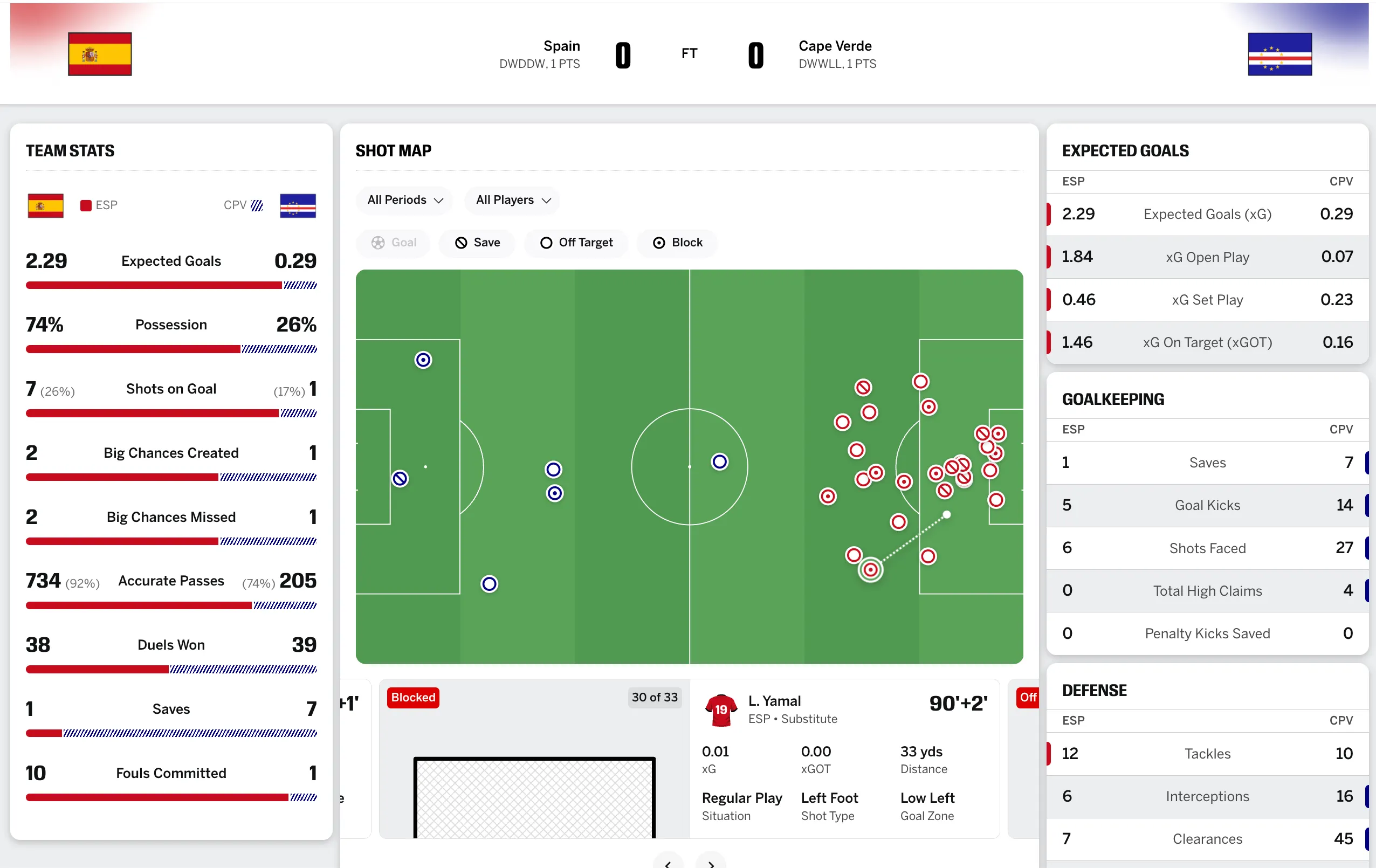
A single Polymarket bet placed on Spain to beat Cape Verde at the 2026 FIFA World Cup has become one of the most-discussed wagers in prediction market history — not because it won, but because it lost everything. One million dollars, gone, on a match that almost nobody expected Spain to drop.
- A Polymarket bet of $1M on Spain to beat Cape Verde at the 2026 World Cup ended in a total loss.
- A contrarian Polymarket bet of $400K on Spain not to win paid out an extraordinary $4.7M to user ‘fishalive’.
- The Spain upset illustrates how prediction markets brutally punish overconfident wagers on heavy favourites.
- Polymarket’s public, on-chain transparency means every massive win and loss plays out in real time for all to see.
Table of Contents
The Polymarket Bet That Went Very Wrong
On June 15, 2026, an anonymous trader put $1 million on Spain to beat Cape Verde in their World Cup group stage opener. The logic seemed airtight. Spain were heavy favourites going into the tournament. The Polymarket bet’s total payout would have been $1,085,943.48 — a return of roughly 8.6% on a supposedly nailed-on result. Boring, safe, almost mechanical.
Spain lost.
The reaction online was instant. @Tyler_Did_It put it bluntly on X: ‘Anytime you can bet $1M to win $85k you do it 🤣’ — the kind of sarcasm that only lands because it’s also genuinely true. That risk-reward ratio is brutal in hindsight, but in the moment it looked like free money. That’s the trap.

How ‘Fishalive’ Turned $400K Into $4.7 Million
While the million-dollar loser was getting torched on social media, a trader going by the handle ‘fishalive’ was quietly collecting a life-changing sum. Fishalive had placed a $400,000 Polymarket bet on Spain not to win the match — at 9% odds. That’s a position almost nobody wanted. The implied probability was roughly one-in-eleven. When Cape Verde pulled off the upset, that $400K turned into $4,702,769.23.
The asymmetry here is staggering. Fishalive risked 40 cents on the dollar compared to the anonymous loser, and walked away with more than four times the payout. Whether that was deep tactical conviction, inside knowledge of squad fitness concerns, or simply a high-variance punt dressed up as analysis, we don’t know. But the result is impossible to argue with.
Why Prediction Markets Amplify Moments Like This
What makes this story different from a standard sportsbook disaster is the platform it happened on. Polymarket is a decentralised prediction market built on the Polygon blockchain. Every position is on-chain and publicly visible. There’s no house in the traditional sense — liquidity comes from traders taking opposing sides, and prices shift in real time as money flows in. That transparency is exactly what made this story go viral: anyone could watch the positions build before kick-off, and anyone could watch them collapse after the final whistle.
Prediction markets like Polymarket have been growing rapidly as a serious alternative to traditional sports betting, particularly in the United States where regulatory patchwork still limits conventional bookmaker access in many states. The platform had a breakout moment during the 2024 US presidential election, when its odds on Donald Trump proved more accurate than most major polling aggregators. That credibility boost brought in a new wave of high-stakes traders — exactly the profile of someone willing to put seven figures on a football match.
The Uncomfortable Truth About Betting Heavy Favourites
Sports prediction at the top level is littered with examples of why massive favourite bets are structurally dangerous. It’s not that Spain were likely to lose — they almost certainly weren’t. It’s that the expected value on a Polymarket bet offering around 8.6% on a single match outcome is almost always negative when you account for the tail risk of an upset. One-in-eleven shots land more often than you think when you’re watching eleven matches at a World Cup group stage simultaneously.
Professional bettors and quant traders understand this intuitively. The anonymous million-dollar loser almost certainly didn’t approach this as a professional would. Flat-betting a million dollars to win around $85,000 — with zero hedging, no position management, and full exposure to a 90-minute sporting event — is the kind of move that makes sense emotionally (Spain are very good!) but falls apart under any rigorous expected-value framework.
Fishalive’s position, by contrast, had positive expected value baked in. At 9% odds, the market was essentially saying Cape Verde had a 9% chance of winning or drawing. Historically, upsets at this tier of football happen at a rate closer to 12-15% in group stage matches where the favourite is resting key players or dealing with travel fatigue. If fishalive modelled that gap, the $400K bet was a textbook overlay — more value than the price implied.
What This Means for Prediction Markets Going Forward
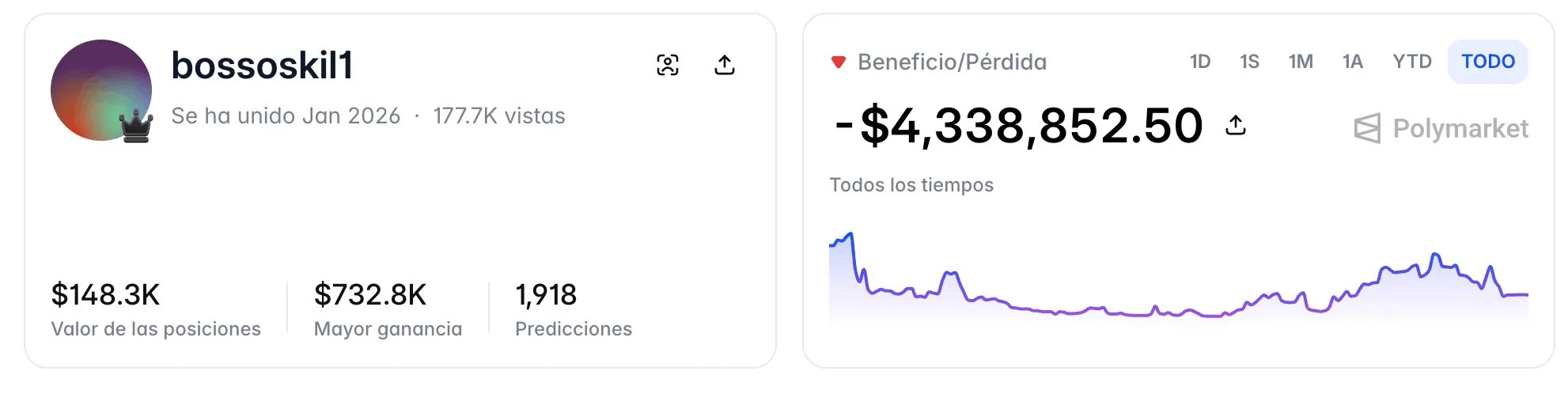
Moments like this are simultaneously the best and worst advertising Polymarket could ask for. The worst, because a one-million-dollar loss makes headlines that could reinforce regulatory scrutiny from bodies already watching crypto-adjacent financial products closely. The best, because fishalive’s $4.7 million win is the kind of story that brings in exactly the sophisticated, high-conviction traders that give prediction markets their forecasting power.
The platform’s growth depends on liquidity, and liquidity depends on people being willing to take both sides of contentious positions. Every time a contrarian wins big against consensus, it signals to the market that the odds were mispriced — and mispriced odds attract sharp money. That’s actually how prediction markets are supposed to work. The crowd was wrong about Spain vs Cape Verde. Fishalive was right. The mechanism corrected itself, violently and publicly, in real time.
The 2026 World Cup still has weeks to run. You can be certain there will be more oversized Polymarket bets on obvious favourites, more contrarian positions at long odds, and more viral moments when the football does what football always eventually does — refuse to follow the script. Whether that’s a feature or a bug probably depends on which side of the trade you’re on.

