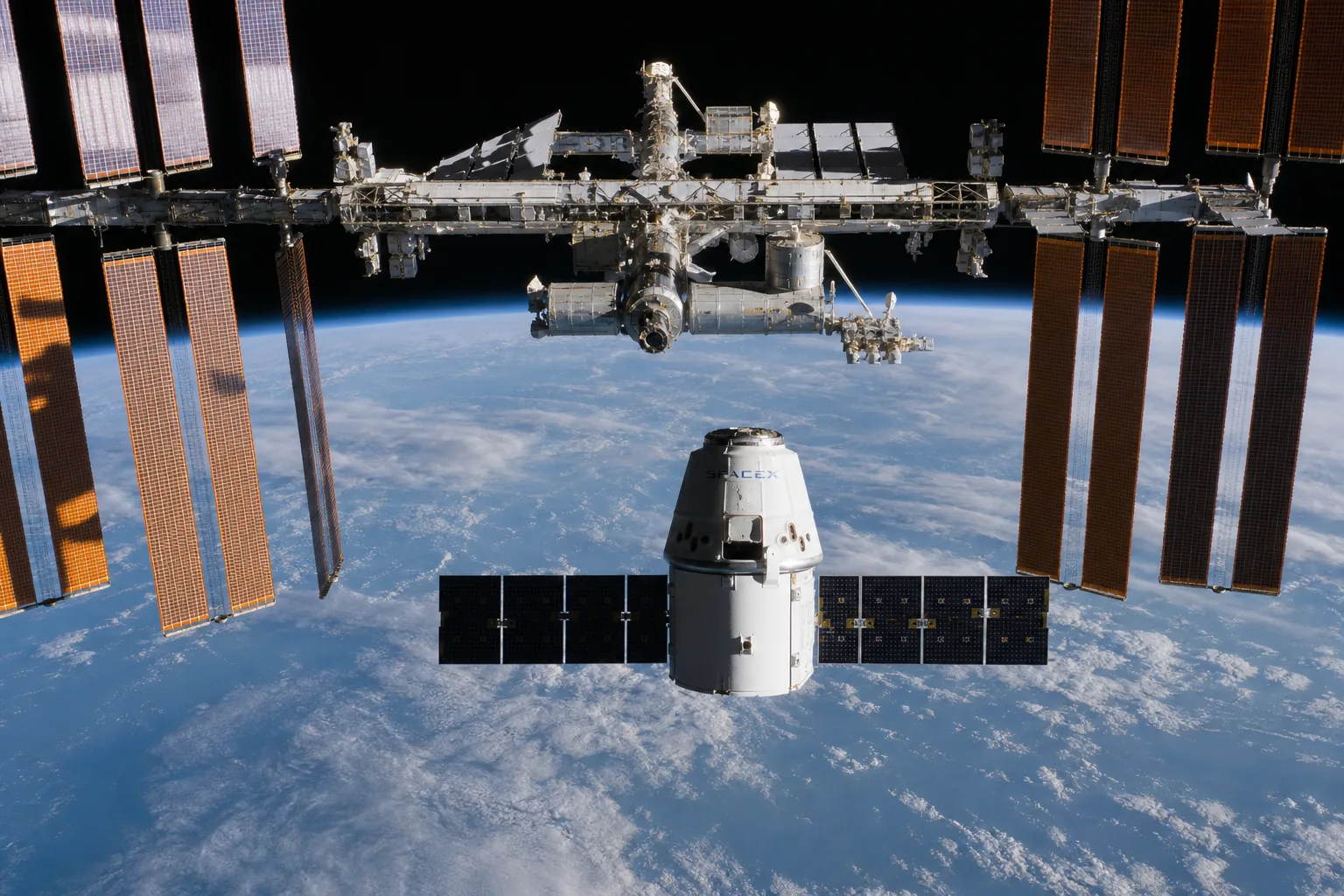
SpaceX Dragon CRS-34 began its journey home from the International Space Station on June 16, undocking at around 12:05 p.m. EDT before targeting a Pacific Ocean splashdown early the following morning. It’s a routine-sounding mission on paper — the 34th commercial resupply run SpaceX has flown for NASA — but what’s riding inside the capsule is anything but routine.
- SpaceX Dragon CRS-34 undocked from the ISS on June 16, carrying thousands of pounds of research samples back to Earth.
- SpaceX Dragon CRS-34 is returning bioprinted organ tissue and DNA-inspired materials being studied as potential cancer treatments.
- Dragon is the only ISS cargo vehicle that can survive atmospheric re-entry — Cygnus, Progress, and HTV-X all burn up.
- The capsule originally launched on May 15 atop a Falcon 9, delivering nearly 6,500 pounds of supplies to station crew.
Table of Contents
What SpaceX Dragon CRS-34 Is Bringing Back
When SpaceX Dragon CRS-34 splashes down off the California coast, it’ll be carrying research that NASA says could shape both future space exploration and medicine here on Earth. That’s not marketing copy — the manifest is genuinely striking. On board are bioprinted organ and cartilage tissue samples, the product of microgravity experiments that use the absence of gravity to build three-dimensional biological structures that are far harder to create in Earth-based labs.
There are also materials inspired by DNA structures, being investigated as a platform for developing new cancer treatments. And alongside the biology, engineers will get back data on improving cryogenic fuel storage — a critical engineering challenge for any deep-space mission that needs to keep liquid hydrogen or oxygen stable for months at a time.
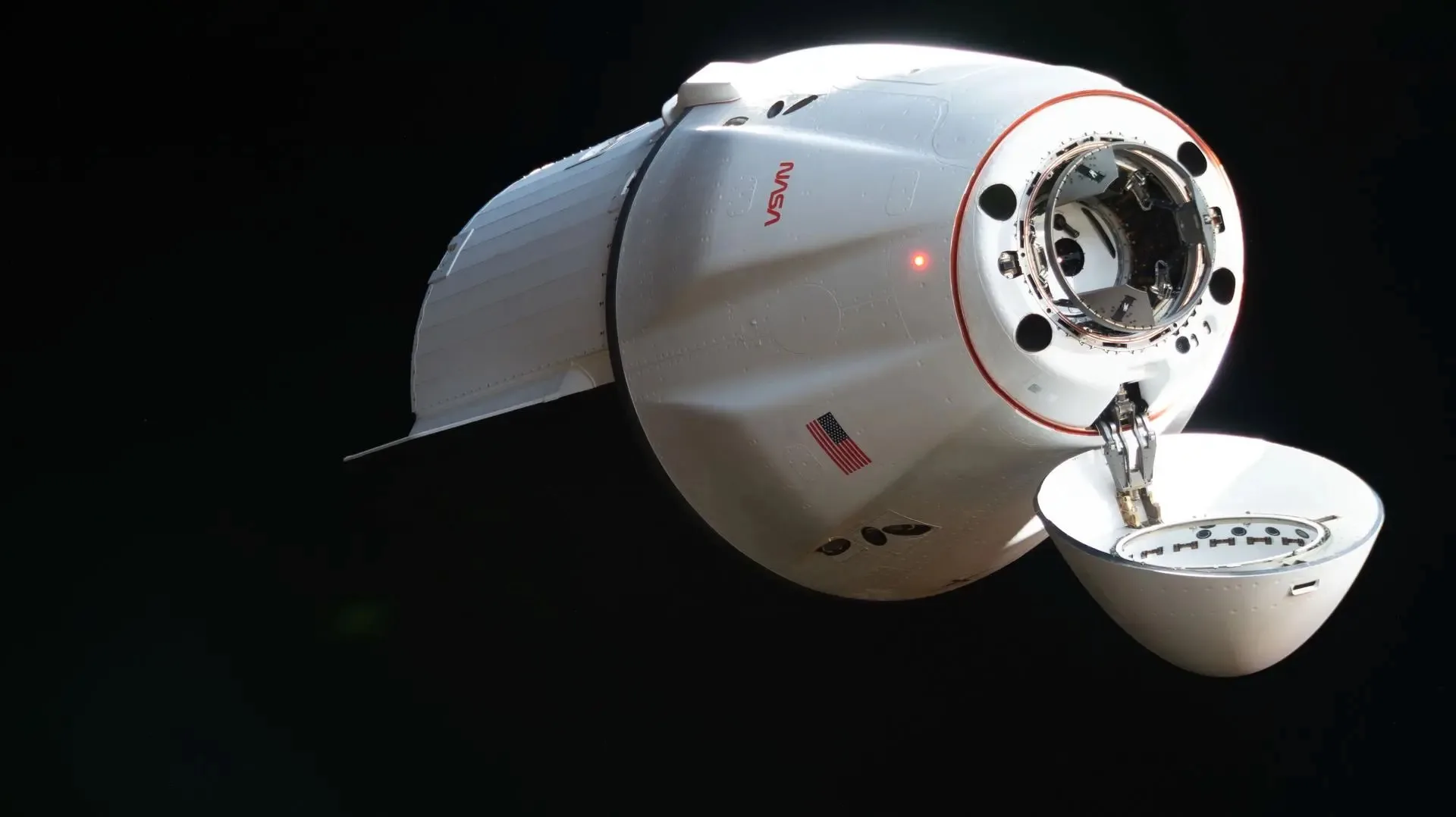
On the hardware side, the returning cargo includes an ocular imaging device used to monitor astronauts’ eye health — a bigger deal than it sounds, given that long-duration spaceflight is known to cause measurable vision changes in a significant portion of crew members. Also coming home: an absorbent bed that filters trace contaminants from cabin air, and a pump from the station’s waste and hygiene compartment. Glamorous? No. Essential to keeping a crew of humans alive in a tin can 400 kilometres above Earth? Absolutely.
The Mission Timeline: From Launch to Splashdown
SpaceX Dragon CRS-34 launched on May 15 atop a Falcon 9 rocket from Florida, arriving at the ISS two days later — a relatively fast rendezvous profile that SpaceX has now refined to a reliable cadence. The capsule delivered close to 6,500 pounds (roughly 2,950 kilograms) of food, scientific hardware, and general supplies on the way up.
The undocking on June 16 was streamed live by NASA, with coverage starting at 11:45 a.m. EDT. The splashdown the following morning, however, won’t be webcast — a quiet but notable difference. Recovery operations in open ocean are logistically complex, and NASA doesn’t always have the bandwidth (or frankly the visual interest) to broadcast a capsule bobbing in the Pacific while recovery ships move into position.
A roughly 30-day station stay is fairly standard for Dragon cargo missions. Long enough to transfer everything, conduct mid-mission resupply handoffs, and load the return manifest without rushing the science teams who need to properly package their samples.
SpaceX Dragon CRS-34 and the Re-Entry Advantage No Other Cargo Ship Has
Here’s something that doesn’t get discussed enough in mainstream coverage: SpaceX Dragon CRS-34 can come home at all because it’s the only cargo vehicle currently serving the ISS that’s designed to survive atmospheric re-entry. That’s not a minor technical footnote — it’s a fundamental capability gap between Dragon and every other active freighter.
Northrop Grumman’s Cygnus burns up on the way down. Russia’s Progress does too. Japan’s HTV-X, the newer addition to the ISS supply chain, is expendable as well. All three vehicles are essentially one-way trucks: they deliver their cargo, then get loaded with waste and deorbited to incinerate over the ocean. Useful, but they can’t bring anything back.
Dragon changed that equation when it first flew cargo to the ISS in 2012 under NASA’s original Commercial Resupply Services contract. The ability to return pressurised cargo — and crucially, sensitive biological and scientific samples — has made it an irreplaceable part of the ISS logistics chain. No other nation or company currently has an operational equivalent in service.
Why the Science Coming Back Matters
It’s easy to gloss over the scientific cargo on a mission like this. ‘Bioprinted tissue’ and ‘DNA-inspired materials’ can sound like vague press release language. But there’s a real reason researchers specifically want to run these experiments in microgravity rather than on Earth.
Gravity fundamentally affects how cells behave, how fluids move, and how structures self-assemble. In orbit, you can grow tissue scaffolds that collapse under their own weight at ground level, or observe protein folding behaviour that’s masked by convection in a normal lab. The ISS has been running continuous microgravity research since 2000, and the compounding value of that data — brought home physically in Dragon’s pressurised cargo bay — is genuinely hard to replicate any other way.
The cryogenic fuel storage research is equally forward-looking. NASA’s Artemis programme and any serious Mars mission architecture depends on the ability to store cryogenic propellants for extended periods in space. Current methods involve significant boil-off losses. Better insulation and storage techniques, developed and tested in the actual space environment, feed directly into hardware decisions for future deep-space vehicles.
CRS-34 in the Broader Commercial Spaceflight Picture
SpaceX Dragon CRS-34 is the 34th cargo flight under NASA’s commercial resupply contracts — a number that would have seemed almost unimaginable when the programme launched in the early 2010s, amid genuine scepticism about whether private companies could reliably service a crewed orbital laboratory.
That scepticism is long gone. SpaceX has transformed low-Earth-orbit logistics in a way that has fundamentally changed NASA’s operating model. The agency no longer owns the trucks — it buys the delivery service, which has freed up budget and attention for the harder problems further out in the solar system.
What’s interesting to watch now is whether any competitor closes the gap on Dragon’s return capability. Sierra Space’s Dream Chaser, a winged spaceplane designed to land on a conventional runway, has been in development for years and has faced repeated schedule delays — its first flight is currently targeting no earlier than 2026. If and when it flies, it would offer a second return-capable vehicle for ISS science, giving NASA redundancy it currently lacks in that specific capability.
Until then, every pressurised cargo sample coming home from the station rides in a Dragon. That’s a significant single point of dependency for a programme that prides itself on resilience — and a commercial moat for SpaceX that’s worth paying attention to as the ISS’s operational timeline inches toward its planned deorbit in the early 2030s.