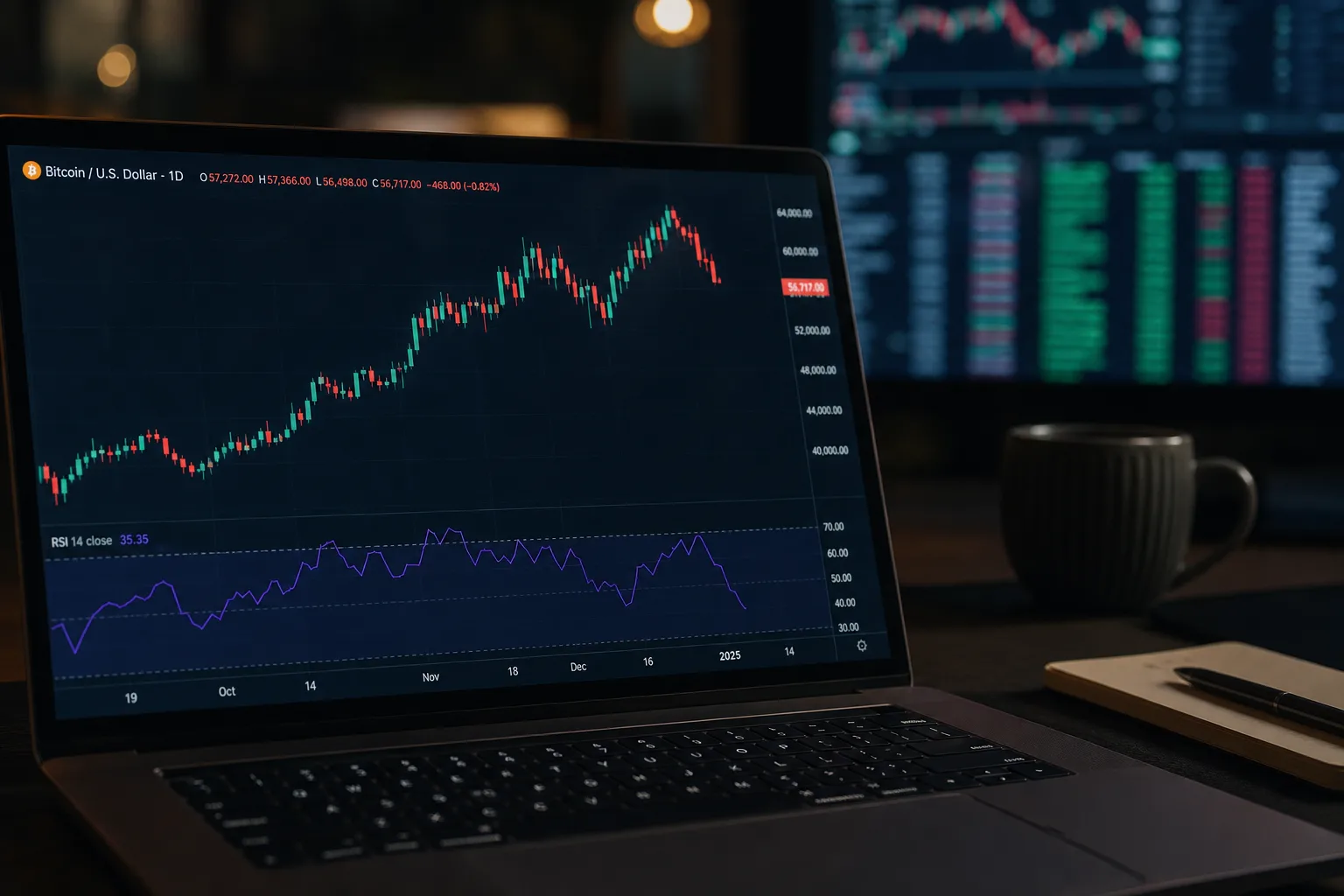
A bitcoin bottom signal is flashing — and some of Wall Street’s most seasoned crypto watchers are paying close attention. Long-term Bitcoin holders have been quietly accumulating during recent months, a telling pattern that tends to precede major market turns. Anthony Scaramucci, the veteran investor and CEO of SkyBridge Capital, isn’t shy about what he thinks it means: the setup for a late 2026 rally is falling into place.
- A bitcoin bottom signal has emerged as long-term holders quietly absorbed Bitcoin from the market.
- Anthony Scaramucci says the bitcoin bottom signal is confirmed by depressed RSI levels and widespread market apathy.
- Scaramucci expects Bitcoin to begin a meaningful rally in late 2026, carrying momentum into early 2027.
- Thin market liquidity means even modest buying pressure could push BTC prices sharply higher from current levels.
Table of Contents
The Bitcoin Bottom Signal Wall Street Is Watching
Bitcoin’s price action in mid-2026 has been, to put it plainly, boring. Volumes are thin. Social media chatter has died down. Retail investors have largely moved on to other obsessions. And yet, underneath the surface calm, something interesting is happening. Long-term holders — the cohort that typically refuses to sell regardless of short-term price swings — have been accumulating meaningfully. That’s not noise. That’s conviction capital moving. Analysts who track this kind of behavior say the emerging bitcoin bottom signal is one of the cleaner setups they’ve seen in years.
This kind of accumulation pattern has historically aligned with what analysts call a ‘holder absorption’ phase — a period where coins migrate from speculative short-term traders into the wallets of investors with multi-year time horizons. When supply tightens in this way while price remains depressed, the conditions for a sharp upward move become increasingly plausible. It’s not a guarantee, but it’s the kind of signal that serious market participants track closely. Every prior cycle that produced a sustained recovery was preceded by a bitcoin bottom signal of this variety.
On-chain analytics tools have long tracked metrics like the RHODL Ratio — a measure that compares the wealth held by recent buyers versus long-term holders — as a way to identify market cycle extremes. When long-term holders dominate the RHODL and continue accumulating despite price stagnation, the historical read is that a market floor is forming. Recent holder absorption fits that framework precisely, and many on-chain analysts have pointed to that data as a textbook bitcoin bottom signal.
Scaramucci’s Case: Apathy Is the Opportunity
Anthony Scaramucci has seen enough market cycles to know that the best entry points rarely feel comfortable. The SkyBridge Capital founder, who has been publicly bullish on Bitcoin since the early 2020s, made clear in recent comments that he’s not just watching the bitcoin bottom signal from the sidelines — he’s holding a significant position and has no intention of trimming it.
His central argument is counterintuitive but historically grounded: market apathy is a feature, not a bug. When nobody is excited about an asset, the people who remain are the true believers. The tourists have left. The leverage has been washed out. What you’re left with is a market populated almost entirely by long-term holders — exactly the kind of buyers recent data has captured. Scaramucci views that composition as the foundation of a durable rally, not a house of cards. For him, widespread disinterest is itself a bitcoin bottom signal worth taking seriously.
Depressed RSI levels, weak sentiment, and thin market liquidity mean even modest demand could drive Bitcoin sharply higher, Scaramucci has reportedly argued, drawing on nearly four decades of experience in financial markets. It’s a classic setup: when sell pressure has been exhausted and supply is locked up with committed holders, it doesn’t take a flood of new buyers to move the price. A trickle can do it.
The 2026–2027 Timeline and Why It Makes Sense
Scaramucci’s specific forecast — Bitcoin begins rallying in late 2026 and carries that momentum into early 2027 — isn’t plucked from thin air. It aligns with a few structural factors that crypto market observers have been flagging for months.
First, the post-halving lag. Bitcoin’s most recent halving in April 2024 cut the block reward from 6.25 BTC to 3.125 BTC, reducing the rate at which new supply enters circulation. Historically, the most dramatic price appreciation following a halving has materialized 12 to 18 months after the event — placing the prime window somewhere between late 2025 and mid-2026. If that cycle is running a few months behind schedule, a late 2026 breakout is well within historical parameters. The current bitcoin bottom signal fits neatly inside that post-halving timeline.
Second, the macroeconomic backdrop. Rate cut cycles have historically been tailwinds for risk assets, and Bitcoin — whatever its proponents say about it being ‘digital gold’ — continues to trade with a meaningful correlation to broader risk appetite. If central banks are in easing mode through 2026, that’s a constructive backdrop for the kind of move Scaramucci is describing.
Third, institutional infrastructure has matured considerably. The approval of spot Bitcoin ETFs in the United States in early 2024 opened the asset class to a far wider pool of capital than previously had access. That demand pipeline didn’t disappear when prices stalled — it just paused. When the bitcoin bottom signal converts into actual price momentum, the ETF inflow mechanism provides a powerful amplifier that didn’t exist in prior cycles.
The MSTR Question: Is Saylor’s Bet Still Sound?
No conversation about institutional Bitcoin conviction in 2026 is complete without addressing Strategy — the company formerly known as MicroStrategy, still led by Michael Saylor, and still one of the largest corporate holders of Bitcoin on the planet. The stock, traded under the ticker MSTR, has attracted skepticism from analysts who worry that its leveraged Bitcoin exposure creates fragility in a prolonged downturn.
Scaramucci isn’t one of those skeptics. He dismissed concerns about Strategy’s sustainability, arguing that Saylor’s long-term conviction will ultimately be rewarded. It’s a position that requires believing two things simultaneously: that Bitcoin’s price will recover materially, and that Strategy can manage its debt obligations long enough to see that recovery. Given Scaramucci’s broader thesis about late 2026, that’s a position with internal consistency, at minimum.
Saylor himself has shown no signs of wavering. Strategy has continued to add to its Bitcoin position through market weakness — a strategy that concentrates risk but also concentrates upside if the thesis plays out. Whether that’s genius or recklessness tends to depend entirely on where Bitcoin’s price is when you’re asking the question.
What Comes Next for Bitcoin’s Price
The honest answer is that no one knows exactly when a bitcoin bottom signal converts into a confirmed bottom. Signals point in directions; they don’t flip switches. What recent data establishes is a structural backdrop — tight supply in strong hands, depressed sentiment, historically low RSI readings — that has preceded recoveries in past cycles. That’s meaningful, but it’s not a timer you can set.
What’s different this cycle is the density of institutional actors who now have direct Bitcoin exposure and defined frameworks for adding more at lower prices. Spot ETF issuers like BlackRock and Fidelity are running products that automatically respond to inflows. Corporate treasuries are benchmarking their allocations. Sovereign wealth fund interest, while still nascent, is no longer purely theoretical. When buying interest does return — whether in late 2026 or otherwise — the demand curve will look very different from anything Bitcoin has encountered before. Scaramucci’s thin-liquidity argument gains extra weight in that context: a market with structurally committed supply meeting a wave of institutional demand doesn’t just move. It moves fast.
Frequently Asked Questions
What is the bitcoin bottom signal that flashed in June 2026?
The bitcoin bottom signal refers to a combination of technical indicators like depressed RSI levels and historically weak market sentiment, alongside thin market liquidity — conditions that Scaramucci believes mean even modest demand could drive Bitcoin sharply higher.
When does Anthony Scaramucci expect Bitcoin to rally?
Scaramucci, CEO of Skybridge, expects Bitcoin to begin rallying in late 2026, with momentum continuing into early 2027. He draws on nearly four decades of investing experience and points to thin liquidity and weak sentiment as conditions that historically precede sharp upward moves.
Why does Scaramucci view market apathy as a bullish signal?
Scaramucci argues that widespread disinterest in crypto reflects a potential opportunity rather than a warning sign. In his view, depressed sentiment and thin market liquidity mean even modest demand could drive Bitcoin sharply higher when buying eventually returns.
What is Strategy (MSTR) and why did Scaramucci defend it?
Strategy, traded as MSTR, is Michael Saylor’s firm known for its significant Bitcoin holdings. Scaramucci dismissed concerns about the company, saying Saylor’s long-term conviction in Bitcoin will ultimately be rewarded as the market recovers.