
Wealthsimple is launching a standalone prediction markets app called Predict this summer, built on Kalshi’s infrastructure and aimed squarely at Canadian retail investors. It’s a notable move — one that puts a mainstream, well-regulated fintech brand behind a category that regulators in dozens of countries are still trying to decide what to do with.
- Wealthsimple’s prediction markets app Predict will offer Canadians access to around 4,000 Kalshi event contracts this summer.
- The prediction markets app is regulated by CIRO as derivatives, requiring settlement periods of at least 30 days.
- CME Group has sued the CFTC over its approval of Kalshi’s crypto perpetual futures, escalating a major regulatory battle.
- Prediction markets face bans or legal challenges in Spain, Indonesia, South Korea, and at least 11 US states.
Table of Contents
What Wealthsimple Predict Actually Offers
The new prediction markets app will give Canadian users access to roughly 4,000 event-based contracts listed on Kalshi, spanning financial markets, economic indicators, and climate data. That’s a wide menu for a product that’s just entering the Canadian market, and it signals that Wealthsimple isn’t treating this as a tentative experiment — it’s going in fully stocked from day one.
The regulatory groundwork was laid back in March, when the Canadian Investment Regulatory Organization (CIRO) authorized Wealthsimple to offer prediction market contracts in those specific categories. That makes Wealthsimple only the second investment dealer in Canada to receive that kind of authorization. The contracts will be classified as derivatives — not gambling products — and carry a mandatory settlement period of at least 30 days. That last requirement is significant: it rules out the kind of short-duration, high-churn event trading that’s drawn the most scrutiny in other markets.

Structuring prediction contracts as derivatives is a deliberate regulatory strategy, and it’s one that’s worked for Wealthsimple here. Canada’s framework essentially sidesteps the gambling-versus-finance debate that’s causing chaos in the US and elsewhere by placing the product clearly within existing securities law. That clarity is rare, and it’s a real competitive advantage for any prediction markets app that can secure it.
Kalshi’s Bigger Ambitions — and the Legal Blowback
The Canadian launch doesn’t exist in a vacuum. Kalshi has been on an aggressive expansion trajectory, and its latest move — launching perpetual futures products — has triggered one of the most significant legal confrontations the derivatives world has seen in years.
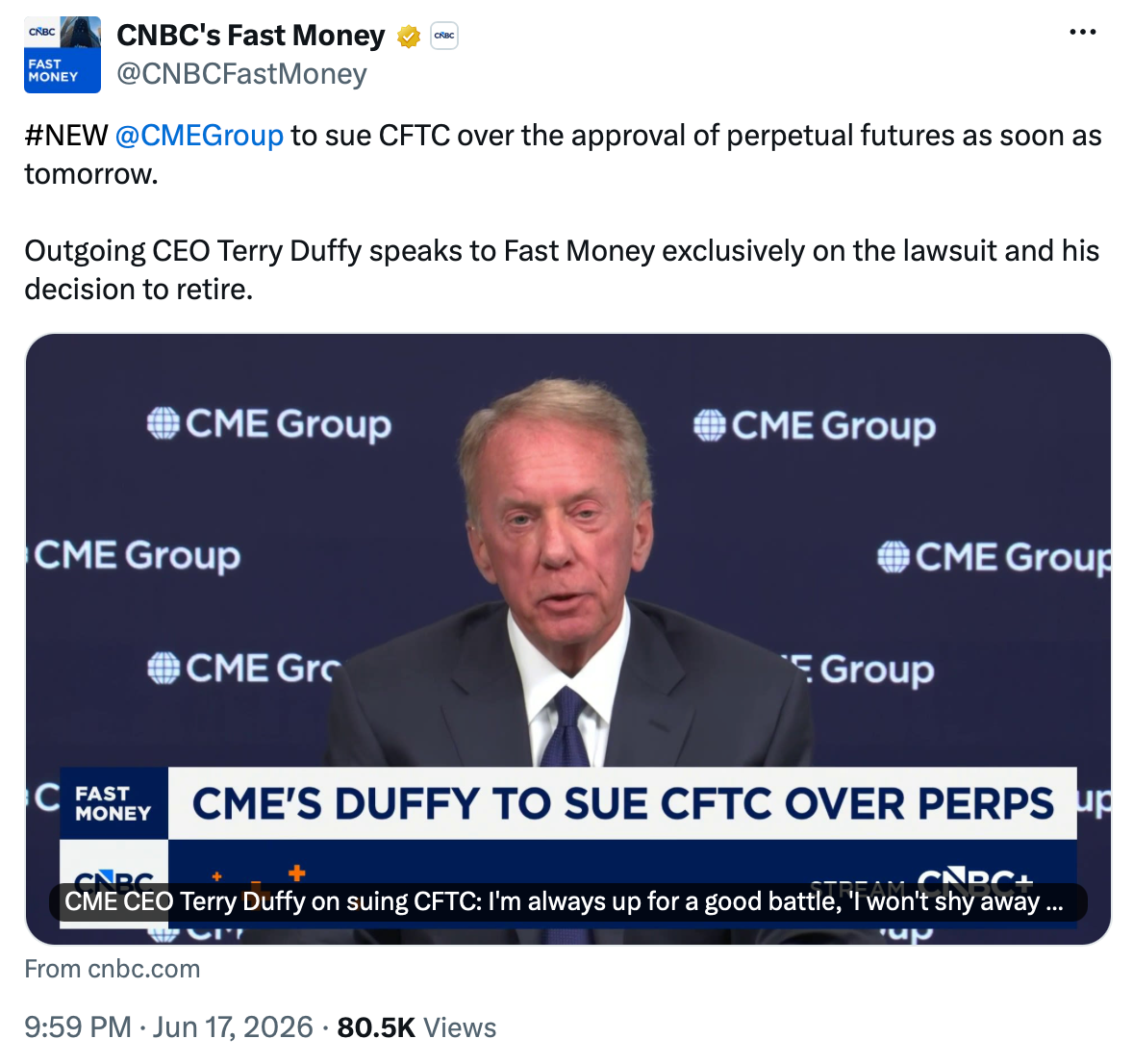
On the same week Wealthsimple announced Predict, CME Group filed a lawsuit against the US Commodity Futures Trading Commission (CFTC) over its May decision to approve Kalshi’s crypto perpetual futures contracts. CME also challenged a similar no-action position the CFTC issued to Coinbase for comparable products. CME CEO Terrence Duffy had telegraphed the move publicly the day before the filing, making clear his exchange viewed the approvals as a misapplication of federal law — not a regulatory gray area to be negotiated, but a fight worth taking to court.
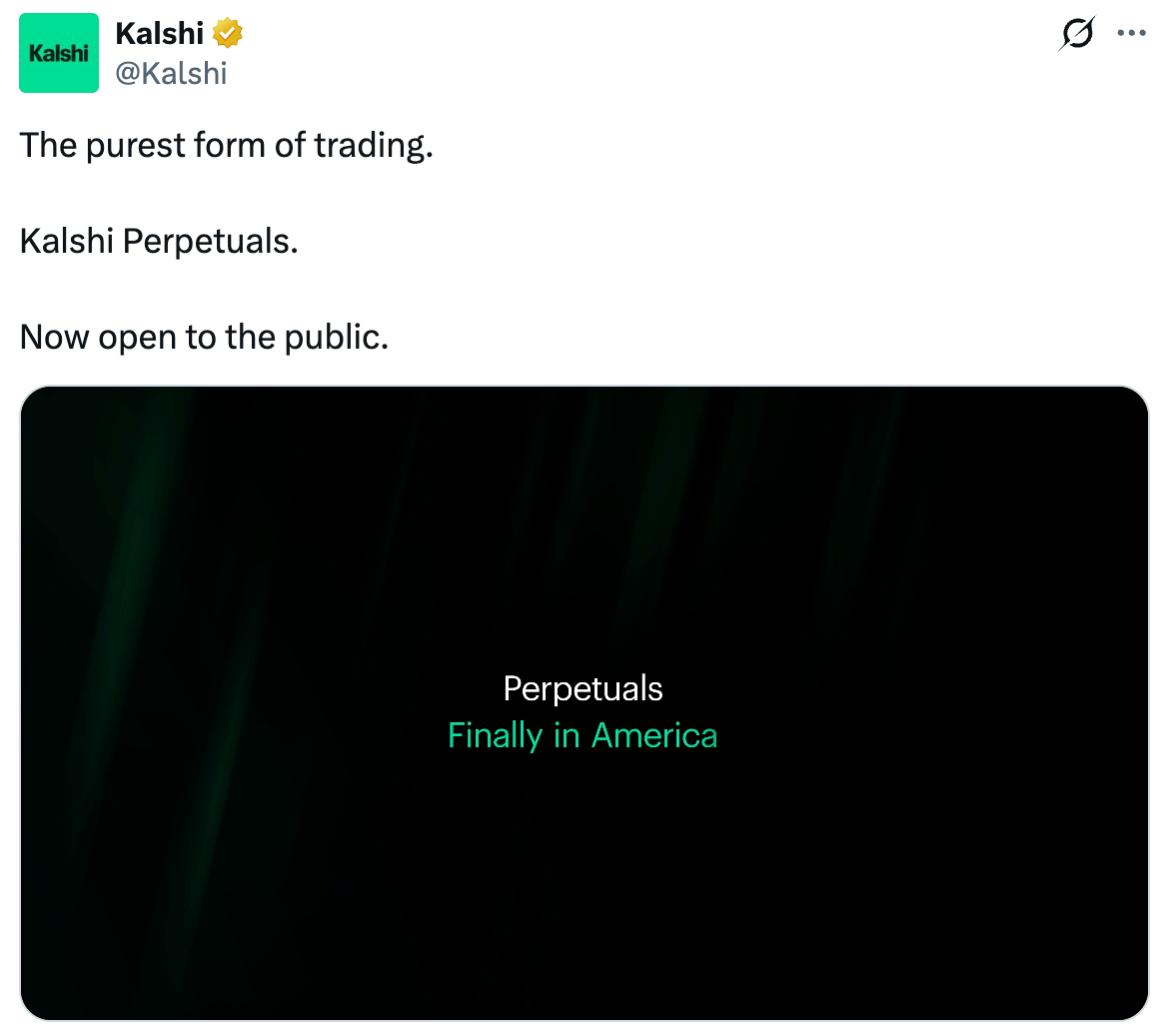
CME’s argument, in essence, is that the CFTC overstepped when it approved these products and that the classification of crypto perpetual futures as regulated derivatives contracts is legally incorrect. It’s a high-stakes position from one of the world’s most powerful financial market operators, and it reflects just how threatened established exchanges feel by Kalshi’s expansion into their territory. Any prediction markets app operating in Kalshi’s ecosystem is now developing against this unsettled legal backdrop.
Meanwhile, the broader crypto futures push is gaining momentum regardless. Coinbase has expanded US institutional access to global crypto derivatives. Kraken launched perpetual futures trading this week through Bitnomial, its CFTC-regulated exchange. The direction of travel is clear — the question is whether CME’s lawsuit can interrupt it.
Prediction Markets Face a Global Regulatory Reckoning
If you thought Canada’s orderly regulatory approval made prediction markets look like a solved problem, the global picture will quickly disabuse you of that notion. This category is under pressure on virtually every continent.
Spain’s regulators ordered internet service providers to block access to both Kalshi and Polymarket while they investigate whether the platforms are operating illegally under national gambling laws. Indonesia banned Polymarket outright after users began trading event contracts tied to whether President Prabowo Subianto would leave office early — exactly the kind of politically sensitive contract that makes governments nervous. In Japan, crypto exchange Bitbank issued warnings to users over transfers linked to Polymarket. South Korean police reportedly looked into local users over alleged gambling violations.
Back in the US, at least 11 states have mounted legal challenges to prediction market platforms in recent months. The core dispute is a jurisdictional one: should these products fall under state gambling statutes, or are they federally regulated derivatives overseen by the CFTC? It’s not a trivial question. The answer determines which regulator has authority, what rules apply, and whether a prediction markets app like Kalshi or Polymarket can operate in those states at all.
At the Bitso Stablecoin Conference in Mexico City on June 16, Digital Chamber CEO Cody Carbone offered a sobering assessment: the clash between the CFTC and state gambling regulators is likely heading to the US Supreme Court. If that’s right, any prediction markets app targeting American users could be years away from any definitive legal clarity in America’s largest market.
Why Canada’s Approach Stands Out
Set against that backdrop, Canada’s move looks almost refreshingly pragmatic. By classifying prediction contracts as derivatives and routing authorization through CIRO, Canadian regulators have created a workable framework without the jurisdictional brawl playing out south of the border. Whether other regulators study the Canadian model is an open question, but it’s hard not to notice the contrast.
For Wealthsimple, the timing is also strategically sound. The company already has a large, established retail user base — people who use it for stock trading, cryptocurrency, and tax-sheltered savings accounts. Introducing a prediction markets app to that audience under a familiar brand lowers the adoption barrier considerably. This isn’t a crypto-native startup pitching event contracts to speculative traders; it’s a mainstream fintech offering a new product category to everyday investors who already trust the platform.
The 30-day minimum settlement requirement means the Wealthsimple Predict prediction markets app won’t attract the same hyperactive trading patterns associated with some offshore prediction platforms. Whether that makes it more or less appealing to Canadian users remains to be seen — but from a regulatory durability standpoint, it’s a much sturdier foundation. If prediction markets are going to survive the current wave of global scrutiny, they probably need more launches that look like this one and fewer that look like the platforms currently being blocked by Spanish ISPs.