

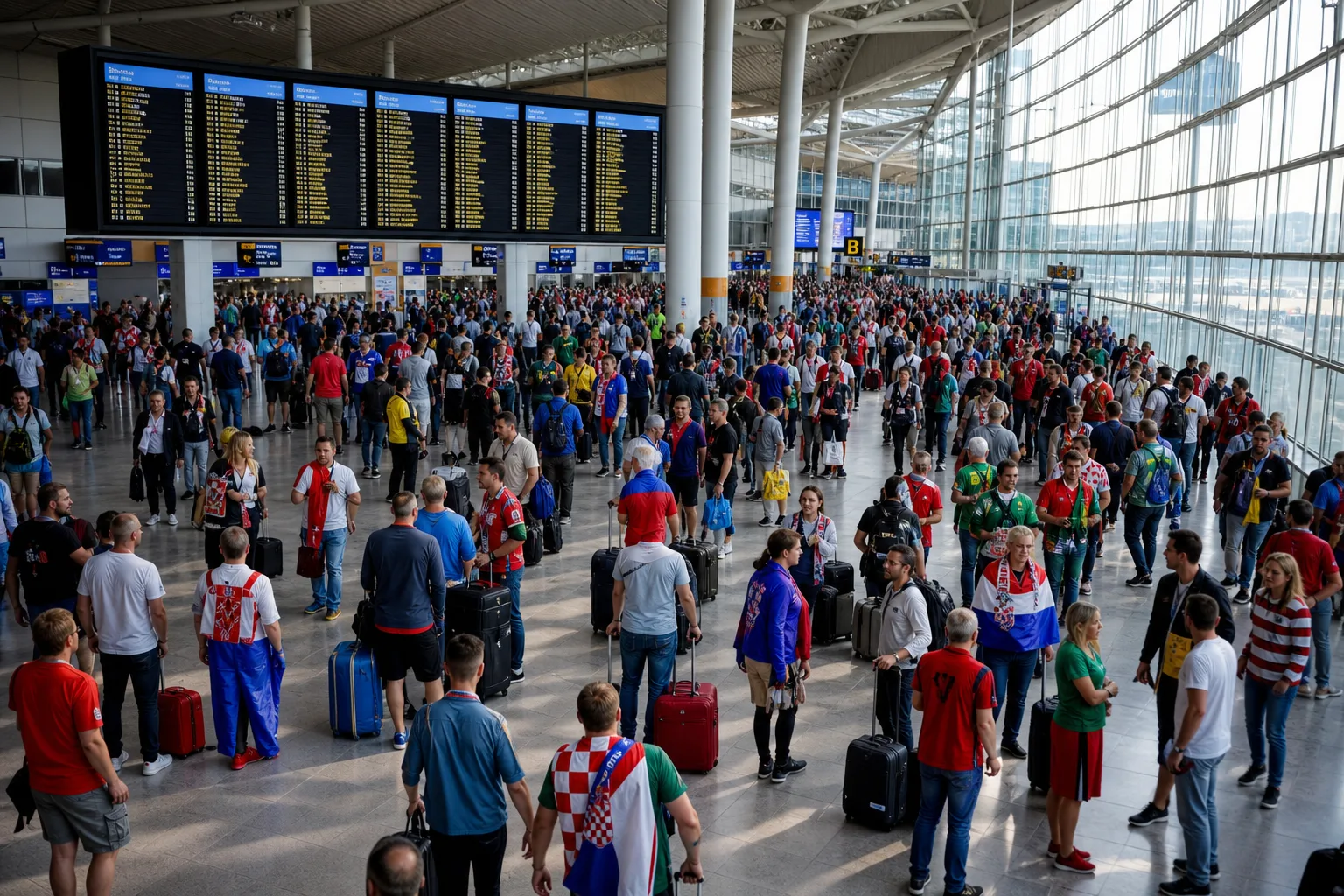
The 2026 World Cup cost — for fans, host cities, and governments — is shaping up to be the defining story of the most ambitious football tournament ever staged. Forget the goals and the group stages for a moment. The numbers surrounding FIFA’s three-nation extravaganza are extraordinary, and not always in a good way.
- The 2026 World Cup cost for US visitors averages over $5,000 per head before a single flight is booked.
- The 2026 World Cup cost to governments in the US and Canada alone is approaching $1 billion in security grants.
- FIFA expanded the tournament to 48 teams partly to defend soccer’s market share against the NBA, NFL, and Formula One.
- Experts warn only the wealthiest or largest nations will be able to host a World Cup alone going forward.
Table of Contents
A Tournament That’s Never Been Done at This Scale
When FIFA awarded the 2026 tournament jointly to the United States, Canada, and Mexico, it framed the decision as a bold vision for football’s future. What it’s produced in practice is a logistical operation without any real precedent in sporting history. Forty-eight national teams — up from the 32 that contested Qatar 2022 — will play across 16 host cities, four time zones, and thousands of miles of airspace. No train network connects Seattle to Miami. No metro system links Toronto to Guadalajara. For the first time in modern World Cup history, the only viable way to get between venues is to fly.
That single fact changes everything about how this tournament is experienced, who can afford to follow it, and what the 2026 World Cup cost means in practice for the people who actually show up.

What the 2026 World Cup Cost Looks Like for Fans
The headline figure is brutal. Christos Anagnostopoulos, an assistant professor in sports management at Hamad Bin Khalifa University in Qatar, puts average attendance cost in US host cities at ‘north of $5,000 a head, before you’ve factored in flights between venues.’ Compare that to Qatar 2022, where visitors spent somewhere between $720 and $2,500 — and Qatar was widely criticised at the time for being expensive. Russia 2018, which offered free public transportation and an additional 500 trains to move fans between matches, now looks like a budget holiday by comparison.
There’s a real question about whether this pricing is pricing ordinary fans out entirely. FIFA has faced direct criticism for its tiered ticketing structure, with affordable seats in short supply and premium categories dominating availability. When you stack ticket prices on top of transatlantic or cross-continental flights and hotels in cities where room rates are already surging, a two-week World Cup trip for a working-class football fan becomes something close to a fantasy. The 2026 World Cup cost burden falls hardest on exactly the supporters who have historically made the tournament’s atmosphere what it is.
The market appears to be responding accordingly. ‘US hotels are already reporting bookings below expectations,’ Anagnostopoulos notes. ‘Scale doesn’t guarantee the crowds will show up.’ That’s a significant warning sign. The 2026 World Cup cost structure may be scaring away the very fans whose energy makes the tournament what it is.
The Security Bill Is Approaching $1 Billion — and Climbing
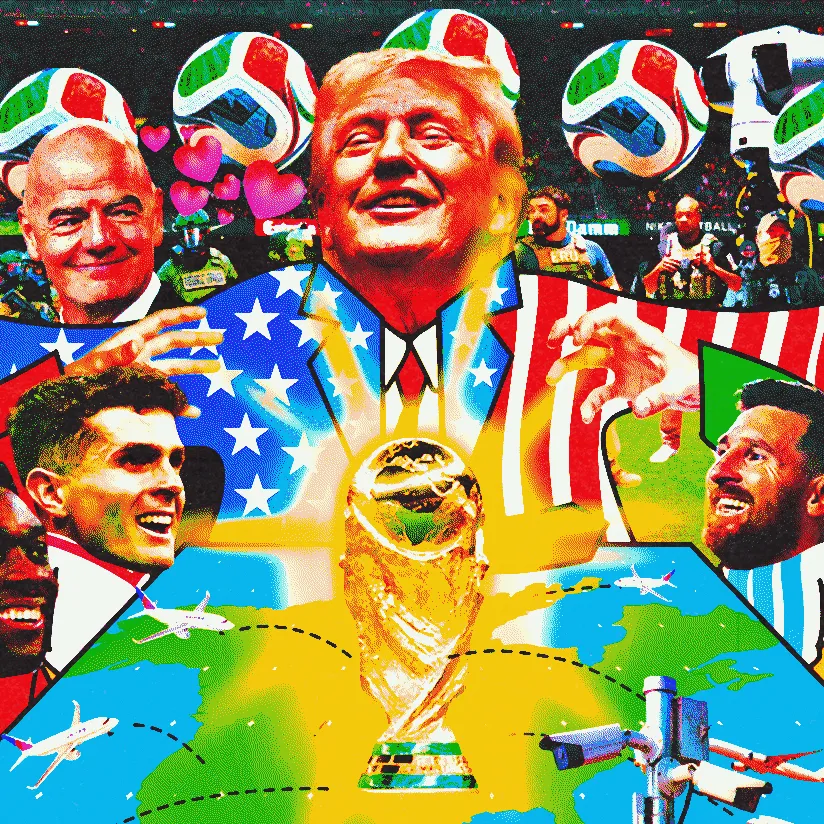
Running a multi-national tournament in 2026 means confronting threats that previous host nations barely had to consider. The US federal government has allocated $625 million in security grants to its host cities alone. On top of that, the Department of Homeland Security has made over $200 million available specifically for anti-drone technology — a reflection of how rapidly accessible drone hardware has become to hostile actors. Canada has chipped in around $104 million in grants to Vancouver and Toronto.
Add it up and you’re already approaching $1 billion in publicly disclosed security spending across just two of the three host nations. And that’s almost certainly the floor, not the ceiling. Security alone now represents a substantial share of the overall 2026 World Cup cost to taxpayers, independent of anything FIFA itself is spending.
The coordination challenge is staggering. ‘Qatar 2022 benefited from a highly compact geography, with venues operating within a relatively unified environment,’ says Leo Levit, chair of Onvif, a membership body focused on standardisation of physical security products. ‘The 2026 World Cup will involve multiple cities, jurisdictions, agencies, and technology ecosystems across the United States, Canada, and Mexico.’ Levit’s concern isn’t just the number of systems involved — it’s whether those systems can actually talk to each other when it matters.
Why FIFA Is Pushing Growth Even When the 2026 World Cup Cost Keeps Rising
So why is FIFA doing this? Why expand a tournament that was already the world’s most-watched sporting event, accepting enormous logistical complexity and spiralling costs in return?
The answer, according to Simon Chadwick, professor of sport and geopolitical economy at SKEMA Business School, is competitive anxiety. ‘What Infantino is trying to do is to ensure that football remains robust, relevant, prominent and that it doesn’t begin losing market share,’ Chadwick says — specifically to the NBA, which has been aggressively building audiences in China, India, Africa, and the Gulf; to the NFL, which is making a sustained play for European fans; and to Formula One, which has exploded in popularity in North America since the mid-2010s.
More teams means more nations with a horse in the race. More nations invested means more broadcast deals, more streaming rights, more sponsorship conversations. FIFA is forecasting 6 billion total engagements across TV, streaming, and digital platforms for 2026 — up from 5 billion in Qatar. Over 5 million people are expected to attend in person, compared to Qatar’s 3.4 million. On paper, the growth argument holds. But whether the revenue projections survive contact with below-expectation hotel bookings and fans who simply can’t afford to cross a continent to follow their team remains to be seen. Critics argue the rising 2026 World Cup cost to ordinary supporters is the price FIFA is quietly willing to pay for that commercial expansion.
Who Can Actually Host a World Cup in the Future?
Perhaps the most consequential long-term implication of the 2026 World Cup cost structure is what it signals about the tournament’s future hosts. The era of a single, traditional football nation staging the World Cup on its own may genuinely be over.
‘The tournament has outgrown France, Germany, Russia, or England,’ Anagnostopoulos says plainly. ‘From here, you either have to be enormously rich — China, Saudi Arabia — and willing to build a host nation from scratch — India — or you have to share the load across borders. The days of a single traditional football nation hosting alone are probably numbered.’
That’s a striking structural shift for a competition that has historically been a point of national pride for its hosts. A joint bid like 2026 distributes the burden, but it also distributes the identity. There’s no single ‘host nation’ story in the way there was with Brazil in 2014 or Japan and South Korea in 2002.

What FIFA has built for 2026 is a tournament that reflects its geopolitical ambitions more than the practical needs of the fans who fund it. Whether the sport’s global primacy justifies the 2026 World Cup cost — in dollars, in carbon, in accessibility — is a question football’s governing body will have to answer long after the final whistle blows. And if the crowds don’t materialise the way projections suggest, that answer is going to be uncomfortable.
Frequently Asked Questions
How much is the average 2026 World Cup cost for a fan attending in the US?
According to sports management professor Christos Anagnostopoulos, average attendance cost in US host cities is running above $5,000 per person, before flights between venues are factored in. That compares sharply to the $720–$2,500 visitors spent attending the Qatar 2022 tournament.
How many teams and host cities are involved in the 2026 World Cup?
The 2026 tournament features 48 teams — up from the usual 32 — spread across 16 host cities in Canada, Mexico, and the United States. Those cities span four distinct time zones and are separated by thousands of miles, making inter-venue travel entirely dependent on flights.
Why did FIFA expand the World Cup to 48 teams?
FIFA, under president Gianni Infantino, expanded the tournament to protect soccer’s global dominance against rising competition from the NBA, NFL, and Formula One. More teams means more countries invested, more tickets sold, and bigger broadcast audiences — FIFA is forecasting 6 billion engagements across TV, streaming, and digital in 2026.
Which countries could realistically host a solo World Cup in the future?
Experts say the tournament has outgrown traditional football nations like France, Germany, or England. Going forward, only enormously wealthy states like China or Saudi Arabia, or large enough economies willing to build significant infrastructure — like India — could realistically host the World Cup alone.

