Every week, the European Space Agency publishes a curated set of ESA space images that, taken together, tell a surprisingly complete story about where spaceflight actually is right now. The selection from 15–19 June 2026 is a particularly good one: a rocket upgrade milestone, a climate science breakthrough, an active Mars canyon, and a returning climate pattern that meteorologists have been watching nervously. Here’s what each frame means beyond the caption.
- ESA space images this week showed Ariane 6 launching with upgraded solid rocket boosters.
- The week’s ESA space images included the departure of a SpaceX cargo resupply mission to the ISS.
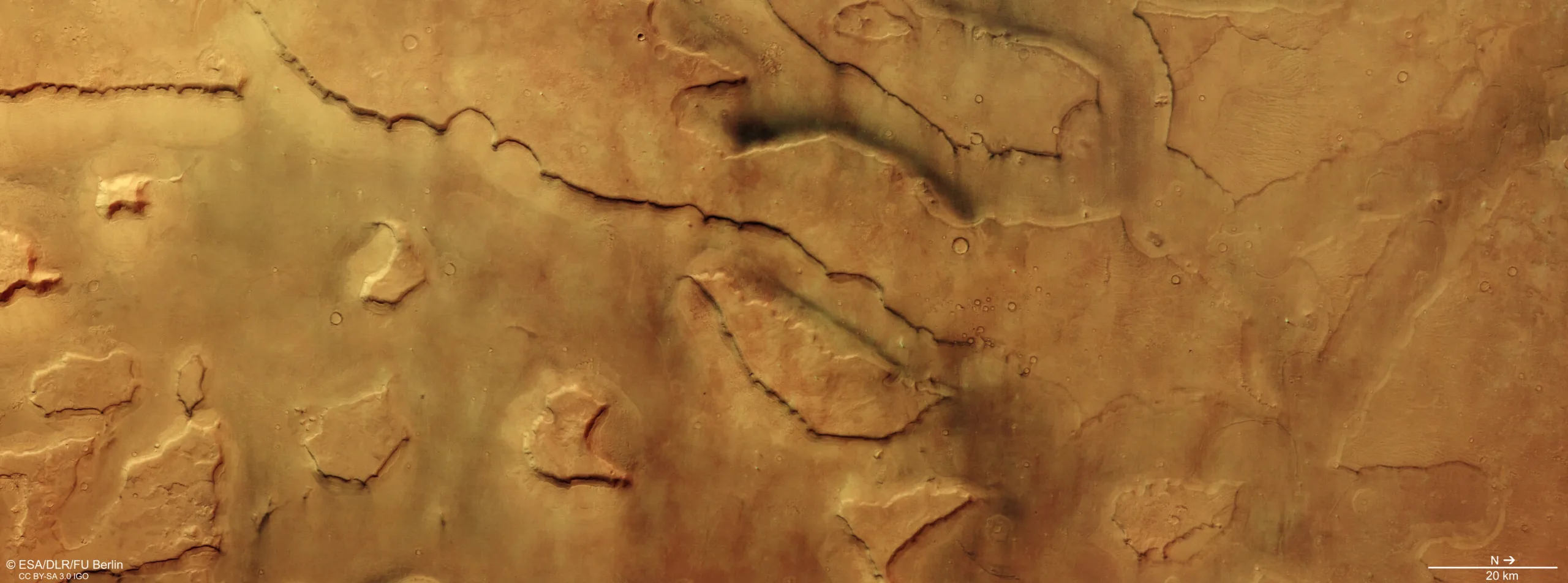
- Mars Express captured sweeping images of dust devils swirling through the Mamers Valles canyon system on Mars.
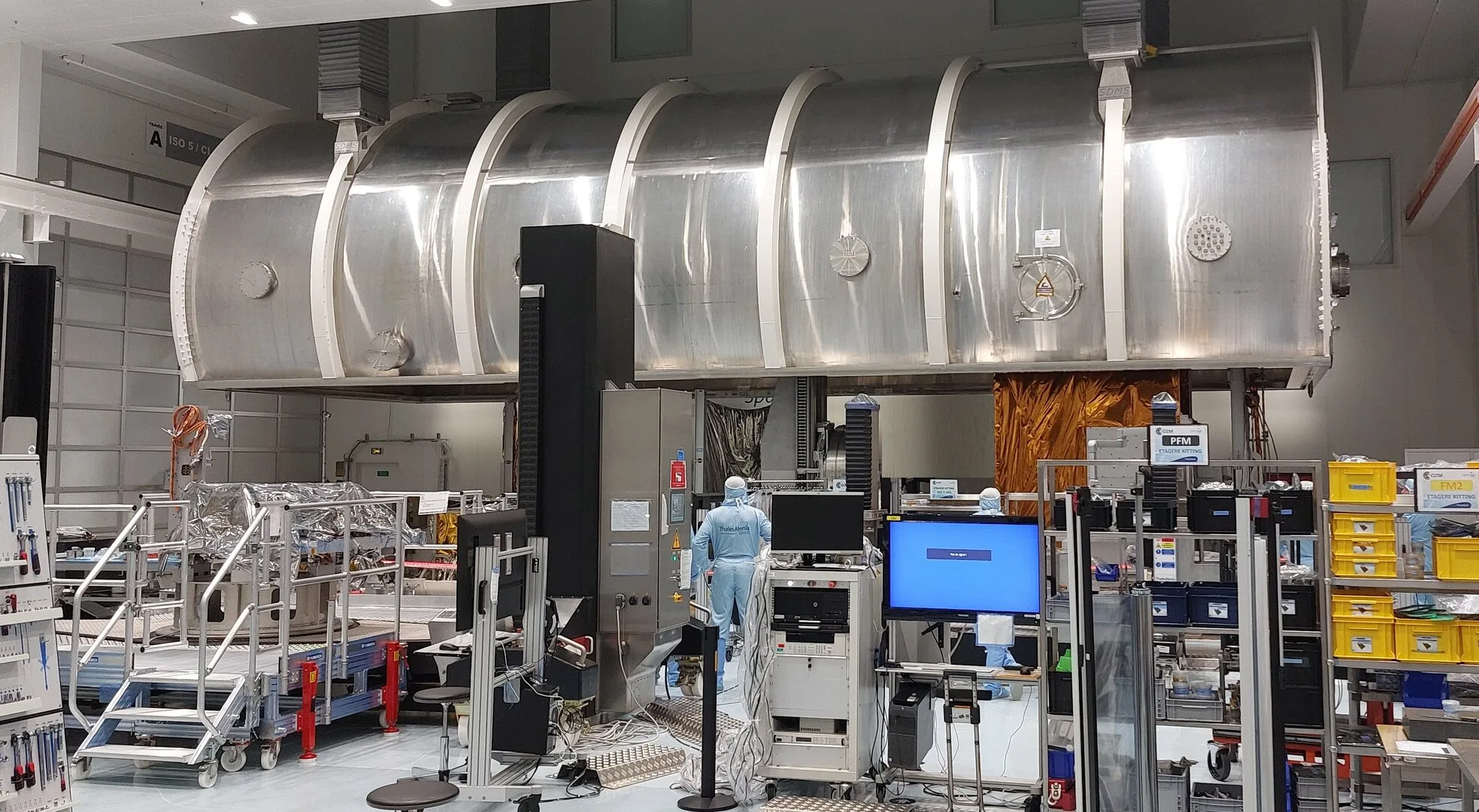
- ESA engineers sealed the CO2M satellite’s spectrometer inside a vacuum chamber, a key milestone for Europe’s carbon monitoring ambitions.
Table of Contents
Ariane 6 Gets a Boost — Literally
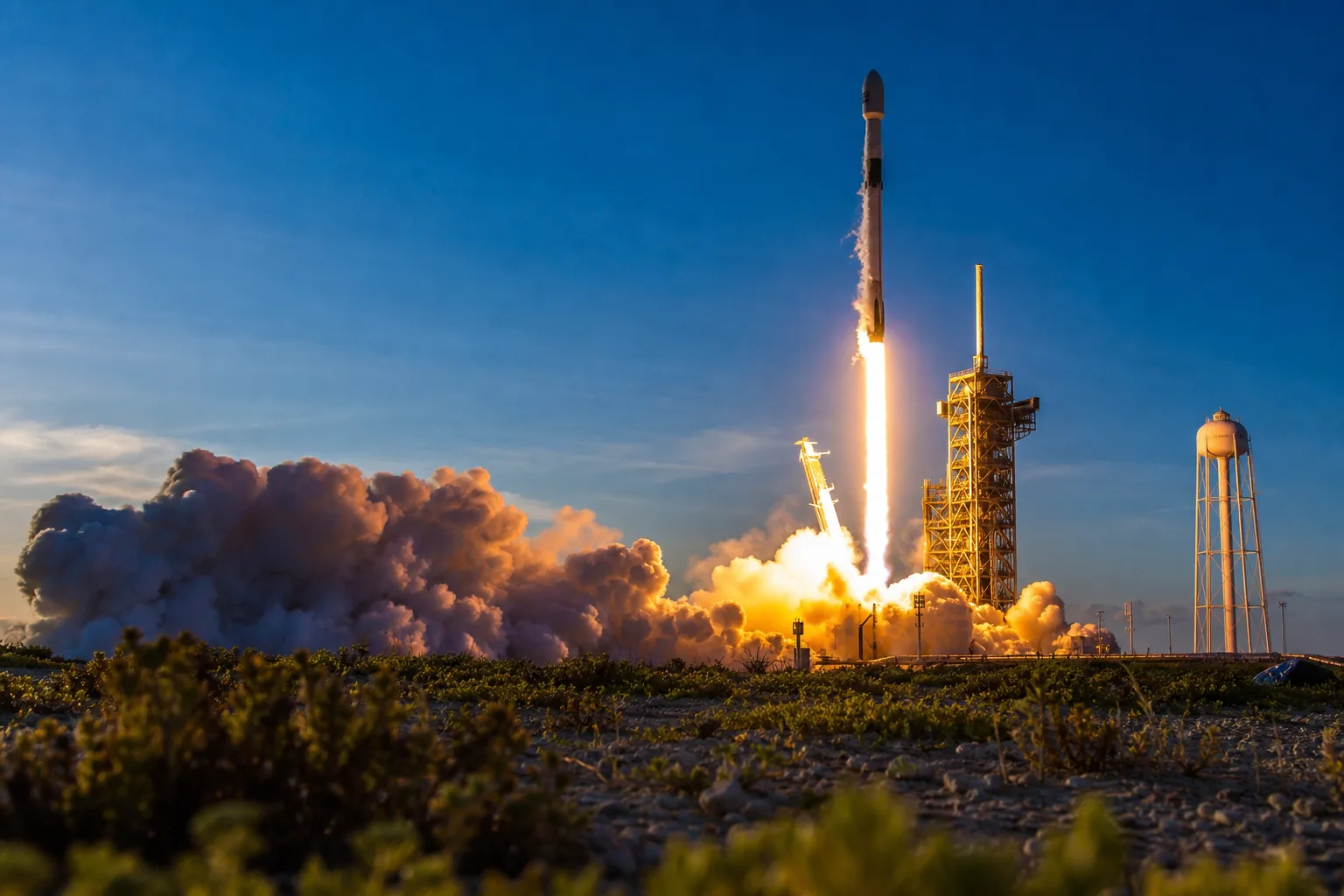
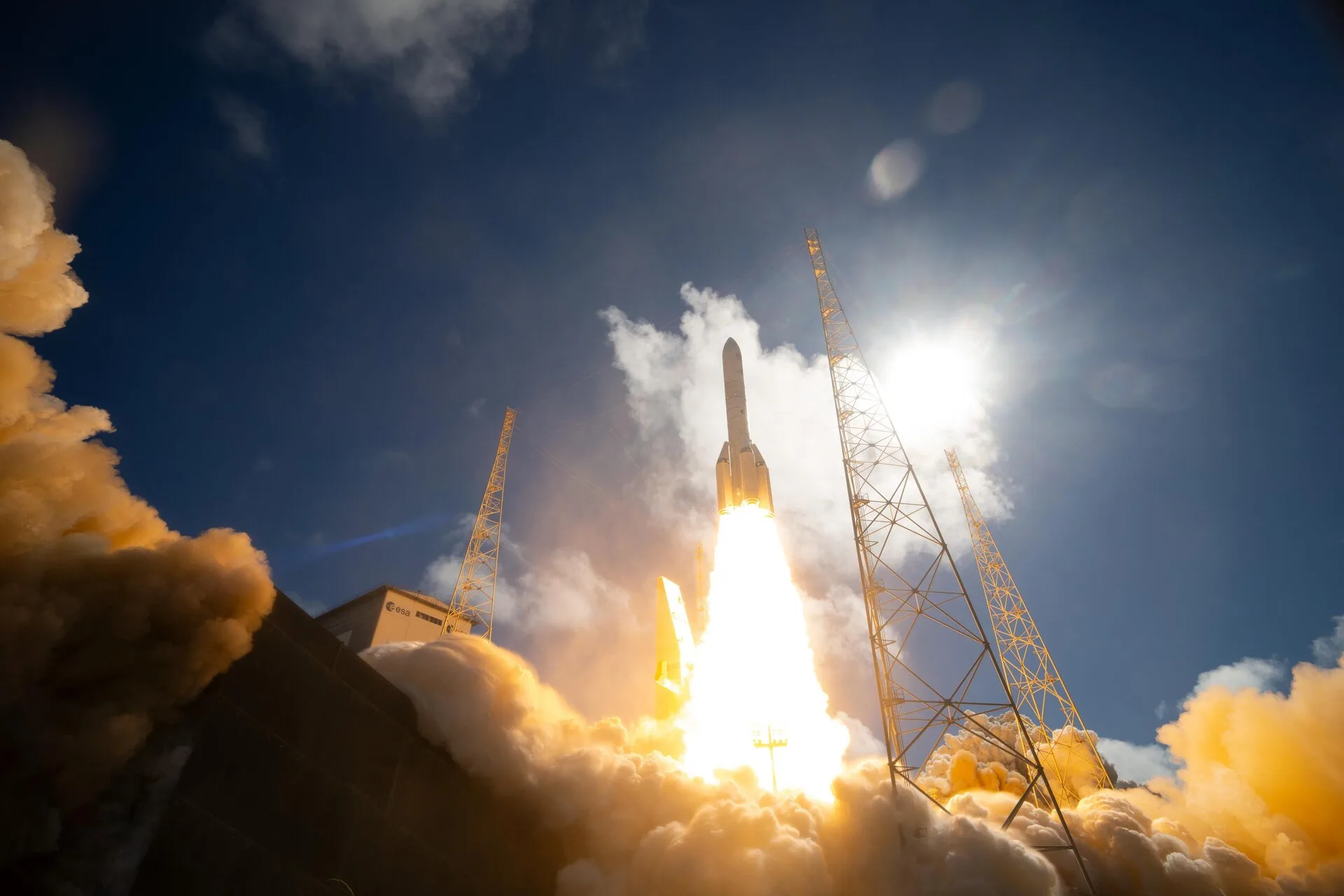
The headline image of the week is almost certainly the liftoff of Ariane 6 fitted with P160C-based solid rocket boosters — the first time this upgraded strap-on configuration has flown. That might sound like incremental engineering housekeeping, but it’s anything but. The P160C booster is derived from the P120C motor that powers both Ariane 6 and Vega-C, and its integration into Ariane 6’s architecture is part of ESA’s longer-term push to reduce per-kilogram launch costs while increasing the rocket’s throw weight to geostationary transfer orbit.
Europe has been under real competitive pressure here. SpaceX’s Falcon 9 has spent the better part of a decade making reusability look effortless, and while Ariane 6 was never designed to be a reusable vehicle in the same mould, ArianeGroup has been clear that performance improvements and production efficiencies are the near-term answer. Seeing P160C fly successfully is the kind of milestone that tends to get underplayed in headlines but matters enormously to the commercial customers ESA is trying to retain — and attract. ESA space images of the launch document this engineering step in a way that written reports alone cannot.
SpaceX and ESA: Still Very Much Partners
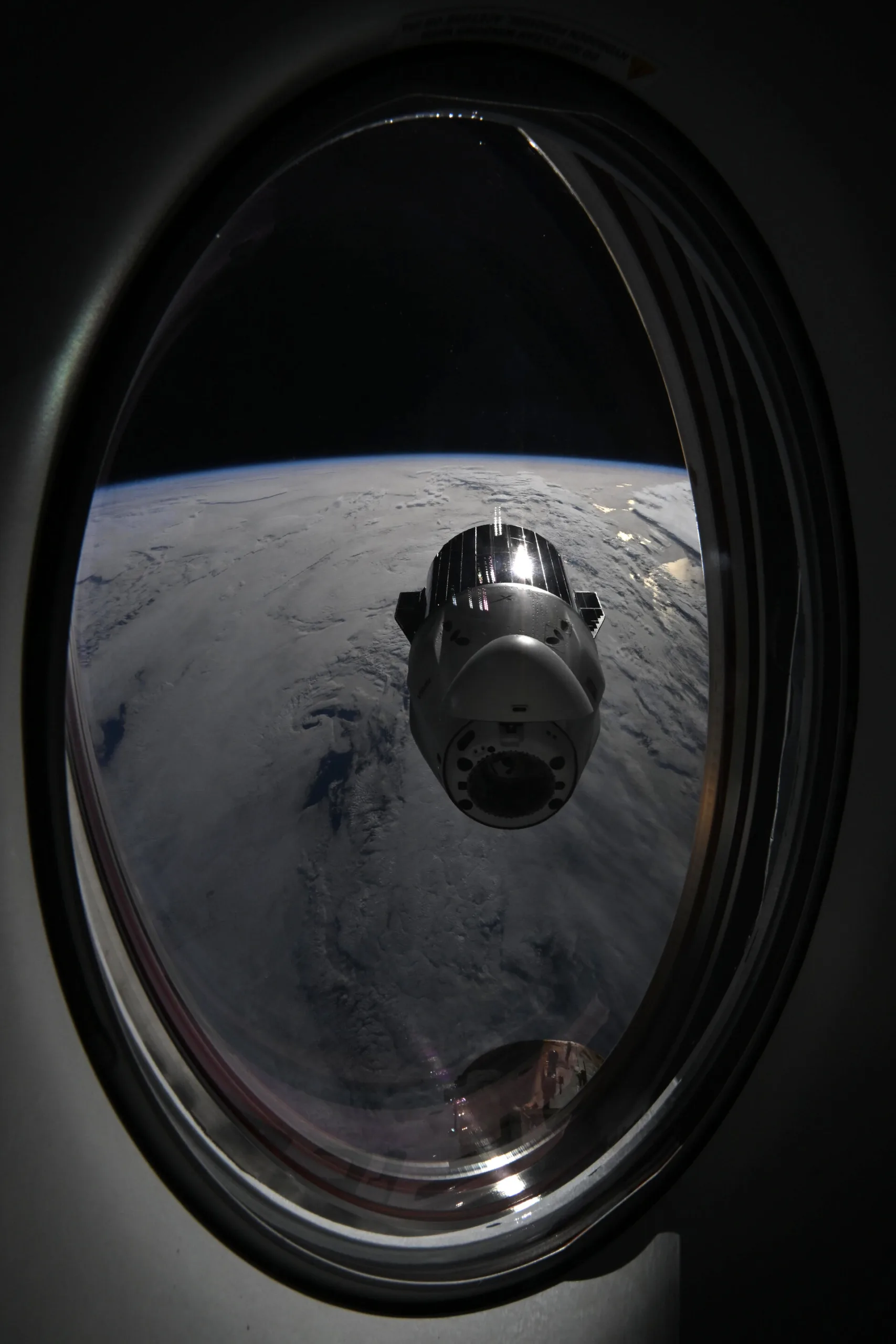
The same week that showed Ariane 6 flexing its upgraded hardware also featured imagery from the departure of a SpaceX commercial resupply mission to the International Space Station under NASA contract. ESA space images of the mission’s departure are a quiet reminder of something the space industry takes for granted but probably shouldn’t: that a European agency and an American commercial operator are deeply intertwined in keeping human beings alive in low Earth orbit.
ESA astronauts, experiments, and hardware regularly fly on CRS missions. The ongoing collaboration also reflects a broader truth about the ISS era — that national space programmes stopped being truly self-contained a long time ago. As the station heads toward its planned decommissioning later this decade, watching each CRS departure carries a certain weight. Every resupply mission is one fewer remaining on the manifest.
El Niño Is Back — And ESA Is Watching
One of the more consequential ESA space images this week comes from Earth itself. Satellite-derived sea surface temperature data reportedly provides some of the clearest early evidence of a returning El Niño pattern. This matters a great deal beyond the meteorological community. Previous significant El Niño events have driven global average temperatures to record highs and contributed to severe drought conditions across parts of South America, southern Africa, and Southeast Asia.
ESA’s role in monitoring El Niño is easy to overlook — climate monitoring rarely generates the same public excitement as a rocket launch — but the agency’s constellation of ocean and atmospheric observation satellites is genuinely critical infrastructure for the world’s weather forecasting systems. The data feeding into ECMWF and NOAA’s seasonal outlook models increasingly depends on European satellites. ESA space images of sea surface temperature anomalies give forecasters a visual record that complements the raw numerical data. As climate variability intensifies, that infrastructure is only going to become more strategically important.
CO2M Takes a Step Closer to Orbit
The CO2M satellite’s spectrometer being sealed inside a vacuum chamber might not look dramatic, but this is the kind of painstaking ground testing that determines whether a mission succeeds or fails once it can’t be touched. CO2M — the Copernicus Carbon Dioxide Monitoring mission — is designed to do something genuinely difficult: measure carbon dioxide emissions from human activities at a resolution fine enough to attribute sources to specific industrial facilities, cities, or regions.
That capability is more politically charged than it might appear. Right now, countries report their own CO2 emissions under the Paris Agreement framework, and independent verification from space has been largely limited or incomplete. CO2M changes that calculus. When it reaches orbit, it will give regulators, scientists, and the public an independent check on national emissions data — a function that some governments will welcome and others will find considerably less comfortable. The vacuum chamber test is one of many environmental simulations the spectrometer must survive before launch. ESA space images of this process are a reminder that the hardest work in space happens on the ground.
Mars Express Finds the Wind at Mamers Valles
Further from home, ESA’s Mars Express spacecraft has been imaging dust devils in Mamers Valles, a sinuous canyon system stretching across Mars’s northern highlands. Dust devils on Mars are well-documented — NASA’s rovers have photographed them at ground level — but orbital imagery of them swirling through a canyon landscape offers a different and valuable perspective on Martian atmospheric dynamics. ESA space images from Mars Express bring that orbital vantage point to a wider audience.
The Mamers Valles system is interesting for reasons beyond the weather. It’s one of the longest canyon networks on Mars, carved likely by ancient water flow, and its floor contains layered deposits that researchers believe preserve a record of past climate cycles. Dust devils churning through it today are, in a sense, the present writing over the past — a vivid contrast between a world that once had liquid water and the desiccated, wind-scoured place it is now. Mars Express has been in orbit for more than two decades, and it’s still producing scientifically valuable imagery. That longevity is itself a story worth noting.
What This Week’s Images Actually Tell Us
Strip away the individual captions and what ESA space images from June 2026 are really showing is the breadth of what a single space agency tracks simultaneously: rocket propulsion upgrades, orbital logistics, ocean climatology, atmospheric chemistry, and planetary science. No single private company covers that range. SpaceX is extraordinary at launch; Planet Labs is exceptional at Earth imaging; but the scientific and institutional scope of what ESA operates — across Copernicus, ExoMars, the ISS partnership, and its own launch programme — remains genuinely difficult to replicate.
As Europe’s geopolitical context continues to push governments toward greater strategic autonomy, that breadth is increasingly seen as an asset rather than an administrative burden. The week in images isn’t just a photo gallery. It’s a ledger of where European spaceflight attention — and money — is actually going.