

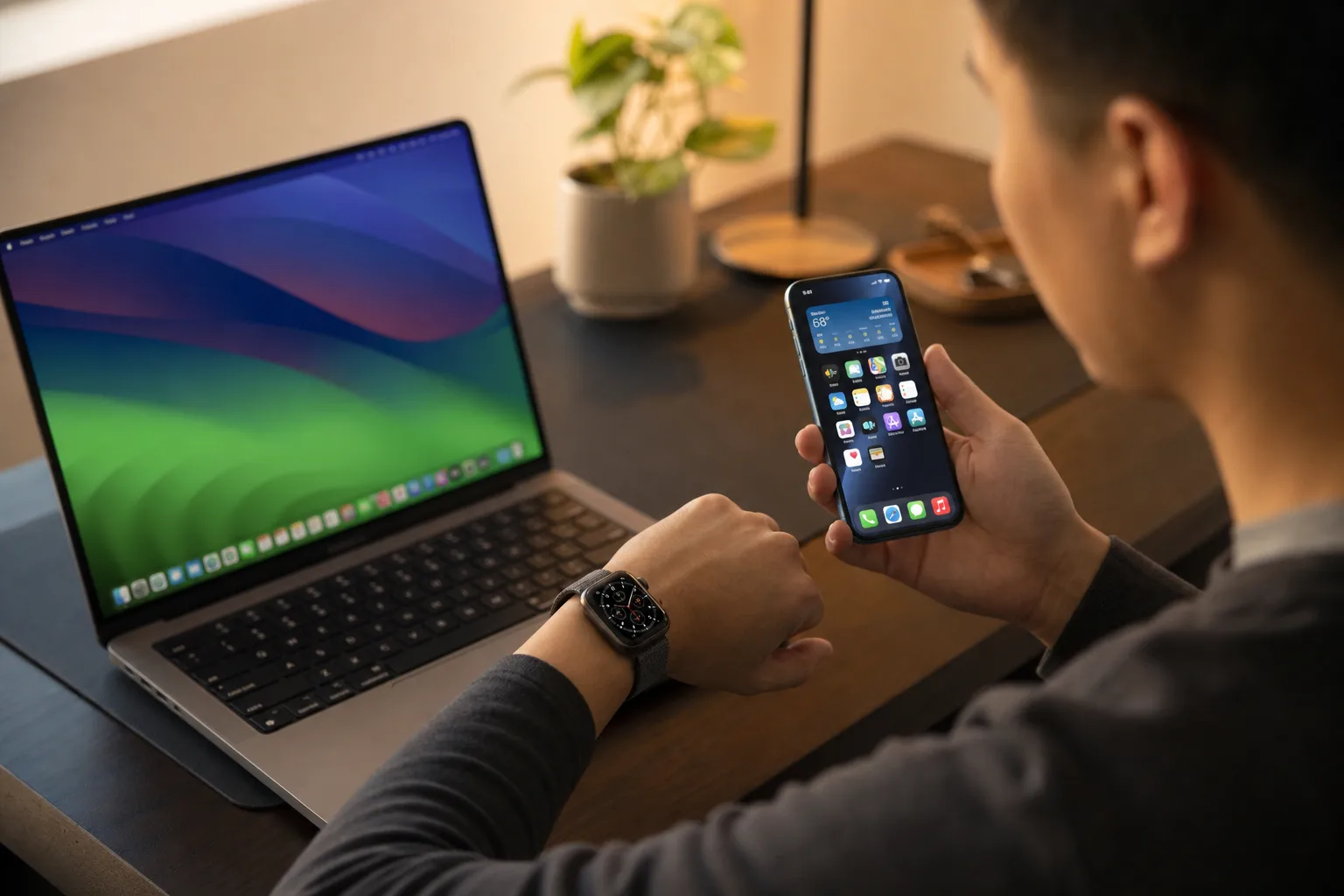
For years, one of the most persistent complaints about Apple’s assistant wasn’t that Siri was slow or mishearing commands — it was that Siri wasn’t even the same product from one device to another. Ask Siri AI a question on your iPhone today, then ask the same thing on your Apple Watch, and you’d get a different — sometimes worse — response. That era appears to be over. With iOS 27, Apple is shipping a fundamentally rebuilt assistant, and the defining feature might not be smarter answers. It might simply be consistency.
- Siri AI in iOS 27 delivers a consistent experience across iPhone, Apple Watch, Mac, and HomePod for the first time.
- Siri AI was intentionally designed as a singular assistant, according to Apple’s senior director of watchOS software engineering.
- The old Siri had different capabilities depending on which Apple device you used, creating a frustrating fractured experience.
- A unified Siri AI could strengthen Apple’s ecosystem story heading into a new era of on-device and cloud intelligence.
Table of Contents
What Siri AI Actually Fixes
Siri AI, rolling out as part of Apple’s iOS 27 software platform, is built around a principle the old Siri never really had: that the assistant should feel identical regardless of which Apple device you’re holding, wearing, or speaking into. That sounds obvious in retrospect. Apple has built a reputation on tight hardware-software integration. But Siri was always the awkward exception — a product that evolved in siloes, where engineers working on watchOS Siri, HomePod Siri, and iPhone Siri were effectively shipping different things under the same name.
The result was maddening if you lived inside Apple’s ecosystem the way Apple wants you to. You’d discover a feature on your iPhone that simply didn’t exist on your Mac. You’d get a confident answer from Siri on one device and a blank stare from Siri on another. It undermined one of Apple’s biggest selling points — that its products work better together than the competition’s.
The Official Explanation — and Why It Matters
Apple doesn’t often explain its engineering decisions in plain language, which is what made a recent interview with TechRadar worth paying attention to. David Clark, Apple’s senior director of watchOS software engineering, was speaking primarily about why watchOS 27 drops support for a significant number of older Apple Watch models. But buried in that conversation was a frank admission about what Siri was, and what Siri AI is meant to be instead.
“We really wanted to make sure the Siri experience is a singular and consistent experience, whether I decide to ask Siri on my wrist a question, or whether I have my phone in my hand and I decide to interact with Siri there. We really wanted to feel like it’s one Siri, that has access to your data and is able to personalise it in a consistent way.”
That’s Clark, and it’s a rare moment of Apple explicitly acknowledging a problem that users have been vocal about for the better part of a decade. The word “singular” is doing a lot of work in that quote. It signals that Siri AI isn’t just a smarter chatbot layered onto the existing infrastructure — it’s a rebuilt foundation designed so that your personal context, your data, and your interaction history follow you from device to device in a coherent way.
Siri AI and the Ecosystem Play
Apple’s ecosystem is genuinely one of its strongest competitive assets. The seamlessness of AirDrop, Handoff, Universal Clipboard, and iCloud sync across iPhone, iPad, and Mac is something Android and Windows users have spent years trying to replicate with varying degrees of success. Siri AI, if it delivers on Clark’s description, slots into that story in a way the old Siri never could.
Think about what it actually means for the assistant to have access to your data “in a consistent way” across devices. It means Siri AI on your Apple Watch can pick up where a conversation on your iPhone left off. It means reminders, context, and preferences aren’t siloed per device. That’s not a minor quality-of-life improvement — it’s the difference between an assistant that feels like a feature and one that feels like an actual tool you’d rely on.
The timing matters here too. Apple is pushing Siri AI into the market as Google, Amazon, and Microsoft are all aggressively evolving their own AI-powered assistants. Google’s Gemini has made real inroads on Android. Amazon is rebuilding Alexa from the ground up with generative AI. Microsoft has Copilot baked into Windows 11. Apple had to respond — and a fragmented, inconsistent Siri wasn’t going to cut it as a competitive answer.
The Hardware Question That Comes With It
There’s a trade-off hiding inside the Siri AI announcement, and Clark’s interview essentially confirms it. The reason watchOS 27 is dropping support for so many Apple Watch models isn’t arbitrary — it’s because running Siri AI at the level Apple is describing requires hardware capable of handling it. Older Apple Watch models simply can’t keep up. That’s a legitimate engineering constraint, though it will sting for users who bought watches not that long ago.
The flip side is that it raises expectations for upcoming hardware. Apple’s HomePod lineup and the Apple TV 4K, both of which have lagged behind iPhone and iPad in terms of Siri capability, become much more interesting devices if Siri AI lands on them with full parity. A HomePod that genuinely shares your assistant context with your iPhone — same intelligence, same personalisation — is a meaningfully more compelling product than what Apple currently sells. The same goes for Apple TV, which has long felt like Siri was bolted on as an afterthought.
Early Signs From the iOS 27 Beta
Siri AI is already live in the iOS 27 developer beta, and early impressions are generally positive. Testers have noted that Siri AI feels more capable and more coherent than previous versions, though it’s still beta software and the full picture will emerge over summer. What’s harder to test in beta is the cross-device consistency promise — that really only becomes apparent when you’re using multiple Apple devices in your daily life and notice that Siri AI on each one feels like the same assistant rather than distant cousins.
If Apple can actually deliver on that promise at scale — not just for beta testers but for hundreds of millions of users across iPhone, Mac, iPad, Watch, and eventually HomePod and Apple TV — it would represent the most meaningful upgrade Siri has seen since it first launched. That’s not a low bar. Siri’s reputation has taken real hits over the years, and restoring trust takes more than a rebrand. But a consistent, personalised Siri AI that follows you across Apple’s entire product lineup is at least the right starting point — and it’s the one users have been asking for the longest.

