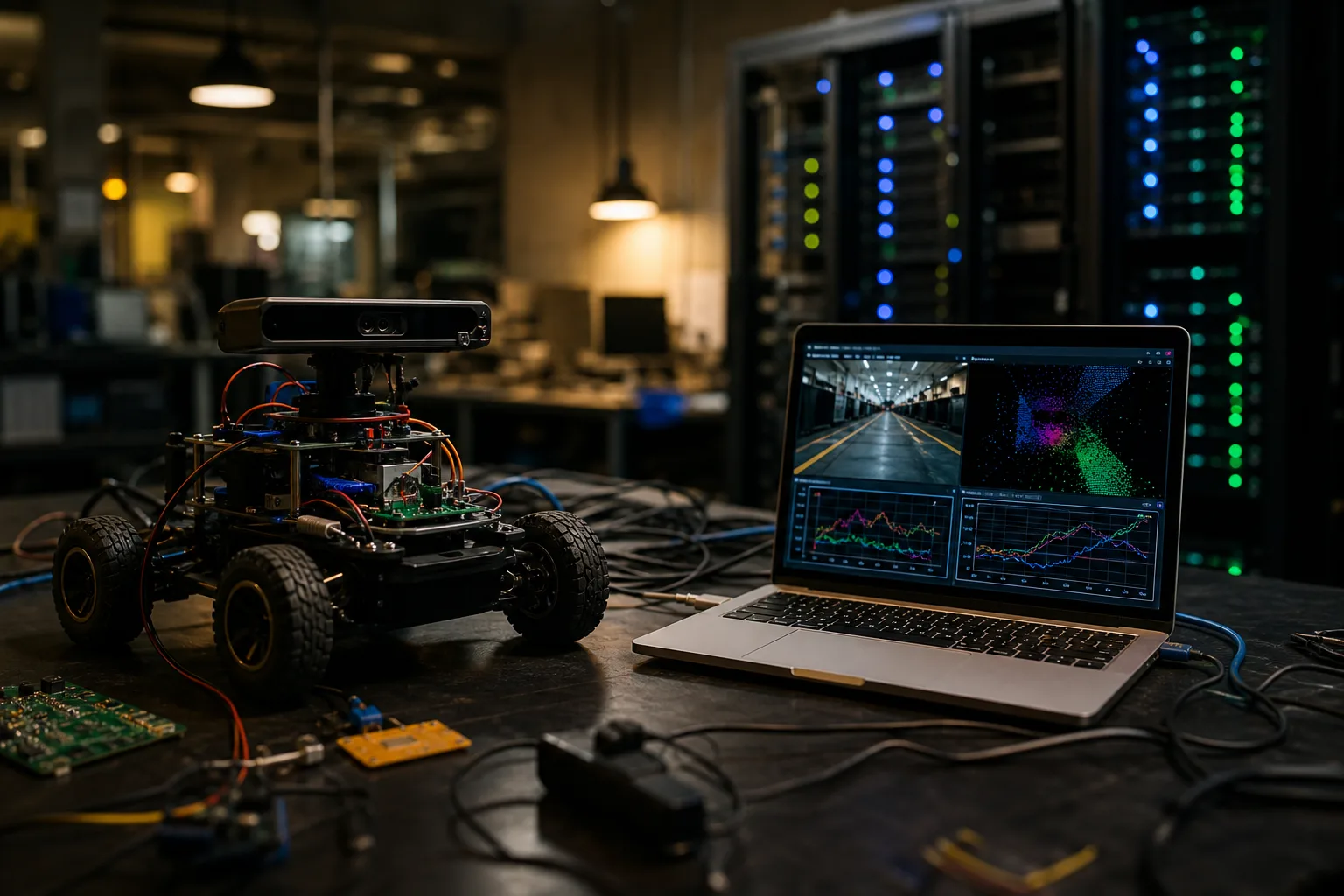
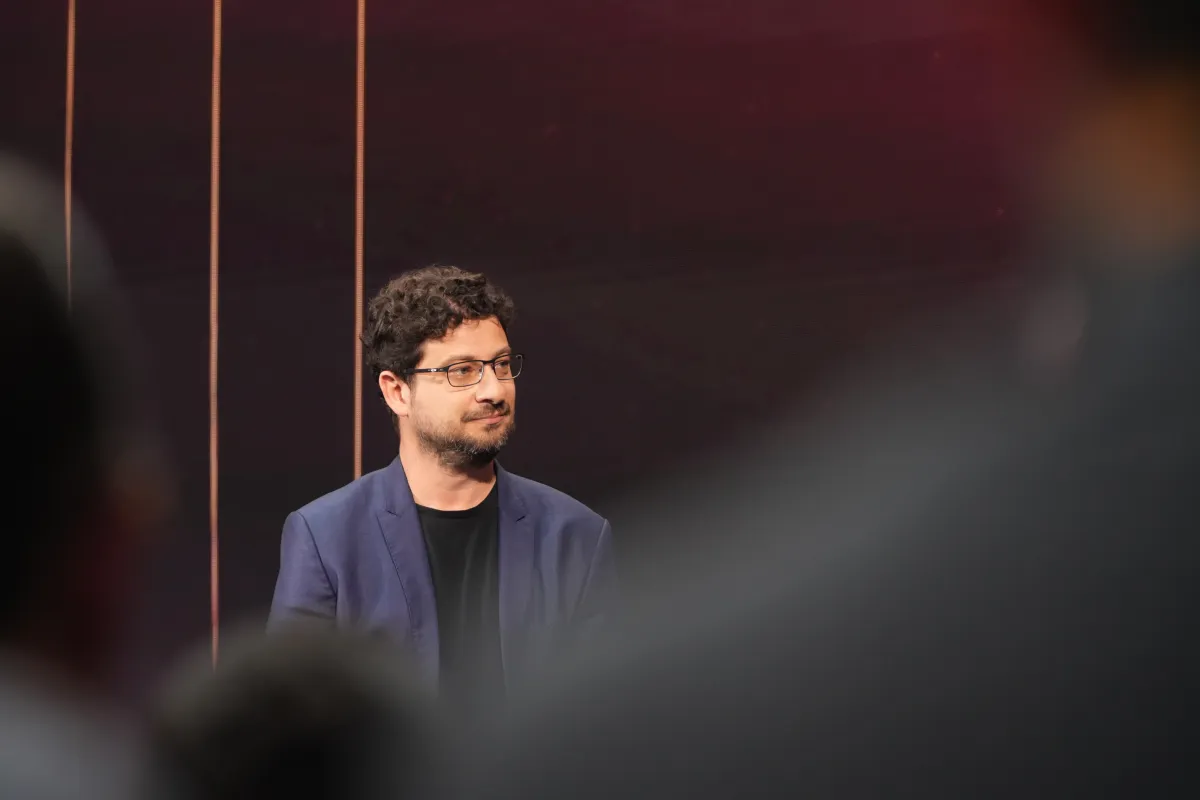
If you’ve ever watched a video on your laptop without paying a cent for the software, there’s a reasonable chance Jean-Baptiste Kempf had something to do with it. As the lead developer of VLC Media Player — the humble app with the orange traffic-cone icon that’s racked up over 6 billion downloads — Kempf built one of the most-used pieces of software on the planet. Now he’s training his sights on a harder problem: robot control infrastructure for a world he believes will soon be crawling with autonomous machines.
- Kyber is building robot control infrastructure that synchronizes video, sensor data, and control inputs with minimal latency at massive scale.
- The startup raised $5 million from Lightspeed, targeting robot control infrastructure for robotics, drones, and remote IT access markets.
- Jean-Baptiste Kempf, lead developer of VLC Media Player with over 6 billion downloads, founded Kyber as a side project while at Shadow.
- Kyber’s core SDK is open source, with a productized enterprise version and hands-on deployment engineers serving defense, telco, and AI clients.
Table of Contents
The Robot Control Infrastructure Bet
Kempf’s new company is called Kyber, and its ambition is to become the foundational software layer for anyone who needs to operate physical devices remotely — in real time, at scale, with as close to zero lag as modern networking allows. That covers a lot of ground. Drones, delivery robots, autonomous vehicles, remote industrial equipment — the common thread is that the person controlling the device isn’t standing next to it, and that gap creates a set of hard technical problems that most companies have quietly solved for themselves and refused to share. Building shared robot control infrastructure is Kyber’s answer to that fragmentation.
Kyber’s core product is an SDK that pulls together video, audio, sensor data, and control inputs and synchronizes them with minimal latency. It’s not magic — it’s the kind of careful, unglamorous engineering that Kempf has been doing for decades. But the market timing feels real. Warehouses are filling with autonomous mobile robots. Drone delivery corridors are being mapped out across cities. The defense sector is deploying unmanned systems at a pace that would have seemed speculative five years ago. All of those use cases share a common dependency: they need reliable, low-latency robot control infrastructure, and most of them are building it from scratch.
From VLC to Robots: The Throughline Is Latency
The connection between a free video player and a robot startup isn’t as odd as it sounds. VLC’s endurance as a piece of software owes a lot to how efficiently it handles streams — decoding video fast, tolerating imperfect network conditions, running well on underpowered hardware. Those are almost exactly the constraints you face when you’re trying to pipe camera feeds and sensor data from a drone back to an operator in real time. Kempf started Kyber as a side project while he was serving as CTO at Shadow, the French cloud gaming startup, where low-latency streaming was similarly the whole game. The lessons he absorbed there map directly onto the robot control infrastructure problem.
‘If you control things in the real world, every millisecond matters,’ Kempf told TechCrunch. That’s not a platitude — it’s a description of why existing solutions break down at scale. The name Kyber is a nod to the lightsaber crystals in Star Wars, which feels appropriate for a company obsessed with speed. But the actual engineering philosophy is grounded in the same principles that made VLC so durable: build for the full range of hardware you’ll encounter, optimize relentlessly, and don’t assume you’re working in ideal conditions.
The startup is also leaning into IoT-style device management — tuning performance to whatever compute is available on a given device, across potentially enormous fleets. That’s the other half of what makes robot control infrastructure genuinely difficult. It’s not just streaming; it’s knowing how to scale that streaming across thousands or millions of endpoints without the whole system collapsing under its own weight.
Why Scale Changes Everything
Kempf is quick to point out that he’s not the first person to build this kind of software. Companies like Waymo and others in the autonomous vehicle space have invested heavily in remote operation tooling for their own fleets. But those are bespoke systems built for specific use cases, and they stop at the company’s own firewall. ‘The largest fleets today have maybe 2,000 or 3,000 vehicles,’ Kempf said. ‘Imagine you need to manage millions of them — that’s not the same thing.’
He’s right, and the implications go beyond raw throughput. When you’re running a fleet of dozens of robots with humans in the loop, a software glitch is an inconvenience. When you’re running millions of autonomous devices managed by AI agents rather than people, a silent failure in your robot control infrastructure can cascade in ways that are genuinely dangerous. Observability — knowing your systems are actually working, in real time, across every node in the network — becomes critical at that scale in a way it simply isn’t when you can physically walk over and check a device.
Even at much smaller scales, though, Kyber has a practical pitch: you shouldn’t need to physically touch every device on your network to push a software update. Remote device management is one of those problems that sounds boring until you’re managing a fleet of robots across three continents and one of them needs a firmware patch. Robust robot control infrastructure makes that kind of operation routine rather than heroic.
Lightspeed Bets on Physical AI’s Plumbing
The $5 million seed round Kyber raised was led by Lightspeed Venture Partners, which has backed Anthropic and Mistral AI — meaning the firm has developed a strong intuition for where the AI stack is thin. ‘Physical AI is only as good as the underlying systems running it,’ Lightspeed wrote in a LinkedIn post announcing the investment. That framing is telling. The VC conversation around AI has been dominated by models and applications for the past few years, but a growing number of investors are waking up to the fact that physical AI — robots, drones, autonomous vehicles — has a different set of robot control infrastructure requirements that the cloud-native software stack wasn’t built for.
Kyber is Paris-based but maintains offices in San Francisco and Singapore, which signals that Kempf isn’t thinking about this as a European niche play. The company already has paying customers in defense, telecom, robotics, and AI — a diverse enough spread to suggest real demand rather than a single anchor client keeping the lights on. The 25-person team includes a significant proportion of forward-deployed engineers, a model borrowed from companies like Palantir, where getting the software working in a customer’s specific environment is part of the product rather than an afterthought.
Three Markets, One Platform
Kyber has narrowed its current focus to three segments: robotics, drones of all kinds, and remote IT access. That last one is worth pausing on. Remote IT access — the ability to manage and troubleshoot hardware without being physically present — might be the least exciting application in Kyber’s portfolio, but it’s also likely the most immediately monetizable. Kempf has said the company aspires to do more than challenge Citrix in this space, but even just competing credibly with legacy remote access vendors would put Kyber in front of a substantial enterprise market where standardized robot control infrastructure is still largely absent.
The open-source strategy gives Kyber a distribution advantage that pure enterprise software companies can’t easily replicate. Kempf’s careers page captures the pitch bluntly: ‘The companies that tried to solve it spent years and tens of millions building custom solutions they’ll never share. We’re building the version everyone else can use.’ That’s a familiar playbook — commoditize the layer below you, sell services and enterprise features above it — but Kempf has actually pulled it off before at enormous scale with VLC. Whether Kyber can thread the same needle in a market with higher stakes and more entrenched incumbents will be the real test.
The broader bet is that the proliferation of connected physical devices is going to create demand for exactly this kind of shared robot control infrastructure, in the same way that the rise of cloud computing created demand for shared networking and storage layers. If Kempf is right that hundreds of millions of robots and drones are coming, the companies that own the robot control infrastructure layer underneath them will occupy a very powerful position. That’s not a guaranteed outcome — but it’s the kind of infrastructure bet that tends to look obvious in retrospect.
Frequently Asked Questions
What does Kyber’s robot control infrastructure actually do?
Kyber’s core SDK synchronizes video, audio, sensor data, and control inputs with minimal latency across remote devices. It’s designed to manage everything from a handful of robots to millions of drones or vehicles, solving the core problem of operating devices where the operator, compute, and action are all in different places.
Who is Jean-Baptiste Kempf and why is he building this?
Kempf is the lead developer of VLC Media Player, which has been downloaded more than 6 billion times. He started Kyber as a side project while serving as CTO at cloud gaming startup Shadow, applying his deep expertise in low-latency video streaming to the emerging world of remotely operated physical devices.
Who has invested in Kyber and how much has it raised?
Kyber raised a $5 million round led by Lightspeed, the American VC firm that has also backed Anthropic and Mistral AI. The funding reflects growing investor interest in the physical AI layer — the systems that make autonomous and remote-operated hardware actually function reliably.
Is Kyber’s software open source?
Yes. True to Kempf’s roots with VLC, the core project is open source. Kyber monetizes through a productized enterprise version and by offering forward-deployed engineers who help customers implement the platform in sectors like defense, robotics, and telecommunications.