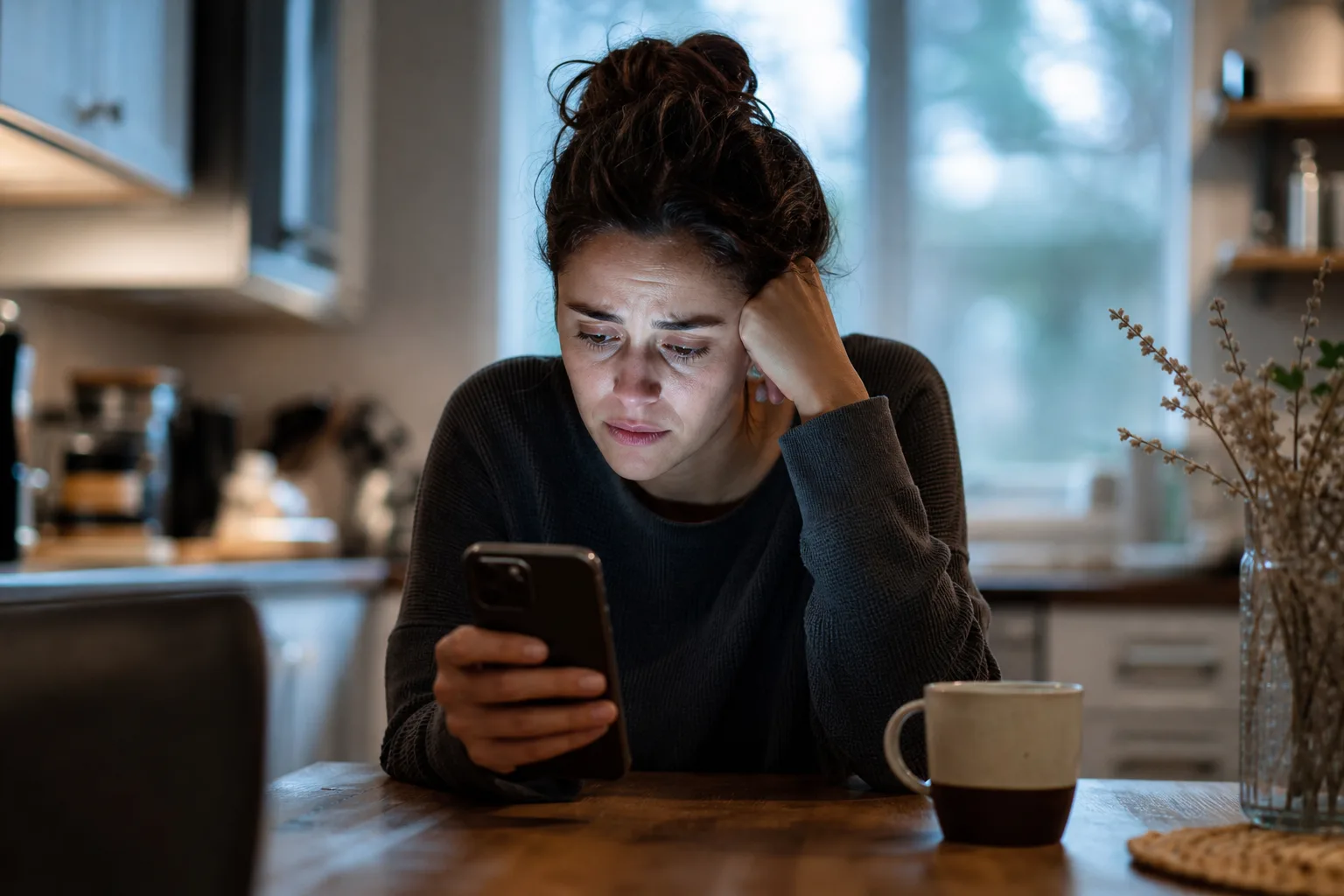
Bad news fatigue has quietly become one of the defining psychological experiences of the 2020s — and new research suggests the problem runs far deeper than simple burnout. It’s not that people have become less curious or less civic-minded. It’s that the human brain, shaped by millions of years of evolution, is being asked to do something it was genuinely never designed to do.
- Bad news fatigue affects 40% of global news consumers in 2025, the highest avoidance rate ever recorded by Reuters Institute.
- Bad news fatigue isn’t weakness — it’s a predictable neurological response to a media environment our brains were never built for.
- 17% of American adults meet the criteria for Problematic News Consumption, with 61% of that group reporting significant physical ill-health.
- Scheduling defined news windows and choosing depth over social-media volume are among the most effective strategies researchers recommend.
Table of Contents
The Numbers Behind Bad News Fatigue Are Striking
The Reuters Institute’s 2025 Digital News Report found that 69% of Canadians now at least occasionally avoid the news. Globally, 40% of people say they sometimes or often do the same — the highest figure the report has ever recorded. When researchers asked why, the answers were consistent: the news put people in a bad mood, left them feeling overwhelmed, and — critically — powerless to change anything. These findings confirm that bad news fatigue is not a fringe experience but a mainstream response to the modern media environment.
That last point matters more than it might seem. Psychologists have long known that the gap between awareness and agency is one of the strongest predictors of psychological distress. You can know exactly what’s happening in four different conflict zones simultaneously and still be completely unable to affect any of them. That’s not information — that’s a stress response with nowhere to go.
Wired for Threats, Buried in Them
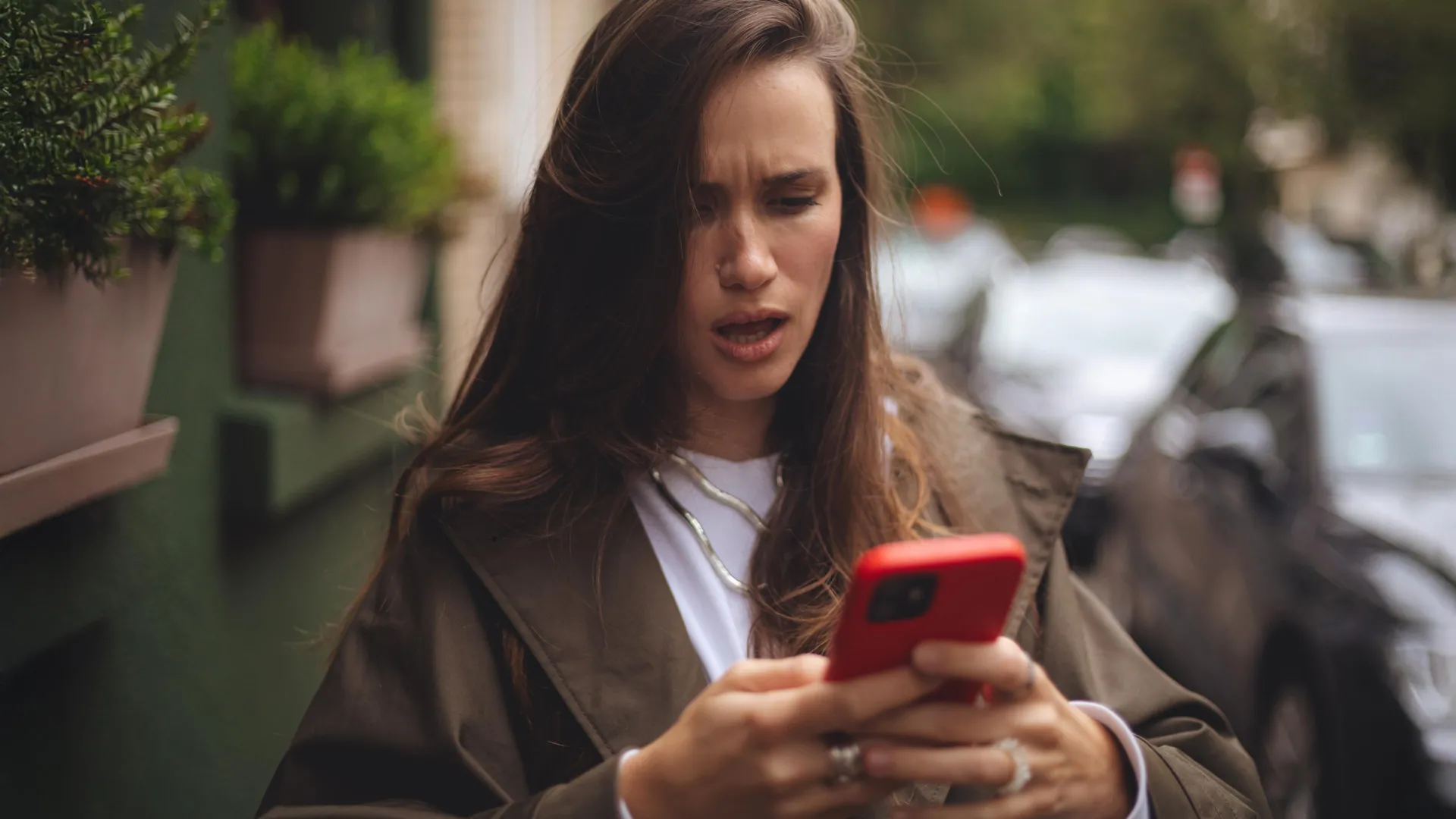
To understand why bad news fatigue hits so hard, you have to go back a long way. Our cognitive architecture was shaped not by the internet, not by newspapers, not even by language in its modern form — but by the brutal arithmetic of survival. Ancestors who paid close attention to potential threats left more descendants than those who didn’t. The brain that froze at an unfamiliar sound in tall grass was the brain that survived long enough to reproduce.
That’s the foundation of what psychologists call the negativity bias: one of the most consistently replicated findings in all of cognitive science. The human mind weighs negative information more heavily than positive, attends to it faster, and holds onto it longer. A predator nearby mattered more than a beautiful sunset — the cost of ignoring a real threat was death, while the cost of a false alarm was just a few wasted minutes of vigilance. That asymmetry made the bias deeply adaptive.
Here’s the problem: that same brain is now being handed a smartphone at breakfast. In 2026, the identical neurological system that once scanned a local environment for predators is being asked to absorb a war in one region, a financial shock in another, a climate disaster in a third, and a violent crime somewhere else entirely — all before the morning coffee’s gone cold. Bad news fatigue is, in large part, the inevitable result of that mismatch: ancient hardware running an incomprehensible modern data load. The hardware hasn’t changed. The data load has become incomprehensible.
A study published in Nature Human Behaviour examined more than 105,000 real news headlines, viewed nearly six million times. The finding was stark: each additional negative word in a headline increased click-through rates, while positive words had the opposite effect. The media industry didn’t create the negativity bias — but it has learned, with alarming efficiency, to exploit it.
When News Consumption Becomes a Clinical Problem
Bad news fatigue exists on a spectrum. At the mild end, it’s the familiar feeling of putting the phone down after ten minutes of scrolling and wondering why you feel worse than before you picked it up. At the severe end, researchers have introduced a clinical framework: Problematic News Consumption, or PNC — a pattern of news engagement that results in preoccupation, emotional dysregulation, and meaningful disruption to daily life.
A 2022 study found that 17% of American adults qualified for severe PNC. Among that group, 61% reported feeling unwell quite a bit or very much — compared with just 6% among people who didn’t meet the PNC threshold. That’s not a marginal difference. That’s a ten-fold gap in reported wellbeing, and it’s being driven significantly by how people consume information rather than simply by what’s happening in the world. For many of these individuals, bad news fatigue had crossed from a manageable irritation into a genuine health concern.
The physiological dimension is particularly striking. Recent research shows that people worldwide demonstrate measurably stronger physical responses to negative news than to positive news — elevated heart rate, cortisol spikes, muscle tension. The body is reacting before the conscious mind has even decided whether the threat is relevant to that individual’s actual life. A report about a crime three thousand miles away can trigger the same initial stress response as a real danger nearby.
The Unequal Burden of News Overload
It’s tempting to treat bad news fatigue as a universal experience — everyone’s tired, everyone’s overwhelmed, everyone’s muting notifications. But that framing papers over a real inequality. For racialized communities, immigrants, and ethnic minority populations, the experience is qualitatively different and considerably heavier.
When you belong to a group that’s regularly the subject of news coverage — as a target of violence, discrimination, or political policy — the option to simply step away isn’t equally available. For someone watching coverage of events in their home country, or tracking legislation that directly affects their family’s safety, ‘just consume less news’ isn’t a lifestyle tweak. It’s an impossible ask. Research on vicarious trauma confirms that repeatedly witnessing harm directed at your own community, even when you’re not the immediate target, carries real psychological weight. The cognitive load is heavier, and the exits are fewer. In this context, bad news fatigue is not simply a matter of individual sensitivity — it reflects a structural imbalance in who bears the psychological cost of staying informed.
Bad News Fatigue Isn’t Fixed by Looking Away
Here’s where the research gets genuinely useful. The instinct when you’re overwhelmed is to disengage entirely — delete the news apps, stop checking social media, go on a ‘news detox.’ But researchers argue that full avoidance creates its own problems. Democratic societies depend on engaged, informed citizens. And the vacuum left by retreat from trustworthy journalism tends to get filled by something worse: misinformation, rumour, algorithmically-amplified rage bait.
The solution isn’t less information — it’s more intentional information. A few approaches have meaningful research support behind them:
- Time-boxing your consumption. Containing news to defined windows — say, thirty minutes in the early evening rather than constant background refreshes — significantly reduces the sense of overwhelm without leaving you uninformed.
- Depth over volume. One carefully reported long-form piece will actually inform you better than twenty emotional, unreliable social media posts. The news literacy argument and the mental health argument point in the same direction here.
- Closing the awareness-agency gap. Research on stress and perceived control consistently shows that knowing about a problem without having any way to act on it is psychologically corrosive. Identifying something — however small — that you can actually do about what you’ve read helps regulate the stress response.
- Recognising rage bait for what it is. Certain content creators and platforms are optimised not to inform but to provoke. Developing the habit of asking ‘is this designed to reflect reality or to make me angry?’ creates useful cognitive distance between the stimulus and your response.
None of this makes the underlying news lighter. The world is not going to become less complicated or less distressing to keep track of. But bad news fatigue — the accumulated weight of unprocessed threat signals — is something your nervous system can learn to manage better. And the research suggests the payoff is real.
What the Tech Industry Owes This Conversation
There’s a dimension here that the psychology researchers tend to underplay: the degree to which this problem is, at least partly, an engineered one. The platforms that deliver most people’s news — Meta’s Facebook and Instagram, X (formerly Twitter), ByteDance’s TikTok — are not neutral pipes. They are engagement-maximisation engines, and the Nature Human Behaviour finding about negative headlines isn’t some academic curiosity. It’s the operating principle of every recommendation algorithm currently running at scale.
Bad news fatigue isn’t just a personal mental health challenge. It’s partly a product design choice — one that prioritises time-on-platform over the psychological wellbeing of the people on it. Some platforms have made token gestures toward ‘wellbeing’ features: screen time dashboards, notification nudges, news feed filters. None have meaningfully changed the underlying incentive structure, which remains stubbornly pointed toward outrage and anxiety because those emotions drive clicks.
Until that changes — and there’s little market pressure to force it — the burden falls on individuals to build intentional habits around how, when, and where they get their news. That’s an imperfect solution to what is, in significant part, a systemic problem. But it’s the one we’ve got. And the science of how to manage bad news fatigue, at least, is getting clearer.
Frequently Asked Questions
What exactly causes bad news fatigue?
Bad news fatigue stems from the brain’s negativity bias — an evolutionary tendency to weight threats more heavily than positive signals. Modern media amplifies this by delivering a continuous stream of global crises, overwhelming a nervous system built to process only local, immediate dangers.
Is bad news fatigue the same as Problematic News Consumption?
They’re related but not identical. Bad news fatigue is the general feeling of overwhelm and avoidance. Problematic News Consumption (PNC) is a clinical framework describing cases where news engagement causes preoccupation, emotional dysregulation, and measurable disruption to daily functioning.
Should I just stop following the news to feel better?
Researchers advise against full avoidance. Democracies depend on informed citizens, and withdrawing from trustworthy sources can increase exposure to misinformation. The recommended approach is structured consumption: set time limits, choose quality long-form journalism over social feeds, and identify actions you can take.
Does bad news fatigue affect some groups more than others?
Yes. For racialized communities, immigrants, and minority groups, news about events targeting their communities carries an extra psychological burden. The option to simply ‘switch off’ is also much harder when coverage directly concerns their country of origin or their own safety.