WWDC 2026 is done and dusted, but if you thought Apple’s product year was winding down, think again. Bloomberg’s Mark Gurman used his Power On newsletter this week to outline roughly 20 Apple new products expected to land between now and the end of 2027 — and the list is one of the most ambitious the company has assembled in recent memory. Foldable iPhones, OLED MacBooks, smart home hubs, AI-powered glasses: it’s a lot to take in. Here’s what’s actually coming, and why it matters.
- Apple new products for 2026–2027 include around 20 devices, from the foldable iPhone Ultra to Apple Glasses.
- The Apple new products lineup is heavily tied to the delayed Siri upgrade, finally arriving two years after its WWDC 2024 preview.
- A MacBook Ultra with an OLED display and touchscreen marks the most significant Mac redesign in years.
- The iPhone 20 Pro models, marking Apple’s 20th-anniversary iPhone, are rumored to feature curved, edge-to-edge glass displays.
Table of Contents
Why the Siri Delay Shaped Everything
Before getting to the hardware, there’s a critical piece of context. Apple previewed a more intelligent, more personal version of Siri at WWDC 2024 — and it’s only now, two full years later, entering beta. That delay reportedly rippled across the entire product roadmap. Multiple Apple new products were quietly held back until the new Siri was ready to debut alongside them, because the experience simply wouldn’t have made sense without it. The home hub, for instance, is built almost entirely around Siri as its primary interface. The Apple TV refresh and HomePod mini updates are both getting the upgraded assistant baked in. In a very real sense, Siri’s tardiness is the reason so many Apple new products are landing at once.
The iPhone Lineup: From Incremental to Historic
Apple’s September iPhone drop is always a certainty, but 2026 and 2027 bring some genuinely unusual entries to the lineup. Among all the Apple new products expected this cycle, the iPhone roster may be the most headline-grabbing.
The iPhone 18 Pro and iPhone 18 Pro Max are the familiar annual update — A20 Pro chip, a slightly smaller Dynamic Island, a simplified Camera Control button, and a new Dark Cherry color. The big hardware addition is variable aperture on at least one rear camera, which Canon and Sony have used in dedicated cameras for years. Apple bringing it to a smartphone could meaningfully change low-light and portrait photography. There’s also Apple’s own C2 modem making its debut, adding 5G web browsing via satellite — a capability that puts Apple’s connectivity ambitions in direct competition with Qualcomm’s roadmap.
The iPhone Air 2 rounds out the standard lineup with an Ultra Wide camera addition and longer battery life, addressing the two most common complaints about the original Air. It also gets the A20 chip rather than the Pro variant — keeping it clearly below the Pro tier while still being a genuinely capable device.
Then there’s the one everyone’s been waiting for.
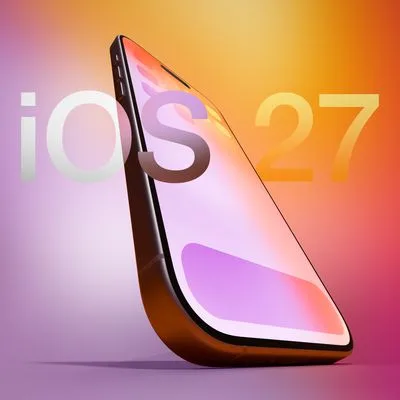
The foldable iPhone Ultra is expected to carry a 7.7-inch inner display and a 5.3-inch outer display — dimensions that make it bigger than a standard iPhone when closed but rival a small iPad when open. It’ll have two rear cameras, one front camera, and — notably — Touch ID via the power button rather than Face ID. That’s a significant architectural choice, likely driven by the physical constraints of a folding hinge. iOS 27 is reportedly being shaped around the device, with side-by-side app multitasking and iPad-style functionality built in from the ground up. Apple isn’t just releasing a foldable phone; it’s building an OS to match. As Apple new products go, the foldable iPhone Ultra may be the single most anticipated launch in years.
Looking further ahead, the iPhone 20 Pro and iPhone 20 Pro Max — Apple’s 20th-anniversary models — are rumored to feature a nearly edge-to-edge display with curved glass wrapping around the sides. Think Samsung’s early curved displays, but executed with the kind of precision Apple’s manufacturing partners at TSMC and Foxconn can now achieve. If the rumor holds, the iPhone 20 Pro could be one of the most visually dramatic redesigns since the original iPhone X.
Apple Watch: Incremental Updates With One Big Question Mark
The Apple Watch Series 12 and Apple Watch Ultra 4 are expected to bring faster S11 chips and some combination of Touch ID integration and additional health sensors — though Gurman notes these details are still disputed. What’s less disputed is the satellite expansion: Apple Watch Ultra 3 and newer models may gain Apple Maps via satellite and the ability to send and receive photos through Messages over satellite. That’s a meaningful leap for adventure and safety use cases, and it deepens Apple’s investment in its satellite infrastructure. These wearable Apple new products may be incremental on paper, but the satellite capabilities represent a genuine platform shift.
iPads and Macs: The Quiet Workhorses
The standard iPad 12 is due for a significant chip jump — from the A16 to either an A18 or A19 — which would finally bring Apple Intelligence support to the entry-level iPad. That’s a bigger deal than it sounds, given how many schools and budget-conscious buyers rely on the base model.
The iPad mini gets a more substantial overhaul: an OLED display, a vibration-based speaker system, a water-resistant design, and an A19 Pro or A20 Pro chip. OLED on a mini-sized iPad could make it the best pocket-sized tablet on the market by a considerable margin. Samsung’s Galaxy Tab S series is the main competition here, and Samsung has had OLED in that tier for a while. Apple’s catching up, but it’s bringing the kind of build quality Samsung can’t quite match. Both iPad entries rank among the more compelling Apple new products aimed at everyday consumers this cycle.
On the Mac side, the Mac Studio, Mac mini, and iMac all receive their expected M5 chip upgrades — evolutionary rather than transformational, but important for keeping Apple’s desktop line competitive as AMD and Intel push their own silicon further. The iMac also gets new color options, which matters more than it sounds for a computer that sits on a desk and doubles as home décor for many buyers.
The headline Mac announcement, though, is the MacBook Ultra. What Gurman is describing here is essentially a reinvention of the MacBook Pro: M6 Pro and M6 Max chips, a thinner chassis, a Dynamic Island (yes, on a laptop), an OLED display, and a full touchscreen. MacOS 27 is expected to include a touch-friendly interface layer to go with it. Apple has resisted touchscreen Macs for years — famously dismissing the concept as ergonomically wrong — so this is a meaningful reversal. Whether macOS 27’s touch layer actually works well will be the real story when reviews land. The MacBook Ultra stands out as one of the boldest Apple new products in the entire 2026–2027 pipeline.
Home, Audio, and the Wearables Push
Apple’s home category has long been its most neglected, but 2026–2027 looks like a serious course correction. Several of the most interesting Apple new products in this wave are aimed squarely at the living room and kitchen counter.
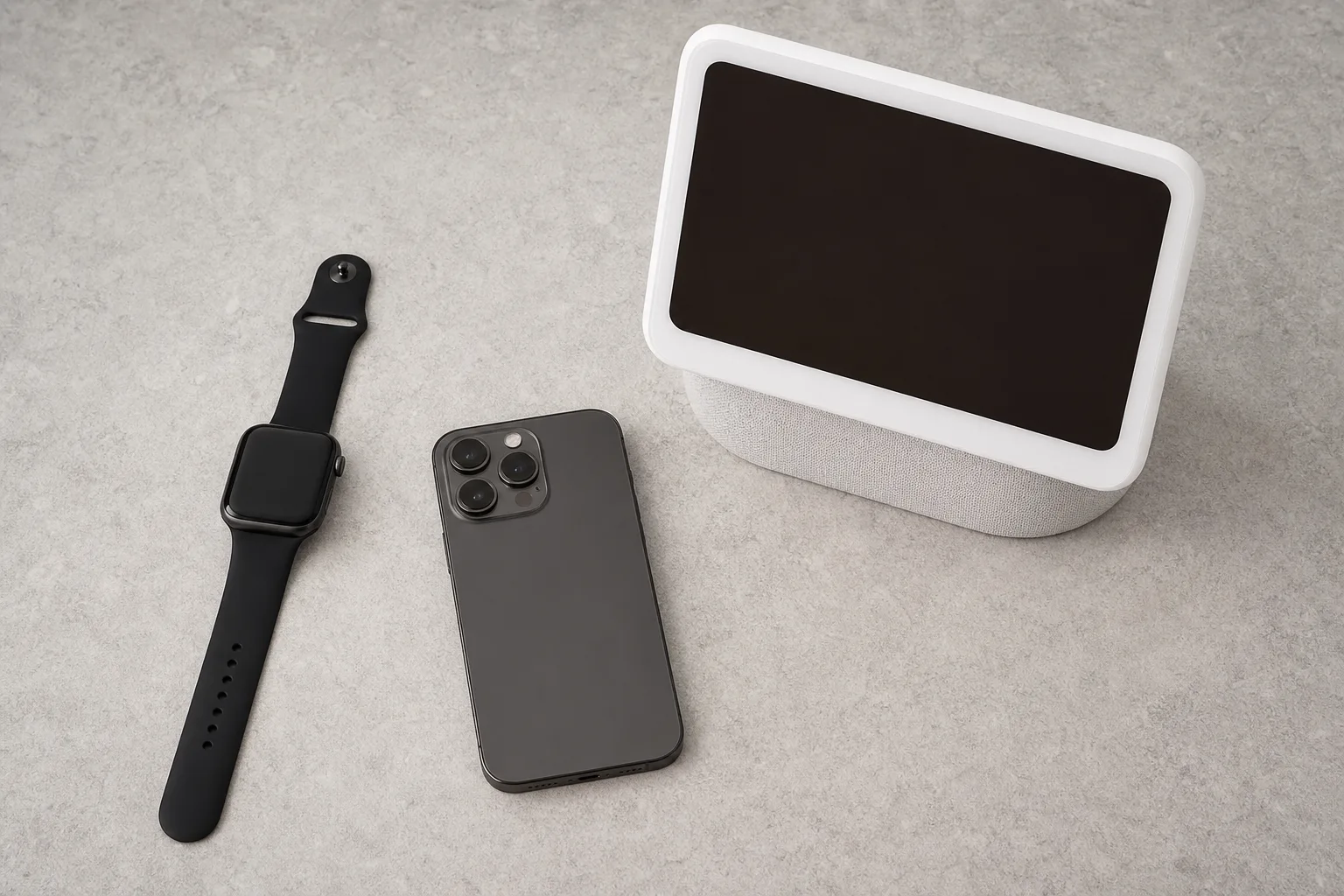
The Apple home hub — a brand-new product category — is a 6-to-7-inch square display powered by an A18 chip with full Apple Intelligence support. It sits on a table or mounts on a wall, handles FaceTime, and runs the new Siri. Think of it as Apple’s answer to Amazon’s Echo Show and Google’s Nest Hub, but with deeper integration into the Apple ecosystem and, presumably, the kind of premium build quality those devices have never had. This is the product Apple’s been circling for years, and it might finally be here.
The Apple TV gets an A17 Pro chip and Apple’s new N1 chip for Wi-Fi 7 support — the same N1 chip rumored across multiple home devices. A built-in FaceTime camera has been discussed, but Gurman isn’t sure it makes this particular revision. The HomePod mini gets a similar treatment: improved sound, a second-gen Ultra Wideband chip, Wi-Fi 7 via N1, and potentially a red color option. The full-sized HomePod gets a refresh centered on the upgraded Siri.

In wearables, the most intriguing entry is AirPods Ultra — a version of AirPods with cameras built in for Visual Intelligence and Siri AI features. The concept sounds odd until you realize this is exactly how Meta’s Ray-Ban smart glasses work, and those have sold better than almost anyone expected. Apple watching that success and building cameras into its own audio hardware is a logical, if still-surprising, move.
And then there are Apple Glasses. Long rumored, rarely detailed, the smart glasses are now described as featuring oval-shaped cameras and custom frame designs. Apple hasn’t committed to a timeline anyone’s found reliable, but its appearance on Gurman’s 2026–2027 list suggests internal development has reached a point where a release is at least plausible within that window. If they ship, Apple Glasses will instantly become the most talked-about Apple new products of the decade.
What This Pipeline Tells Us About Apple’s Direction
Read across all 20 Apple new products and a clear theme emerges: Apple is using the Siri upgrade as a forcing function to refresh its entire lineup at once. Devices that might have shipped incrementally are now arriving with AI-first positioning baked in from launch. That’s a different strategy than the slow rollout of Apple Intelligence onto existing hardware — this time, Apple’s building the hardware around the software.
The other thread running through all of this is Apple’s ambition in the home. Between the home hub, the HomePod refresh, the Apple TV, and AirPods Ultra, Apple is making a sustained push into the ambient computing space that Amazon and Google have occupied for a decade. Whether Apple can displace entrenched habits — and price-sensitive buyers who’ve already invested in rival ecosystems — remains the biggest open question of its hardware roadmap heading into 2027.
Frequently Asked Questions
What Apple new products are expected in 2026?
The most anticipated Apple new products for late 2026 include the iPhone 18 lineup, Apple Watch Series 12 and Ultra 4, a new smart home hub with a 6–7 inch display, an updated Apple TV, HomePod mini refresh, and possibly the MacBook Ultra with an OLED screen.
What is the foldable iPhone Ultra rumored to look like?
The foldable iPhone Ultra is expected to feature a 7.7-inch inner display and a 5.3-inch outer display, two rear cameras, one front camera, and a Touch ID power button rather than Face ID. iOS 27 will reportedly offer iPad-style multitasking for the device.
When will the MacBook Ultra with an OLED display launch?
The MacBook Ultra — a major redesign of the MacBook Pro line — is expected to arrive in late 2026 or early 2027, featuring M6 Pro and M6 Max chips, a touchscreen, Dynamic Island, and a thinner chassis.
Does the new Apple home hub have Apple Intelligence support?
Yes. The rumored Apple home hub is expected to include an A18 chip, which enables Apple Intelligence features. It also reportedly supports FaceTime, a 6–7 inch square display, and the more personalized version of Siri that recently arrived in beta.