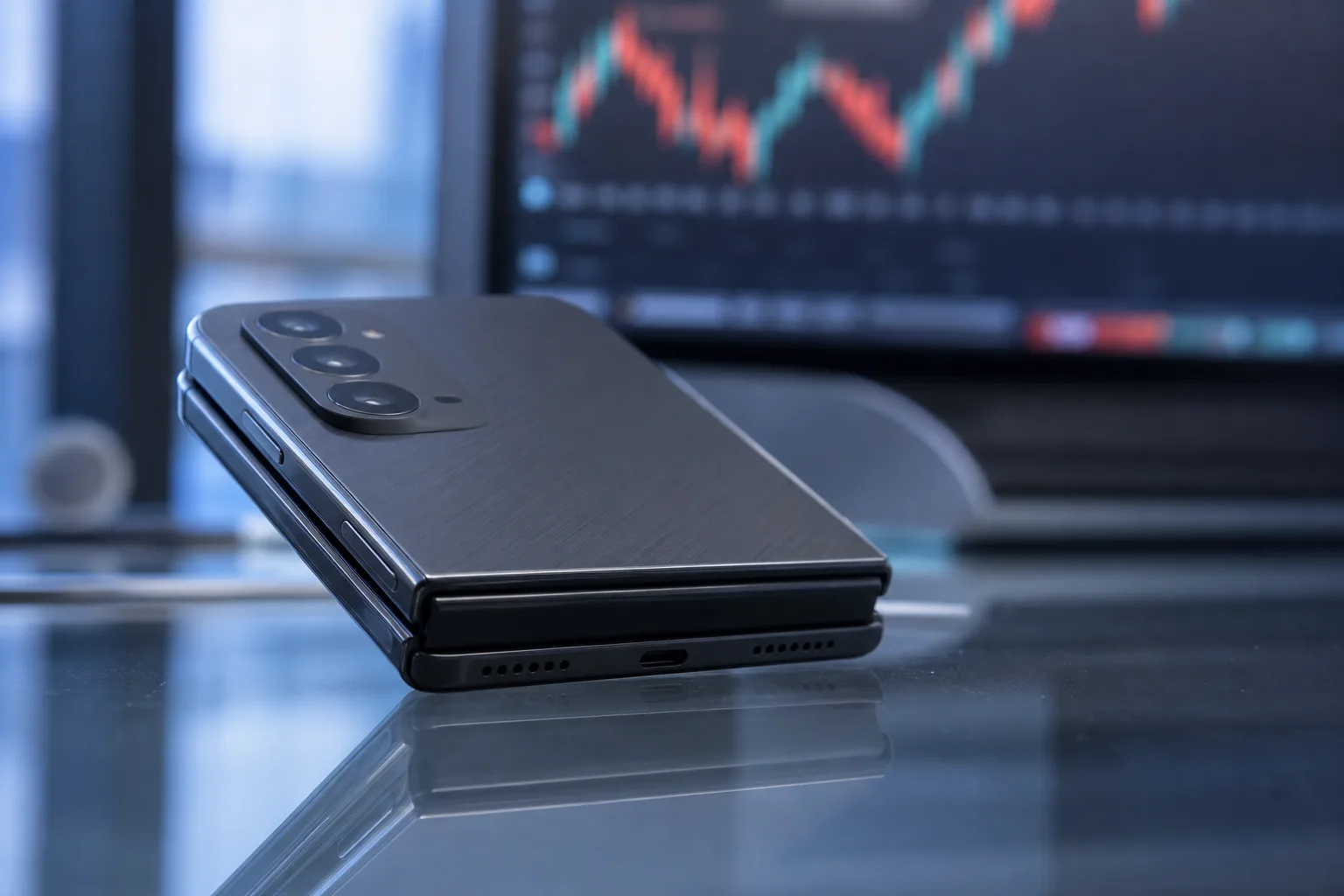
The Apple stock rebound everyone on Wall Street needed heading into the July 4th holiday weekend finally arrived — and it came from an unlikely place: a foldable phone that most consumers can’t yet afford. After a bruising week in which Apple’s surprise announcement of steep price increases on Macs, iPads, and other hardware sent $AAPL sliding, the stock clawed back roughly 5% in a single session. The catalyst wasn’t a product launch or a blockbuster earnings beat. It was a production order bump.
- The Apple stock rebound of 5% comes after a sharp selloff triggered by unprecedented Mac and iPad price increases.
- The Apple stock rebound is being fuelled by news that Apple raised foldable iPhone Ultra production targets to 10 million units.
- IDC predicts the foldable iPhone Ultra will carry an average selling price of around $2,500 — a massive revenue opportunity.
- Apple is expected to sell roughly 240 million iPhones total in 2026, with 70–75 million units projected as iPhone 18 Pro models.
Table of Contents
Why Apple Stock Took a Hit in the First Place
To understand why the Apple stock rebound matters, it helps to understand the selloff. Apple rolled out dramatic price hikes across several product lines, citing rising component costs. While Apple has nudged prices up before — often quietly, often regionally — the scale this time was described by analysts as unprecedented. Higher prices can mean fatter margins, but they also risk demand destruction, and investors initially leaned hard into the pessimistic read. Macs and iPads aren’t impulse buys. When sticker prices climb sharply, upgrade cycles tend to stretch, and that rattles confidence in near-term revenue.
Throw in broader concerns about consumer spending in 2026 — sticky inflation, a cautious middle-market consumer — and the sell pressure made sense, even if it was arguably an overreaction. Apple’s brand loyalty is famously resilient. Its customers don’t defect easily. But the market needed a reason to look forward rather than flinch backward, and it got one Thursday evening.
The Foldable iPhone Ultra Production Bump That Triggered the Apple Stock Rebound
According to a report from Nikkei Asia, Apple has instructed suppliers to prepare for production of approximately 10 million foldable iPhone Ultra units — up from an earlier forecast of 7 to 8 million. That’s a roughly 25–40% revision upward, depending on where in that range the original target sat. In supply chain terms, that’s not a rounding error. Apple doesn’t tell Foxconn and its component partners to rev up capacity unless demand signals justify it. These aren’t speculative builds. They’re orders. This production bump is a key reason analysts are debating whether the Apple stock rebound can be sustained.
IDC has projected an average selling price of around $2,500 for the foldable iPhone Ultra — which, if accurate, would place it far above any iPhone Apple has shipped before. We’re talking about Apple potentially doubling the ceiling of what it charges for a smartphone. Even at relatively modest volumes compared to the mainstream lineup, the revenue math is striking.
Putting 10 Million Units in Context
It’s tempting to see 10 million units as a huge number, and in isolation it is. But Apple is forecast by IDC to move around 240 million iPhones total across 2026. The foldable Ultra, even at full production, represents somewhere in the neighbourhood of 4% of Apple’s overall iPhone shipments. Nikkei’s report also suggests that 70 to 75 million of those 240 million units could be iPhone 18 Pro and iPhone 18 Pro Max models — the bread-and-butter of Apple’s premium tier.
So the foldable isn’t replacing anything. It’s sitting on top of the stack as a halo device — the kind of product that elevates brand perception, generates enormous press attention, and prints revenue at a per-unit rate that makes the Pro Max look affordable. Think of it less like a mass-market iPhone refresh and more like what the Apple Watch Hermès or the Mac Pro does for those respective categories: it sets a ceiling that makes everything below it feel like reasonable value. For investors tracking the Apple stock rebound, this halo effect is part of what makes the foldable Ultra so compelling as a narrative driver.
Samsung has been doing something similar with its Galaxy Z Fold series for years, though with limited commercial breakthrough relative to its S-series flagships. Apple entering that space — with its supply chain scale, its services ecosystem, and its ability to drive software optimisation across the whole stack — is a meaningfully different proposition. If Apple can do to foldables what it did to truly wireless earbuds with AirPods, the segment could grow far more quickly than anyone currently models.
Apple Stock Rebound or Sustained Rally? What Comes Next
A single-day 5% Apple stock rebound after a selloff is encouraging, but it doesn’t automatically erase the underlying tension. Those price hikes are real. Component costs aren’t coming down fast, and Apple has already baked higher prices into its product lineup. The question heading into Q3 earnings — and beyond — is whether premium demand holds up across the Mac and iPad lines at their new price points.
There’s also the broader question of Siri. It might sound flippant, but Apple’s AI story remains unresolved in a way that legitimately concerns analysts. While rivals like Google and Samsung have been aggressively shipping AI features into their flagship devices, Apple’s AI integration has felt cautious and incremental. Some investors — and apparently more than a few of them, given how the market reacted — are betting that a $2,500 foldable device will need to arrive with a genuinely compelling AI experience baked in. If it doesn’t, the premium price tag becomes much harder to defend, and the Apple stock rebound could quickly lose momentum.
The iPhone 18 lineup — the more conventional successor to the iPhone 17 — isn’t expected to land until spring 2027, which means Apple has an unusually long runway between now and its next major volume refresh. That puts even more weight on the foldable Ultra to carry the narrative through the back half of 2026. For a device that will be purchased by a sliver of Apple’s customer base, it’s carrying a surprisingly heavy strategic load.
What the Production Numbers Signal About Apple’s Confidence
Production forecast revisions like the one Nikkei reported rarely happen without internal conviction. Apple’s supply chain planning is notoriously disciplined — the company spent decades building a machine that minimises excess inventory and punishes sloppy demand forecasting. When it tells suppliers to build 25–40% more of something, it’s because its own internal models, retail pre-registration data, carrier interest, and regional demand signals are all pointing in the same direction.
That, more than anything, is probably what drove the Apple stock rebound on Thursday. Not the raw number of 10 million units. Not the $2,500 price tag, impressive as it is. But the confidence signal embedded in Apple revising its own forecast upward — before the product has even launched publicly — suggesting internal sell-through projections that justify the production commitment. Wall Street reads that kind of signal clearly.
Whether the Apple stock rebound extends into next week and beyond depends on what else surfaces before the foldable Ultra’s expected launch window. Positive carrier partnership announcements, strong pre-order indications, or a meaningful Siri upgrade could all extend the rally. A disappointing demo, a delayed launch, or further negative macro data could snap it back. But for now, the message from investors is plain: the price hike pain is real, the foldable opportunity is real, and right now the market is choosing to focus on the latter.
Frequently Asked Questions
What caused the Apple stock rebound after the price hike selloff?
The Apple stock rebound appears tied to a Nikkei Asia report that Apple raised its foldable iPhone Ultra production forecast from 7–8 million to around 10 million units. With an expected average selling price of $2,500, Wall Street read that as a strong demand signal that offsets margin concerns from component price hikes.
How much will the foldable iPhone Ultra cost?
IDC forecasts an average selling price of around $2,500 for the foldable iPhone Ultra, making it an ultra-expensive iPhone compared to the rest of Apple’s lineup.
When is Apple releasing the iPhone 18?
Apple isn’t expected to replace the iPhone 17 and iPhone Air with the iPhone 18 lineup until spring 2027, meaning the foldable iPhone Ultra and iPhone 18 Pro models sit at the top of Apple’s 2026 portfolio.
How many iPhones is Apple expected to sell in 2026?
IDC expects Apple to ship around 240 million iPhones across 2026. Of those, Nikkei reports suggest 70–75 million could be iPhone 18 Pro and iPhone 18 Pro Max models, with the foldable Ultra representing a much smaller but higher-value slice.