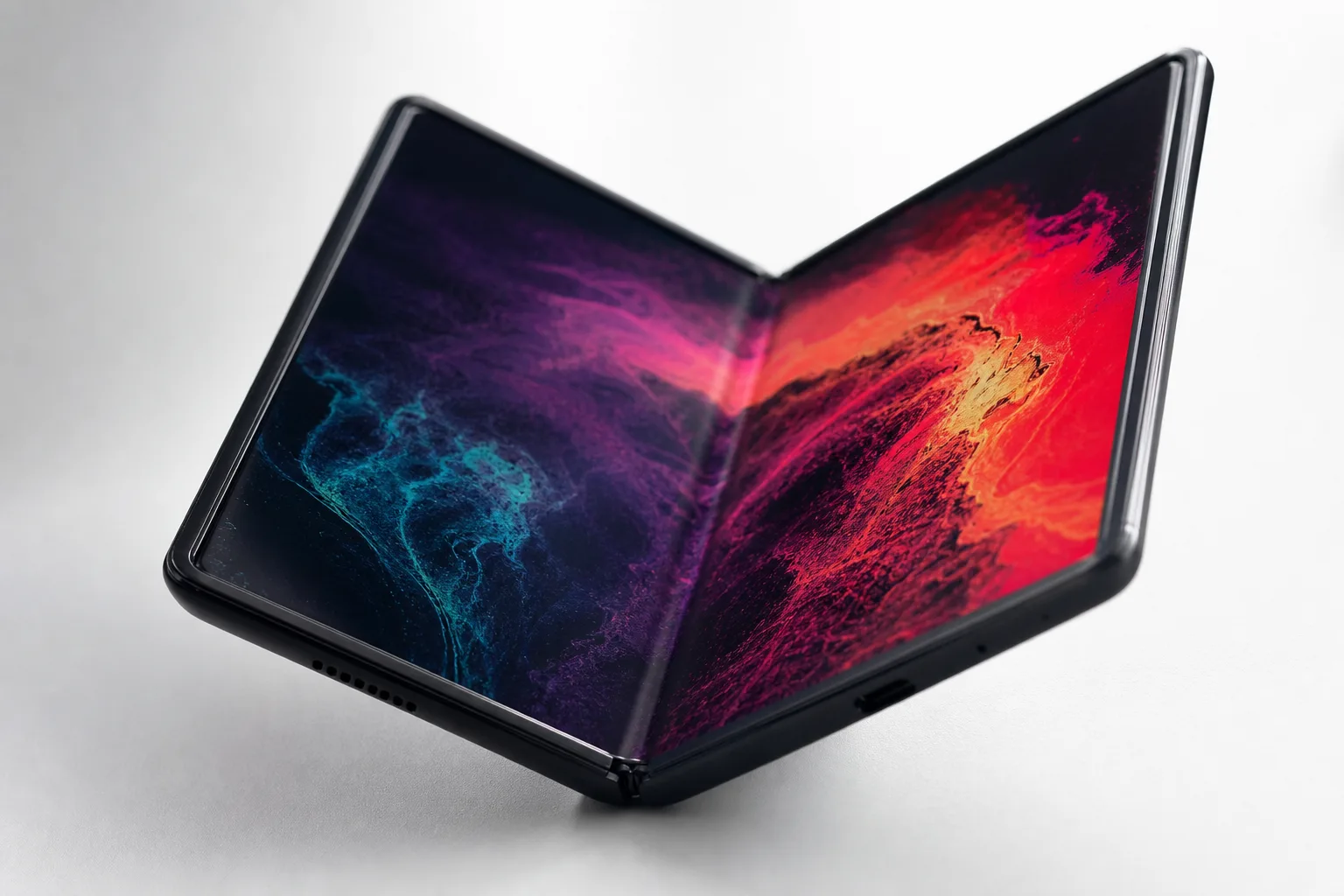
The foldable iPhone is no longer just a persistent rumor. According to a report from TheElec, Apple has formally approved Samsung Display to begin module production of OLED panels for its long-awaited first foldable device — and production lines in Vietnam are already running. This is as close to a hard confirmation as the industry gets before an official Apple announcement.
- Apple has approved Samsung Display to begin mass-producing foldable iPhone OLED panels, with an initial order of around 3 million units.
- Samsung Display passed Apple’s yield threshold for the foldable iPhone after achieving final production yields above 80 percent.
- The foldable iPhone is expected to feature a 7.8-inch inner display, Touch ID, an A20 chip, and a starting price near $2,000.
- Samsung Display holds an exclusive three-year agreement to supply all foldable OLED panels, locking out competitors for the foreseeable future.
Table of Contents
Samsung Display Gets the Green Light
Module production approval is a significant milestone in Apple’s supply chain process. It’s not a preliminary handshake — it means a supplier has demonstrated it can consistently deliver finished panels at the quality and scale Apple demands. Passing that bar requires hitting a yield rate of at least 70 percent, Apple’s reported minimum threshold. Samsung Display apparently cleared it comfortably, achieving final yields above 80 percent. That’s a meaningful margin, and it suggests Samsung’s production process is dialled in rather than barely scraping through.
Back-end processing — which covers adding driver circuits, flexible printed circuit boards, and protective components before the panels go through final inspection and ship — is being handled at Samsung Display’s facility in Vietnam. That site has around 80 production lines in total, with roughly 50 currently active. An initial order of approximately three million panels is modest enough that the facility has plenty of headroom, which makes sense for a first-generation product with a $2,000 price point. Apple isn’t betting the entire supply chain on a device that may take a generation or two to reach mainstream adoption.
The Display Technology Behind the Foldable iPhone
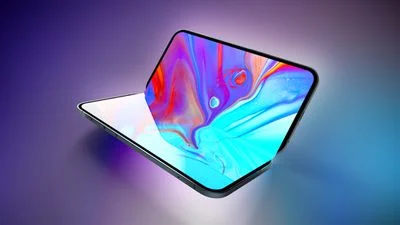
The panels are expected to use Color Filter on Encapsulation, or CoE, technology. In practical terms, this removes the polarizer layer that traditional OLED panels rely on and instead forms a color filter directly on top of the encapsulation layer. The result is a thinner, lighter panel — critical for any foldable device where every fraction of a millimetre matters for the folding mechanism and overall feel in the hand.
Paired with that is Samsung Display’s newest M16 OLED material set. Each successive generation of Samsung’s OLED material stack has brought improvements to brightness, color accuracy, longevity, and power draw, and M16 is said to continue that trend. For Apple, which has made display quality a centerpiece of its hardware identity since the original Retina display, shipping its first foldable with anything less than state-of-the-art panel technology would have been a non-starter.
The inner display is rumored to measure 7.8 inches — putting it roughly in line with Samsung’s Galaxy Z Fold series inner screen — while a 5.5-inch cover display would handle everyday interactions when the device is closed. That’s a generous cover screen by any measure, meaningfully larger than what Samsung shipped on early Fold devices and more in line with where the category has evolved.

Samsung’s Exclusive Lock-In — and What It Means
Samsung Display isn’t just the launch supplier for the foldable iPhone. According to the report, it holds an exclusive three-year agreement, which means Apple has no plans to introduce a second foldable OLED supplier — whether that’s LG Display, BOE, or anyone else — for the foreseeable future. That’s a different posture from what Apple has taken with its iPhone OLED strategy for flat-screen models, where it has progressively brought LG Display and BOE into the supply chain to diversify risk and apply pricing pressure.
The exclusivity makes strategic sense for both sides. Samsung gets guaranteed volume and the prestige of being the sole display partner on one of the most anticipated Apple products in years. Apple, meanwhile, gets access to Samsung Display’s deepest foldable OLED expertise — the Korean company has been manufacturing foldable panels longer than anyone else — at a moment when yield stability and panel reliability are genuinely critical. A foldable iPhone with crease problems or early display failures would be a reputational catastrophe at $2,000 a unit. Locking in the most experienced supplier and giving them three years of runway is a calculated move.
It’s also worth watching whether that exclusivity clause holds if the foldable iPhone sells better than the cautious initial order implies. Apple has historically used multi-supplier strategies to maintain negotiating leverage. If the foldable becomes a genuine volume product, the pressure to bring in a second source will intensify — agreements or not.
What Else We Know About the Foldable iPhone
Beyond the display, the rumor landscape around the foldable iPhone has filled in considerably over the past year. The device is expected to run on Apple’s A20 chip, alongside Apple’s C2 modem, the second generation of the company’s in-house cellular chip.
Perhaps the most talked-about spec decision is the authentication method. The foldable iPhone is reportedly dropping Face ID in favour of Touch ID. That’s a deliberate concession to the physical realities of a foldable form factor: embedding the sensors and projector array needed for Face ID into a device that bends, has a crease, and may be used at unusual angles is an engineering challenge that Apple has apparently decided isn’t worth solving in version one. A side-mounted Touch ID sensor — similar to what Apple used on iPad Air and iPad mini — is the expected solution.
Pricing is expected to start at around $2,000. That figure has been consistent across multiple supply chain reports, and it positions the foldable iPhone above every other Apple product currently on the market. For context, the iPhone 16 Pro Max starts at $1,199. The foldable would be entering the market at a price that leaves very little room for error in terms of build quality, software experience, and the overall sense of value.
The Broader Foldable Market Context
Apple is arriving at the foldable party considerably later than Samsung, Google, and a slate of Chinese manufacturers including Huawei and Oppo. Samsung has been iterating on the Galaxy Z Fold since 2019. Google shipped the Pixel Fold in 2023 and its successor in 2024. The category has matured — and in some ways stalled — while Apple watched from the sidelines.
That delay, frustrating as it may be for people who’ve wanted a foldable iPhone for years, has probably been the right call. Early foldables were genuinely rough: fragile hinges, aggressive creases, poor software optimisation, and battery life that struggled with the demands of two displays. The category is in a much better place in 2026, and Apple can now enter with a product that benefits from half a decade of industry learning without having to be the one who worked through the growing pains publicly.
The foldable iPhone’s success — or failure — will depend less on whether Apple can make a foldable and more on whether it can make the software experience feel native rather than adapted. iPadOS and iOS multitasking have historically lagged behind Android’s flexibility. If the foldable iPhone ships with a version of iOS that doesn’t fully justify the larger inner canvas, the hardware will feel like a missed opportunity regardless of how good Samsung Display’s M16 panels look. That’s the real test Apple still has to pass.
Frequently Asked Questions
When will the foldable iPhone be released?
Apple hasn’t announced an official release date, but Samsung Display’s Vietnam facility is already fulfilling an initial panel order scheduled for delivery this year, strongly suggesting a launch later this year.
What display technology does the foldable iPhone use?
The foldable iPhone is expected to use Color Filter on Encapsulation (CoE) technology, which eliminates the traditional polarizer layer and places a color filter directly on the encapsulation layer, paired with Samsung Display’s newest M16 OLED material set for improved brightness and efficiency.
Who is the exclusive OLED supplier for the foldable iPhone?
Samsung Display is the exclusive supplier under a three-year agreement, meaning Apple won’t source foldable OLED panels from any other display maker during that period.
How much will the foldable iPhone cost?
Current industry rumors put the foldable iPhone’s starting price at around $2,000.