

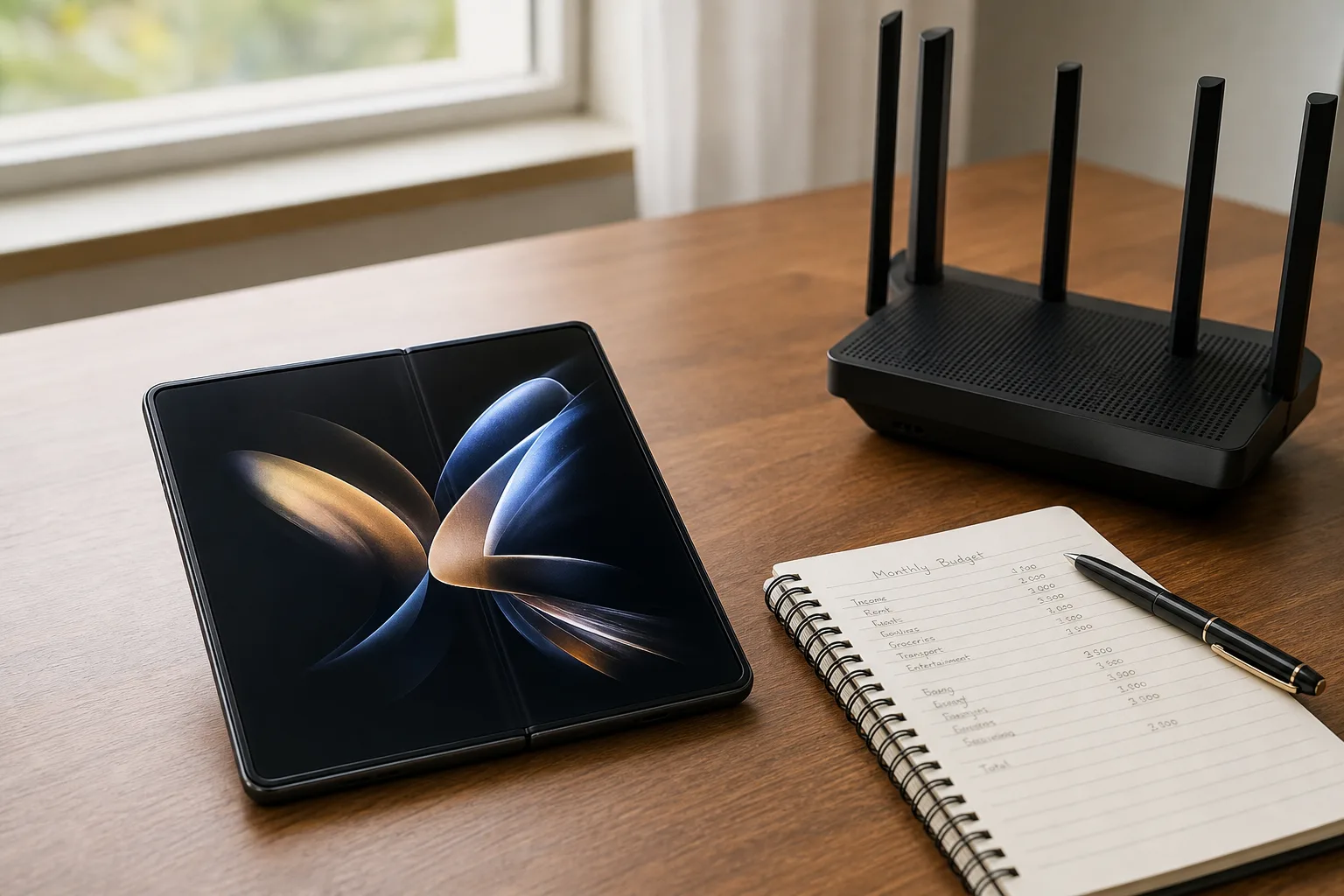
- Comcast customers may find Xfinity Mobile iPhone Duo promotions appealing, but they should wait for the actual pricing and eligibility rules.
- Any Xfinity Mobile iPhone Duo offer will probably hinge on a trade-in, installment billing, and an active qualifying Comcast relationship.
- Apple still has not publicly announced a foldable iPhone, so carrier deal chatter is running ahead of confirmed hardware details.
- Foldables have become carrier-promotion magnets: their high prices make monthly credits look especially tempting.
Table of Contents
Xfinity Mobile iPhone Duo deals are a preview of a familiar carrier playbook
The Xfinity Mobile iPhone Duo is being discussed as though it is already a straightforward purchase decision. It isn’t. Apple has yet to publicly unveil a foldable iPhone, let alone confirm that “iPhone Duo” will be its retail name. Still, the idea of Xfinity Mobile preparing offers around Apple’s expected answer to Samsung’s Galaxy Z Fold line makes perfect business sense: foldables are expensive, carriers need a reason for people to tolerate 24- or 36-month payment plans, and Apple’s brand can make even an awkward product category feel inevitable.
Reports around Xfinity Mobile’s prospective promotion point to the carrier positioning Apple’s first large foldable as a premium flagship rather than a quirky side project. That tracks. Samsung has spent years teaching consumers that book-style foldables belong in the ultra-premium bracket, with Galaxy Z Fold models regularly priced well above conventional flagships. Google’s Pixel Fold and OnePlus Open followed the same route. Apple isn’t likely to enter that market by trying to be cheap.
My read is that the eventual Xfinity Mobile iPhone Duo pitch, if and when Apple announces the phone, will be less about a simple sticker-price discount and more about monthly bill credits. That is the modern US carrier deal in a nutshell: the phone sounds deeply discounted, then the fine print asks for an eligible plan, a trade-in in good condition, a lengthy installment agreement, and patience.
For shoppers, that distinction matters more than the splashy number in an ad.
What to check before taking an Xfinity Mobile iPhone Duo offer
Xfinity Mobile has a particular angle that the national carriers do not: it is tied to Comcast’s broader consumer ecosystem. The service uses Verizon’s network infrastructure, but it is principally designed as an add-on for Xfinity Internet customers. That can make a future Xfinity Mobile iPhone Duo promotion attractive for households already paying Comcast every month. It can also make the deal much less flexible than it first appears.
Start with the required service. A big trade-in allowance is only valuable if the mobile plan suits how you actually use data. Xfinity Mobile offers by-the-gig and unlimited options, and its plan lineup has changed over time, so prospective buyers should read the current terms rather than relying on a headline or an old Reddit thread. Comcast maintains its active mobile plan information on its official Xfinity Mobile plan page.
Then look at the credit schedule. If a carrier advertises, say, a large amount “off” a phone, it commonly applies that amount as equal monthly credits over the full financing term. Leave early, pay off the device early, cancel service, or become ineligible for the promotion, and the remaining credits may disappear. You still own the phone, but you may owe the unpaid balance immediately. It is less like receiving a coupon at a checkout counter and more like agreeing to a rent rebate that arrives one month at a time.
A future Xfinity Mobile iPhone Duo deal will also almost certainly put trade-in condition under a microscope. A cracked display, damaged cameras, activation locks, or an unidentifiable device can turn a promised top-tier credit into a much smaller one—or no credit at all. Take clear photos of the old phone, record its IMEI, remove Find My before shipping it, and keep every confirmation. That sounds tedious because it is tedious. It is also preferable to spending months arguing over a missing trade-in valuation.
Apple’s foldable has a tougher job than beating Samsung on specs
The tempting comparison is Apple versus the Galaxy Z Fold, particularly the next-generation device expected to carry Samsung’s foldable strategy forward. But Apple’s real challenge is broader. It needs to persuade a huge base of conventional iPhone owners that a folding screen solves a problem they feel every day.
Samsung can point to the obvious advantage: a phone that opens into a small tablet makes email, documents, maps, video, reading and split-screen apps more comfortable. The counterargument has always been just as obvious. The devices are thicker, heavier, more fragile than a regular slab phone, and the crease is still there. Foldables have improved dramatically since the early days, but nobody mistakes their engineering compromises for magic.
Apple has historically waited out those compromises. Remember when the company skipped the first wave of 5G phones, then arrived later with the iPhone 12? That patience can look conservative until it works. If Apple brings a foldable to market, it will likely focus hard on hinge durability, display crease management, app behavior, battery life and the practical question of whether iOS actually takes advantage of a larger canvas.
That is why the Xfinity Mobile iPhone Duo conversation is interesting even before official hardware details exist. Carrier support is a clue that a foldable iPhone, if it arrives, will be sold as a mainstream flagship from day one, not a limited experiment for enthusiasts. Apple’s scale tends to pull accessory makers, app developers and retail staff into line very quickly.
The price may be the real folding point
There is no confirmed iPhone Duo price. Anyone presenting one as settled fact is getting ahead of Apple. Yet the existing foldable market provides a useful baseline: book-style folding phones typically sit at the top of a manufacturer’s lineup, commonly around or above the price of an Ultra-class smartphone. Apple’s version could easily command an even larger premium if it uses an unusually large display, titanium construction, advanced cameras, or a novel hinge mechanism.
That helps explain why Xfinity Mobile iPhone Duo promotions would be central to the launch rather than an afterthought. A $1,800 or $2,000 device is psychologically difficult to buy outright, even for people who regularly purchase Pro iPhones. Break that same cost into a monthly device payment and offset it with trade-in credits, and suddenly it competes in a buyer’s mind with a familiar flagship upgrade. Carriers understand this arithmetic better than anyone.
But consumers should do the arithmetic themselves. Compare the total cost over the full term against buying unlocked from Apple, selling the old device privately, and choosing a lower-cost service plan. Trade-in promotions are often legitimately good for people who stay put for years and already need the qualifying service. They are lousy for someone who changes carriers whenever a better offer appears.
There is another wrinkle: a first-generation Apple foldable may carry more uncertainty than a normal iPhone refresh. Apple is excellent at polishing product categories, but folding displays and hinges have failure modes that traditional phones simply do not. Extended warranty coverage and repair pricing deserve a closer look than they would on a standard iPhone. A discount is not much consolation if an inner screen repair costs a painful sum after coverage ends.
Wait for the paperwork, not the rumor
For now, the sensible response to any Xfinity Mobile iPhone Duo deal chatter is interest, not urgency. Watch for an official Apple announcement, then wait for Xfinity Mobile to publish the offer’s required plan, trade-in list, credit timing, financing term and rules for existing customers. Those details determine whether a promotion is genuinely competitive or simply dressed up to look generous.
Apple entering foldables would put real pressure on Samsung, Google and every Android maker that has spent years carrying this category’s torch. Yet it could also expose the category’s biggest unanswered question: do millions of ordinary phone buyers want a device that folds, or do they just enjoy seeing one at the store? The carrier promotions may make the answer cheaper to test—but not cheap.