

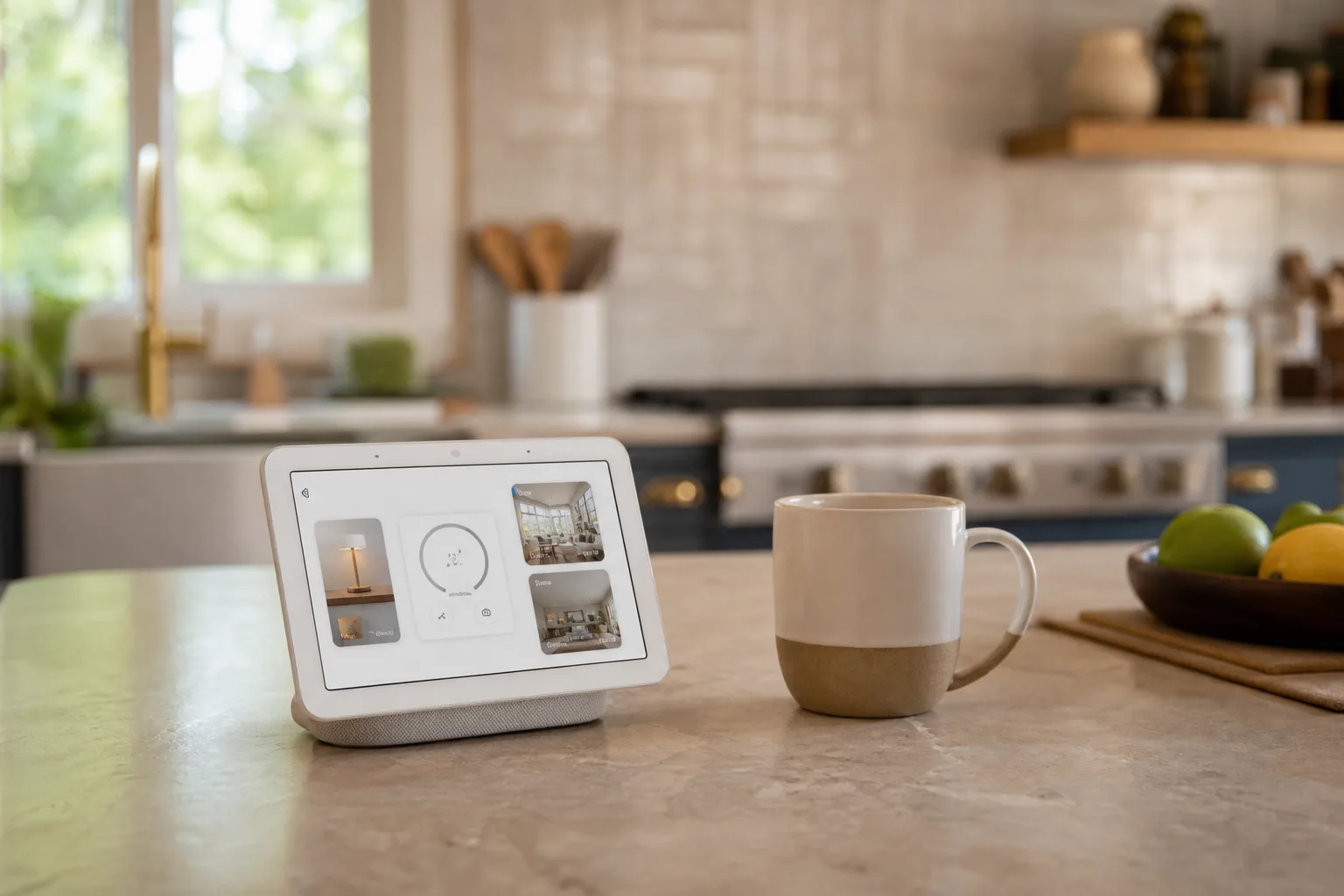
- Apple smart home plans reportedly center on a HomeView display designed to become the household’s Siri-powered control panel.
- The Apple smart home event may also bring a faster Apple TV 4K and the first major HomePod mini refresh.
- Apple could preview LG-made locks, cameras, doorbells, and thermostats as it seeks a larger role in connected-home hardware.
- The real test is whether Apple can make Siri reliable enough for household tasks, not merely produce attractive new devices.
Table of Contents
Apple smart home finally gets its moment
Apple has spent years treating the home as a promising side project: a HomePod here, an Apple TV refresh there, a Home app that slowly got less frustrating. The company’s reported October 13 “Welcome home” presentation could be the first time the Apple smart home strategy actually looks like a joined-up product plan.
Reports point to three core announcements: a new smart display apparently called HomeView, a revised Apple TV 4K, and a second-generation HomePod mini. There may also be a preview of HomeKit-compatible gear developed with LG, including cameras, a smart lock, thermostat, and doorbell. Apple has confirmed the event date and its “Welcome home” branding, though it has not publicly confirmed the product lineup.
That caveat matters. Product rumors are rarely perfect, and Apple’s launch format appears unusual: a press gathering in New York alongside an online video presentation rather than a big live keynote. Even so, this rumored lineup hangs together. Apple has all the ingredients for a serious home platform — iPhone, iCloud, TV hardware, speakers, chips, and now Apple Intelligence — but it has lacked a product that makes the system feel present in the room. That is the missing piece in the wider Apple smart home proposition.
Amazon solved that visibility problem years ago with Echo Show devices. Google tried it with Nest Hub. Both companies have since found that a screen on the kitchen counter is useful, but not magic. The Apple smart home opportunity is to make that screen feel less like a digital photo frame with timers and more like a personal household dashboard.
HomeView could be the missing household hub
Bloomberg’s reporting describes HomeView as a roughly six-inch square display on a half-dome base, held by a metal arm. One model may sit on a counter while another mounts to a wall. The design has reportedly drawn comparisons to the iMac G4 — a compliment, frankly, because that old lamp-like computer remains one of Apple’s more charming industrial designs.
What matters more than the silhouette is who the device recognizes. HomeView is expected to identify household members by voice or proximity, then alter its display accordingly. Walk into the kitchen and see your calendar, music controls, a grocery reminder, and camera alerts; another family member might see a completely different set. That’s a familiar idea in theory, but Apple has a better chance than most rivals of making it useful because many households already have individual Apple IDs, shared calendars, Family Sharing, and iPhones.
The software is said to borrow from the iPad, Apple Watch, Apple TV, iPhone widgets, and StandBy mode. That could either be a strength or a warning sign. Apple’s best interface work tends to be focused; its weaker efforts often resemble a shelf of unrelated services. A Apple smart home display cannot become an iPad nailed to a wall. It needs to surface the next useful thing without requiring someone to hunt through app icons while their pasta boils over.
Reports suggest HomeView may not ship until November. If that timing holds, Apple will have an extra few weeks to explain why a new screen belongs in homes already cluttered with tablets, televisions, phones, and laptops. The answer can’t just be “Siri is here.” Siri has been here for more than a decade.
Apple TV and HomePod mini need more than new silicon
The likely Apple TV 4K update sounds understated on the outside and significant underneath. The box reportedly retains its familiar design but moves to an A19 or A19 Pro processor, a large jump in processing power. Built-in microphones for voice requests are also rumored, while the Siri Remote could gain a speaker to help locate it after it vanishes into the sofa cushions — a small feature, but one that solves an extremely real domestic problem.
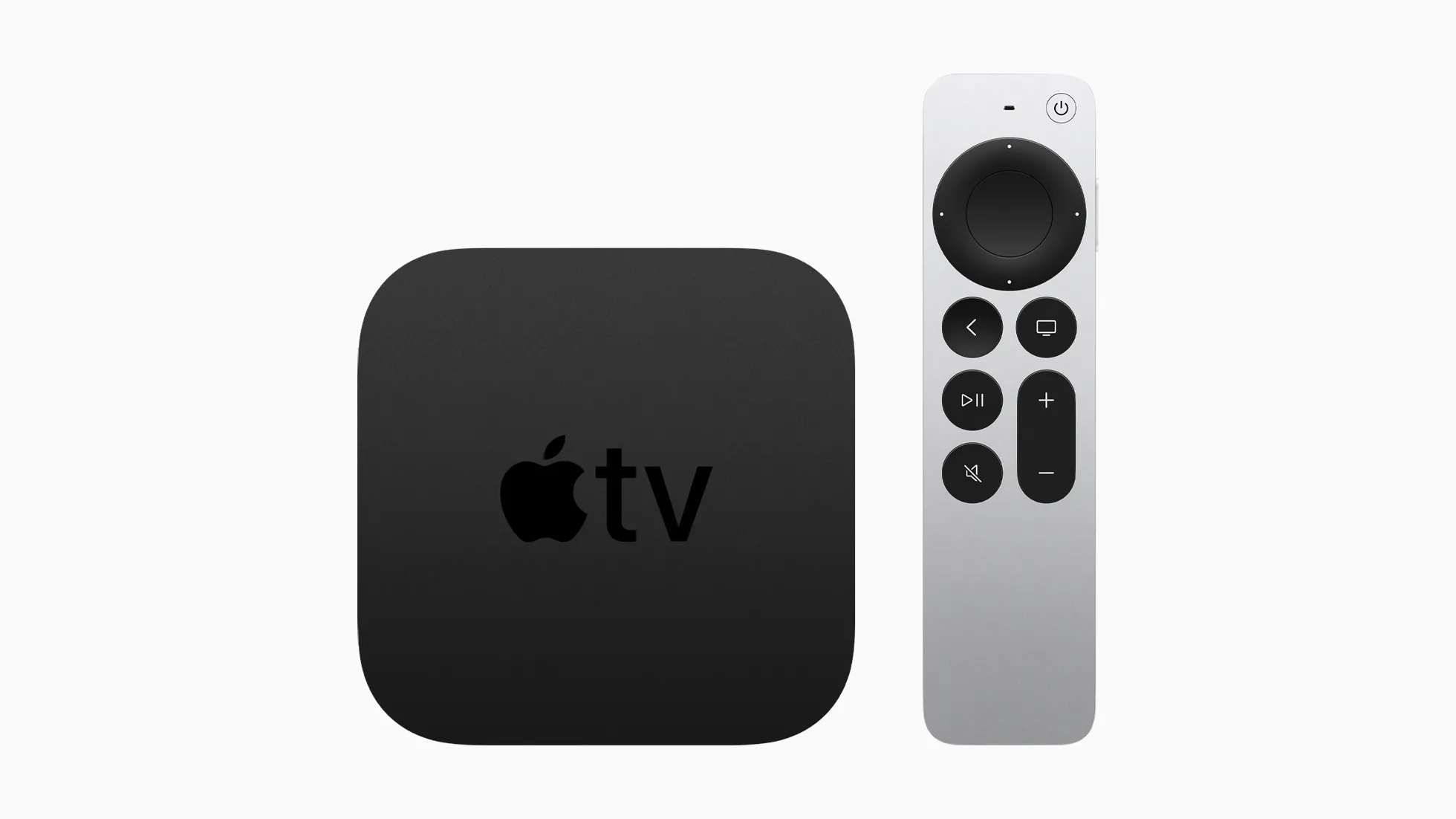
A faster Apple TV would be the natural living-room anchor for the Apple smart home system. Apple already positions it as a Home hub, and its processor has ample headroom for local automation, camera views, gaming, and AI-assisted requests. But Apple needs to make the benefits visible. People don’t replace a perfectly functional streaming box because its chip is faster; they replace it because it does something their old box plainly cannot.
One rumored addition could help: support for four full-size HomePods as a surround-sound arrangement with Apple TV. That would give Apple an answer to buyers who want a cleaner alternative to a receiver-and-speaker setup. It would also be expensive. Four standard HomePods cost far more than many capable soundbars, so this is hardly mass-market home theater. More importantly, it shows Apple may finally be thinking in systems rather than isolated gadgets.
The reported HomePod mini 2 is more straightforward. A jump from the aging S5 processor to the S10 chip should give the tiny speaker enough headroom for the new Siri and Apple Intelligence features Apple is expected to emphasize. The current mini still uses silicon associated with the Apple Watch Series 5. That is ancient in Apple-chip years.
New colors — reportedly pink, white, green, blue, and black — are welcome, but they’re window dressing. The question for the Apple smart home lineup is whether the new mini can answer follow-up questions accurately, understand natural phrasing, and complete requests without the familiar “I found some web results” detour. Voice control in the home needs to work like a light switch. Nobody applauds when it works; everybody notices when it doesn’t.
LG accessories could show how serious Apple is
The most strategically interesting rumor may be the hardware Apple does not appear to be making itself. Bloomberg has reported that Apple and LG have co-developed HomeKit accessories, potentially covering smart locks, thermostats, video doorbells, and several camera types. The accessories reportedly will not reach stores for at least a few months, though Apple could show them during the event.
Calling them “second-party” products may sound like marketing taxonomy, but the category matters. Apple has long relied on third-party HomeKit companies, with uneven results: products disappear, apps change ownership, and standards support can be patchy. A tighter relationship with LG could give the Apple smart home effort more consistent hardware without forcing Apple to become a doorbell-and-thermostat manufacturer overnight. That consistency would matter for an Apple smart home intended to feel like dependable household infrastructure.
Apple’s privacy posture is also relevant here. HomeKit Secure Video and local processing have been selling points against cloud-heavy camera platforms, although Apple’s system has often felt narrower and more expensive than rivals. If Apple can pair privacy with simple installation and broad accessory availability, it has a credible opening. If customers need an engineering degree to diagnose a Matter pairing failure, the whole promise falls apart.
The Siri question hangs over everything
My read is that October 13 will be less about three individual products than an attempt to reset expectations around Siri. Apple has already shown that Apple Intelligence can rewrite text, summarize notifications, and generate images. The home is a harder assignment. It involves multiple people, physical devices, ambiguous language, security-sensitive actions, and the occasional child yelling a song request over a running dishwasher.
That’s why the Apple smart home push is ambitious. It asks Apple to turn its most historically unreliable interface into the connective tissue of a household. The hardware could be lovely — it probably will be — but the company’s real work begins after the applause. Amazon and Google have shown how quickly smart speakers lose their appeal when voice assistance becomes a parade of misunderstandings.
Apple has an unusually strong foundation: loyal device owners, deep control of its hardware and software stack, and a user base that may trust it more than ad-driven competitors with cameras inside their homes. But trust alone won’t make a smart display indispensable. On October 13, Apple needs to show that its home products can stop being a hobby and start acting like infrastructure.