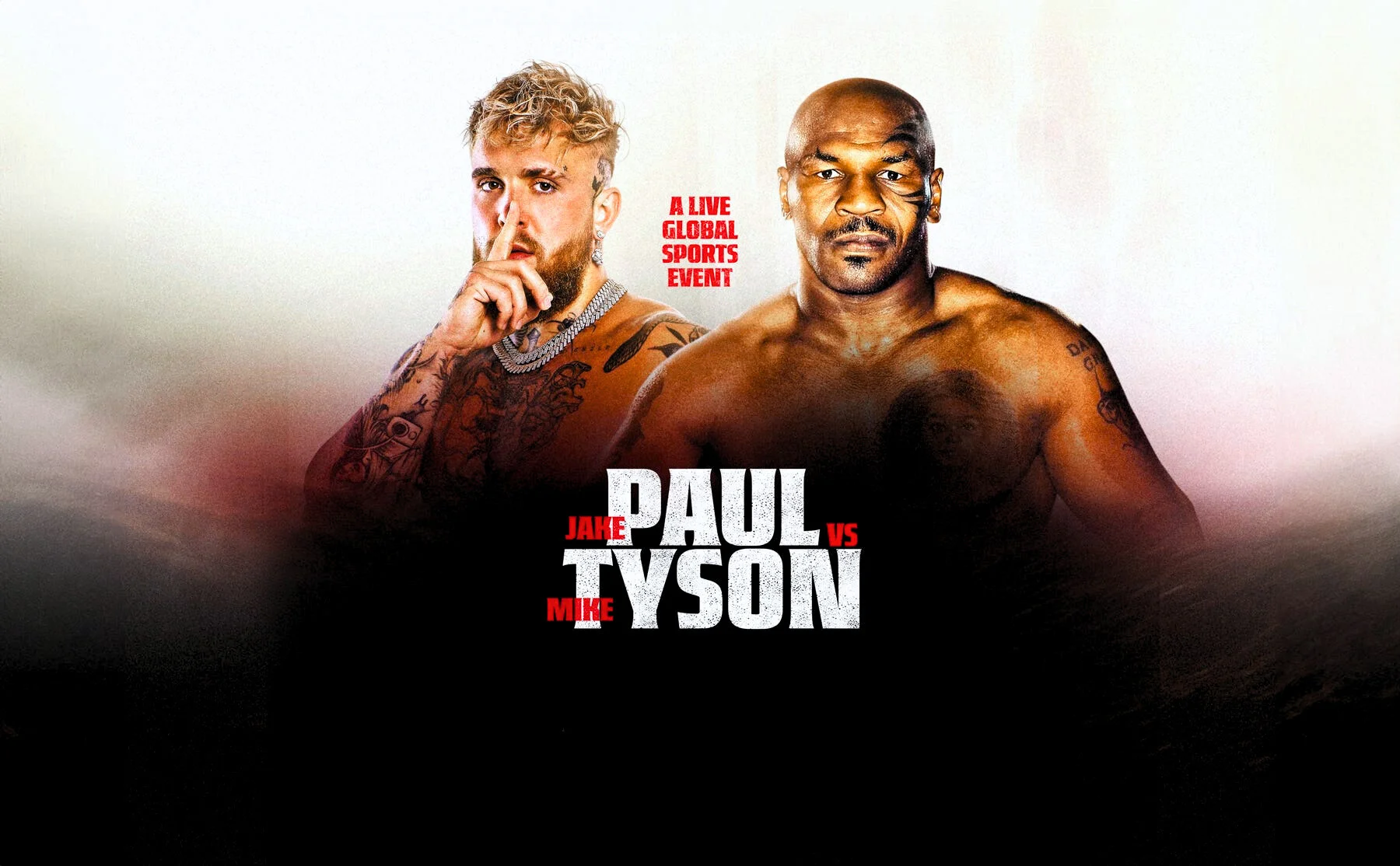
The story in brief: Netflix’s Mike Tyson vs. Jake Paul boxing match demonstrated both the scale of the platform’s live-event ambitions and the difficult reality of delivering a major broadcast to a vast audience at the same moment. The fight reached 65 million concurrent streams across 60 million households globally, according to Most Valuable Promotions, but it also generated more than 100,000 complaints about buffering, poor quality, and dropped connections.
The Netflix broadcast of the Tyson vs. Paul fight was not merely another celebrity sporting event. It was a stress test for a company that has built its dominance on on-demand viewing, where audiences can arrive at different times and the platform has more room to spread demand. Live television changes that equation. Everyone wants the same moment at once: the opening bell, a knockout, the final decision, or simply the ability to take part in the online conversation as it happens.
That is why the headline figure matters. Netflix reached 65 million concurrent streams globally during the fight, while Most Valuable Promotions, the event’s organizer, reported that the broadcast reached 60 million households worldwide. Those are extraordinary figures for any streaming platform, and they put the event in direct comparison with some of the largest live streams previously handled elsewhere.
Table of Contents
Viewership on a scale Netflix could not ignore
Live sports has become one of the few remaining forms of programming that can gather a mass audience in real time. Scripted series can dominate discussion for days or weeks, but they do not create the same immediate pressure on a service’s systems. A major sporting event does. For Netflix, which has spent years defining itself around films and series available whenever subscribers choose, Tyson vs. Paul showed what happens when its audience is asked to show up together.
The 65 million concurrent streams figure exceeded the 59 million concurrent streams handled by Disney Plus Hotstar during a World Cup cricket match. The comparison is useful because it places the Netflix broadcast within the broader competition to make streaming a credible home for the world’s biggest live events. It also illustrates why raw subscriber totals are not the only meaningful measure for a streaming company. The decisive question during a live broadcast is whether the service can support a huge concentration of viewers without the experience falling apart.
On that front, the Tyson vs. Paul event delivered a mixed result. The audience was enormous, attention was global, and the fight created the sort of cultural moment platforms want. Yet the very scale that made the event valuable also exposed the consequences when delivery does not meet expectations.
More than 100,000 complaints put the technical problems in view
Many viewers experienced buffering, poor stream quality, and dropped connections during the broadcast. Downdetector recorded over 100,000 complaints about streaming problems, while social media filled with frustrated reactions from viewers unable to get the experience they expected from a high-profile event.
Those complaints should not be dismissed as a minor footnote to a large audience figure. In live programming, timing is part of the product. A viewer who misses a pivotal moment because a stream freezes cannot simply avoid spoilers and return later with the same experience. The event has already happened. That makes reliability especially important for sports, where the shared immediacy is the point.
There is also a reputational issue. Netflix has trained viewers to expect a polished, dependable on-demand service. When the company enters live broadcasting, subscribers are unlikely to judge it against Netflix’s traditional catalogue alone. They will judge it against the established expectation for television coverage: turn it on, and it works. A stream that buffers at the wrong moment is therefore more damaging than a standard playback problem on a series that can be paused and restarted.
Netflix’s priority was stability for most viewers
Netflix CTO Elizabeth Stone addressed the issues in a statement to employees. Stone said the company had focused on maintaining stream stability for most viewers, while acknowledging that Netflix has room to improve its live-streaming infrastructure.
Stone described the event as operating at an “unprecedented scale.” That wording is important. It does not erase the poor experiences reported by some members, and Stone recognized their dissatisfaction. But it does explain the central trade-off Netflix appeared to be managing: protecting a stable stream for the majority rather than allowing a wider failure to spread across the audience.
That is a defensible operational priority, but it is not a complete answer for customers who saw poor quality or lost their connection. The public lesson from the event is that successful scale and perfect reliability are not the same thing. Netflix can reasonably point to the number of viewers it served, while affected viewers can reasonably argue that a live event of this profile should have been better prepared for the demand it attracted.
A benchmark and a warning for Netflix’s live plans
The fight set a new benchmark for live streaming on Netflix and surpassed major events on other platforms such as Disney Plus Hotstar. It also outshone Netflix’s projections for its upcoming Christmas Day NFL stream. That makes the broadcast difficult to frame as either a straightforward triumph or a clear failure. It was a success in reach, visibility, and proof of demand; it was a warning in execution.
For Netflix, the broader significance lies in what live events can offer. Sports and entertainment broadcasts can bring audiences to the service at a specific time, create a sense of occasion, and give subscribers a reason to stay engaged beyond the usual release cycle. They can also create advertising and promotional opportunities around programming that people are unlikely to skip or watch days later.
But live programming does not allow the same margin for error as Netflix’s established business. The company’s future broadcasts will be judged not just by whether they attract attention, but by whether viewers can watch without interruption when attention peaks. The Tyson vs. Paul fight made the demand unmistakable. It also made clear that Netflix needs to enhance its systems if it wants to handle large-scale live broadcasts more efficiently.
That is the real takeaway from an event that drew massive global attention. Netflix proved it can assemble an audience of remarkable size. Its next challenge is making sure the experience feels as big as the numbers suggest.
Read related coverage: Netflix Soars to 40M Ad Users after Adding Live NFL Games on SquaredTech.
More News: Mobile – Tech News – Editors Pick