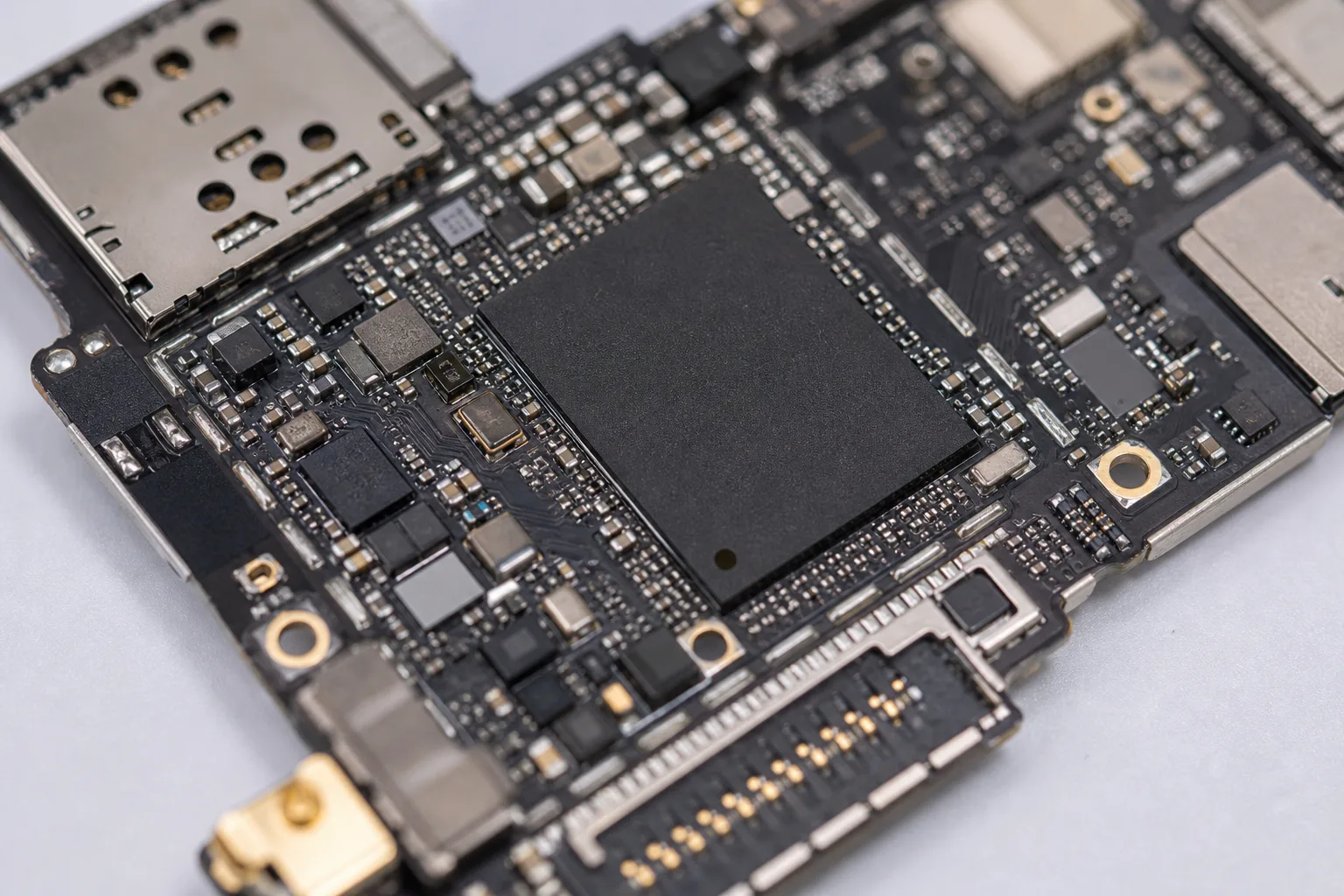
A leaked image of what appears to be an iPhone 18 Pro motherboard has surfaced on Weibo, and if it’s authentic, the A20 Pro chip inside Apple’s next flagship is shaping up to be a meaningful step forward — not just in raw speed, but in how the entire chip package handles heat, memory bandwidth, and AI workloads. The image was shared by two well-known leakers, ‘WHYLAB’ and ‘Ice Universe,’ and while nothing has been confirmed, the technical details visible in the image align closely with what the supply chain rumour mill has been pointing toward for months.
- The A20 Pro chip appears to use TSMC’s WMCM packaging, moving DRAM to the side to reduce heat buildup.
- A leaked motherboard image shows the A20 Pro chip sports a noticeably larger Neural Processing Unit for stronger AI performance.
- TSMC’s 2nm process is expected to make the A20 Pro up to 15 percent faster and 30 percent more efficient than the A19.
- iPhone 18 Pro and the foldable iPhone are both expected to ship with the A20 Pro chip in September this year.
Table of Contents
A20 Pro Chip Ditches the Old Packaging Playbook
The most structurally significant detail in the leaked image isn’t the chip itself — it’s how the chip is packaged. For years, Apple has built its A-series chips using a package-on-package (PoP) design, where DRAM memory is stacked directly on top of the application processor. It’s a tidy, space-efficient approach that keeps memory latency low and power consumption in check. But it has an inherent problem: heat. When you stack the processor and memory that closely together, thermal energy from the chip has nowhere to go except into the memory sitting right above it.
The leaked motherboard image suggests Apple is finally moving away from PoP with the A20 Pro chip, switching instead to TSMC’s Wafer-Level Multi-Chip Module (WMCM) technology. The fundamental difference is that WMCM places DRAM to the side of the processor rather than on top of it. That spatial separation reduces thermal coupling between the two components, which should meaningfully improve heat dissipation during sustained workloads — the kind of extended, intensive processing that pushes any chip to its limits.
This matters more than it might sound. Apple has been pushing harder into on-device AI, professional video, and real-time computational photography. Those are exactly the workloads that generate sustained heat. A chip that runs cooler under load doesn’t just last longer — it maintains its peak performance for longer before thermal throttling kicks in. WMCM is essentially Apple and TSMC engineering more breathing room into the package itself.
LPDDR6 Memory and the 96-Bit Bus
The A20 Pro chip is also said to be paired with LPDDR6 memory running on a 96-bit memory bus. LPDDR6 is the next generation of low-power double data rate memory, offering higher bandwidth than LPDDR5X while maintaining strong energy efficiency. The 96-bit bus width is a specific detail worth paying attention to — it sits between the 64-bit configurations seen in lower-tier chips and the wider buses found in Apple’s M-series desktop silicon, suggesting Apple has deliberately tuned the memory architecture to feed the A20 Pro’s larger AI processing capabilities without blowing the power budget.
Taken together, the WMCM packaging and LPDDR6 memory represent a more holistic rethink of the A20 Pro chip’s memory subsystem than Apple typically makes in a single generation. Usually, the jump from one A-series chip to the next involves process node improvements and incremental tweaks. This time, it looks like Apple is restructuring the physical architecture of how the chip and its memory communicate and breathe.
A Much Larger Neural Processing Unit
Perhaps the most telling detail in the leaked image is the size of the Neural Processing Unit. According to the leak, the overall die size of the A20 Pro chip is roughly comparable to the A19 Pro — Apple isn’t making a dramatically larger chip. But the NPU portion of that die appears to be significantly bigger, which means Apple has traded transistor real estate away from other areas to invest more heavily in AI processing power.
That’s a deliberate strategic choice, and it tells you a lot about where Apple thinks the product is headed. On-device AI in iOS has been growing steadily — Apple Intelligence, introduced with iOS 18, brought generative writing tools, image creation, and smarter Siri responses that run locally on the device. A larger NPU in the A20 Pro chip would directly accelerate all of that, enabling more sophisticated models to run faster and with less battery drain. It’s also the kind of investment that becomes more valuable over time, as Apple continues to push AI capabilities into its software updates throughout the product’s lifespan.
TSMC’s 2nm Process Brings Its Own Gains
Beyond the packaging changes, the A20 Pro chip is expected to be manufactured on TSMC’s second-generation 2nm process, known internally as N2. This is the same node Apple used for the A18 Pro’s successor, and the performance targets are significant: up to 15 percent faster and 30 percent more power-efficient compared to chips built on the previous generation node used for the A19.
N2 also introduces a specific power delivery innovation worth flagging: super-high-performance metal-insulator-metal (SHPMIM) capacitors. These capacitors, embedded within the chip’s power delivery network, more than double the capacitance density of the previous generation. That might sound like deep plumbing, but the practical effect is improved power stability — the chip gets cleaner, more consistent power delivery under variable loads, which contributes directly to both performance consistency and efficiency.
Stack SHPMIM capacitors on top of WMCM packaging on top of the LPDDR6 memory architecture, and you’ve got a chip that should be meaningfully more capable at sustained peak performance than anything Apple has shipped in an iPhone before. The individual changes are incremental; the combination is more substantial.
What Else to Expect from iPhone 18 Pro
The A20 Pro chip won’t be exclusive to the iPhone 18 Pro. Apple’s long-rumoured foldable iPhone — widely expected to finally land this year — is also said to run the same chip, which makes sense given the foldable will be positioned as a flagship-tier device. Both the iPhone 18 Pro and the foldable model are expected to carry 12GB of RAM, 48-megapixel rear cameras, and Apple’s in-house C2 modem, which debuted in the iPhone 16e earlier this year.
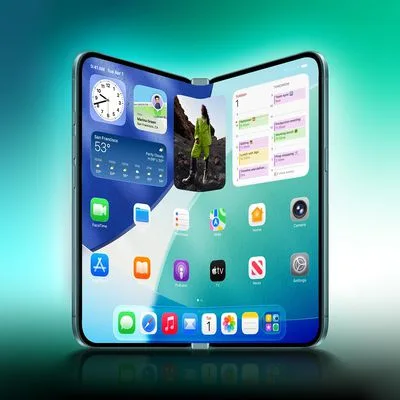
All three models — iPhone 18 Pro, iPhone 18 Pro Max, and the foldable — are targeting a September launch this year, keeping Apple firmly on its usual annual release cadence. The leaked image hasn’t been independently verified, and Apple hasn’t confirmed any of these specifications, so there’s still room for the details to shift between now and announcement day. But given that WMCM packaging has been rumoured consistently across multiple supply chain sources over the past several months, the direction of travel looks fairly solid.
The Bigger Picture for Apple Silicon
Apple’s A-series chips have been the most consistently impressive pieces of silicon in the smartphone industry for several years running. Competing chips from Qualcomm and MediaTek have closed the gap in some benchmarks, particularly on Android flagships, but Apple’s tight integration between hardware and software still gives it advantages that raw benchmark numbers don’t always capture.
The A20 Pro chip, if it delivers what these leaks suggest, represents Apple doubling down on that integrated approach — specifically around AI. The decision to expand the NPU significantly rather than chasing raw CPU or GPU gains reflects a clear bet that on-device machine learning is the most valuable thing a smartphone chip can do in 2026 and beyond. With Google’s Tensor chips pushing hard on the same frontier and Qualcomm’s Snapdragon 8 Elite already boasting dedicated AI processing enhancements, Apple can’t afford to stand still. The A20 Pro looks like the answer to that pressure.
Frequently Asked Questions
What makes the A20 Pro chip different from the A19 Pro?
The A20 Pro chip switches to TSMC’s WMCM packaging, which moves DRAM alongside rather than on top of the processor to cut heat. It also uses LPDDR6 memory on a 96-bit bus and TSMC’s 2nm process, targeting up to 15 percent faster performance and 30 percent better efficiency.
What is WMCM packaging and why does it matter for the iPhone 18 Pro?
WMCM stands for Wafer-Level Multi-Chip Module. Unlike the traditional package-on-package design where DRAM stacks directly above the processor, WMCM places memory to the side, reducing thermal coupling and improving heat dissipation during heavy, sustained workloads.
When is the iPhone 18 Pro expected to launch?
Apple’s iPhone 18 Pro and the new foldable iPhone, both powered by the A20 Pro chip, are expected to be released in September this year.
How much RAM will the iPhone 18 Pro have?
According to current leaks and rumours, the iPhone 18 Pro and the foldable iPhone model are both expected to ship with 12GB of RAM.