- The DJI vs Insta360 lawsuit targets the new Luna Ultra camera on both design and utility patent grounds.
- DJI vs Insta360 tensions have been building all year, with a separate Chinese lawsuit filed earlier in 2025.
- DJI is seeking an injunction that would block Luna Ultra sales in the US market entirely.
- The utility patent claims go well beyond looks, covering core gimbal tracking and control functionality baked into both devices.
- The DJI vs Insta360 legal battle now spans two US lawsuits targeting the new Luna Ultra camera on design and utility patents.
- DJI vs Insta360 tensions aren’t new — DJI sued Insta360 in China earlier this year over alleged employee poaching and stolen R&D.
- DJI is seeking an injunction that would block Luna Ultra sales in the US market entirely.
- The utility patent claims go well beyond looks, covering core gimbal tracking and control functionality baked into both devices.
Table of Contents
DJI vs Insta360: Two Lawsuits, One Very Familiar-Looking Camera
The DJI vs Insta360 rivalry just turned into a courtroom battle. Within days of Insta360 officially unveiling the Luna Ultra — its direct answer to DJI’s Osmo Pocket 4P — DJI filed not one but two separate lawsuits against its Chinese competitor in the United States. The message is hard to misread: DJI looked at the Luna Ultra, decided it had seen that camera somewhere before, and reached for the lawyers.
The timing is pointed. Insta360 had barely finished its launch announcements when DJI moved in federal court. Choosing to file in the US rather than China is itself a strategic signal — DJI clearly believes American courts give it a stronger shot at winning injunctive relief, which is the real prize here. Not damages. Not licensing fees. DJI wants the Luna Ultra pulled from US shelves entirely.
What the Design Patent Case Actually Says
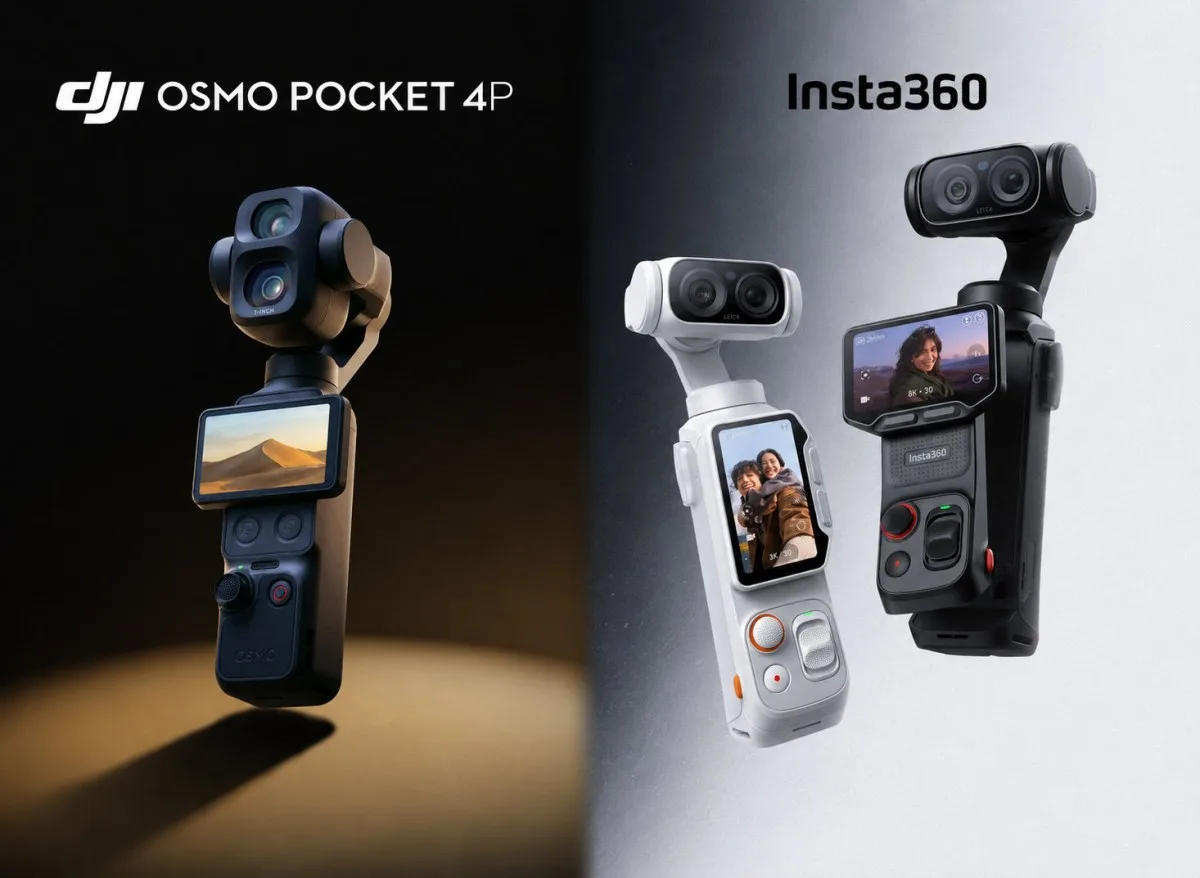
The first DJI vs Insta360 lawsuit focuses on design patents — essentially, how the product looks. DJI argues that the Luna Ultra copies the ‘ornamental design’ protected by its existing patents on the Osmo Pocket line. And if you put both devices side by side, the case isn’t hard to understand visually.
DJI’s patent filings describe an ‘elongated handheld body, neck connecting the body to the gimbal arm connection point, gimbal assembly and camera.’ A second patent covers the ‘module at the top, rotatable display and bezel, lower control section housing the scroll wheel and record button, side-mounted accessory slot, and the port opening at the base.’ That’s not a vague description — it maps almost point-for-point onto both the Osmo Pocket 4P and, DJI contends, the Luna Ultra.
Design patent cases in the US are notoriously tricky. The legal standard isn’t whether two products look similar to an engineer — it’s whether an ‘ordinary observer’ buying the product might confuse one for the other. Apple vs Samsung spent years in court over rectangles with rounded corners. Whether DJI’s design patents are specific enough to stick against a competitor operating in the same product category will ultimately be a judge’s call, but DJI clearly feels confident enough to push this publicly.
The Utility Patents Go Much Deeper
The second DJI vs Insta360 lawsuit is where things get genuinely interesting — and potentially more dangerous for Insta360. DJI’s second complaint cites four utility patents, which protect how a device works rather than how it looks. These are harder to design around and typically carry more weight in court.
The four patents DJI is relying on cover: a control mechanism for switching a gimbal between ‘follow’ and ‘locked’ modes using a single control input; a handheld gimbal system with integrated subject tracking and a real-time display that removes the need for a companion smartphone app; a method where the gimbal’s own camera image is used to drive the motor’s directional commands; and a self-contained system for tracking a subject and showing the feed directly on the gimbal’s built-in screen.
Read those descriptions carefully. They’re not describing niche edge-case features — they’re describing the core experience of using a modern handheld gimbal camera. The ability to track a subject and display the result on-device, without tethering to a phone, is essentially the whole point of products like the Osmo Pocket 4P and the Luna Ultra. If DJI can successfully argue it owns patents on that fundamental interaction model, Insta360 has a serious problem that no industrial design tweak can fix.
A Rivalry That’s Been Heating Up All Year
This isn’t the first time DJI and Insta360 have clashed legally in 2025. Earlier this year, DJI filed a separate lawsuit against Insta360 in China, making strikingly different allegations: that Insta360 recruited former DJI employees and used knowledge and research developed at DJI to file its own drone-related patents. That’s a trade-secret and unfair-competition argument — quite different from a patent infringement claim, but it paints a broader picture of a company that believes it’s being systematically undercut by a rival that grew up in its shadow.
Insta360 built its early reputation on 360-degree action cameras before expanding into more conventional formats. The DJI vs Insta360 competition reached a new intensity with the Luna Ultra, which represents Insta360’s most direct head-to-head challenge to DJI’s core product lines. DJI’s Osmo Pocket 4P launched as a premium compact gimbal aimed squarely at solo creators and filmmakers, and Insta360 arriving in the same space with a similarly specified device — reportedly including a detachable screen that the Pocket 4P doesn’t offer — would have raised eyebrows in DJI’s Shenzhen headquarters regardless of any legal strategy.
What’s Really at Stake Here
On one level, the DJI vs Insta360 dispute is a patent battle between two hardware companies. On another level, it’s a window into just how fiercely competitive the compact creator-camera segment has become. DJI built this category — the Osmo Pocket line essentially defined what a handheld gimbal camera for consumers could be. Watching a well-funded competitor arrive with a product that hits the same brief, at a competitive price, with potentially better features in some areas, is exactly the kind of threat that triggers aggressive legal responses.
It’s worth being clear-eyed about the optics, though. Filing lawsuits against a competitor the moment they launch a rival product is a legitimate legal strategy, but it’s also the kind of move that reads as defensive. When a company with DJI’s resources and market position rushes to court over a competitor’s launch, it tends to signal that the competitive pressure feels very real. Analysts will note — and customers will notice — that the Luna Ultra apparently bothered DJI enough to warrant two simultaneous federal lawsuits on launch week.
The injunction request is the thing to watch going forward. If DJI secures even a preliminary injunction while the DJI vs Insta360 cases proceed, Insta360 loses access to the US market for the Luna line during what should be its strongest sales window. That kind of early ruling can be commercially catastrophic for a new product. Courts don’t grant preliminary injunctions lightly — DJI would need to demonstrate both a likelihood of success on the merits and that it would suffer irreparable harm without one. Whether its patents are strong enough to clear that bar is the central question these proceedings will answer.
In the meantime, the DJI vs Insta360 contest has two very capable products fighting for the same customer — and now fighting in court as well. For consumers, the competition is producing better hardware. For the companies themselves, the next few months will be decided as much by lawyers as by engineers.
Source: GSMArena
Frequently Asked Questions
What is the DJI vs Insta360 lawsuit actually about?
DJI has filed two separate lawsuits in the US against Insta360. The first targets design patents, claiming the Luna series copies the physical appearance of the Osmo Pocket line. The second cites four utility patents covering gimbal tracking, subject locking, and integrated display control methods.
What could happen to Insta360 Luna Ultra sales if DJI wins?
DJI is specifically seeking an injunction, which would halt US sales of the Insta360 Luna line. If granted, that would be a significant commercial blow for Insta360, cutting off one of the world’s largest consumer camera markets for the product.
Has DJI sued Insta360 before?
Yes. Earlier this year, DJI filed a lawsuit against Insta360 in China, alleging that Insta360 poached former DJI employees and used stolen research and development work to file its own drone-related patents.
How similar do the DJI Osmo Pocket 4P and Insta360 Luna Ultra actually look?
Both devices share a strikingly similar form factor: an elongated handheld body, a gimbal assembly at the top, a rotatable display, a scroll wheel and record button on the lower section, and a side-mounted accessory slot. The visual resemblance is difficult to miss side by side.