


- Meta Applied AI was formed in March with 6,500 engineers, many of whom describe their new assignments as mechanical and soul-crushing.
- A live employee meeting for the Meta Applied AI unit was derailed by an expletive-filled outburst, reflecting deep internal frustration.
- Mark Zuckerberg acknowledged in an internal memo that recent restructuring had caused real distress and promised more stability ahead.
- Over 1,600 Meta employees have signed a petition opposing a program that monitors their clicks and keystrokes for AI training data.
Table of Contents
A Live Meeting Goes Off the Rails
Meta Applied AI — the company’s newly formed unit of roughly 6,500 engineers and product managers — has a morale problem. And this week, that problem became impossible to ignore. During a livestreamed, employee-only technical presentation open to thousands of staff, an unidentified participant interrupted the call with an expletive-laden outburst, reportedly demanding that those running the session relay a pointed message to a specific Meta AI executive. The exact phrasing, reported by Wired, was blunt enough to make one of the presenters cover their face with their hands.

The meeting’s hosts asked everyone to mute and moved on. Employees watching the stream apparently described it as a ‘spicy’ start — a word that rather undersells what happened. An outburst like that, on a call with thousands of colleagues watching, doesn’t come from nowhere. It’s a pressure valve going off after months of accumulated frustration inside the Meta Applied AI unit.
Inside the Meta Applied AI Unit: What the Work Actually Looks Like
The Meta Applied AI team was assembled from March onward, growing in waves through early April. Its stated mission is to support the researchers at Meta Superintelligence Labs — the company’s high-profile AI research division — by generating the kind of training and evaluation data that frontier AI models need to improve. In practice, that means engineers who were previously building features for apps used by billions of people are now writing complex coding problems and generating puzzles to test whether AI models can reliably solve them.
Three current employees spoke to Wired anonymously about life inside the unit. The descriptions are stark. ‘It’s literally the gulag,’ one of them said. ‘You have zero purpose in life all of a sudden, you barely interact with anyone, you just have these tasks every week.’ Another described the work as mechanical and not creative, and not making use of their full skillset and knowledge. A third put it simply: ‘Most people find the work soul-crushing.’
Two tasks per week. That’s what some Meta Applied AI engineers are being asked to complete. For people who were previously architecting social media infrastructure at global scale, that’s not just a step down — it’s a full stop. The cognitive whiplash of going from shipping product to essentially doing data labeling-adjacent work for AI scientists is, by all accounts, profound.
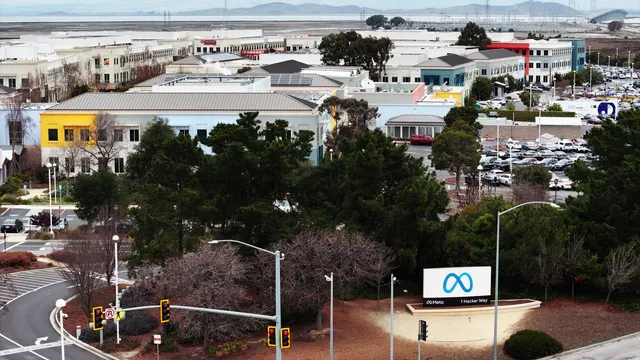
What makes this particularly sharp is the coercive element. Engineers placed into the Meta Applied AI team reportedly have no real option to decline the assignment. Join, or leave the company. In Silicon Valley, where senior engineers are treated as prized assets and routinely courted with competing offers, that kind of forced placement is almost unheard of. It’s why employees have taken to calling themselves ‘draftees’ — and the word fits. Nobody enlisted; they were conscripted.
The Broader Meta Morale Crisis
The Meta Applied AI situation doesn’t exist in a vacuum. Earlier this year, Meta cut around 8,000 employees — roughly 10 percent of its workforce — as part of a sweeping AI-focused restructuring. The ripple effects have been felt across multiple divisions. Current and former employees have told Wired that both data center engineering and Instagram teams are operating under heightened stress and increased workloads as a result.
At an all-hands meeting for Instagram employees this week, Meta’s chief product officer Chris Cox didn’t sugarcoat things. He described the past few months as ‘difficult’ and ‘brutal,’ comparing the experience to ‘running a marathon in the middle of a hailstorm and then, like, your teammate gets replaced and then we’re recording you.’ He then said, drawing laughs: ‘It’s like what the fuck.’ Cox also acknowledged that leadership needed to ‘get in touch with the company again’ and urged a recalibration around AI hype — ‘It is neither god, nor is it the devil,’ he said, ‘and it’s nowhere near as good as you think it is, and it is nowhere near as bad as you think it is.’
That last part deserves attention. A senior Meta executive publicly telling employees — and, by extension, the broader tech world — not to over-index on AI capabilities is a meaningful signal. It suggests the internal narrative around AI at Meta has, at least in some quarters, run ahead of what the technology can actually deliver today.

Meanwhile, a separate but related flashpoint: more than 1,600 Meta employees have signed a petition demanding that the company halt a program that monitors US workers’ clicks and keystrokes to generate AI training data. Employee surveillance programs of this kind sit in legally and ethically contested territory, and the scale of the internal pushback — over 1,600 signatures — signals that this isn’t a fringe concern. Meta has since scaled back the initiative slightly, allowing employees to pause data collection for up to 30 minutes and request specific exemptions. That’s a partial concession, but it’s unlikely to satisfy those who object to the program on principle.
Zuckerberg Responds — and Acknowledges the Damage
In an internal memo on Friday, Mark Zuckerberg addressed the turbulence directly. ‘Given the complexity of these changes, we’ve made mistakes and will almost certainly make more,’ he wrote, before committing to ‘providing as much stability going forward as possible.’ He also reiterated his pledge to avoid further mass layoffs this year.
On Meta Applied AI specifically, Zuckerberg positioned the unit as a transitional assignment rather than a permanent career destination. ‘Work like AAI is critical to advancing our models and it lets very talented people contribute to those efforts while we create other roles they can contribute to around Meta over the coming months,’ he wrote. That framing — ‘talented people’ doing necessary but temporary work — is both a recognition that the situation is unsustainable and an attempt to reframe what looks like a holding pen as a meaningful contribution.
Practically, Zuckerberg announced a cap on team sizes: on some squads within Meta Applied AI, the manager-to-employee ratio had ballooned to 50 to one, which is less a management structure than an absence of one. He also promised increased budgets for team events, a company-wide hackathon planned for next month, and — in what might sound like a small thing but probably isn’t — assigned desks for employees in many locations by the end of the year. Remote and hybrid workers who’ve lost any sense of physical home base within their company tend to feel that loss more than employers realize.
What This Tells Us About the AI Talent Squeeze
Step back and the Meta Applied AI story reflects something bigger about where the AI industry is right now. Every major tech company is racing to build and refine frontier models, and the bottleneck increasingly isn’t compute — it’s high-quality training data and rigorous model evaluation. Generating that data requires skilled humans. But skilled engineers don’t join Meta to write test puzzles for AI models; they join to build products.
Meta released its first pioneering open-weights Llama models three years ago and has had a mixed track record with subsequent releases. The pressure to close the gap with OpenAI, Google DeepMind, and Anthropic is real and relentless. Pulling thousands of engineers into data generation work is a logical response to that pressure — but it’s creating a workforce that feels hollowed out and sidelined at exactly the moment the company needs them most engaged.
There’s a tension here that no memo can fully resolve. Zuckerberg needs the grunt work done to advance his AI ambitions. But the people he’s asking to do it were hired — and handsomely compensated — to do something very different. If Meta Applied AI can’t move its engineers into more substantive roles quickly, the company risks losing the very talent it drafted. And in a market where AI engineers are still being aggressively recruited by competitors, that’s not a theoretical risk — it’s a ticking clock.
Frequently Asked Questions
What is the Meta Applied AI team and what does it do?
Meta Applied AI is a unit formed in March with around 6,500 engineers and product managers. Its stated purpose is to support AI researchers at Meta Superintelligence Labs by generating training and evaluation data for frontier AI models, including complex coding problems and puzzles.
Why are Meta Applied AI employees so unhappy?
Employees describe the work as menial and repetitive — tasks like generating puzzles to test AI models — far below the software development roles they held previously. Many say they had no real choice but to join the unit or leave Meta entirely, leading some to call themselves ‘draftees.’
What did Mark Zuckerberg say about the Meta employee morale crisis?
In an internal memo, Zuckerberg admitted that recent organizational changes had caused distress and that mistakes had been made. He pledged no further mass layoffs this year, promised to limit the number of employees per manager, increase team event budgets, and restore assigned desks by year’s end.
How many Meta employees were laid off in the recent restructuring?
Meta cut approximately 8,000 employees — around 10 percent of its total workforce — as part of an AI-focused restructuring last month. The cuts have generated increased workloads and stress across multiple divisions including data center engineering and Instagram.

