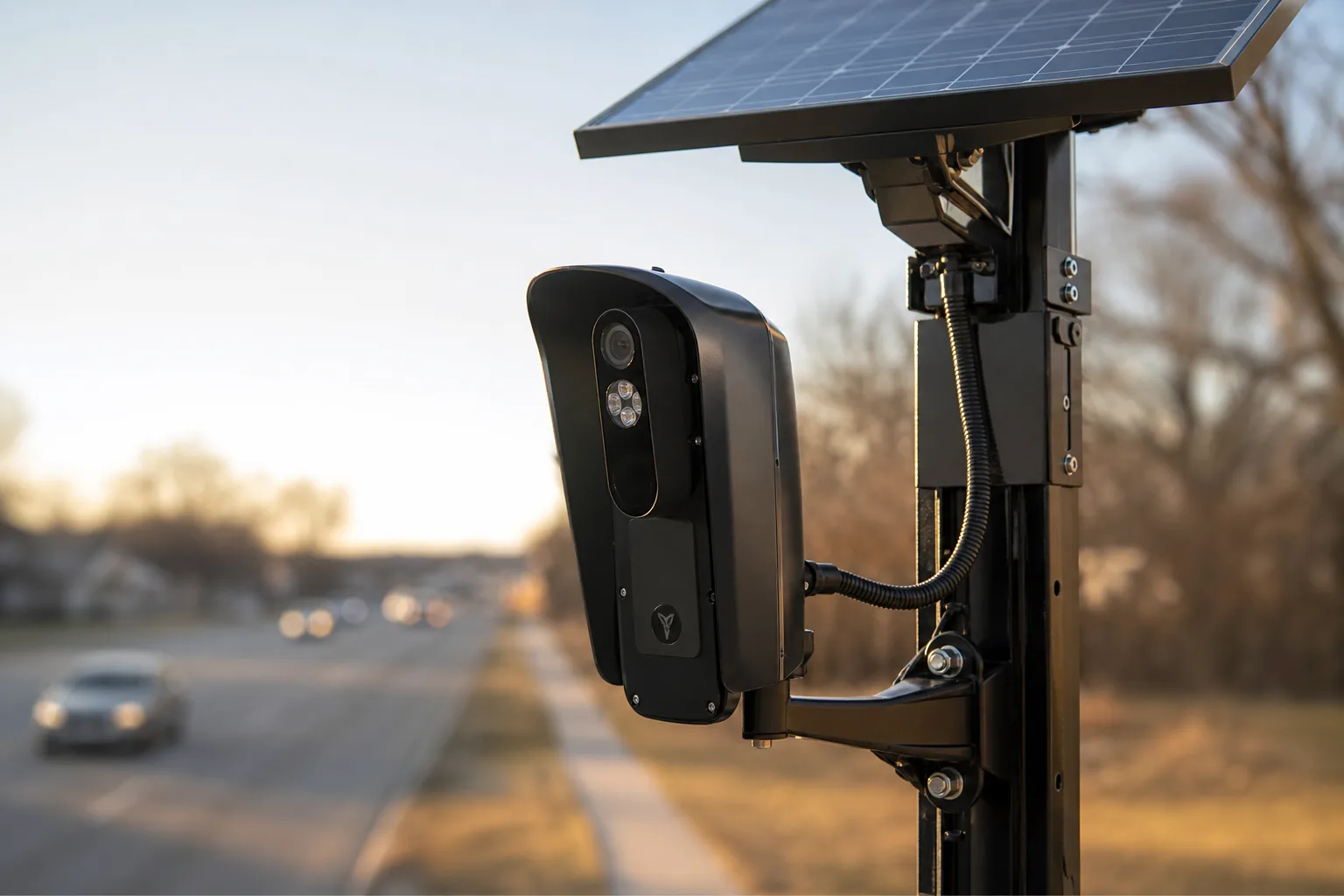
There’s a quiet revolution happening on the streets of American cities, and most people driving through it have no idea. Flock Safety cameras — the AI-powered surveillance hardware deployed by Atlanta-based Flock Security — have crossed the 100,000-unit mark across the United States, and the network keeps growing. Calling them license plate readers, as most people do, dramatically undersells what they actually are.
- Flock Safety cameras now exceed 100,000 units nationwide, making Flock the dominant force in US automated surveillance.
- Flock Safety cameras do far more than read plates — they support natural-language searches for people, vehicles, and specific visual details.
- Security researchers have repeatedly exposed critical vulnerabilities, including cameras left open to the internet with no password required.
- Law enforcement misuse is well documented, with local police conducting over 1,400 searches on behalf of ICE in Denver alone.
Table of Contents
More Than a License Plate Reader
The ‘automated license plate reader’ label stuck because it’s the most obvious thing these cameras do. But it’s a bit like calling a smartphone a ‘calculator’ because that’s the app you happened to open. Flock Safety cameras run a modified version of Android, connect wirelessly to a central database, and process everything they capture using AI — making the footage searchable in plain English by anyone with system access.
A law enforcement officer looking for a suspect doesn’t need a plate number. They can type something like ‘blue pickup truck with a cracked windshield and a kayak in the bed’ and the system will surface matching footage from across the network. That’s a fundamentally different capability than what people typically imagine when they hear ‘traffic camera.’ It’s a searchable, AI-indexed visual record of public movement — and it covers everyone, not just people suspected of anything.
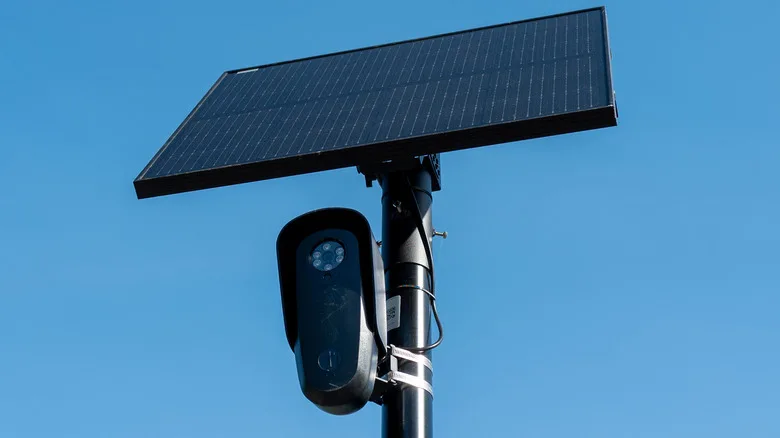
Beyond the roadside ALPRs, Flock’s product lineup has expanded considerably. The company sells AI security cameras, mobile surveillance trailers, and — for those who want eyes in places a pole-mounted camera can’t reach — quadcopter drones. Its Condor cameras are explicitly designed to track individuals rather than vehicles. All of these systems operate on the same underlying principle: describe what you’re looking for, and the AI finds it. Flock Safety cameras, in other words, are better understood as a unified AI surveillance platform than as a collection of discrete hardware products.
How the Flock Safety Camera Network Actually Works
Flock contracts with cities, towns, homeowners’ associations, and private businesses. Individual deployments can be restricted to a local area, but many police departments opt into a much larger shared network. That’s where things get genuinely concerning from a civil liberties standpoint.
The ACLU of Massachusetts flagged the fact that police departments in Texas — thousands of miles away — can run searches against Massachusetts Flock footage. The network effect is the point: more cameras, more coverage, more data. For law enforcement, that’s a powerful tool. For anyone worried about mass surveillance of innocent people going about their daily lives, it’s a different story entirely. Flock Safety cameras in one state effectively become Flock Safety cameras in every state, the moment a department joins the shared network.

Then there’s the federal dimension. Flock doesn’t hold a direct contract with Immigration and Customs Enforcement or other Homeland Security agencies — a distinction the company has been careful to maintain publicly. But that separation is largely illusory. Data-sharing agreements between local police departments and federal agencies have long allowed ICE to tap into local surveillance infrastructure, and Flock footage is no exception. In Denver, the ACLU of Colorado obtained logs showing that local officers had conducted more than 1,400 searches on ICE’s behalf as of August — using a system the city’s residents likely had no idea was being used that way.
Flock Safety Cameras Have a Security Problem
Flock Security has consistently insisted its platform is secure. That claim has been tested repeatedly, and repeatedly found wanting — not by sophisticated nation-state hackers, but by a musician.
Benn Jordan, a Chicago-based composer and YouTuber with no formal cybersecurity credentials, has become the unlikely thorn in Flock’s side. In a November exposé, Jordan and researcher John Gaines demonstrated that with physical access to a roadside Flock camera, they could press a single button, connect over Wi-Fi, use standard Android developer tools to debug the device, gain root access, and install malware. There were also exposed USB ports that could be exploited with a basic malicious drive. These aren’t theoretical attack vectors requiring deep expertise — they’re the kind of things a determined hobbyist could pull off.
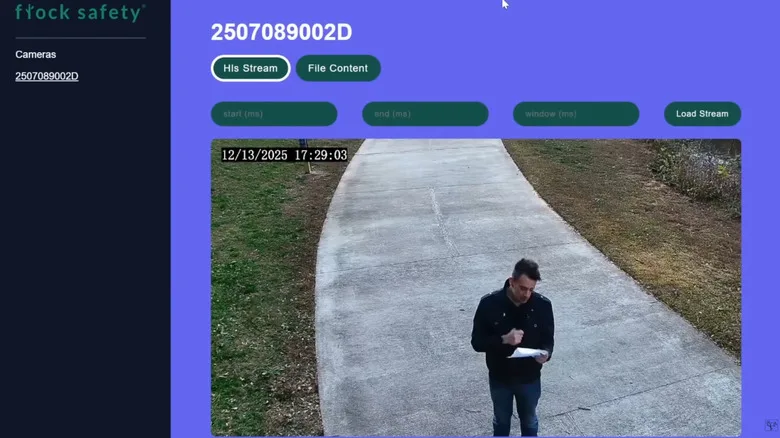
Then in December 2025, Jordan found something worse: at least 70 Flock Safety cameras — including Condor people-tracking units — were fully exposed to the open internet and indexable through commercial search engines. No authentication required. Live footage. Parks, streets, and private moments that people had no idea were being recorded, let alone broadcast to anyone who knew where to look. Jordan drove the point home by recording Flock’s dismissive response to his earlier work directly onto one of the exposed Condor cameras and downloading the clip for his video.
The company’s response to all of this? Rather than acknowledging the findings or running a bug bounty program like virtually every serious tech company does, Flock smeared Jordan and other researchers as, in their words, ‘activist groups who want to defund the police, weaken public safety, and normalize lawlessness.’ That’s not a security posture. That’s reputation management masquerading as one. Until Flock Safety cameras come with meaningful hardening standards and a transparent disclosure process, that reputation gap will only widen.
Misuse Inside Law Enforcement
Even setting aside the security holes, the question of how Flock Safety cameras are used — when they’re working exactly as intended — is deeply uncomfortable. Access to a network that can locate virtually any vehicle or person in a city within seconds is an extraordinary amount of power to hand to any institution, and some officers have used it accordingly.

There are documented cases of police using Flock to stalk and harass women. That’s not a hypothetical abuse scenario — it happened. On the corporate side, Flock employees were found to have used footage of preschoolers captured by the system as a sales tool to demonstrate the cameras’ capabilities to potential clients. The company that lectures researchers about ‘public safety’ was using footage of small children to close deals.
Flock does have genuine crime-solving wins to point to — the network has assisted in at least one murder investigation and helped dismantle a vehicle smash-and-grab operation. Those aren’t nothing. But they don’t resolve the core tension: a system that tracks everyone, every day, regardless of suspicion, in order to occasionally catch someone who did something wrong.
What Happens When Surveillance Becomes Infrastructure
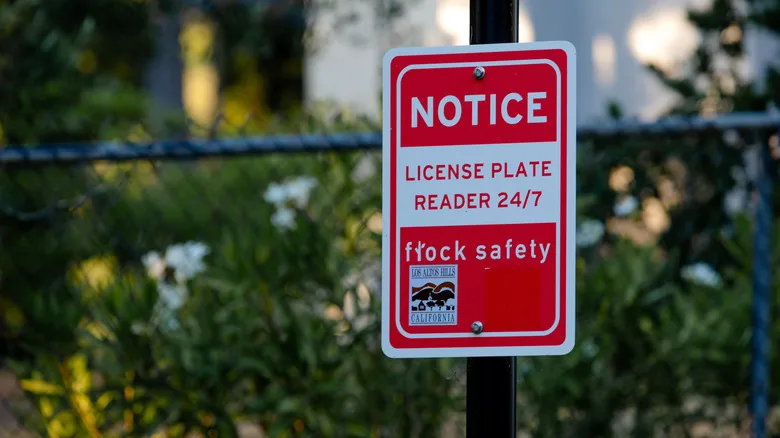
The deeper problem with Flock Safety cameras isn’t any single vulnerability or abuse case — it’s the pace of deployment and the difficulty of reversing course once a city is embedded in the network. More than 100,000 units. Contracts with cities, towns, HOAs, and private businesses. A shared nationwide database that crosses state lines and, through data-sharing arrangements, reaches federal agencies. That’s not a product anymore — it’s infrastructure.
And infrastructure, as anyone who’s tried to kill a highway or decommission a power plant knows, is extraordinarily hard to remove once it’s in place. The institutional inertia alone is substantial: police departments that have built workflows around Flock searches, city councils that signed contracts without fully understanding the scope, residents who never got a meaningful vote. One widely circulated characterization of the Flock network’s reach — likely meant as a selling point — suggests that virtually no movement in a covered area goes undetected.
That framing reveals something important about how Flock thinks about its product. Comprehensive coverage isn’t a side effect — it’s the value proposition. The question American cities are only now beginning to grapple with seriously is whether the trade-off that Flock Safety cameras represent was ever theirs to make on behalf of everyone who lives there.
Frequently Asked Questions
What exactly can Flock Safety cameras track?
Flock Safety cameras go well beyond license plates. Officers can search in plain language — for example, ‘green sedan with flag bumper sticker’ — and the AI will surface matching footage. The company also offers people-tracking Condor cameras, mobile surveillance trailers, and quadcopter drones.
How does ICE access Flock camera footage?
Flock doesn’t hold a direct contract with federal immigration authorities, but ICE routinely gains access through data-sharing agreements with local police departments. In Denver, ACLU Colorado obtained logs showing local officers ran over 1,400 searches on ICE’s behalf as of August.
How serious are the security vulnerabilities in Flock cameras?
Serious enough that an independent researcher with no formal cybersecurity background — musician and YouTuber Benn Jordan — discovered dozens of cameras exposed to the open internet with no password, plus physical exploits allowing root access and malware installation.
Can a city remove Flock cameras once they’re installed?
In practice, it’s very difficult. The source notes that once Flock cameras take root in a city, weeding them out can be nearly impossible.