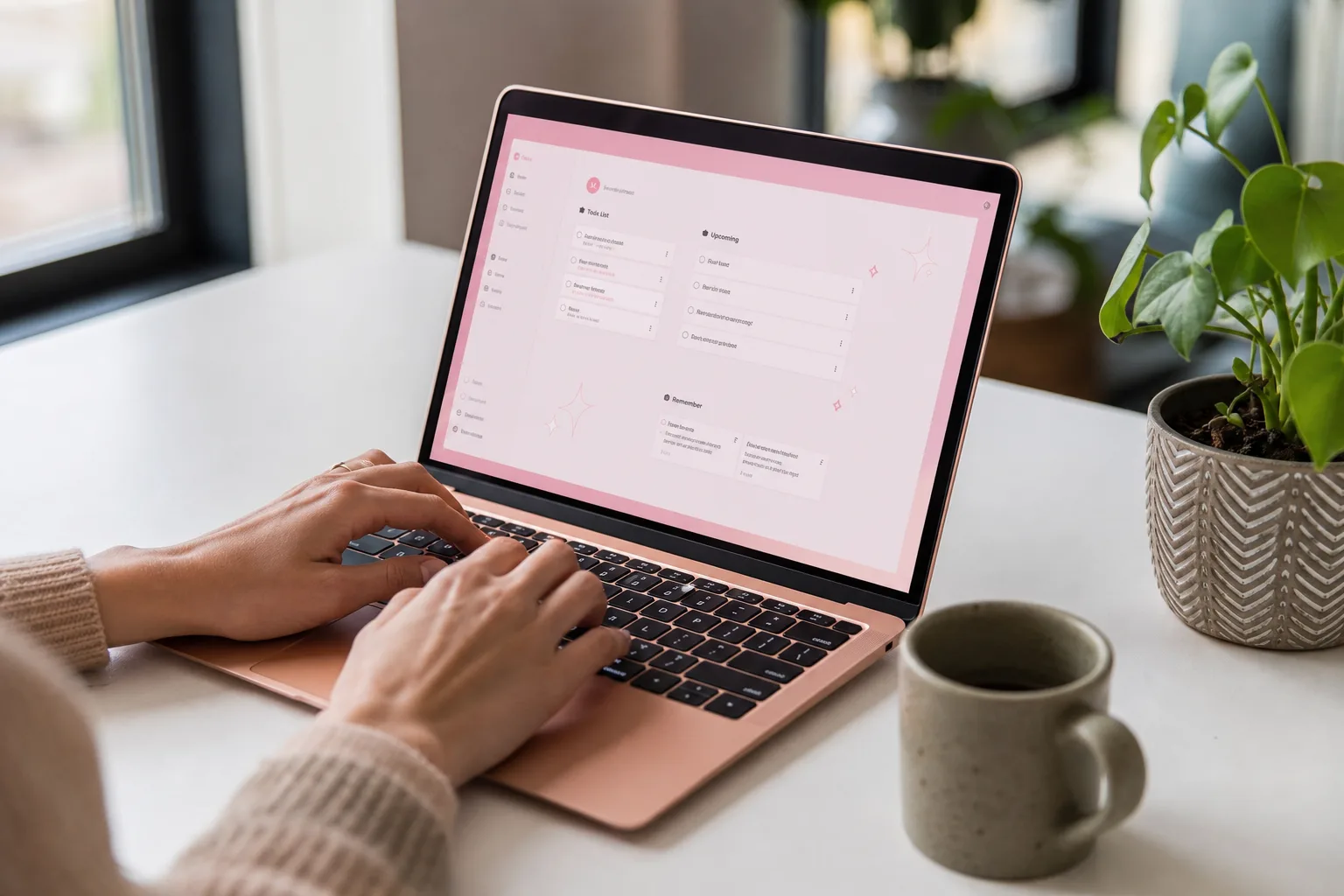
When most people hear the name Paris Hilton, ‘software developer’ isn’t the first title that comes to mind. But Google’s Gemini Canvas just made that distinction a lot less meaningful — and Hilton’s newly built productivity app is the proof of concept nobody saw coming.
- Gemini Canvas let Paris Hilton build a fully functional productivity app using only natural-language prompts and zero lines of code.
- Gemini Canvas is emerging as one of the most accessible AI-powered tools for turning ideas into working software without developer skills.
- Hilton’s app, Iconic Ideas, organizes tasks and rewards completed goals with ‘sparkle points,’ reflecting her personal ADHD-driven workflow needs.
- The project signals a broader shift in software creation — where describing an idea clearly may soon be all the skill you need.
Table of Contents
What Gemini Canvas Actually Does
Gemini Canvas sits inside Google’s broader Gemini AI platform and does something deceptively simple: it lets you build working software by talking to it. You describe what you want — an app, a game, an interactive infographic — and Canvas generates, refines, and iterates on it in real time. No IDE, no Stack Overflow, no debugging sessions at 2 a.m. Just prompts and patience.
That might sound like a party trick, but the underlying capability is serious. Google’s Gemini models are doing genuine code generation under the hood, translating plain-English intent into structured, functional software. What Canvas adds on top is a layer of interactivity — a workspace where non-technical users can actually see their project take shape and push it in new directions without ever touching the source. It’s the difference between watching a chef cook and having a meal magically appear in front of you.
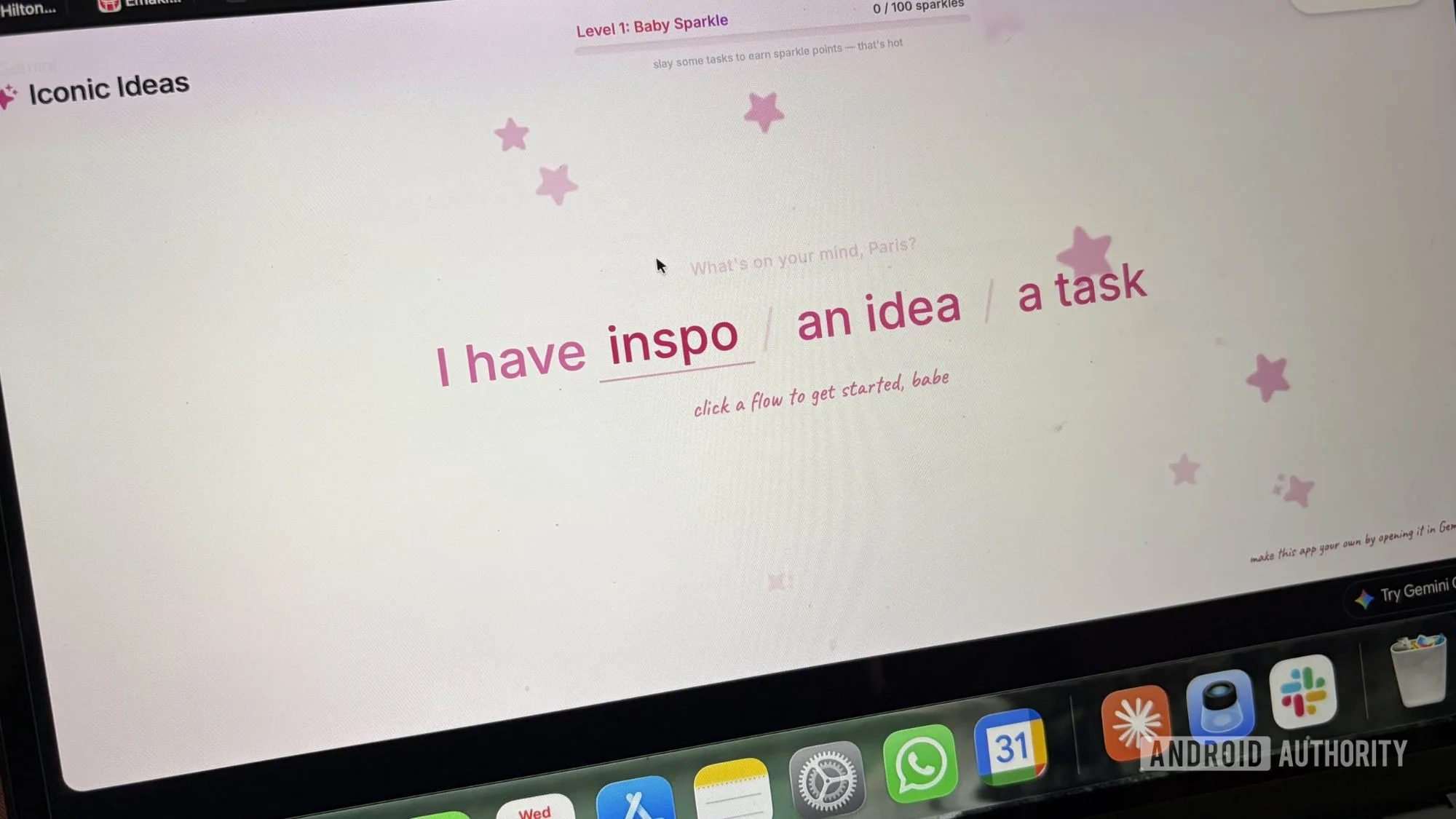
Paris Hilton, Android’s ‘Icon-in-Residence’
Google didn’t just hand Hilton a press release to tweet. They brought her in as Android’s first official ‘icon-in-residence’ — a genuinely interesting PR move that puts a recognisable cultural figure inside a technical product demo and asks: what happens when someone with ideas but no coding background gets access to Gemini Canvas?
The answer, apparently, is Iconic Ideas. Hilton has spoken openly about living with ADHD, and the app she built reflects that directly. It’s a productivity tool designed to capture the rapid-fire stream of thoughts that ADHD brains are famous for — pulling ideas out of your head, organising them into tasks, and giving the whole process enough visual stimulation to keep you engaged. Completing a task earns you ‘sparkle points.’ The entire UI is, predictably and unapologetically, pink.
You might be tempted to dismiss the aesthetic as vanity, but that’s actually the wrong read. The fact that Hilton could build a tool that matches her own sensibility — not a generic to-do app, but something that reflects how she thinks and what she responds to — is the real story here. Personalisation at that level has historically required a developer who could translate your vision into code. Now it requires a conversation.
Gemini Canvas and the No-Code Movement — What’s Different This Time
No-code tools aren’t new. Platforms like Webflow, Glide, and Bubble have been promising to democratise software creation for years. And they’ve made real progress — thousands of small businesses run on apps built without traditional development. But those platforms still carry a learning curve. You need to understand their logic, their data models, their component libraries. The barrier is lower than writing raw code, but it’s still a barrier.
What separates Gemini Canvas from the existing no-code ecosystem is the interface itself: natural language. You don’t need to learn Bubble’s visual programming environment or Glide’s spreadsheet-to-app pipeline. You just describe what you want, the way you’d describe it to a colleague. That’s a fundamentally different entry point — and it’s one that genuinely has no prerequisite skills attached to it.
The broader AI industry is moving in the same direction. OpenAI’s GPT-4o can generate working web apps from a prompt. Anthropic’s Claude has been used to prototype internal tools at startups. Microsoft’s Copilot is embedded in Power Apps for exactly this use case. But Google’s decision to give Canvas its own dedicated workspace inside Gemini — rather than burying it in an API or a developer-facing product — signals that they think this capability is ready for mainstream, non-technical users. The Hilton partnership is the most visible expression of that bet.
The Mood Board Feature Nobody’s Talking About
One detail from Hilton’s Iconic Ideas project deserves more attention than it’s getting. When you feed an idea into the app — a goal, a project concept, a vague creative direction — it can generate a visual mood board around that idea. Not just a list of tasks, but a visual representation of where the idea could go.
That’s a meaningful addition to any productivity tool, but it’s especially interesting for the kind of creative, early-stage thinking that precedes any real planning. A mood board bridges the gap between ‘I have a feeling about this direction’ and ‘here’s what that direction actually looks like.’ For anyone who’s ever struggled to articulate a vision — whether that’s redecorating a space, launching a product, or planning an event — having an AI generate that visual scaffolding on demand is genuinely useful, not just decorative.
It also shows how Gemini Canvas is more than a code generator. It’s reaching into design and ideation territory, which puts it in conversation with tools like Canva, Figma’s AI features, and Adobe Firefly in ways that go beyond pure app development.
What This Actually Means for Software Development
Let’s be clear about what AI-assisted tools like Gemini Canvas are and aren’t. They’re not replacing software engineers. Complex applications — the kind that handle financial transactions, medical records, multi-user collaboration at scale — still require deep technical expertise, security knowledge, and architectural thinking that no prompt-based tool is close to replacing. Any developer reading this can relax.
What these tools are doing is filling a gap that’s existed for a long time: the space between ‘I have a clear idea for a tool I’d use every day’ and ‘I can actually build that tool.’ For individuals, small teams, and founders who know exactly what they need but don’t have the budget or technical background to commission custom software, that gap has always been costly. You either learned to code, hired someone, settled for an off-the-shelf solution that didn’t quite fit, or dropped the idea entirely.
AI-powered no-code builders are collapsing that gap fast. And the more capable models like Gemini become at understanding intent and generating clean, functional output, the smaller that gap gets. Hilton’s pink task manager is a consumer-friendly illustration of something that has real implications for internal business tools, educational technology, healthcare apps, and anywhere else that bespoke software has historically been too expensive or complex to build.
The question worth watching isn’t whether Paris Hilton will become a software engineer. It’s how quickly the next generation of creators — designers, educators, entrepreneurs, healthcare workers — realises that the tools to build exactly what they need are already in their hands, waiting for the right prompt.
Frequently Asked Questions
What exactly is Gemini Canvas and what can it build?
Gemini Canvas is a feature inside Google’s Gemini AI that lets users create apps, games, infographics, and other interactive projects through natural-language prompts alone. No coding or traditional development skills are required — you describe what you want and the tool builds it iteratively.
How did Paris Hilton use Gemini Canvas to build her app?
Hilton worked with Gemini Canvas as part of her role as Android’s first ‘icon-in-residence.’ She used a handful of prompts to create Iconic Ideas, a pink, sparkle-themed productivity app designed around her ADHD, without writing a single line of code herself.
Does Gemini Canvas require a Google account or special subscription?
Gemini Canvas is accessible through Google’s Gemini platform. While basic Gemini access is free, some advanced features — including Canvas — may require a Gemini Advanced subscription tied to a Google One AI Premium plan. Availability can vary by region.
Is no-code AI app building reliable enough for real use?
For personal productivity tools, simple games, and lightweight apps, AI-assisted no-code builders like Gemini Canvas are proving genuinely capable. They’re not replacing professional software engineers for complex systems, but for tailored personal tools, the output can be surprisingly polished and functional.