

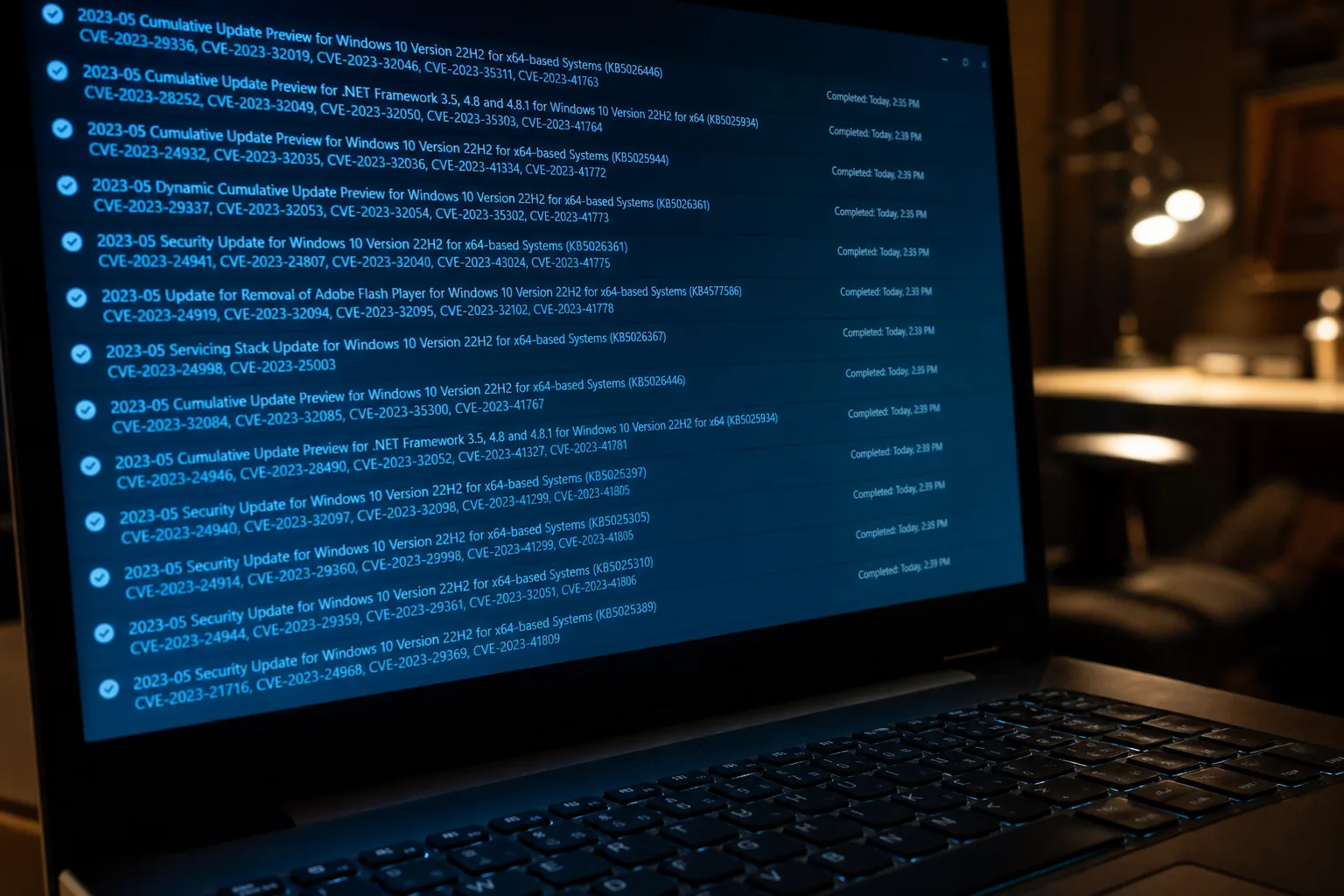
- Patch Tuesday June 2026 delivered a record-breaking ~200 security fixes, with nearly three dozen rated critical by Microsoft.
- Patch Tuesday June 2026 features three publicly available exploits, including two tied to a rogue researcher called Nightmare Eclipse.
- AI tools are accelerating vulnerability discovery, and experts warn high patch volumes may become permanent going forward.
- Microsoft also quietly battled an internal worm infection hitting 72 of its public GitHub repositories during the same week.
Table of Contents
Patch Tuesday June 2026 Breaks All Previous Records
Patch Tuesday June 2026 has set a record that nobody in the security industry is exactly thrilled about. Microsoft shipped fixes for nearly 200 vulnerabilities across Windows and its broader software portfolio — the largest single Patch Tuesday drop in the programme’s history. Close to three dozen of those were assigned Microsoft’s most severe ‘critical’ rating, and working exploit code for at least three of the bugs is already circulating publicly. For system administrators, this is the kind of month that turns routine patch management into a genuine emergency.
To put that number in context: a typical Patch Tuesday in recent years has landed somewhere between 60 and 120 fixes. Nearly 200 is roughly double the historic average. And if you factor in the browser side of things, the real total is far higher. Rapid7’s Adam Barnett flagged that Microsoft separately addressed 360 browser vulnerabilities this month alone — an order of magnitude above what’s been typical. Microsoft has now stopped listing Chromium-based CVEs in its Security Update Guide entirely, which tells you something about how unmanageable the numbers have become. Patch Tuesday June 2026 is, by any measure, the most demanding update cycle the programme has ever produced.
AI Is Rewriting the Rules of Vulnerability Discovery
So why now? The short answer is artificial intelligence. Microsoft acknowledged in a blog post last month that both its internal engineering teams and the broader security research community are leaning heavily on AI tools to find bugs faster and at greater scale. The implication is uncomfortable but straightforward: the same technology that promises to make software more secure is simultaneously making the attack surface easier to map. Patch Tuesday June 2026 may be the clearest illustration yet of that dynamic playing out in real time.
Tenable senior staff research engineer Satnam Narang put it plainly:
‘Some surveys put AI usage among security professionals generally at 90%, so it’s unsurprising that this volume of patches may be the norm. Pandora’s proverbial box has been opened, and as more advanced AI models become available, we expect the norm to continue upward across the board, not just for Patch Tuesday.’
That framing — Pandora’s box — is apt. Once AI-powered fuzzing and static analysis are widely adopted on both the offensive and defensive sides, there’s no putting it back. Security teams that haven’t already integrated AI-assisted tooling into their workflows are going to find themselves at a serious disadvantage, not just in finding bugs but in keeping pace with the volume of patches they’re expected to evaluate and deploy each month. The scale of Patch Tuesday June 2026 makes that challenge concrete rather than theoretical.
One particularly striking data point from this month: CVE-2026-49160, a denial-of-service flaw affecting Microsoft’s Internet Information Services web server among other targets, was reportedly discovered and submitted by OpenAI’s Codex. That’s the first publicly confirmed instance of an AI system directly reporting a vulnerability that made it into a Microsoft Patch Tuesday advisory. It almost certainly won’t be the last.
Nightmare Eclipse: The Researcher Microsoft Can’t Ignore
If AI is the structural story of Patch Tuesday June 2026, the Nightmare Eclipse saga is the dramatic one. The anonymous researcher — whose chosen alias evokes chaos by design — has spent recent weeks publishing working exploit code for unpatched Windows flaws. Two of this month’s zero-days trace directly back to their public disclosures.
The first, which Nightmare Eclipse branded ‘GreenPlasma,’ targets an elevation-of-privilege weakness in the Windows Collaborative Translation Framework. Microsoft’s patch for that flaw landed today as CVE-2026-45586. The second, dubbed ‘YellowKey,’ exploits a BitLocker vulnerability that lets anyone with physical access to a device view data that should be encrypted — exactly the kind of flaw that makes IT security teams break out in a cold sweat. That one is addressed in CVE-2026-50507.
And then, almost immediately after Microsoft published today’s patches, Nightmare Eclipse dropped a fresh exploit — this time claiming it hits a zero-day in Windows Defender itself. The timing was clearly deliberate. For enterprises still working through their Patch Tuesday June 2026 deployment queue, that announcement added an unwelcome layer of urgency.
The backstory here adds another layer. Nightmare Eclipse claims to be a former Microsoft employee, a claim Microsoft has declined to address publicly. Rapid7 noted that a recent post from the researcher featured an image of Albert Vesker, the fictional Resident Evil character who worked as a scientist before turning against the organisation that employed him. The symbolism isn’t exactly subtle.
Microsoft’s response to all of this has been messy. The company initially hinted in a blog post at potential legal action against Nightmare Eclipse, which triggered immediate backlash across social media and infosec communities. Redmond then walked it back on X, saying it has no intention of suing researchers but would refer them to law enforcement if laws are broken. The CVE advisories for the flaws Nightmare Eclipse exposed don’t name the researcher, offering only a bland note that Microsoft ‘recognises the efforts of those in the security community.’ That non-acknowledgement is unlikely to improve the relationship.
More pressure is coming. Nightmare Eclipse has announced a ‘bone shattering’ drop of additional Windows zero-days planned for July 14 — which happens to be the exact date of next month’s Patch Tuesday. Whether that’s a genuine threat or performance art, Microsoft’s security team has roughly four weeks to figure it out. If those disclosures land as promised, Patch Tuesday June 2026 may come to be seen as merely the opening act.
Visual Studio Code Zero-Day and a GitHub Token Theft Risk
Beyond the Windows-focused drama, Patch Tuesday June 2026 includes a patch for a genuinely nasty flaw in Visual Studio Code. The vulnerability allowed an attacker to steal a victim’s GitHub authentication tokens with a single click — the kind of attack that could cascade into source code access, supply chain tampering, or worse, depending on what repositories the victim had access to.
Microsoft was forced to issue an emergency stopgap fix back on June 3, after a researcher published a full proof-of-concept showing exactly how to exploit it. The reason that researcher went public without first coordinating with Microsoft? They’d previously submitted a vulnerability through responsible disclosure channels, only to find Microsoft silently patched it months later with no credit or acknowledgement. It’s a pattern that erodes the trust underpinning the whole coordinated disclosure system — and Microsoft is now dealing with the consequences.
Microsoft’s Own Repos Hit by the Shai-Hulud Worm
If all of that wasn’t enough, Microsoft was simultaneously fighting fires from within during Patch Tuesday June 2026 week. At least 72 of the company’s public code repositories were found to be infected with a variant of the Shai-Hulud worm last week. Every affected package traced back to the official Azure Durable Task SDK — which had already been hit by the same worm in May. Two consecutive months, the same SDK, the same worm. That’s not bad luck; that’s a systemic problem that needs a harder look at how Microsoft manages and monitors its own public-facing code infrastructure.
The Rest of the Industry Is Keeping Pace
Microsoft isn’t alone in shipping unusually large update bundles right now. Adobe pushed fixes for a significant number of critical vulnerabilities this month across Experience Manager, Acrobat Reader, and ColdFusion — all products with serious enterprise exposure. Google, meanwhile, resolved 429 vulnerabilities in a single Chrome browser update on June 3. Chrome updates automatically, but actually installing them requires a full browser restart — a step more users skip than you’d expect.
The industry-wide surge in patch volume isn’t coincidental. It reflects the same AI-driven acceleration in vulnerability research playing out across every major software vendor simultaneously. Security teams at large organisations are facing a structural mismatch: the rate at which bugs are being found is outpacing the rate at which patches can be evaluated, tested in staging environments, and safely deployed without breaking production systems. Patch Tuesday June 2026 crystallises that mismatch more sharply than any previous cycle.
If Tenable’s Narang is right — and the survey data he’s citing suggests he is — this isn’t a spike. It’s the new baseline. The question for enterprise IT teams isn’t whether to keep up with monthly patch cycles, but whether the old monthly cadence is even fit for purpose anymore. With AI systematically combing through codebases on both sides of the security equation, the window between a vulnerability being discovered and it being actively exploited is narrowing fast. Patch Tuesday used to feel like a predictable monthly ritual. Patch Tuesday June 2026 is starting to feel like evidence that the treadmill keeps accelerating — and nobody has found the off switch yet.
Frequently Asked Questions
Why is Patch Tuesday June 2026 considered a record-breaking update?
Microsoft addressed nearly 200 security vulnerabilities in a single Patch Tuesday cycle, the highest count in the program’s history. On top of that, 360 additional browser vulnerabilities were patched separately — pushing the true total far higher and suggesting AI-assisted bug discovery is fundamentally changing the volume of flaws being found.
Who is Nightmare Eclipse and what did they release?
Nightmare Eclipse is an anonymous security researcher who claims to be a former Microsoft employee. They publicly dropped working exploits for Windows flaws, including ‘GreenPlasma’ and ‘YellowKey,’ and has threatened a ‘bone shattering’ release of further zero-days on July 14, 2026 — the same day as next month’s Patch Tuesday.
How is AI contributing to the increase in vulnerability discoveries?
Both Microsoft’s own engineers and the broader security community are increasingly using AI tools to find bugs. Tenable’s Satnam Narang notes that some surveys put AI usage among security professionals at around 90%, meaning the elevated volume of patches each month may be here to stay.
What was the Visual Studio Code zero-day patched this month?
A flaw in Visual Studio Code allowed attackers to steal GitHub authentication tokens with a single click. Microsoft issued an emergency patch on June 3 after a researcher published a public proof-of-concept, having declined to coordinate with Microsoft after a previous report was silently fixed without credit.

