
- Mistral AI strategy now targets the full stack — compute, models, platforms, and enterprise consultancy, not just model development.
- The Mistral AI strategy prioritises European data sovereignty, with banks like BNP Paribas running models fully on-premise.
- Specialised small models for robotics, voice, and document processing are outperforming general-purpose AI in speed and efficiency.
- A research team used Mistral’s Codestral to decode ancient Egyptian papyri — a collection that would have taken 2,000 years to process manually.
Table of Contents
Mistral AI Strategy Has Quietly Shifted — And It’s Bigger Than You Think
The Mistral AI strategy that emerged from the company’s AI Now Summit in Paris last week looks very different from the one that put the French startup on the map two years ago. Back then, Mistral was a model company — scrappy, technically impressive, and defined by its willingness to release capable open-weight models that made OpenAI nervous. That chapter isn’t closed, but it’s no longer the whole story. Mistral is now building toward something much more ambitious: a vertically integrated AI company that owns the compute, ships the models, runs the platforms, and consults on deployment. Think less Hugging Face and more a European answer to the hyperscaler stack.
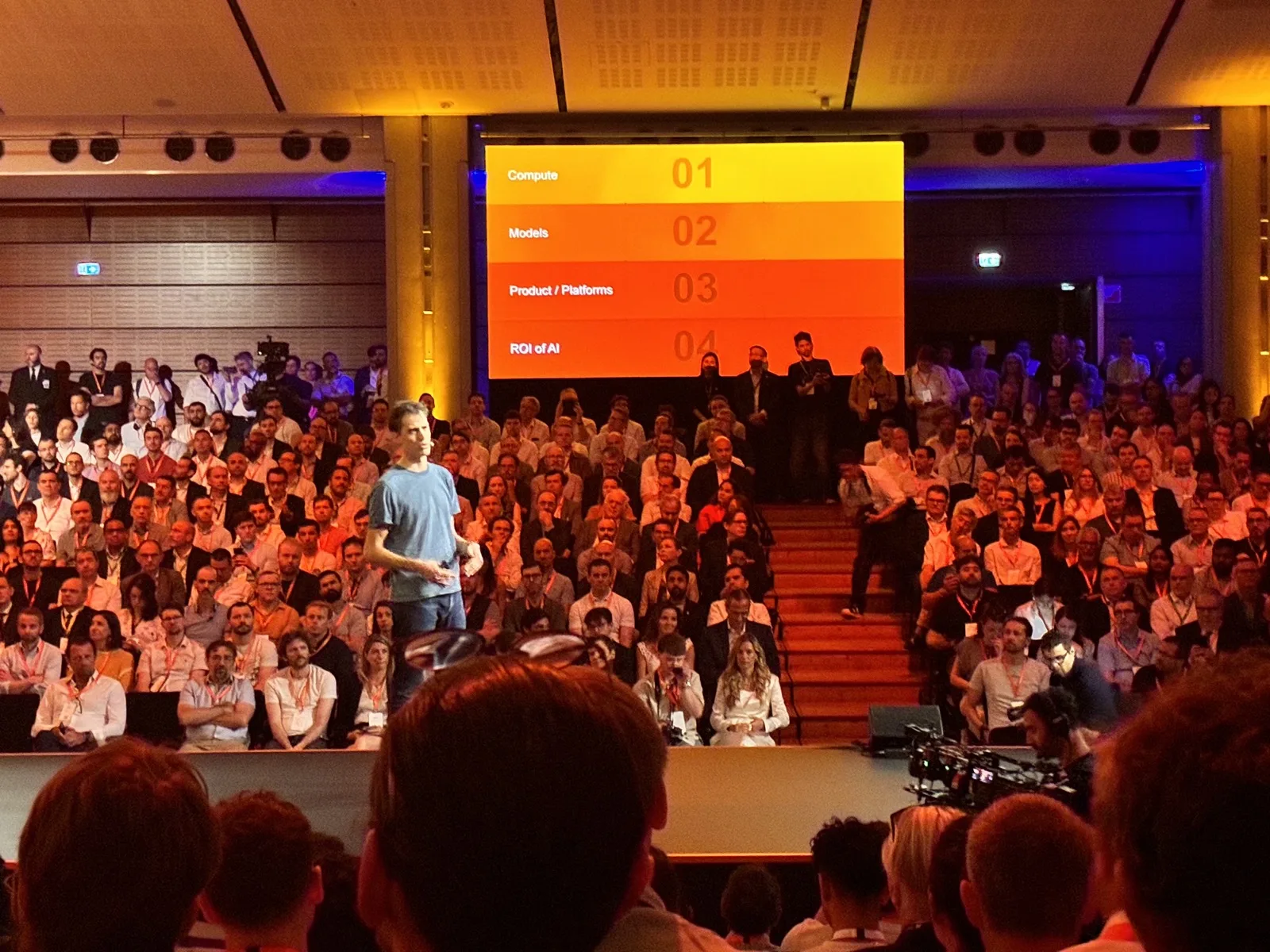
The summit itself — held near the Louvre in the same venue that normally hosts Paris Fashion Week, with co-founders presenting from a catwalk — made the ambition clear before a single slide went up. This wasn’t a developer conference. It was a signal to European enterprise that Mistral is here to be taken seriously as an infrastructure partner, not just a model provider. The Mistral AI strategy, in other words, is now as much about relationships and contracts as it is about research.
Owning the Stack: Compute, Models, and Everything Between
One of the more striking announcements was confirmation that Mistral now owns its own compute. The company operates a 40-megawatt data centre in Paris, with additional facilities on the way — including one in Sweden. That’s a deliberate move. Running your own infrastructure gives Mistral control over pricing, latency, and, critically, the ability to make hard guarantees about data residency that US-based cloud providers structurally cannot offer to European clients.
For context: Microsoft, Google, and Amazon have all made significant commitments to European data sovereignty in recent years, but they’re doing it on their terms, within their global architectures. Mistral’s pitch is different — the data never leaves, the model is yours, and you can run it on your own hardware if you want. That’s a genuinely different proposition for a hospital, a bank, or a government ministry trying to navigate GDPR and sector-specific regulation. The Mistral AI strategy around sovereignty is, arguably, its sharpest competitive edge over US rivals.
The messaging throughout the summit leaned heavily on partnerships rather than raw model performance. Mistral called out collaborations with ASML, BNP Paribas, and Amazon’s Alexa+ as centrepieces of its current direction. That’s a conscious choice. Anthropic and OpenAI are still fighting for mindshare among developers and researchers. Mistral is going after signed enterprise contracts — a slower, less glamorous path, but potentially a stickier one.
Small, Fast, and Focused: The Case Against General-Purpose AI
Perhaps the most technically interesting thread running through the summit was Mistral’s argument for specialised small models over large general-purpose ones. The Mistral AI strategy here is clear: purpose-built models dramatically outperform the likes of GPT-4o or Claude 3.5 Sonnet — not on benchmark leaderboards, but on the metrics that actually matter in production: speed, energy consumption, and cost per token.
Three models stood out. Document AI is Mistral’s OCR-focused model, currently being used by the EU Patent Office to process documents at scale — the kind of repetitive, high-volume task where a massive general model is overkill and prohibitively expensive. Voxtral is a multilingual voice model that’s powering Amazon’s Alexa+ in Europe, which is a notable customer win given how competitive the voice AI space has become. And Robostral is an industrial robotics model built in partnership with ASML, the Dutch semiconductor equipment giant whose machines are, quite literally, irreplaceable in global chip manufacturing.
The logic here is sound. As AI moves from novelty to infrastructure, efficiency matters more than headline capability. A model that can process 10,000 documents per hour at a fraction of the cost of GPT-4 wins the contract, even if it can’t write a sonnet. Mistral is betting that most enterprise AI workloads look a lot more like the former than the latter. The Mistral AI strategy on specialisation is, in this sense, a direct response to how enterprise buyers actually evaluate AI vendors.
Agentic AI: The Harness Is Everything
On the agentic side of things, Pieter Stock’s talk at the summit offered a useful framing that cuts through a lot of the current hype. His argument: the model alone isn’t enough. What he called the “harness” — the layer that adds context, persistence, and learning — is what actually determines whether an AI agent works in a real-world setting.
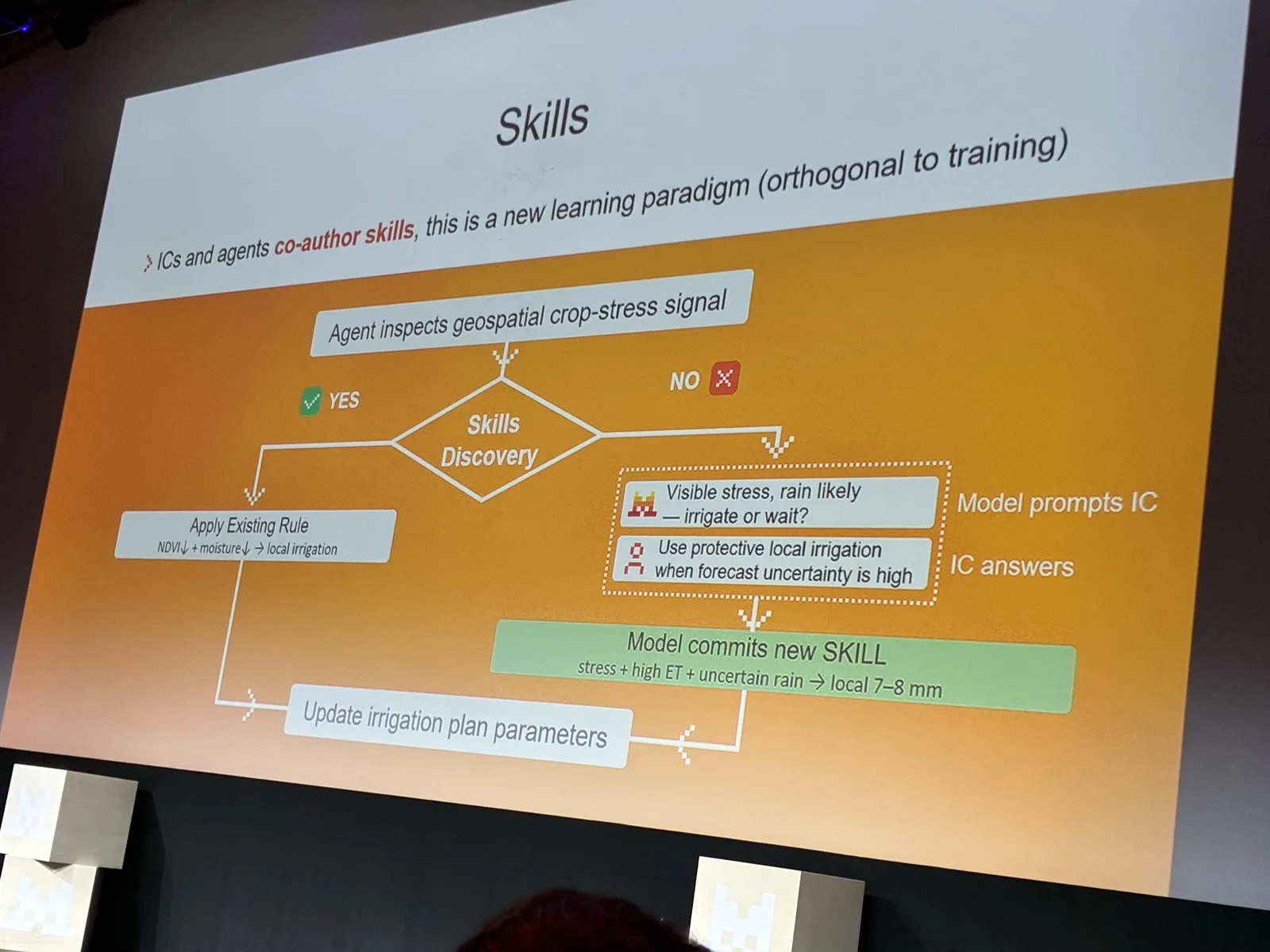
This tracks with what engineers building production agentic systems have been saying for months. Raw model capability is table stakes. The hard problems are state management, error recovery, and keeping the system transparent enough that a human can audit what it did and why. Stock highlighted reasoning as the critical ingredient here — not in the abstract sense of “the model is smart,