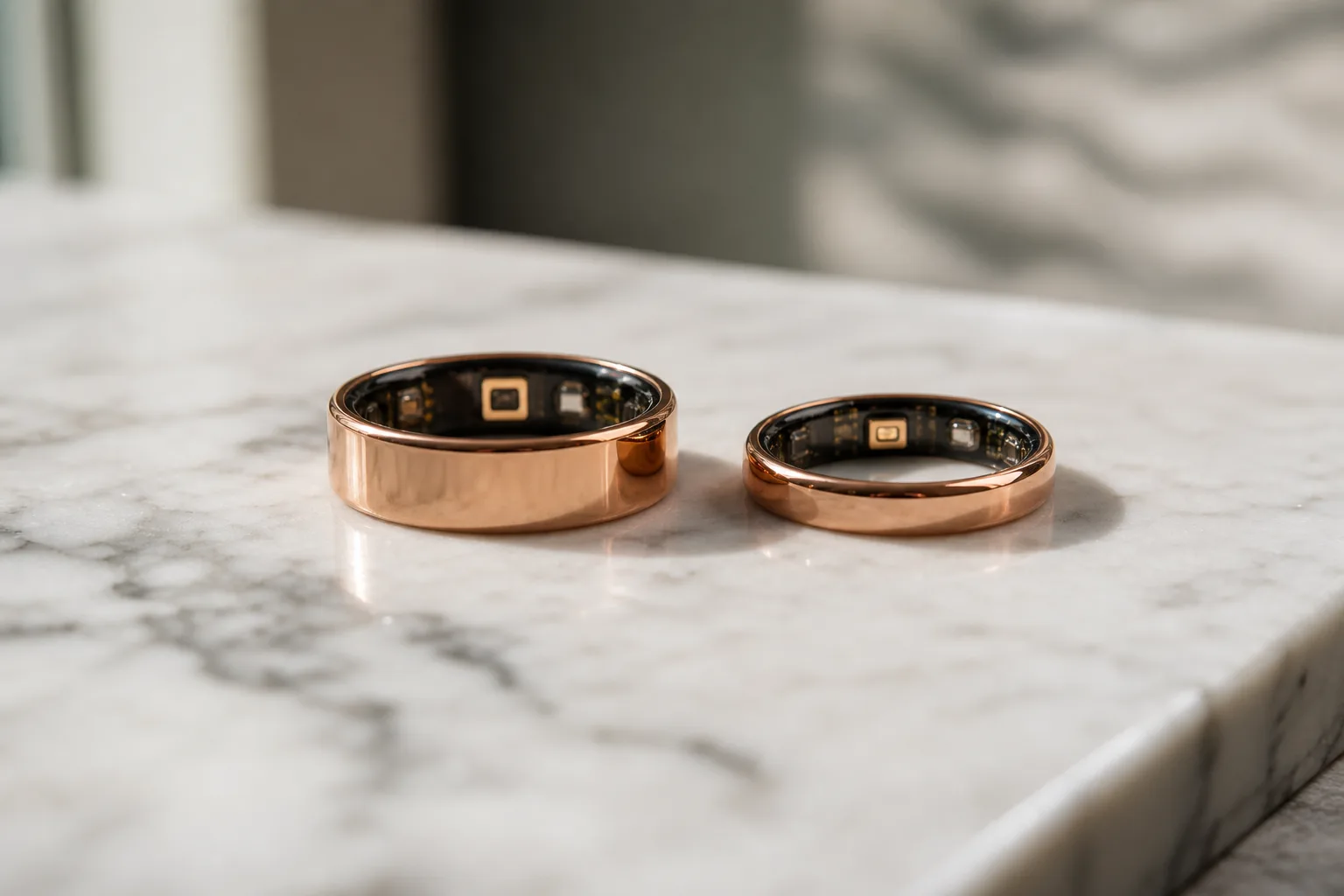
The Oura Ring 5 has only been on one reviewer’s finger for 24 hours, and already it’s making a strong case for being the most meaningful generational leap in smart ring history. That’s not hypetalk — it’s the result of Oura completely rethinking the hardware from the inside out, shrinking the form factor by 40% while somehow squeezing in an extra day of battery life. For a device that lives on your finger every hour of every day, that combination matters more than almost any spec sheet ever could.
- The Oura Ring 5 is 40% slimmer than its predecessor, making it genuinely feel like everyday jewelry on your finger.
- Oura Ring 5 adds an extra day of battery life through a complete internal redesign, including new LEDs and refined algorithms.
- The size reduction isn’t just cosmetic — it signals a broader shift in what wearable health tech can realistically look like.
- New software features including Health Radar, live activity tracking, and blood pressure signals are still being put to the test.
Table of Contents
Why the Oura Ring 5 Size Reduction Is a Bigger Deal Than It Sounds
When Oura announced the fifth-generation ring in late May, the 40% size reduction was the headline. But numbers on a press release don’t quite capture what it feels like in practice. The Oura Ring 5 is slim enough that it’s virtually indistinguishable from a standard piece of jewelry. When placed next to a conventional wedding band, the two are nearly identical in width and thickness. That comparison alone tells you how far sensor miniaturization has come.
With the Oura Ring 4, there was always a small but persistent reminder that you were wearing a piece of technology. Grip something tightly, make a fist, or try to press your fingers flush together, and you’d feel a subtle gap — the ring physically preventing full contact between fingers. It wasn’t painful. It wasn’t even particularly bothersome for most users. But for anyone wearing the device around the clock, that marginal intrusion adds up. The Oura Ring 5 essentially eliminates it.
This kind of friction reduction — literal, physical friction — is what separates good wearables from great ones. Apple learned this with the Apple Watch getting thinner across generations. Fitbit learned it the hard way when users abandoned bulky early trackers. The principle is the same: the best health tracker is the one you actually keep wearing. Oura has clearly internalized that lesson.
What Had to Change Inside to Make the Oura Ring 5 Work
Getting a ring this slim to do more than its predecessor isn’t a question of software tweaks or minor component swaps. Oura had to gut the entire internal architecture. The battery was redesigned from scratch. The LEDs responsible for health tracking — measuring things like blood oxygen, heart rate, and skin temperature — were replaced with more powerful, more efficient versions. The algorithms that interpret all that sensor data were refined to work accurately with the new hardware configuration.
The payoff is an additional day of battery life on top of what the Ring 4 offered. Exact claims vary depending on usage, but Oura is targeting around seven days on a charge. That’s meaningful for a device you’re supposed to sleep in, work out in, and never really think about. Any friction in the charging routine — hunting for the charger, timing the charge window around sleep — undermines the core value proposition. More battery, less friction.
It’s worth flagging that 24 hours of real-world testing doesn’t validate those battery claims yet. Extended use over a full week will be the real test, and early impressions always carry caveats. But the engineering rationale behind the improvement is sound, and Oura has generally delivered on battery promises in previous generations.
Oura Ring 5 Software: The Features Still Being Tested
Hardware gets most of the early attention with the Oura Ring 5, but the software additions are arguably just as significant — if harder to evaluate quickly. Oura is rolling out Health Radar, a dashboard-style feature designed to give users a higher-level view of their health trends over time rather than just daily scores. Live activity tracking is also new, addressing one of the more persistent criticisms of the Ring 4, which was relatively passive compared to wrist-based competitors like the Apple Watch or Garmin devices.
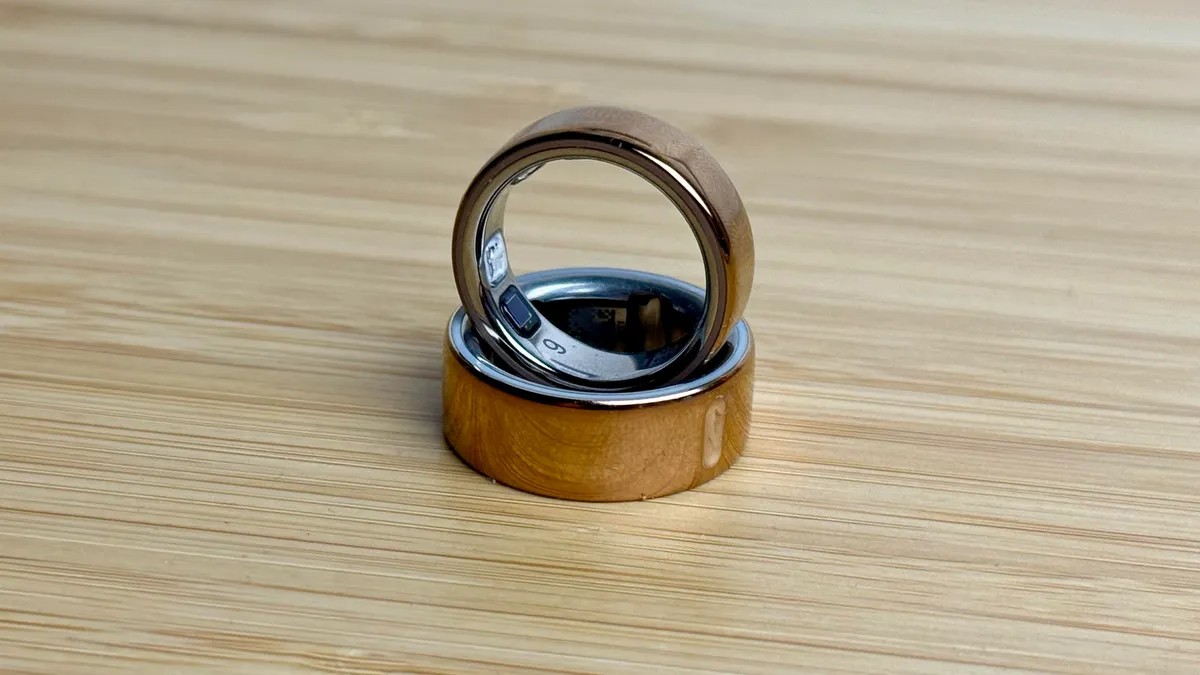
The most eye-catching addition, though, is blood pressure signals. Oura is being careful with its language here — “signals” rather than “readings” — which reflects both regulatory caution and the genuine technical challenge of accurate cuffless blood pressure monitoring. Samsung has been pursuing similar functionality with the Galaxy Watch series, and even Apple is reportedly working toward it. If Oura can deliver something clinically meaningful in a ring form factor, that’s a significant development for the broader wearable health space.
One important nuance worth understanding: many of these software features are also arriving on the Oura Ring 4. Oura has been consistent about updating older hardware through its app, which means the Ring 5’s hardware improvements are the primary reason to upgrade — not software exclusivity. That’s either reassuring (existing Ring 4 owners aren’t left behind) or slightly deflating (Ring 5 buyers aren’t getting a dramatically different app experience). Probably both.
What the Oura Ring 5 Tells Us About Where Wearables Are Heading
Zoom out from the spec comparisons and the Oura Ring 5 represents something more interesting than a single product upgrade. It’s the clearest signal yet that the wearable tech industry is entering a maturity phase where miniaturization and comfort are becoming the primary competitive frontier, not raw sensor count or feature lists.
The first generation of fitness trackers — chunky Fitbit wristbands, early Garmin devices, even the original Apple Watch — were unmistakably tech products. Useful, yes. But obvious. The implicit trade-off was always: wear this slightly awkward device, get your health data. Oura Ring 5 challenges that trade-off directly. When your health tracker is genuinely indistinguishable from a wedding band, the conversation shifts. It’s no longer about tolerating the device. It’s about forgetting it’s there.
That shift has implications beyond rings. It puts pressure on wrist-based wearables to think differently about form. It opens the door for health monitoring to reach demographics who’ve resisted wearables specifically because of how they look — older users, fashion-conscious consumers, people who simply don’t want to broadcast that they’re tracking their biometrics. And it suggests that the next few years of wearable hardware development will be defined less by what sensors can detect and more by how invisible the whole thing can become.
Oura isn’t alone in this direction — startups like RingConn and Samsung’s Galaxy Ring are all pushing into the smart ring category — but the Oura Ring 5 currently sets the benchmark for what the form factor can achieve. The real question now is whether competitors can match the miniaturization without sacrificing sensor accuracy. Based on what we’ve seen so far, that’s a harder engineering problem than it looks.