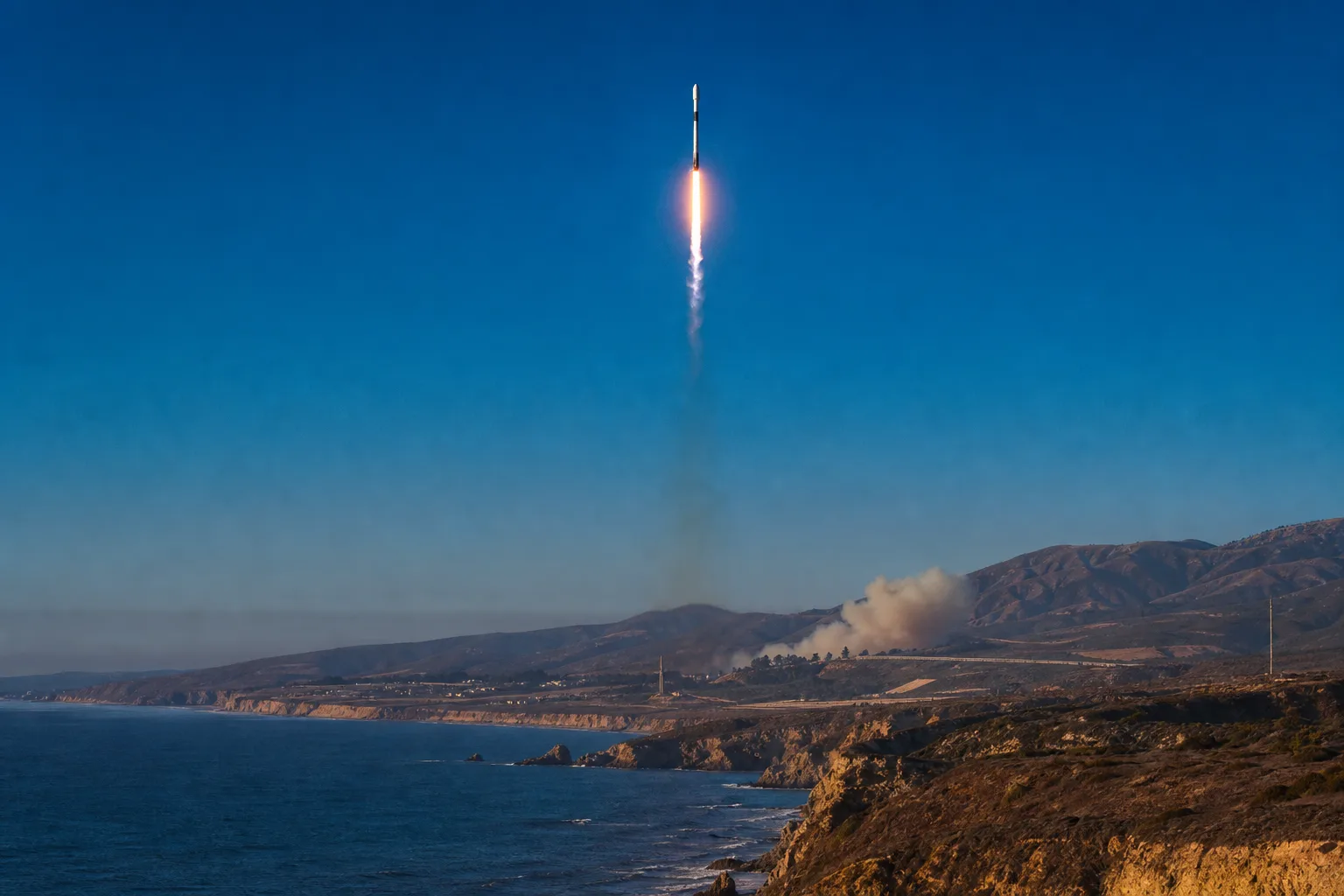
SpaceX added another 24 Starlink satellites to its low Earth orbit broadband constellation on Sunday, June 28, in a launch that quietly crossed a significant milestone: the total number of active Starlink satellites in operation now exceeds 10,700. At a cadence that would have seemed implausible just five years ago, the company is reshaping what global internet infrastructure looks like — one Falcon 9 mission at a time.
- SpaceX launched 24 new Starlink satellites on June 28, bringing the total active network to more than 10,700 relays.
- The Starlink satellites were carried by Falcon 9 Booster 1088, completing its 17th flight — a new reuse milestone for that core.
- Sunday’s mission was SpaceX’s 75th Falcon 9 launch of 2026, reflecting an extraordinary operational tempo.
- The growing Starlink network serves consumer broadband, in-flight Wi-Fi, and emerging cell-to-satellite connectivity worldwide.
Table of Contents
The Launch: By the Numbers
Liftoff occurred at 12:09 p.m. EDT from Space Launch Complex 4 East at Vandenberg Space Force Base on California’s central coast. The new batch — designated Group 17-40 — reached orbit roughly nine minutes after leaving the pad, with deployment from the Falcon 9 upper stage scheduled about an hour after that. Clean, methodical, almost routine. That’s the point.
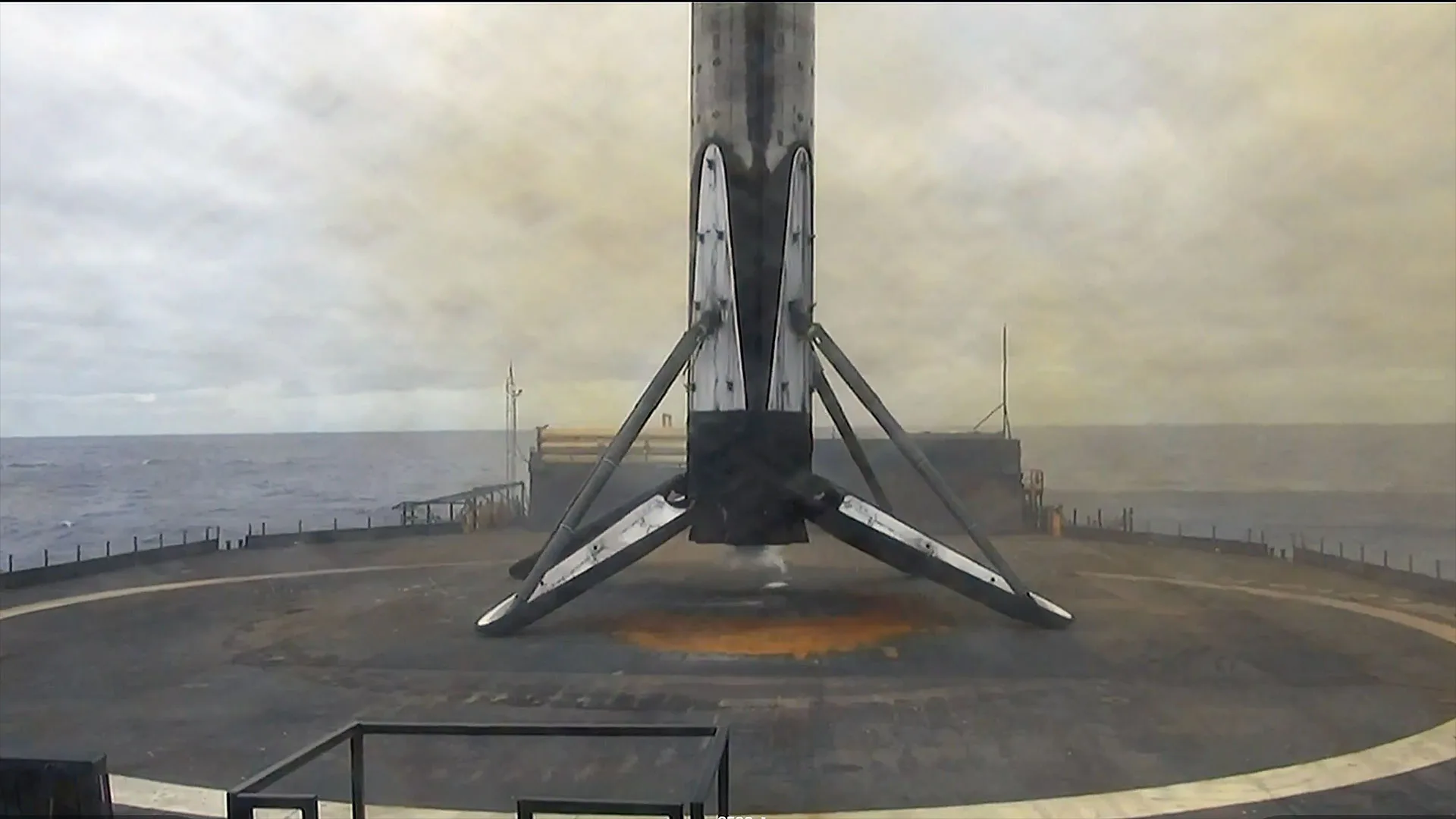
The first stage, Booster 1088, stuck its landing on the autonomous droneship ‘Of Course I Still Love You’ in the Pacific Ocean, completing its 17th flight. That’s not a typo. The same booster has now flown 17 times, and SpaceX is treating that as an ordinary Tuesday — or in this case, an ordinary Sunday. The economics of rocket reuse are doing exactly what Elon Musk promised they would a decade ago, even if the path there was rockier than anyone admitted at the time.
Starlink Satellites Cross the 10,700 Mark
The figure that matters most from this mission is the network size. Spaceflight historian and tracker Jonathan McDowell, who maintains some of the most meticulous satellite constellation data available, confirmed that the new Starlink satellites pushed the active relay count above 10,700. To put that in perspective, the entire combined catalog of all operational satellites from all operators worldwide stood at roughly 7,500 just five years ago. SpaceX has, on its own, exceeded that number with a single constellation.
The sheer scale of the Starlink network is both its greatest commercial asset and its biggest source of controversy. Astronomers have been vocal — and rightfully so — about the impact of large satellite constellations on ground-based observation. SpaceX has made incremental adjustments, including deploying visors on some satellites to reduce reflectivity, but it’s a tension that isn’t going away as the constellation keeps growing.
What Starlink Satellites Actually Do (Beyond Basic Broadband)
Most people think of Starlink as a rural internet solution — the dish on a farmhouse roof, the backup link for a remote research station. That’s still a huge part of the business. But the scope of what these Starlink satellites support has broadened considerably.
SpaceX now counts in-flight Wi-Fi providers and cell-to-satellite connectivity partners among its customers. The cell-to-satellite piece is particularly worth watching. T-Mobile in the US has a deal with SpaceX to use Starlink satellites for direct-to-device messaging and, eventually, data — effectively eliminating dead zones for standard smartphones without any hardware modification. That’s a fundamentally different value proposition than consumer dish subscriptions, and it opens up a recurring revenue stream tied to existing mobile carrier relationships.
Maritime and aviation customers are also growing segments. Airlines including Hawaiian Airlines and JSX have signed on for Starlink-powered inflight connectivity. The latency advantages of low Earth orbit over traditional geostationary satellite internet (think ViaSat or older HughesNet) make Starlink genuinely competitive for real-time applications in ways that older satellite broadband simply wasn’t.
75 Falcon 9 Launches in 2026 — And Counting
Sunday’s mission was SpaceX’s 75th Falcon 9 launch of 2026. We’re not even through the year yet. For context, the entire global launch industry managed roughly 200 orbital launches in all of 2022 across every country and every operator combined. SpaceX alone is on pace to approach or exceed 100 Falcon 9 missions this year — and that doesn’t include Starship test flights.
This launch cadence is the real competitive moat. No other operator comes close. Rocket Lab is doing impressive work with Electron and is building the larger Neutron vehicle, but it’s targeting a different market segment. United Launch Alliance’s Vulcan Centaur is finally flying after years of delays. China’s launch industry is active and growing, but largely serves its own national programs. For commercial satellite broadband specifically, SpaceX is effectively its own competition.
Booster Reuse: The Quiet Revolution in Launch Economics
It’s easy to scroll past the booster landing as a footnote, but Booster 1088’s 17th flight deserves a moment. When SpaceX first landed an orbital-class booster in December 2015, the aerospace establishment was skeptical that rapid reuse would ever be economically practical. The concern was always refurbishment costs eating into savings. SpaceX has systematically disproved that, to the point where a booster with 17 flights is now unremarkable.
The downstream effect on Starlink satellite launch costs is significant. SpaceX doesn’t publish per-launch cost figures, but analysts broadly estimate the company launches Starlink missions for a fraction of what third-party commercial launches cost. That internal subsidy — using the launch business to build out the internet business — is one of the most unusual vertical integrations in tech history.
What Comes Next for the Starlink Constellation
SpaceX has FCC approval to operate thousands more Starlink satellites beyond the current active count, and it has filed for second-generation constellation expansions that would push the total authorized figure to around 42,000 satellites. Whether the company actually deploys that many is a separate question — regulatory pressure from international bodies and ongoing debate at the International Telecommunication Union about spectrum coordination and orbital slot management could slow the cadence at some point.
But in the near term, the trajectory is clear. More launches, more Starlink satellites, more coverage. The network’s expansion into cell-to-satellite services represents the next phase of monetization, and if T-Mobile’s partnership proves out at scale, other carriers won’t be far behind in seeking similar arrangements. At 10,700 active satellites and climbing, Starlink is no longer a startup story — it’s an infrastructure story, and one with very few close competitors on the horizon.