

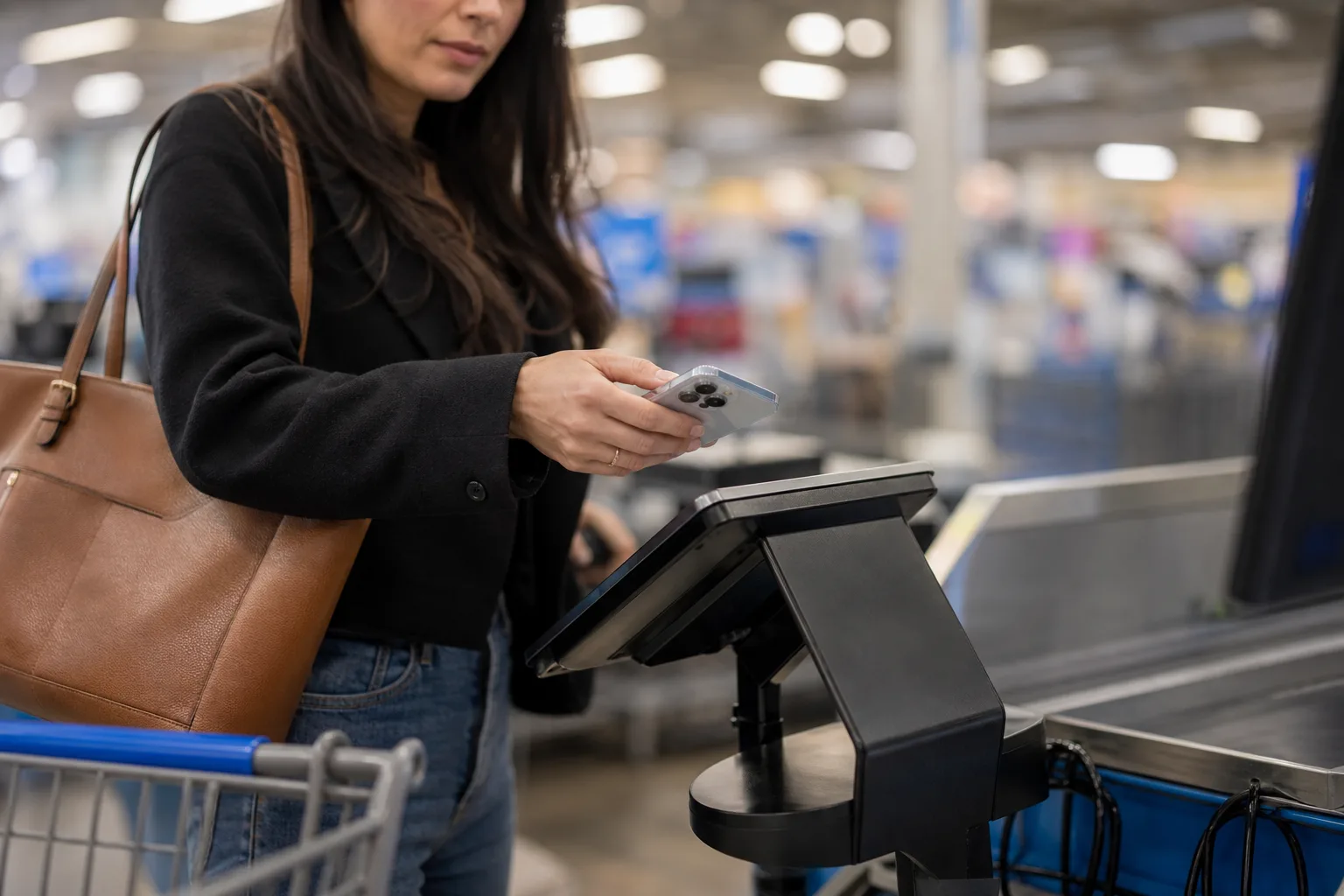
- The Walmart Apple Pay rollout reportedly begins next week, removing one of the biggest remaining retail gaps for iPhone payments.
- A state-by-state Walmart Apple Pay rollout may make launch timing uneven, but the strategic message is clear across the chain.
- Apple has reportedly cut more than 200 jobs across its Vision Pro and Siri organizations during a difficult product transition.
- The pairing of checkout expansion and internal cuts captures Apple’s uneven moment: consumer convenience rises while expensive bets face scrutiny.
Table of Contents
Walmart Apple Pay rollout closes an embarrassing gap
The Walmart Apple Pay rollout is reportedly set to begin next week, finally bringing Apple’s tap-to-pay system to the largest retailer in the United States. For iPhone owners, this has been one of those oddly persistent annoyances: you can pay with Apple Pay at a local coffee shop, a major airline, or a stadium, then reach Walmart’s checkout and have to pull out a physical card or use Walmart Pay instead.
That friction has lasted far longer than it should have. Walmart has spent years steering shoppers toward its own QR-code-based Walmart Pay service, which works inside the retailer’s app and gives Walmart a closer relationship with the transaction. Apple Pay, by contrast, keeps the payment credentials and much of the customer experience inside Apple’s wallet. Retailers tend to prefer owning that last inch of the checkout journey. Consumers, unsurprisingly, tend to prefer whatever takes two seconds.
The launch is expected to roll out by state rather than switch on nationwide overnight. That makes operational sense for a retailer with thousands of stores, multiple point-of-sale configurations, and an enormous workforce that will need to know what happens when the terminal does—or doesn’t—behave. Still, the important part is that the Walmart Apple Pay rollout appears to be real. The holdout is finally moving.
Walmart hasn’t publicly detailed its plans in the material behind this report, so shoppers should treat any exact local availability date cautiously until they see the contactless symbol at their store. But a phased launch is a familiar retail playbook, not a sign that the program is half-hearted. If it works cleanly, it should quickly become background infrastructure—the best outcome for any payment system.
Apple Pay offers a quick tap for checkout. In practice, that means Face ID, a quick tap, and less need to hand a plastic card to anyone. No app hunt. No QR code held at an awkward angle under fluorescent lights. That sounds mundane because it is mundane. Mundane is exactly what payments ought to be.
Why Walmart Apple Pay rollout matters beyond one checkout lane
The Walmart Apple Pay rollout matters because Walmart’s scale turns a retailer decision into a consumer-habit decision. Walmart operates stores across the United States. Its acceptance of Apple Pay won’t make the service new, but it does remove a conspicuous gap in the map of places where an iPhone can replace a wallet.
It also reflects a less romantic truth about mobile payments: the argument is over. Contactless card payments are mainstream, and Apple Pay has become a default behavior for millions of people. Walmart Pay may remain useful for customers invested in the retailer’s app, especially where receipts, offers, and shopping lists live in one place. But requiring a proprietary payment flow increasingly feels like asking customers to use a store-branded remote control just to turn on the television.
My read is that Walmart can now offer Apple Pay without surrendering the customer relationship it once worried about losing. Retail media, loyalty programs, delivery subscriptions, marketplace sellers, and its Walmart+ membership give the company plenty of first-party touchpoints. The checkout terminal no longer has to carry that entire strategic burden.
For Apple, the Walmart Apple Pay rollout is another quiet validation of the iPhone’s ecosystem advantage. Apple doesn’t need to persuade people to download a new payment app when Wallet is already on the phone, tied to their cards, transit passes, tickets, and identity documents in some markets. Each additional retailer makes leaving that ecosystem marginally less appealing. Nobody buys an iPhone solely because it works at Walmart. But convenience stacks up, like small bills in a jar.
Apple’s other headline is much less comfortable
The same daily news cycle brought a harder story: Apple has reportedly laid off more than 200 employees across its Vision Pro and Siri teams. The cuts land in two areas that have carried outsized expectations. Vision Pro is Apple’s ambitious bet on spatial computing; Siri is the company’s long-promised, frequently frustrating answer to the AI assistant race.
Neither situation is simple. Vision Pro remains a remarkable piece of hardware, but its price and weight have kept it far from the mass-market moment Apple clearly wants. The headset’s technology is impressive; the business case has always been the bigger question. Apple has been here before, of course. Not every category opener gets an iPod-style trajectory, and remember when the industry briefly pretended every living room needed a 3D television?
The Siri side may be more consequential. Apple has spent the past few years trying to reposition its assistant around more capable, context-aware AI features, while rivals such as Google, OpenAI, Microsoft, and Anthropic have made the pace of improvement impossible to ignore. A reported reduction in staff doesn’t automatically mean Apple is retreating from AI. It could mean teams are being reorganized, duplicated work is being cut, or product plans have changed. But it does suggest the company is not immune to the cost and execution pressure surrounding its biggest future-facing projects.
A useful snapshot of Apple’s contradictions
Set the two stories side by side and Apple looks very Apple: the company is making everyday life better through an overdue Walmart Apple Pay rollout, while simultaneously trimming teams attached to moonshot hardware and an AI effort that still needs to prove itself. One is low drama and immediately useful. The other is high drama because it involves Apple’s next decade.
Consumers will notice the first change at a register. Investors and developers will watch the second far more closely. Apple can afford a product that takes years to find its audience. What it cannot afford is to let Siri become the product people cite whenever they explain why Apple feels a step behind. Walmart accepting Apple Pay is overdue progress. Making Apple’s intelligence ambitions feel equally inevitable is the much tougher job.

