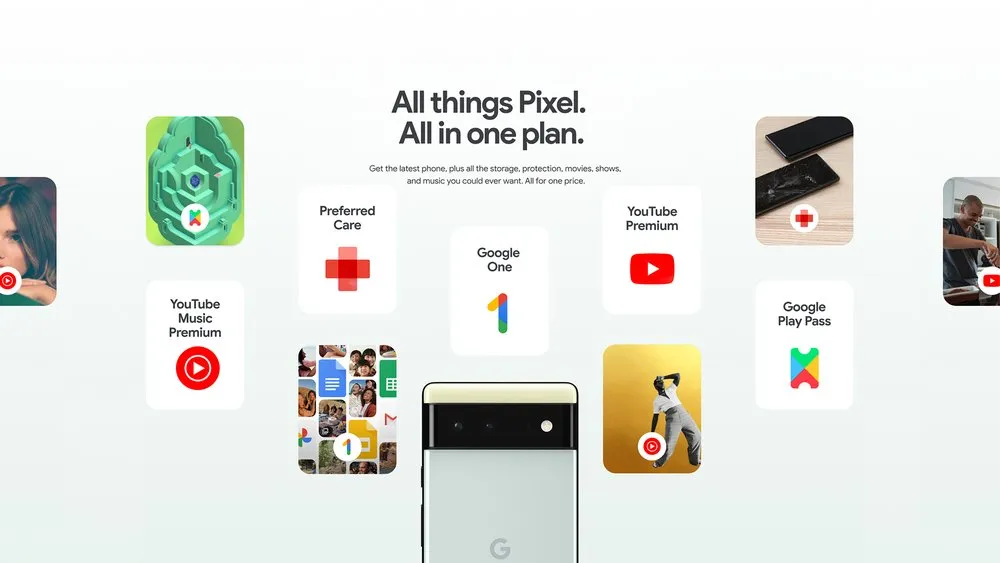
Google is ending Pixel Pass, the subscription service that paired a Pixel phone with a package of premium Google services for a fixed monthly fee. The offer combined hardware with services such as YouTube Premium, Google Play Pass, and YouTube Premium, presenting the Pixel experience as something closer to an ongoing membership than a conventional phone purchase.
The decision was first reported after 9to5Google found an announcement on Google’s support page. Google said Pixel Pass purchases and renewals would no longer be available. The explanation was limited, but its wording points to a familiar tension in consumer technology: the appeal of a simple all-in-one plan versus the reality that many customers want to choose their hardware and subscriptions separately.
Google said it wants to focus on the value delivered through its hardware products while giving people more flexibility to select and buy the services they prefer. That is a fairly broad statement, and it does not answer every practical question about why Pixel Pass is being retired. Still, it suggests that Google concluded the bundle was not the best long-term way to sell the Pixel experience.
That matters because Pixel Pass was not merely a discount or a temporary promotion. It was an attempt to connect several parts of Google’s consumer business in one monthly payment: a Pixel device, cloud storage, app and game subscriptions, and an ad-free YouTube experience. In theory, that approach made sense. A buyer who wanted a new phone and already used several Google services could avoid managing separate bills and could see a clearer picture of the overall cost.
In practice, bundles can be harder to position than they first appear. A package only feels simple when every included component is useful to the customer. Someone who wants a Pixel phone may not need premium games and apps through Google Play Pass. Another person may already have access to a service through a family plan or another arrangement. For those customers, the bundle can feel less like convenience and more like paying for features they did not actively choose.
Table of Contents
Pixel Pass began with the Pixel 6 series
Google introduced Pixel Pass in 2021 alongside the Pixel 6 series. At launch, the monthly subscription cost $45 for the Pixel 6 and $55 for the Pixel 6 Pro. Subscribers received 200GB of storage through Google One, access to premium games and apps through Google Play Pass, and the benefits of YouTube Premium.
The pricing made the service a notable experiment in how Google could package its devices. Smartphone makers have long looked for ways to make the relationship with a buyer last beyond the initial sale of a handset. Subscriptions offer a predictable monthly connection, while services can make a device feel more closely tied to a company’s wider ecosystem. Pixel Pass was Google’s version of that idea, built around services it already owned rather than a separate carrier-style package.
But a bundled model also asks Google to keep several moving pieces aligned. The value proposition depends not only on the phone, but on whether Google One, Google Play Pass, and YouTube Premium remain compelling as a group. It also depends on whether customers see enough value in the combined price compared with buying only the services they actually use. Google’s decision to stop new purchases and renewals indicates that it would rather let those choices stand on their own.
That does not mean Google is retreating from services. The company’s statement says the opposite: it intends to offer different ways for users to access and enjoy what it offers. The distinction is important. Pixel Pass is ending as a particular purchasing structure, not as a sign that Google is abandoning the services that were included in it.
What the change means for current subscribers
Google has set out a transition plan for people already subscribed to Pixel Pass. Existing subscribers can continue using the service for two years from the date of their subscription. Once that initial period ends, they will be able to upgrade their Pixel device and receive a $100 discount as part of the transition.
Google also said that, after a Pixel Pass subscription expires, its service subscriptions will automatically renew at a discounted rate. The company did not provide specific details about the cost of the full bundle after that transition. That omission leaves an important part of the picture unresolved for subscribers trying to work out what their future monthly spending may look like.
For current users, the key issue is not simply that Pixel Pass is going away. It is how the bundle will separate into individual subscriptions after the original arrangement ends. The value of Pixel Pass came from putting several products under one umbrella. Once the umbrella disappears, customers will need to consider which of those services they want to keep and whether the discounted renewal rate remains attractive for their own usage.
The $100 upgrade discount gives subscribers a defined benefit at the point when they may be considering another Pixel device. Yet it does not fully replace the clarity of having a single ongoing offer. Google’s transition plan is better read as an effort to prevent an abrupt cutoff than as a continuation of Pixel Pass under another name.
A limited experiment from the start
Pixel Pass was never a universal part of Google’s phone lineup. The Pixel 7a and the Pixel Fold were not included in the offering. Google also did not expand the subscription outside the United States, leaving it available only to customers in that country.
Those limits put the service in perspective. Pixel Pass arrived with the Pixel 6 series, but it did not become a standard option attached to every Pixel launch or a broadly international subscription program. Its reach remained narrow, which likely made it more difficult for Google to turn it into a defining feature of the Pixel brand.
For prospective Pixel buyers, the end of Pixel Pass may actually make the shopping decision more straightforward. The phone can be evaluated on its own merits, while Google One, Google Play Pass, and YouTube Premium can be selected individually. That approach removes the promise of a single fixed monthly fee, but it also removes the pressure to accept a package that may include services a buyer does not want.
Google frames the change as the result of regularly assessing its offerings through customer feedback. That is a polished corporate explanation, but the underlying point is credible: consumer bundles only work when they are easy to understand and clearly valuable to enough people. Pixel Pass offered an ambitious version of a Google ecosystem package. Its retirement shows that putting a phone and multiple subscriptions on one bill is not automatically the same thing as making the purchase simpler.
The Pixel Pass era is ending, but the broader strategy behind it remains visible. Google still has hardware, storage, entertainment, and app services to sell. What is changing is the way those pieces are presented to customers: less as one mandatory package, and more as separate choices around a Pixel device.
Read More: Related to Google