

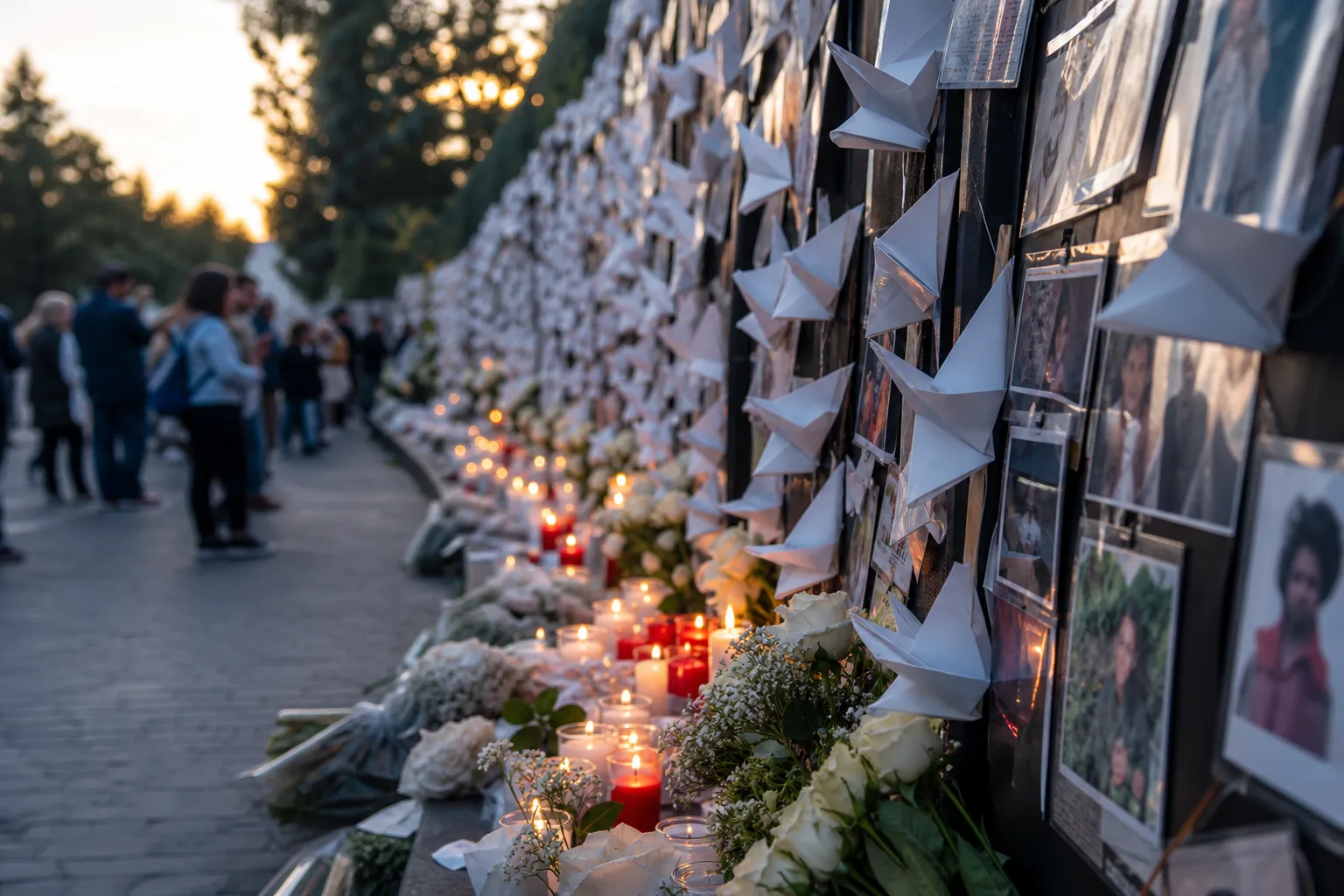
- Air France Flight 447 crashed into the Atlantic Ocean in 2009, killing all 228 people on board.
- A Paris Appeals Court found Air France Flight 447’s operators solely responsible, overturning a 2023 acquittal.
- Both companies face a maximum fine of €225,000 each — an amount many victims’ families call wholly inadequate.
- The verdict has major implications for how courts assign corporate liability in complex aviation disasters.
Table of Contents
Air France Flight 447: A Verdict Sixteen Years in the Making
After more than sixteen years of grief, legal battles, and a previously failed prosecution, families of the 228 people killed aboard Air France Flight 447 finally heard a guilty verdict this week. Paris’s Appeals Court ruled that both Air France and Airbus bear “sole and entire” responsibility for the June 2009 disaster — one of the deadliest accidents in French aviation history — overturning a 2023 lower court decision that had cleared the two companies entirely. For the families, it’s a moment that has been a long time coming. For the aviation industry, it’s a decision that raises uncomfortable questions about corporate accountability that don’t have easy answers.
What Happened to AF447
The bare facts of the crash are almost unbearably stark. On the night of June 1, 2009, an Airbus A330 operating as Air France Flight 447 departed Rio de Janeiro’s Galeão International Airport bound for Paris Charles de Gaulle. Somewhere over the mid-Atlantic, the aircraft encountered a storm system and began to behave erratically. The plane’s pitot tubes — the external sensors that measure airspeed — iced over, feeding the cockpit instruments bad data. Automated systems handed control back to the human crew at the worst possible moment.
The captain was on a scheduled rest break when the two co-pilots found themselves confronted with conflicting speed readings and a cascade of system warnings they were not adequately trained to manage. Rather than pushing the nose down — the correct response to an aerodynamic stall — one of the co-pilots pulled back on the stick, making the situation dramatically worse. The aircraft fell from 38,000 feet into the Atlantic Ocean in a matter of minutes. All 216 passengers and 12 crew members died.
Among the dead were 61 French nationals, 58 Brazilians, and 26 Germans, along with passengers from 30 other countries. The victims included Alexander Bjoroy, an 11-year-old boy from Bristol returning home after a school break in Brazil, three Irish doctors — Eithne Walls, Jane Deasy, and Aisling Butler — heading home from a holiday, and Brazilian prince Pedro Luiz de Orleans e Bragança, just 26 years old. One of the last passengers to board in Rio, 40-year-old engineer Nelson Marinho Filho, had nearly missed the flight entirely. He didn’t survive it.
The Recovery: Years of Searching an Empty Ocean
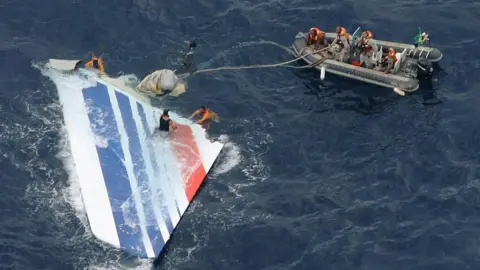
The recovery operation that followed Air France Flight 447 was among the most complex and harrowing in aviation history. The crash site lay more than 700 miles from the nearest South American coastline, in a stretch of ocean with depths reaching several kilometres. Brazilian forces recovered 51 bodies in the first 26 days of searching — many still strapped into their seats — but for many families, remains were not returned for years. One father told BBC News Brasil in 2019 that he was only able to bury his son’s remains more than two years after the accident. The flight data recorder wasn’t located until 2011, after an exhaustive deep-sea search covering 10,000 square kilometres of ocean floor.
That two-year gap before the black boxes were recovered wasn’t just a practical complication — it prolonged the uncertainty hanging over the technical investigation and arguably delayed accountability by years. France’s Bureau of Enquiry and Analysis for Civil Aviation Safety (BEA) ultimately concluded in 2012 that the accident resulted from a combination of sensor failure and inadequate pilot training — a finding that became central to the subsequent criminal proceedings.
Why the Air France Flight 447 Case Took So Long to Resolve
Criminal prosecutions of aviation companies are genuinely rare. The technical complexity of modern aircraft, the multi-party nature of any major crash, and the historically close relationship between regulators and the industry they oversee all make it extraordinarily difficult to pin criminal negligence on a corporation. In the initial trial, both Air France and Airbus were acquitted in April 2023 — a decision that devastated families who had spent over a decade fighting for legal recognition of what they saw as preventable failures.
The appeals process brought a different outcome. After an eight-week retrial, the Paris Appeals Court ruled that both companies were not merely negligent but criminally responsible for manslaughter in connection with Air France Flight 447. Prosecutors during closing arguments in November were blunt in their assessment, accusing the companies of “spouting nonsense and pulling arguments out of thin air” in their defence. That’s unusually direct language for a formal court proceeding, and it signals just how little patience the prosecution had for the arguments Air France and Airbus had been making for years.
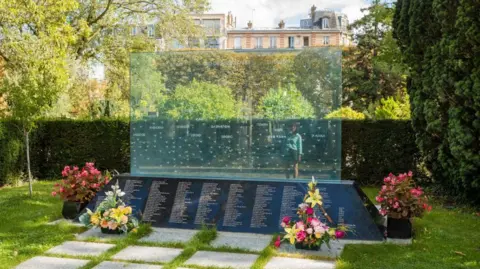
Daniele Lamy, president of the AF447 victims’ association — who lost her own son in the crash — called the verdict a long-overdue moment of reckoning. “The justice system is at last taking into account the pain of the families faced with a collective tragedy of unbearable brutality,” she said. It’s hard to argue with that framing. Sixteen years is a very long time to wait for any kind of answer.
The Fine That Insults the Scale of the Tragedy
Here’s where the verdict becomes genuinely complicated. The court handed down the maximum permissible fine: €225,000 — roughly $261,000 — for each company. Combined, that’s less than half a million dollars split between an airline and one of the world’s largest aircraft manufacturers. Air France’s parent company, Air France-KLM, reported revenues of over €17 billion in 2023. Airbus, similarly, is a company operating at an entirely different financial scale.
The families know this. Many have called the fine a symbolic gesture at best, and a cynical one at worst. The gap between the moral weight of 228 deaths and a six-figure fine reflects a structural problem in how French — and more broadly, European — criminal law handles corporate manslaughter in cases involving large, systemically important companies. The reputational damage from the verdict may ultimately cost both companies far more than the financial penalty, but that’s cold comfort to the people who lost family members in the Air France Flight 447 disaster.
What Changed After the Crash — and What Still Hasn’t
To be fair to the industry, the response to the technical failures exposed by Air France Flight 447 wasn’t nothing. The faulty pitot tubes manufactured by Thales — which had been flagged as a concern before the crash — were replaced across the A330 fleet. Pilot training protocols around high-altitude stall recovery were overhauled globally. The accident directly influenced how aviation authorities and airlines think about the handoff between automated systems and human crews, a problem that has only become more relevant as aircraft grow more sophisticated.
But the criminal verdict suggests that regulators and courts now believe those changes, however real, came too late and were preceded by a period in which known risks were not adequately addressed. The BEA’s 2012 investigation was unambiguous: the co-pilots lacked the training to handle the situation they encountered. The question the court appears to have answered is whether that gap in training was an honest failure or a foreseeable one that should have been prevented. It concluded the latter.
Corporate Liability in Aviation: A Precedent With Reach
Both Air France and Airbus say they will appeal, which means this legal story almost certainly isn’t over. But the verdict already matters regardless of what happens next. It’s one of the very few instances in which a major airline and a major aircraft manufacturer have both been found criminally guilty of manslaughter following a crash. That’s not a minor footnote — it’s a signal to the industry that the traditional firewall between technical accident investigation and criminal liability isn’t as solid as companies have historically assumed.
The timing is also notable. Aviation safety is under renewed scrutiny globally, with Air France Flight 447 sitting alongside the Boeing 737 MAX disasters as a case study in how systemic corporate decisions — about training, about sensor maintenance, about responding to known technical issues — can translate directly into mass casualties. Boeing’s own legal battles in the US have followed a very different trajectory, with a deferred prosecution agreement that many found deeply unsatisfying. The French court’s willingness to pursue and ultimately deliver a criminal conviction in the Air France Flight 447 case may invite comparisons that neither country’s aviation establishment will find entirely comfortable.
For the families of the 228 people on board Air France Flight 447 that night, the verdict won’t bring anyone back. But after sixteen years, it at least establishes that someone was responsible — and that aviation companies, however powerful and technically complex their operations, aren’t above criminal accountability when things go catastrophically wrong. Whether this verdict becomes a genuine turning point in how courts treat corporate negligence in aviation, or remains an outlier in a system still heavily weighted toward acquittal, will depend on what happens in the next appeal — and on how the industry responds when it knows prosecutors are willing to go this far.

