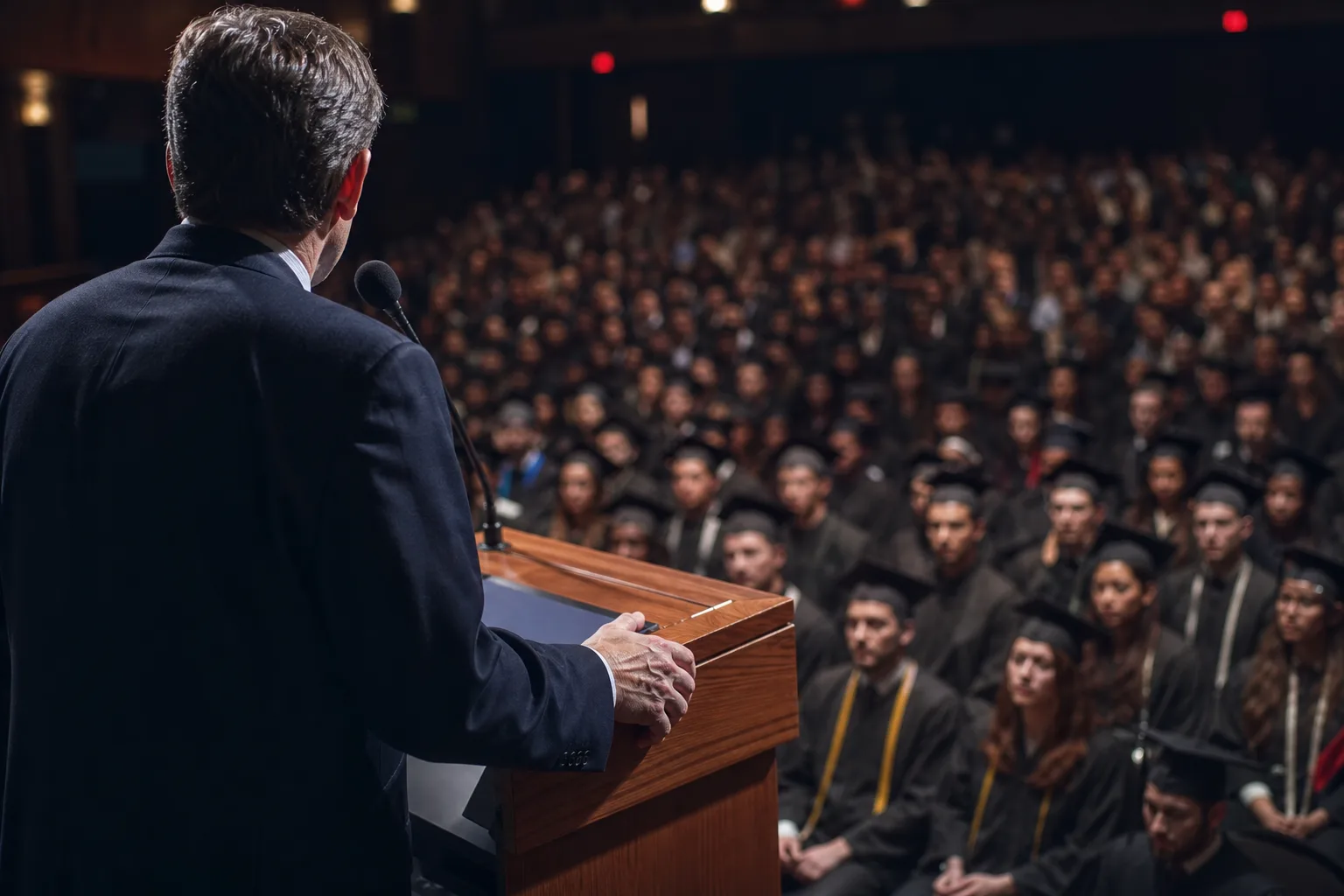
The Sundar Pichai AI speech that wasn’t. When Google’s CEO took to the podium to deliver a commencement address to graduating students, observers expecting the usual torrent of AI enthusiasm were in for a surprise — Pichai barely mentioned it at all. For the man who has staked much of Google’s future on artificial intelligence, the omission wasn’t just curious. It was telling.
- Sundar Pichai’s AI speech at graduation deliberately avoided almost all mention of artificial intelligence, a striking choice for Google’s CEO.
- The Sundar Pichai AI speech signals a broader industry shift away from relentless AI hype toward more measured public communication.
- Google has faced mounting pressure over AI missteps, making Pichai’s careful messaging at a public event more politically calculated than accidental.
- The decision to sidestep AI talking points in a high-profile address reflects how complicated the technology’s public perception has become.
Table of Contents
The Dog That Didn’t Bark
There’s something almost cinematic about the CEO of one of the world’s most AI-obsessed companies standing in front of a room full of young people — arguably the demographic most directly shaped by the technology — and choosing to talk about almost anything else. No breathless proclamations about large language models. No declarations that AI is the most transformative technology since fire. Just a relatively grounded speech about life, career, and dealing with the unexpected. The Sundar Pichai AI speech stood out precisely because of what it lacked.
To anyone who’s followed Pichai’s public appearances over the past two years, this is a striking departure. Google I/O 2023 became something of a meme for how many times the word ‘AI’ was dropped from the stage. In earnings calls, in press interviews, in op-eds — artificial intelligence has been the throughline of virtually every major communication out of Mountain View. The Sundar Pichai AI speech silence, then, reads less like an oversight and more like a deliberate strategic exhale.
Why the Silence Matters More Than the Words
Context is everything here. Google has had a genuinely rocky stretch on the AI front. The launch of Gemini’s image generation feature earlier in 2024 turned into a PR disaster after the model produced historically inaccurate images — generating racially diverse Nazis and other absurdities that drew widespread ridicule and forced Google to pull the feature temporarily. AI Overviews in Google Search, meanwhile, produced embarrassing errors almost immediately after launch, including a now-infamous suggestion to add glue to pizza sauce to stop cheese from sliding.
These aren’t minor stumbles. They’re the kind of public failures that stick in the cultural memory, especially among younger audiences who are simultaneously the most enthusiastic adopters of AI tools and the most skeptical of corporate messaging. Standing in front of graduates and delivering a full-throated AI hype speech in that climate would have been, at minimum, politically tone-deaf. Viewed through that lens, the Sundar Pichai AI speech becomes an exercise in damage control as much as inspiration.
So the Sundar Pichai AI speech pivot makes sense as reputation management, even if it’s never framed that way publicly. Sometimes the smartest communication move is knowing when to stop talking.
A Broader Shift in How Tech Talks About AI
Pichai isn’t alone in recalibrating. Across the industry, there are signs that the era of unchecked AI boosterism is giving way to something more measured — not because executives have stopped believing in the technology, but because the gap between the promises and the current reality has become impossible to ignore in public. The Sundar Pichai AI speech is one data point in a broader pattern of leaders stepping back from the hype cycle.
Sam Altman at OpenAI has oscillated between apocalyptic warnings and utopian promises, a balancing act that’s grown increasingly difficult to maintain with a straight face. Microsoft’s Copilot rollout has been met with a mixture of genuine enthusiasm and frustration from enterprise customers who expected more. Pew Research data consistently shows that public anxiety about AI is growing faster than public excitement — a dynamic that any communications-savvy executive has to account for when choosing what to say at a high-profile event.
Graduation speeches, in particular, carry a specific weight. They’re one of the few remaining formats where a tech executive speaks directly to a general audience without the filter of a product launch or investor presentation. The crowd isn’t full of developers or analysts nodding along to roadmap slides. They’re students — people about to enter a job market genuinely anxious about what AI means for their prospects. Hyping the technology that many of them fear is quietly eliminating entry-level positions isn’t exactly a crowd-pleasing move. That reality made the Sundar Pichai AI speech format — empathetic, grounded, light on tech jargon — the only sensible choice.
What This Says About Google’s Positioning
There’s a longer strategic play visible here, too. Google finds itself in an unusual position: it is arguably the company with the deepest AI research heritage on the planet — DeepMind, Google Brain, the original Transformer architecture paper all trace back to its orbit — yet it has repeatedly been outmaneuvered in the public narrative by OpenAI and, to a degree, by Microsoft’s aggressive Copilot integration push.
Part of Google’s response has been to let the products do more of the talking. Gemini 1.5 Pro’s expanded context window, NotebookLM’s surprisingly viral audio summaries, the steady integration of AI into Google Workspace — these are the proof points Google wants people to experience rather than simply hear about. A CEO who shows up to a graduation and talks about human resilience rather than model benchmarks fits neatly into that pivot: less hype, more substance, let the technology earn its reputation. Seen that way, the Sundar Pichai AI speech is a communications strategy as much as a personal address.
Whether that approach actually works is another question. Google’s core search business faces genuine competitive pressure for the first time in two decades, and the company’s AI monetization story is still a work in progress. Staying quiet about AI in one speech doesn’t neutralize the structural challenges Google is navigating. But it does suggest that someone in Mountain View has noticed that the old playbook — announce big, promise bigger, worry about delivery later — isn’t landing the way it used to.
The Audience Was Paying Attention
It’s easy to over-read a single commencement address. Pichai may simply have made a judgment call that students didn’t need another lecture about technology from a billionaire CEO, and that a more human, less product-oriented speech would land better. That’s not cynical calculation — that’s just good communication instinct.
But in an environment where every public statement from a major tech CEO is parsed for signal, the Sundar Pichai AI speech conspicuously free of AI talk will be read as meaningful regardless of intent. And the fact that it’s being discussed at all — that the absence of AI in a Google CEO’s remarks is itself a news story — says something important about where we are with this technology.
We’ve reached the point where AI is so saturated into the tech conversation that choosing not to mention it is itself a statement. The next phase of the AI era won’t be defined purely by which models are most powerful or which demos are most impressive. It’ll be shaped by how the people steering these companies talk — and choose not to talk — about what they’re building. Pichai’s quiet graduation podium might be a small preview of that shift, and the Sundar Pichai AI speech may well be remembered as the moment the tone began to change.
Frequently Asked Questions
What did the Sundar Pichai AI speech actually focus on instead of AI?
Rather than centering his remarks on artificial intelligence, Pichai used the graduation address to speak more broadly about resilience, purpose, and navigating uncertainty — themes that resonate with graduates without wading into the contested politics of AI’s societal impact.
Why would Google’s CEO avoid mentioning AI at a public event?
Google has faced significant public scrutiny over AI products, from the Gemini image controversy to concerns about AI Overviews in Search. Avoiding the topic at a high-profile event may reflect a deliberate effort to manage perception and let the technology speak through products rather than speeches.
Is this part of a wider trend among tech CEOs downplaying AI rhetoric?
There are signs that some executives are recalibrating their messaging. After years of breathless AI promotion, the backlash — from job displacement fears to accuracy concerns — has made unqualified enthusiasm a harder sell in public forums, especially to younger audiences.