

The AI power race now shaping the technology industry isn’t really about algorithms or model benchmarks. It’s about electricity — raw, unglamorous, physical power. Microsoft, Google, and Amazon are caught in a scramble to secure enough energy to keep their AI ambitions alive, and the stakes stretch far beyond Silicon Valley balance sheets. This fight is landing on the desks of utility regulators, nuclear plant operators, and local governments who never expected to become key players in the future of artificial intelligence.
- The AI power race is forcing Microsoft, Google, and Amazon to secure unprecedented amounts of electricity for their data centers.
- The AI power race is accelerating deals with nuclear, solar, and gas suppliers as hyperscalers exhaust traditional grid capacity.
- Data center energy demand from AI workloads is expected to double or triple by 2030, straining national power grids.
- Smaller nations and US states are already pushing back against hyperscaler land and power grabs.
Table of Contents
The AI Power Race Is a Physical Problem First
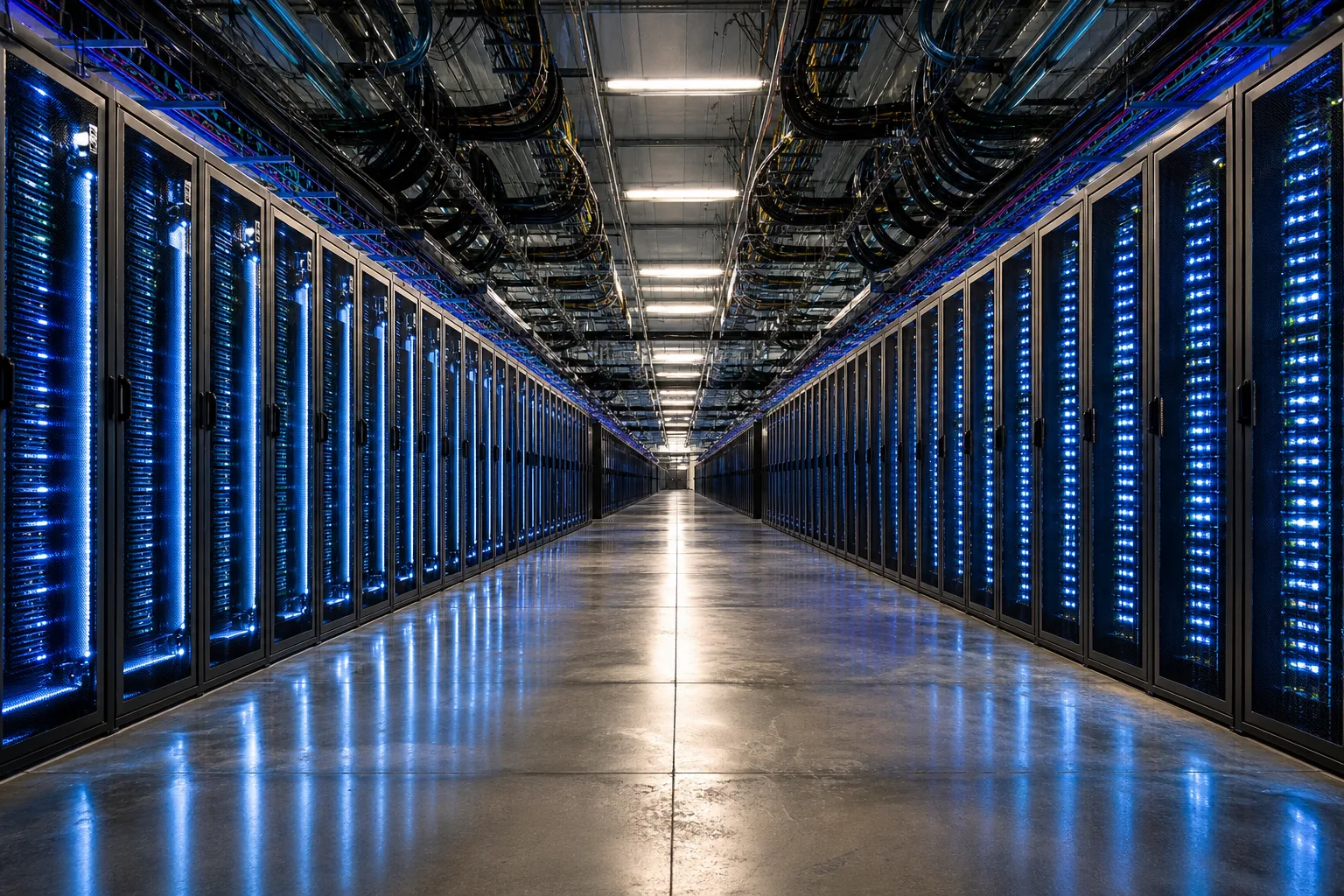
There’s a tendency to talk about AI as if it lives in the cloud — weightless, abstract, somewhere above ordinary infrastructure. The reality is far messier. Every ChatGPT query, every Gemini response, every Copilot suggestion runs on racks of Nvidia GPUs drawing extraordinary amounts of power inside warehouses that need to be cooled around the clock. The AI power race is, at its core, a competition to control physical resources: land, water, and above all, electricity.
According to the International Energy Agency, data center energy consumption has been rising sharply and is expected to continue growing dramatically in the years ahead — a jump driven almost entirely by AI workloads. To put that in perspective, projected demand could exceed the electricity consumption of many mid-sized countries in a year. And Microsoft, Google, and Amazon collectively account for a dominant share of that demand.
Microsoft: Betting Big on Infrastructure
Microsoft’s position in the AI power race is perhaps the most exposed. Its deep partnership with OpenAI means it has to provision computing infrastructure not just for its own products — Azure, Copilot, Bing — but effectively for OpenAI’s entire operation. The company reportedly announced plans to invest heavily in data centers during fiscal year 2025, a scale of commitment that would have seemed fictional just five years ago.
To actually power those facilities, Microsoft has made some genuinely audacious energy deals. Its agreement with Constellation Energy to bring the previously retired Unit 1 reactor at Three Mile Island back online is the clearest signal yet that conventional renewable energy isn’t going to cut it. Solar and wind are intermittent. Nuclear isn’t. When you need 24/7 guaranteed power for data centers that cannot go dark, nuclear suddenly looks a lot more attractive — and Microsoft isn’t alone in that calculation.
Google and Amazon Are Chasing the Same Scarce Resources
Google has long positioned itself as the greenest of the hyperscalers, and for years that held up reasonably well. The company matched its energy consumption with renewable purchases and hit carbon-neutral milestones. Then generative AI arrived and blew those commitments apart. Google’s own environmental report acknowledged that its greenhouse gas emissions rose significantly in recent years, with data center electricity consumption identified as the primary driver. The AI power race is making it very hard to stay green.
Amazon, through AWS, faces the same tension. The company has committed to the Climate Pledge and aims to be net-zero by 2040. But AWS is also the largest cloud provider in the world, and its AI infrastructure buildout is enormous. Amazon has signed power purchase agreements for nuclear energy too — most notably backing X-energy’s small modular reactor program. It’s a hedge against a future where grid electricity either isn’t available in sufficient quantities or comes with costs and emissions that are politically untenable.
What makes the dynamic genuinely interesting is how all three companies are now competing for the same finite pool of power capacity. In Virginia’s data center corridor — already the densest concentration of data centers on the planet — utilities like Dominion Energy are struggling to keep up with connection requests. Some customers are waiting years for grid access. The AI power race has created a bottleneck that money alone can’t immediately solve.
Nuclear’s Quiet Comeback and the New Energy Deals
For decades, nuclear power was the energy source the tech industry quietly ignored. Now it’s becoming central to every hyperscaler’s long-term strategy. Microsoft’s Three Mile Island deal was followed by Google signing a power purchase agreement with Kairos Power for a fleet of small modular reactors. Amazon has made similar commitments. The premise is consistent across all three: SMRs and recommissioned existing plants offer always-on, low-carbon electricity that solar and wind simply can’t guarantee.
This isn’t philanthropy. It’s pure strategic necessity. The AI power race requires guaranteed baseload power, and the traditional grid increasingly can’t provide it without years-long infrastructure upgrades. By locking in nuclear capacity now — even nuclear plants that won’t be operational for several years — these companies are trying to get ahead of a crunch that grid operators are already warning about.
Natural gas is also part of the picture, even though it’s uncomfortable for companies with public sustainability commitments. Several hyperscalers have quietly backed new gas generation projects as a bridge solution, acknowledging that the timeline for clean alternatives doesn’t match the timeline for AI infrastructure growth. That tension between stated climate goals and operational reality is one the industry hasn’t found a clean answer to.
The Political and Regulatory Blowback
Communities near planned data center sites are starting to push back, and so are state and national regulators. In Ireland, where a significant proportion of European data center capacity is housed, grid operators have already flagged that new data center connections in Dublin could threaten national grid stability. The Irish government has effectively paused approvals in some areas. Similar conversations are happening in parts of the American Southeast and Midwest.
The political dimension matters. Local politicians who championed data center tax breaks a decade ago — jobs, investment, prestige — are now fielding complaints from residents about water usage, noise, visual impact, and electricity price pressures. The AI power race is making data centers much harder to love as a community asset when they’re consuming a disproportionate share of local resources while employing relatively few people.
There’s also a national security angle that’s emerging in Washington. The concentration of AI infrastructure among just three American companies — all competing for the same power — creates systemic risks that policymakers are only beginning to map. What happens to AI-dependent national services if a major grid disruption takes out a hyperscaler’s primary region? It’s a question that previously belonged to contingency planning documents. It’s becoming a mainstream policy concern.
What Comes Next in the AI Power Race
The AI power race isn’t going to slow down because electricity is hard to find. If anything, the constraints are pushing all three companies to become more vertically integrated energy players than any tech company has ever been. Microsoft, Google, and Amazon are now negotiating directly with nuclear operators, backing reactor startups, building transmission infrastructure, and funding grid modernization in ways that blur the line between tech company and utility.
That’s a profound shift. The biggest technology companies in the world are effectively becoming energy companies too — not by choice, but because the alternative is losing ground in the most important technology competition of this decade. The side that secures reliable, scalable power wins the right to run the biggest AI models, serve the most customers, and ultimately define what this technology becomes.
Energy infrastructure is notoriously slow to build. Data centers and AI models are not. That gap — between how fast AI demand is growing and how fast power supply can respond — is the defining constraint of the next five to ten years. Whoever closes it most effectively won’t just win the AI power race. They’ll win the AI era.
Frequently Asked Questions
Why is the AI power race driving such enormous energy demand?
Training and running large AI models requires massive parallel computing done inside GPU-packed data centers that run 24/7. Demand is growing fast as models get larger and usage scales.
What energy sources are Microsoft, Google, and Amazon turning to?
All three companies are pursuing long-term power agreements covering a range of energy sources, including renewables and nuclear energy. The push into nuclear reflects how seriously these companies are taking the challenge of securing sufficient power supply.
How does the AI power race affect ordinary electricity consumers?
Grid operators warn that surging data center demand could push up electricity prices and strain infrastructure originally designed for residential and commercial loads. Some regions are already seeing utilities struggle to keep pace with the added capacity needs.
Which company is spending the most on AI infrastructure?
Microsoft, Google, and Amazon are all committing substantial capital to AI infrastructure, with each on track to exceed previous spending records. All three companies are investing tens of billions in data center buildout as they compete for AI dominance.

