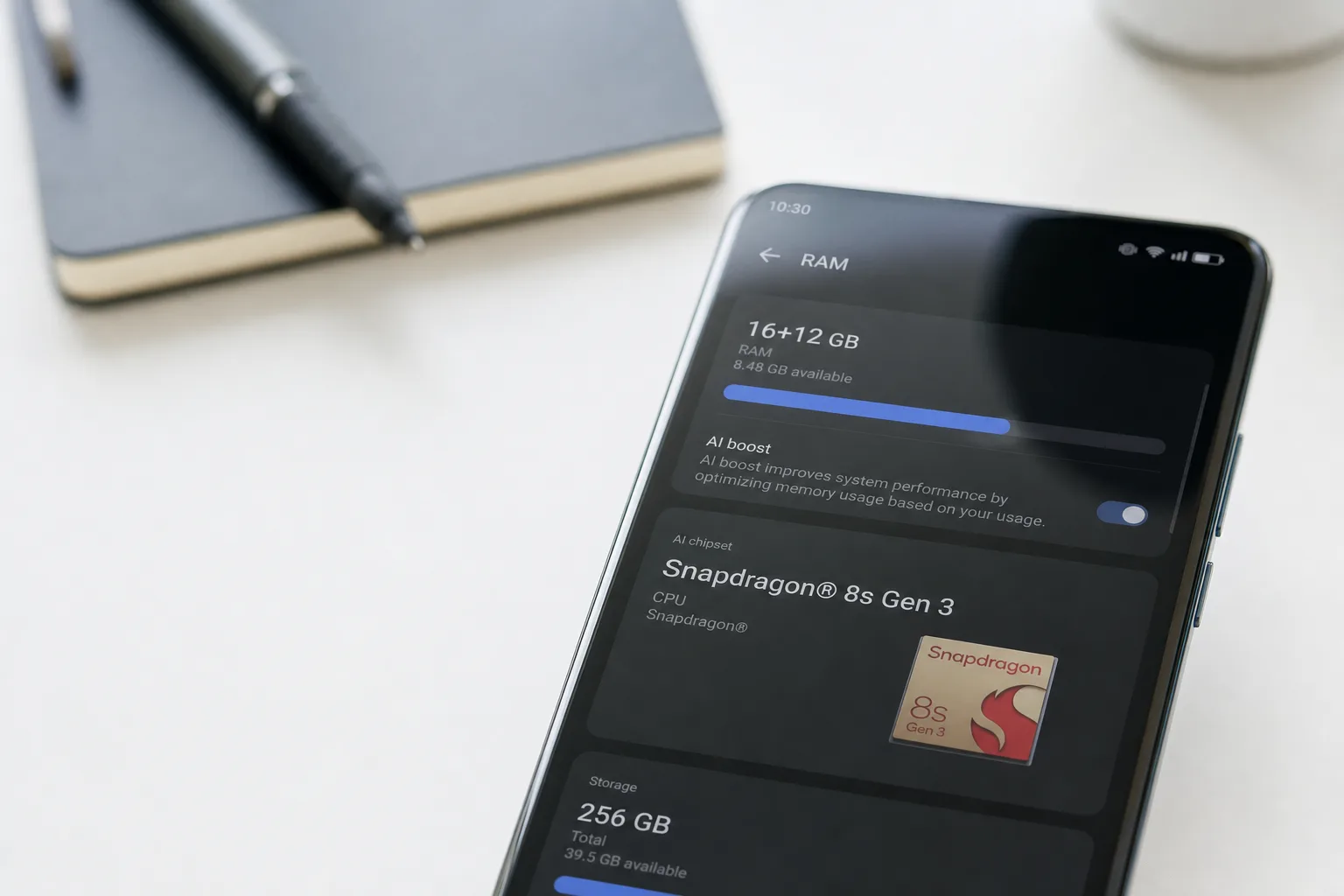
If you’re shopping for a new Android phone in 2026 and you’re tempted to save a little cash by settling for an 8GB model, stop. The Android RAM conversation has changed more in the past 18 months than it did in the previous five years — and not in a way that favours budget buyers. On-device AI has completely redrawn what ‘enough memory’ actually means, and 8GB no longer makes the cut.
- Android RAM requirements have shifted dramatically — 8GB is no longer enough to run Google’s latest on-device AI features in 2026.
- Gemini Intelligence sets 12GB of Android RAM as its minimum, with AI model files alone consuming up to 5.9GB of storage.
- Apple’s iOS 27 now matches Google’s 12GB threshold, meaning only the iPhone 17 Pro line supports the latest Siri AI features.
- Rising RAM costs and expanding AI model sizes suggest even 12GB phones could feel constrained within the next two to three years.
Table of Contents
The AI Appetite That’s Eating Your Android RAM
Here’s the core problem: running AI models locally — on the phone itself rather than a remote server — requires those models to be loaded into RAM and kept there. You can’t spin up a multi-gigabyte neural network on demand in a couple of seconds; the whole point is that it’s sitting ready, waiting for your input. That’s what makes on-device AI fast, private, and functional without a data connection. But it also means a meaningful chunk of your Android RAM is permanently occupied.
Google’s Gemma 4 models, which power Gemini Intelligence on Android, come in two on-device variants: the E2B at 4.2GB and the E4B at 5.9GB. Add in the operating system, background apps, and whatever you’re actually trying to do, and a phone with 8GB of total Android RAM is already in trouble before you’ve opened a browser tab. That’s why Gemini Intelligence actually specifies 12GB of RAM as the minimum requirement, along with AI Core and Gemini Nano v3 or higher — not a recommendation, an actual minimum requirement.
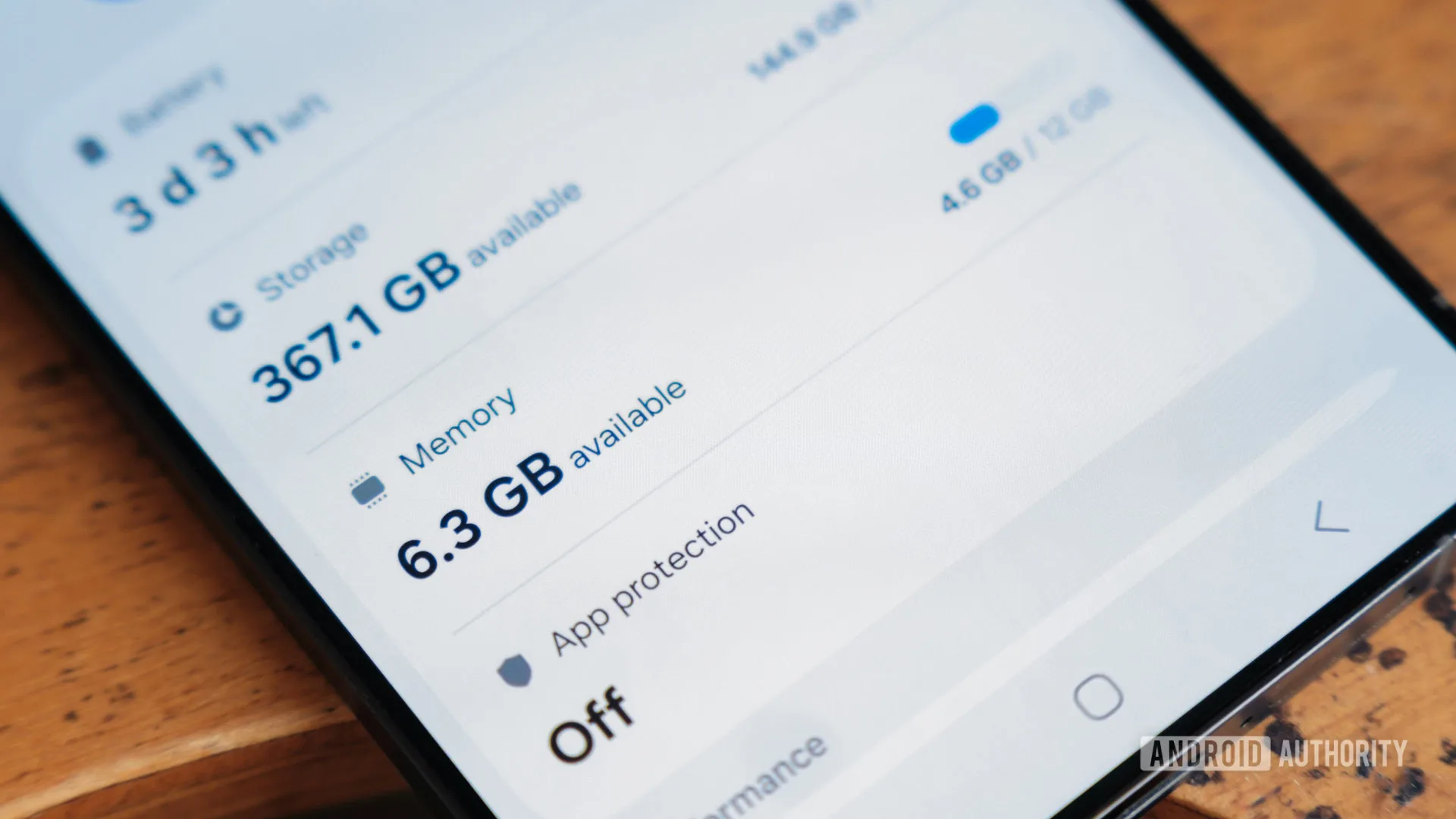
For context, Gemini Nano 3 — the previous generation — required under 4GB of model storage. The jump to Nano 4’s variants represents a significant step up in model complexity, and it’s safe to assume that trajectory isn’t flattening anytime soon. The most capable on-device models are getting bigger, not smaller, as developers push them to do more.
What 12GB Android RAM Actually Gives You
It’s easy to see ’12GB’ on a spec sheet and think that’s a generous amount of headroom. In practice, it’s tighter than it sounds. If Gemini Intelligence’s largest on-device model is occupying nearly 6GB of that Android RAM, you’re effectively working with around 6–7GB for everything else — the OS, your browser, your messaging apps, any game you’ve got cached. That’s not dramatically better than what an 8GB phone offered two years ago for conventional tasks.
The Android RAM equation here isn’t just about raw numbers, it’s about the permanent reservation AI models demand. Unlike regular apps that can be paged out of memory when not in use, an AI model that gets swapped out loses the responsiveness that makes it useful. The whole selling point of on-device AI — instant, fluid interaction — collapses if the model has to reload every time you switch apps. So the reservation is non-negotiable.
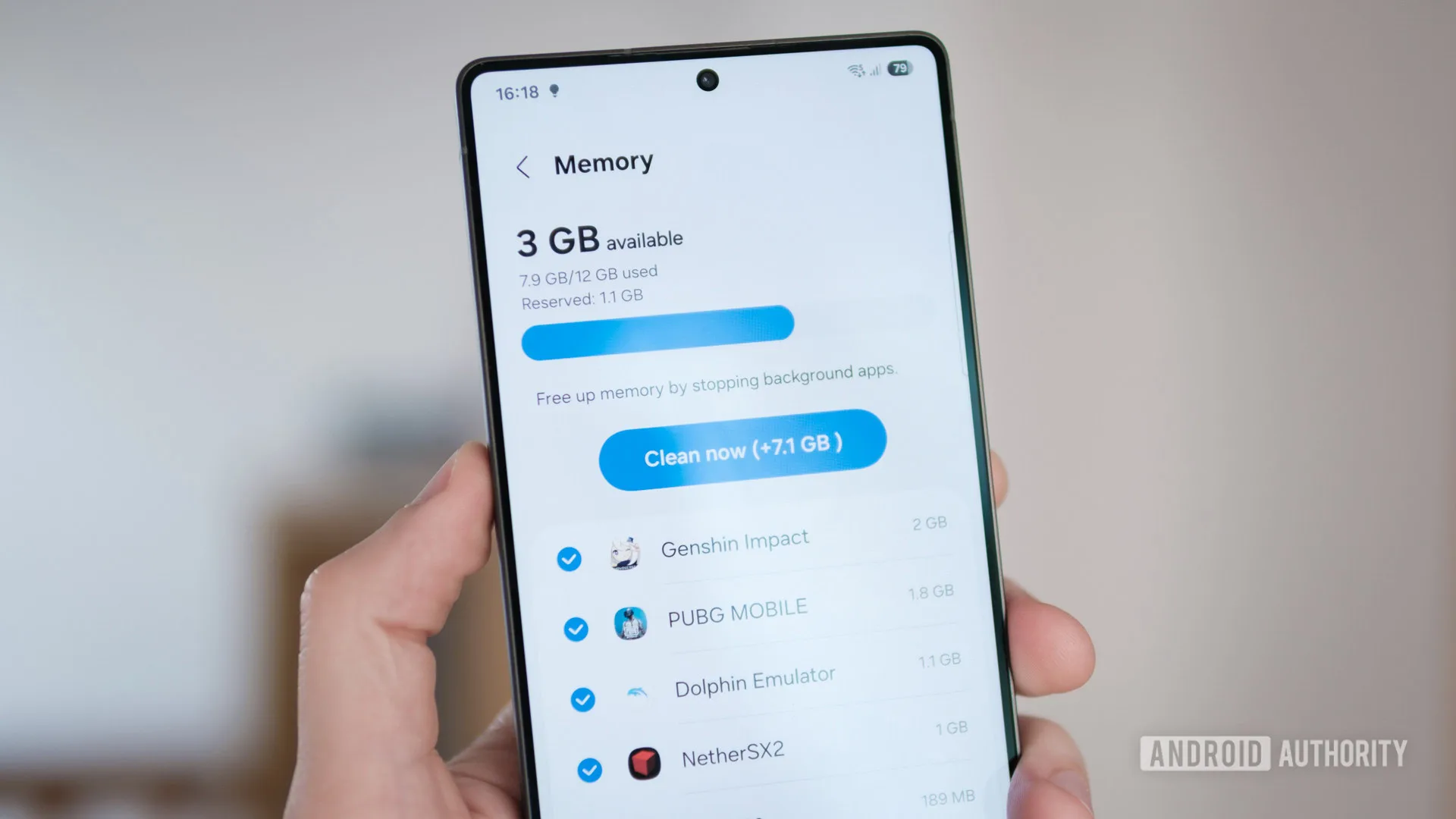
That said, 12GB still represents a real improvement over 8GB for power users. Running two or three demanding apps simultaneously, keeping a game state preserved in the background, and still having Gemini Intelligence sitting ready — that’s a workload 12GB of Android RAM can handle, even if it’s not doing so with much slack. Anything less, and you’re making compromises the phone’s marketing materials definitely won’t mention.
Google’s Pixel Fragmentation Problem — and What It Tells Us
The mess that’s emerged in Google’s own Pixel lineup is a useful illustration of how quickly this shift happened. Even within Pixel’s relatively tidy product family, figuring out which models support which tier of Gemini features has become genuinely complicated. Some Pixel 8 variants shipped with 8GB of Android RAM, which was considered totally reasonable at the time. Those phones are now cut off from Gemini Intelligence entirely.
Google has tried to soften the blow with Gemini Go, a stripped-down set of assistant-style features designed for lower-end Android Go devices. It works on as little as 2GB of RAM, which sounds accessible — until you remember that many budget Android Go phones only have 4GB total, leaving 2GB for everything else. It’s better than nothing, but it’s a very different experience from the full Gemini Intelligence suite, and calling them comparable would be misleading.
The broader point is that AI on Android isn’t a single feature you either have or don’t — it’s becoming a tiered ecosystem, with the most capable, most useful tools gated behind memory thresholds that a significant portion of the installed base simply can’t meet. If you bought a mid-range Android in 2023 or 2024 with 8GB of RAM, you’re already looking at a growing list of features your phone will never run.
Apple Is Doing the Same Thing — Android RAM Isn’t the Only Story
It would be convenient to frame this as an Android problem, but Apple has arrived at exactly the same place. When Apple Intelligence launched, it required enough RAM to exclude the base iPhone 15 lineup — which shipped with 6GB — and anything older. That already drew complaints about Apple fragmenting its historically unified software experience.

With iOS 27, Apple has raised the bar again. On-device AI features — including Expressive Voices and enhanced dictation, powered in part by Google’s Gemini technology via Siri AI — now require 12GB of RAM. The practical result is that only the iPhone 17 Pro, iPhone 17 Pro Max, and the iPhone Air currently qualify. That’s a significant narrowing of Apple’s addressable market for its premium software features, and it chips away at one of the things Apple has long used to differentiate itself from Android: that software updates work broadly and for years.
The convergence on 12GB as the shared minimum across both platforms isn’t coincidental. It reflects the reality of what these models actually need. When both Google and Apple independently land on the same number, that number tends to stick — at least until the next generation of models pushes it higher.
How Long Before 12GB Android RAM Becomes the New 8GB?
That’s the uncomfortable question hanging over any phone purchase in 2026. Gemini Nano went from requiring under 4GB to nearly 6GB in a single generation. If the next major on-device model adds another gigabyte or two of overhead — which isn’t unreasonable, given the pace of development — then a phone with 12GB of Android RAM starts to look a lot like today’s 8GB phone in two or three years’ time.
RAM prices aren’t helping. Global memory supply constraints have pushed costs up sharply, which means manufacturers are under pressure to offer the cheapest configurations they can at each price point. That’s a structural tension: the market wants more Android RAM in phones to handle AI, but tight supply and high costs push in the opposite direction. Budget and mid-range buyers feel that tension most acutely.
If you’re spending $600 or more on a phone you expect to use for four or five years — a reasonable expectation — the calculus is fairly clear. Buy as much RAM as you can afford at that price point. The $50 or $100 premium for a higher-memory variant is almost certainly cheaper than replacing a phone a year or two earlier than planned because it’s been locked out of the features that define what a smartphone does in 2027 and 2028.
The mobile industry has crossed a threshold where Android RAM isn’t just a performance spec — it’s a gatekeeper for the features that matter most. And that gatekeeper is only going to get more demanding from here.
Frequently Asked Questions
How much Android RAM do you need for Gemini Intelligence in 2026?
Google officially requires 12GB of Android RAM to run Gemini Intelligence, along with AI Core and Gemini Nano v3 or higher. The on-device Gemma 4 model variants are sized at 4.2GB and 5.9GB respectively, which is why lower-spec phones simply can’t load them effectively.
Why does on-device AI need so much RAM?
Local AI models must be fully loaded into RAM to respond quickly. A 4–6GB model can’t be called up on demand in a second or two — it has to sit resident in memory at all times. That’s why on-device AI tools permanently consume several gigabytes that would otherwise go to apps and games.
Is 8GB RAM still fine if I don’t use AI features?
Technically yes — 8GB handles everyday apps, multitasking, and even mobile gaming reasonably well. But given that AI features are now the primary focus of new Android and iOS development, an 8GB phone in 2026 locks you out of a growing chunk of what makes a modern smartphone worth upgrading to.
Does Apple Intelligence also require 12GB of RAM?
Yes. With iOS 27, Apple raised its on-device AI requirement from 8GB to 12GB of RAM, matching Google’s threshold. That means features like Expressive Voices and enhanced dictation are currently limited to only certain recent iPhone models.