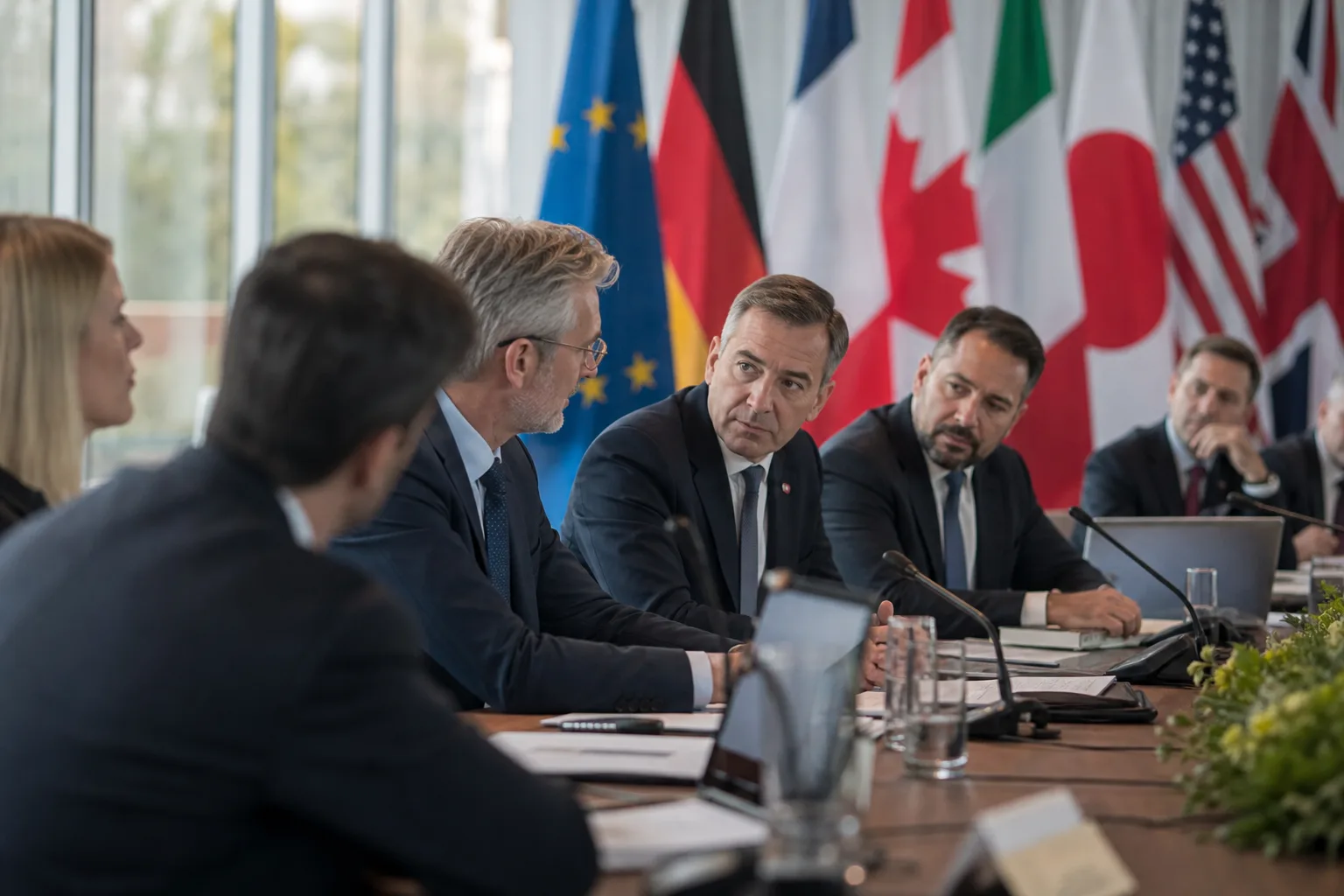
The AI sovereignty debate has been simmering for years in policy circles and boardrooms across Europe and Asia. At the G7 Summit this week, it finally boiled over — loudly, and in front of the very people who run the companies at the centre of it.
- The AI sovereignty debate intensified at the G7 after the US blocked Anthropic’s Mythos 5 and Fable 5 model exports on national security grounds.
- French President Macron and Indian PM Modi both warned that AI sovereignty is at risk if the US can revoke model access without notice.
- A proposed ‘trusted partners’ scheme could grant non-US nations access to advanced AI models, but its scope and enforceability remain deeply unclear.
- Cohere CEO Aidan Gomez says the Anthropic restrictions prove that depending on a handful of big tech firms is dangerous for national resilience.
Table of Contents
The Moment That Crystallised the AI Sovereignty Problem
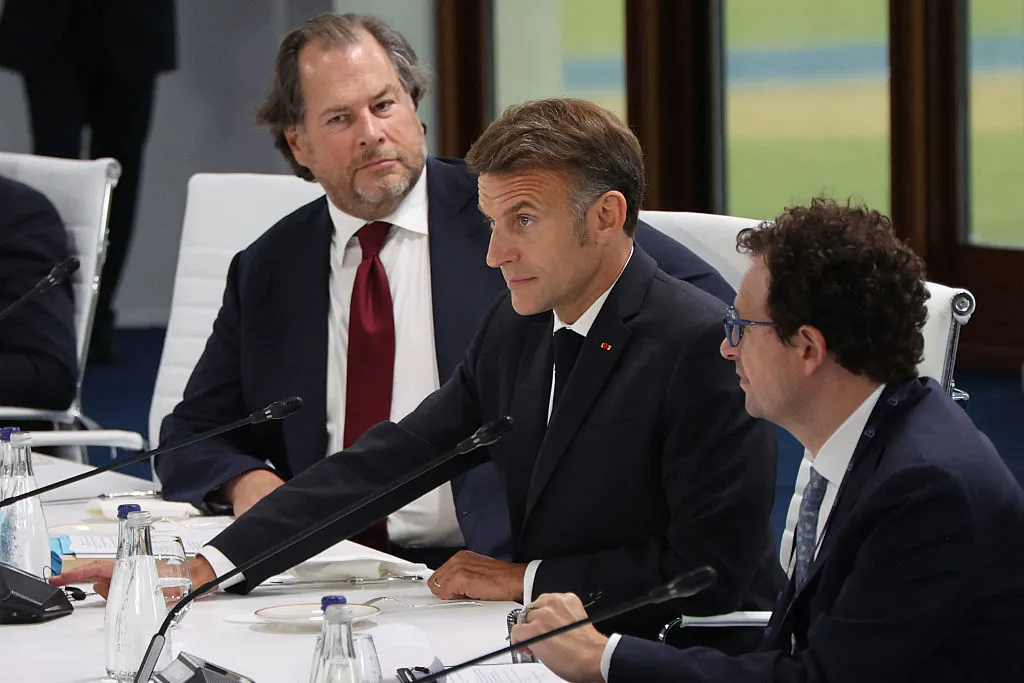
French President Emmanuel Macron didn’t mince words over lunch on Wednesday. Seated alongside Anthropic CEO Dario Amodei, OpenAI CEO Sam Altman, and President Donald Trump, Macron put the tension on the table directly: if the US ‘from one day to the next can turn off the switch,’ it wouldn’t just damage the economies of European customers — it would ultimately hurt the AI firms themselves. It was a pointed argument, and a strategically smart one. Telling Altman and Amodei that unpredictability is bad for their own business is a more effective lever than appealing to abstract notions of fairness.
Indian Prime Minister Narendra Modi echoed the concern, according to reporting by the Financial Times. Modi argued that democratic nations must have unfettered access to top AI systems to protect critical infrastructure — framing the issue not just as an economic inconvenience but a matter of national security in its own right.
The backdrop to all of this is a specific, very recent incident. Just days before the summit, the Trump administration blocked Anthropic from exporting its newest Mythos 5 and Fable 5 models, citing national security concerns. The trigger, reportedly, was Amazon flagging to the White House that certain safety guardrails in those models could be circumvented. Cybersecurity experts have since pointed out that comparable capabilities exist in models that remain freely available — including from OpenAI — making the selective nature of the ban harder to defend on technical grounds alone. Anthropic’s models are still frozen, explanation still thin.
Why AI Sovereignty Is Now Every Country’s Problem
Here’s what the Anthropic export ban actually demonstrated, beyond the immediate commercial pain for Anthropic’s customers: any company or government that has built on US AI infrastructure now carries a hidden risk that doesn’t show up on any balance sheet. Access can disappear overnight. The reasons may never be made public. And there’s no appeal process anyone has clearly defined.
This isn’t a theoretical edge case anymore. A hospital system in Germany that integrated Anthropic’s API into its diagnostic workflows, a fintech startup in Bangalore that trained its risk models on top of Fable 5, a government agency in Brazil using Mythos 5 for document processing — all of them would have woken up one morning to find their systems broken, with no clear timeline for resolution and no formal recourse. That’s not a vendor relationship. That’s dependency.
The AI sovereignty problem isn’t new, but the Anthropic ban gave it a concrete face. For years, European regulators in particular have warned about over-reliance on US cloud and software infrastructure. The concern was always that geopolitical events — a trade dispute, a change in administration, a national security determination — could weaponise that dependency. Most companies quietly assumed those warnings were theoretical. They’re not anymore.
Cohere and the Case for Diversification
Aidan Gomez, co-founder and CEO of Canadian enterprise AI firm Cohere, was direct in his response to the summit news. ‘The recent restriction on access to Anthropic’s models confirms what we at Cohere have known all along: that companies and democratic nations remaining dependent on a small handful of big tech companies is dangerous to resilience,’ Gomez said in a statement. ‘Digital sovereignty is not just about market competition or any one company or nation. It’s about who controls the foundational technology that will shape our economic security and national sovereignty for decades to come.’
Gomez has a commercial interest in saying this, obviously — Cohere is positioned precisely as an enterprise-friendly, sovereignty-conscious alternative to OpenAI and Anthropic. But that doesn’t make him wrong. The AI sovereignty debate has created a genuine opening for non-US AI providers, and Cohere isn’t the only one who’s noticed. Mistral in France, Aleph Alpha in Germany, and a growing cluster of model providers in the UAE and India are all making the same pitch: we can’t be switched off by Washington.
The ‘Trusted Partners’ Scheme: Promising in Principle, Vague in Practice
G7 leaders also floated the idea of a ‘trusted partners’ arrangement — a framework that would give non-US countries and companies continued access to advanced American AI models from Anthropic, OpenAI, and others, as long as they used those models to strengthen defences against adversaries like China rather than for purposes that could raise national security flags. Both nations and companies could qualify.
Macron’s argument for Washington backing such a scheme was pragmatic: nobody will want to buy US AI access if it could vanish without warning. The trusted partners model is essentially an attempt to formalize what most international customers thought they already had — reliable, contractual access — and bake it into something harder to revoke unilaterally.
But the details are doing a lot of work here, and those details don’t exist yet. Who decides which partners are ‘trusted’? What happens when a trusted partner is caught in a secondary trade dispute? How quickly can the designation be stripped? And critically — does this scheme extend to a 50-person AI startup in Paris that just had its product break because it was using Anthropic’s API? The summit discussion seems oriented around nation-states and large enterprises. The long tail of the startup ecosystem, which has arguably done more to build on top of US AI infrastructure than any government agency, barely gets a mention.
The Deeper Contradiction in the AI Sovereignty Push
There’s an uncomfortable tension at the heart of this debate that no G7 communiqué will fully resolve. Europe, India, and other regions are simultaneously pushing hard for AI sovereignty — building local models, funding domestic AI champions, writing regulations designed to give home-grown players an edge — while also scrambling to maintain access to American AI because it keeps pulling ahead. GPT-4o, Claude 3.5, Gemini Ultra — these aren’t models that European or Indian alternatives have matched in general capability benchmarks, and most enterprise customers know it.
This creates a paradox: the louder a government advocates for AI sovereignty in principle, the more its companies reveal their de facto dependence by panicking when US models become unavailable. The Anthropic ban exposed that gap between rhetoric and infrastructure reality in the starkest possible terms.
The honest answer — the one that nobody at a G7 lunch wants to say out loud — is that true AI sovereignty would require years of sustained investment in domestic model development, compute infrastructure, and talent pipelines, with no guarantee of catching up to US labs that are spending at a scale most nations can’t match. The trusted partners scheme is a workaround for a problem that a workaround can’t fully fix. Until that gap closes, the world will keep wanting American AI. It’ll just keep worrying about who controls the switch.
Frequently Asked Questions
What is the AI sovereignty debate about at the G7?
The AI sovereignty debate centres on whether countries outside the US can rely on American AI models when access can be revoked overnight. At the G7, leaders like Macron and Modi argued that democratic nations need guaranteed, unfettered access to advanced AI to protect critical infrastructure and economic stability.
Why did the US block Anthropic’s Mythos 5 and Fable 5 models?
The Trump administration blocked exports of Anthropic’s Mythos 5 and Fable 5 models on national security grounds after Amazon flagged to the White House that certain safety guardrails could be bypassed. Critics note that similar capabilities exist in models still freely available from other providers.
What is the ‘trusted partners’ scheme discussed at the G7?
The trusted partners scheme is a proposed arrangement that would give non-US nations and companies continued access to advanced American AI models like those from Anthropic and OpenAI, provided they use them to build defences against rivals like China. Its full scope remains unclear and it is uncertain whether it would help every affected company or government.
Does the AI sovereignty concern only affect governments?
No. The risk extends to any private company — a startup in Paris or Bangalore, for instance — that has built its product on US AI infrastructure. If access is revoked without warning or explanation, the business impact is immediate and there may be no formal appeals process.