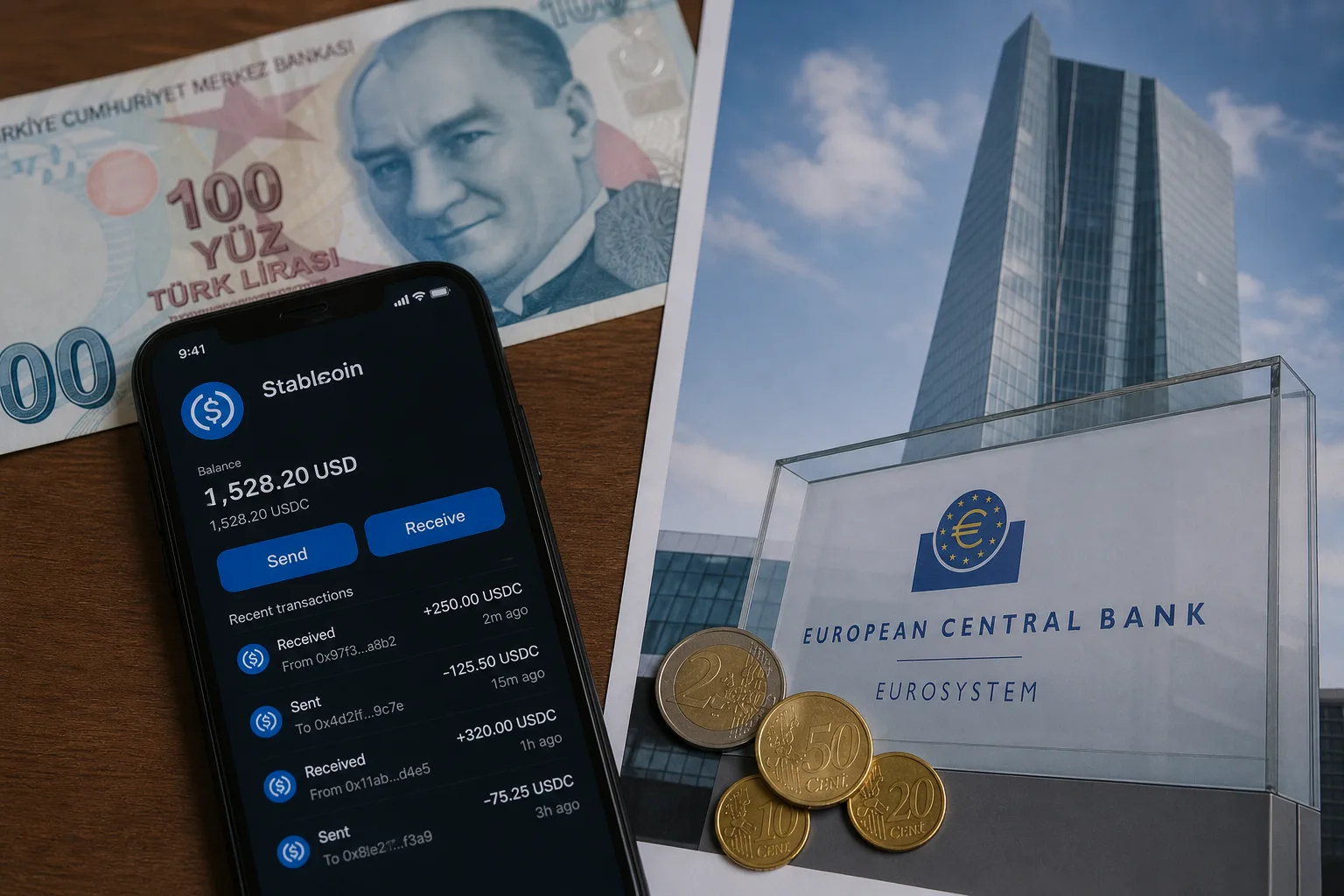
Europe has the regulatory framework, the institutional muscle, and the policy ambition to build a meaningful stablecoin market. What it apparently doesn’t have is the one thing that actually makes stablecoins take off: a good reason to use them. New data from Zodia Markets puts the problem in stark, uncomfortable terms — and it comes in the form of the Turkish lira. Euro stablecoins, despite all the regulatory groundwork being laid, are getting lapped by a currency whose home economy is a fraction of the eurozone’s size.
- Euro stablecoins make up just 0.3% of total stablecoin supply despite Europe accounting for 38% of global stablecoin transactions.
- Zodia Markets processed $3.4B in Turkish lira stablecoin volume in 2025, ranking it ahead of euro stablecoins and all G10 currencies.
- Stablecoin demand follows payment friction, not economic size — and the euro’s efficient banking rails leave it with almost no use case.
- A 37-bank consortium plans to launch a MiCA-compliant euro token in 2026, but the core demand problem remains unsolved.
Table of Contents
$3.4 Billion in Lira — and Euro Stablecoins Barely Register
Zodia Markets — the crypto subsidiary majority-owned by Standard Chartered — processed $3.4 billion in Turkish lira stablecoin transactions in 2025. That’s enough to make the lira its second-most-used stablecoin currency, sitting only behind the US dollar and ahead of the euro and every other G10 currency. Read that again. A currency from an emerging market with chronic inflation issues, a history of sharp depreciation, and a fraction of the eurozone’s GDP outranked euro stablecoins on a platform backed by one of the world’s largest international banks.
Europe accounts for roughly 38% of global stablecoin transactions. Euro-denominated tokens, meanwhile, make up around 0.3% of total stablecoin supply. That gap isn’t a regulatory failure — it’s a demand failure, and it’s exactly the kind of inconvenient truth that tends to get buried under optimistic press releases about digital finance infrastructure.

Euro Stablecoins Explained: Why Friction Drives Adoption
Nick Philpott, Zodia’s co-founder and interim chief executive, laid out the logic plainly. His clients turned to lira-pegged stablecoins rather than routing lira through correspondent banking because the tokens settled faster, more reliably, and more cheaply. Zodia could liquidate them on receipt. The old route — slow timelines, layered fees, uncertain settlement windows — was a genuine operational headache. The stablecoin route wasn’t.
That’s the core insight here. Stablecoins don’t grow because a currency is important or because a regulatory body blessed the token format. They grow where the underlying payment rail is broken, expensive, or slow. Turkey’s lira ticks all those boxes for cross-border transactions. The euro, frustratingly for anyone building euro stablecoins, ticks almost none of them.
SEPA transfers are fast. Cross-border euro payments within the EU are cheap. The correspondent banking system that turns lira into a logistical nightmare simply isn’t the euro’s problem. So tokenizing euros doesn’t give a European business or consumer anything they don’t already have. It just wraps a working system in a different technical format and asks people to adopt it anyway. Unsurprisingly, they haven’t. Euro stablecoins, in other words, are solving a problem that most European users don’t actually experience.
The dollar sits in its own category entirely. It’s the unit of account for global crypto markets, which means dollar-pegged tokens like USDT and USDC are the default settlement layer whether you’re in Istanbul, Lagos, or Lisbon. Dollar stablecoins don’t need friction to justify their existence — they’re the baseline. Euro stablecoins end up squeezed between a currency people can already move cheaply through banks and a currency that already runs the on-chain economy.

A 37-Bank Consortium and a Digital Euro That Solves the Wrong Problem
Europe isn’t sitting still. A consortium of 37 banks across 15 countries is backing the Qivalis project, which aims to issue a MiCA-compliant euro stablecoin in the second half of 2026. The European Central Bank, separately, continues its work toward a digital euro. These are serious institutions making serious commitments. The problem is that institutional seriousness doesn’t manufacture user demand.
Euro stablecoins aren’t struggling because they lack regulatory cover. MiCA is one of the most developed crypto regulatory frameworks in the world, and Europe has moved faster than most jurisdictions in defining the rules for compliant token issuance. The gap is on the demand and distribution side, and Zodia’s data makes that concrete rather than theoretical. When a single emerging-market currency outranks the entire euro token category by a significant margin on a major institutional platform, that’s not a compliance problem. That’s a use-case problem.
The harder question European policymakers need to answer isn’t ‘how do we regulate euro tokens?’ It’s ‘who will actually use them, and why?’ So far, the honest answer seems to be: not many people, and not for reasons that institutional infrastructure alone can fix. Until a compelling corridor emerges, euro stablecoins will remain a well-regulated solution without a clear problem to solve.

The Real Split: Dollars for Saving, Local Tokens for Moving
The lira result isn’t just an anomaly — it reflects a broader division forming inside stablecoin markets. Standard Chartered’s research team, led by Geoffrey Kendrick, estimated last year that up to $1 trillion could flow out of emerging-market bank deposits into stablecoins over three years. Dollar tokens are pulling savings out of local banks in countries exposed to currency stress. Turkey was among the 16 high-risk economies Standard Chartered flagged, alongside Egypt, Pakistan, and Nigeria — countries where residents want somewhere to park money outside a weakening local currency.
In that context, lira stablecoins and dollar stablecoins are doing completely different jobs. Dollar tokens function as a substitute for a dollar bank account — a way to hold value outside a depreciating currency. Lira tokens function as the on-ramp that connects domestic Turkish funds to global crypto liquidity. Zodia’s clients weren’t holding lira tokens as a store of value. They were using them to bridge Turkish fiat into dollar settlement. The lira token is the pipe, not the reservoir.
That dynamic is now attracting serious global infrastructure. Ripple recently brought its dollar-backed RLUSD token into Turkey through partnerships with BiLira, Bitexen, and Bitlo. BiLira’s TRYB lira stablecoin is backed by reserves held in local Turkish banks and routes through the country’s largest local OTC desk. Turkey processes close to $200 billion in annual crypto volume — real weight, not speculative froth — which is why global issuers are building infrastructure there rather than waiting for the market to come to them.
Nigeria offers a parallel data point. The IMF reported this week that Nigeria has become sub-Saharan Africa’s leading cross-border stablecoin corridor, with roughly $59 billion in inflows. The pattern is consistent: high friction, currency stress, large informal economy, and rapid stablecoin adoption. None of those conditions describe the eurozone — which is precisely why euro stablecoins have struggled to gain traction even as overall European transaction volumes remain substantial.
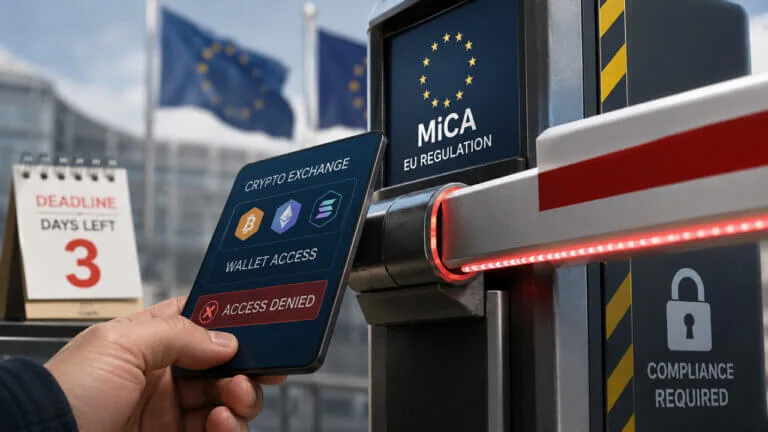
The Regulatory Risk Nobody’s Talking About Loudly Enough
There’s a systemic question lurking underneath all of this that regulators in Ankara, Brussels, and beyond will eventually have to confront head-on. Lira stablecoin reserves are now held inside Turkish banks. That ties the stability of those tokens directly to local bank balance sheets. Under normal conditions, that’s manageable. But stablecoins move fast — faster than any correspondent banking system, faster than most regulatory response mechanisms.
If Turkey enters another period of sharp currency stress (and its history suggests it will), the speed at which holders can swap lira tokens into dollar tokens could trigger capital outflows from Turkish banks at a pace that supervisors aren’t structured to handle. It’s the kind of second-order effect that sounds theoretical until it happens in real time, and by then the options narrow quickly.
This isn’t an argument against lira stablecoins. It’s an argument for regulators to catch up with the infrastructure that’s already being built around them. The MiCA framework in Europe is ahead of most of the world on this. Turkey’s regulatory posture toward crypto is more permissive and less structured. That asymmetry matters as global stablecoin infrastructure increasingly treats Turkish markets as a serious corridor rather than an edge case.
For euro stablecoins, the lira’s rise doesn’t change the fundamental challenge — but it does sharpen it. The question for any institution planning a MiCA-compliant euro token isn’t whether the regulation is sound. It’s whether there’s a real payments problem that the token solves for a real user, in a real corridor, today. Until that question has a credible answer, the eurozone will keep writing the rules while emerging markets write the volume numbers.
Frequently Asked Questions
Why are euro stablecoins struggling to gain adoption?
Euro stablecoins solve a problem that largely doesn’t exist for most users. European banking rails already clear payments quickly and cheaply, so tokenizing euros offers little practical advantage. Meanwhile, dollar tokens dominate on-chain markets, leaving euro stablecoins squeezed from both sides.
What made Turkish lira stablecoins so popular on Zodia Markets?
The friction in cross-border lira payments — slow settlement, layered correspondent banking fees, and unreliable timelines — pushed Zodia’s clients toward lira-pegged tokens. They settled faster and more cheaply than traditional banking corridors, making them a practical tool rather than a speculative one.
What is MiCA and how does it affect euro stablecoins?
MiCA (Markets in Crypto-Assets) is the EU’s regulatory framework for digital assets, including stablecoins. It sets reserve, transparency, and licensing requirements. A consortium of banks is preparing to launch a MiCA-compliant euro token in the second half of 2026.
Are there risks tied to lira stablecoin reserves held in Turkish banks?
Yes. Lira stablecoin reserves are now held inside Turkish banks, which ties their stability to local bank balance sheets. Rapid swaps from lira tokens into dollar tokens during periods of currency stress could move capital out of those banks faster than regulators are equipped to manage.