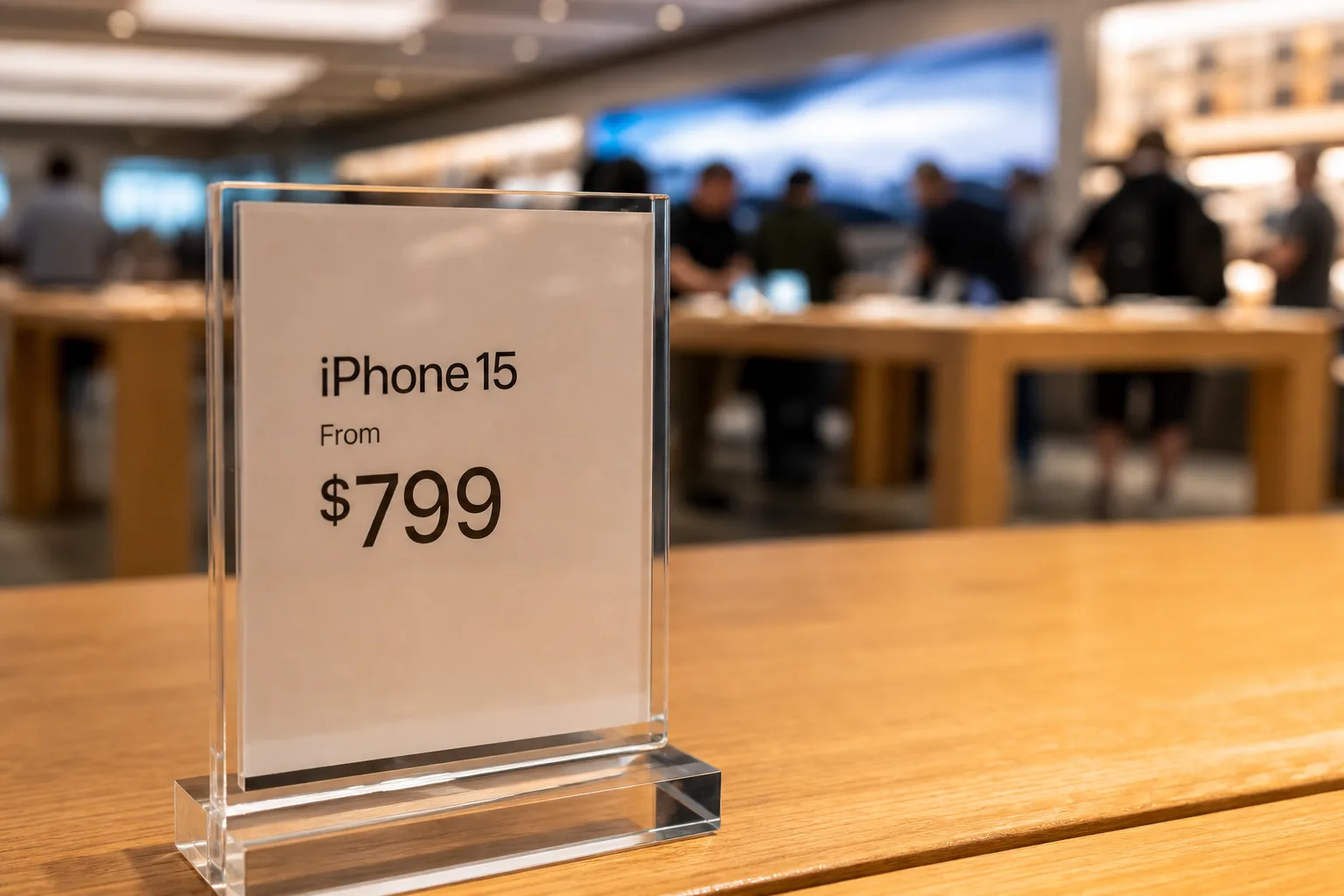
Apple price increases are coming — Tim Cook said so himself. What nobody knows yet is exactly when, or how steep the hike will be. But a growing set of signals suggests customers shouldn’t assume they have until September to think it over.
- Apple price increases appear imminent, with Tim Cook publicly warning that the memory shortage has made the situation ‘unsustainable.’
- Bloomberg’s Mark Gurman believes Apple price increases will happen soon — not tied to the iPhone 18 Pro launch in September.
- Apple’s Q3 earnings report next month and John Ternus becoming CEO on September 1 both create pressure to act quickly.
- Buyers considering current Apple models may want to purchase sooner, before any hikes take effect.
Table of Contents
Tim Cook Breaks With Tradition to Warn Buyers
Apple rarely, if ever, tips its hand on pricing ahead of a product launch. The company’s standard playbook is to reveal prices on stage at a keynote, with zero advance warning. So when Cook sat down with The Wall Street Journal and openly acknowledged that Apple price increases are unavoidable, it was, to put it mildly, unusual.
‘Unfortunately, price increases are unavoidable,’ Cook told the Journal. ‘We’re doing our best to mitigate the huge increases that are being passed to us, and we’ve been trying to shield our customers from the increases, but the situation has become unsustainable.’
The culprit is a worsening global memory shortage that has been squeezing component costs across the industry. Apple isn’t alone — Samsung, Google, and virtually every major device maker sources DRAM and NAND flash from the same constrained supply chain. But Apple’s premium positioning means its margins are watched more closely than almost anyone else’s, and the company has historically defended those margins with a ferocity that borders on obsessive.
The public warning, in itself, tells you something important. Apple didn’t have to say any of this. The fact that Cook chose to frame it so explicitly — and so early — suggests the company is managing expectations for something that’s closer than most people assume. Apple price increases don’t get flagged this far in advance without a reason.
Why Apple Price Increases May Not Wait Until Fall
The obvious assumption when Cook made his comments was that this was groundwork being laid for the iPhone 18 Pro launch, expected in September. That reading made intuitive sense: give customers a few months to absorb the bad news, and by the time the new handsets arrive, it’s old news.
But Bloomberg’s Mark Gurman pushed back on that timeline in a post that’s worth taking seriously. ‘Regarding Apple price hikes, have to imagine these are fairly imminent,’ Gurman wrote. ‘No other reason to flag them now. I’d also note that Apple back to school sale is very imminent, and it could make sense to tie these together as a buffer. Either way this is happening soon. Not a fall thing.’
Gurman was explicit that he’s speculating here — there’s no suggestion of a leak or insider source behind this read. But his logic is sound, and there are at least three concrete reasons to think he’s right.
Three Reasons the Timeline Points to Now, Not September
1. Apple’s Margins Are Already Under Pressure
Apple has spent years building a reputation as a company that delivers industry-leading operating margins, which is extraordinary for a hardware company at its scale. Apple’s annual filings show just how carefully the company has managed that trajectory over the past decade. A prolonged memory shortage eating into gross margins isn’t something Apple will sit on patiently. Every quarter that passes without a price correction is a quarter of margin compression that’s difficult to explain to Wall Street. Apple price increases implemented early — even before new products launch — are entirely consistent with how Apple has historically operated when component costs spike.
2. John Ternus Takes the CEO Chair on September 1
This is arguably the most underappreciated factor in the timing question. John Ternus officially becomes Apple’s CEO on September 1. That date sits just days before Apple’s traditional fall product event window.
Asking Ternus to kick off his tenure by announcing price increases on the same stage where he’s supposed to be celebrating new iPhones would be a terrible way to start. It’s the kind of optics that Apple’s communications team would work hard to avoid. Getting Apple price increases out the door while Cook is still technically at the helm — and framing them as a response to an industry-wide supply problem rather than a new CEO’s first policy decision — is a far cleaner narrative.
3. Cook’s Final Earnings Report Matters
Apple’s Q3 earnings report lands next month. Tim Cook has spent the better part of two decades transforming Apple from a company primarily known for cool products into one of the most profitable businesses in human history. His legacy is, in large part, built on those margins and on Apple’s ascent to a multi-trillion-dollar valuation.
Heading into an earnings call with compressed margins — and no concrete plan to address them — wouldn’t be the exit note Cook is likely aiming for. Apple price increases that take effect before Q3 closes, or that have at least been announced and priced in, give Apple something concrete to point to when analysts ask how the company plans to protect profitability. It’s not just about the stock price on a given day; it’s about the story Cook gets to tell on his way out.
What This Means for Anyone Buying Apple Products Right Now
The practical implication is straightforward. If you’re already in the market for a current-generation Apple device — a MacBook, an iPad, AirPods, or any iPhone model that’s already on sale — the calculus has shifted. Waiting to see if new hardware arrives in September might mean paying more for the privilege of patience.
Apple price increases that hit in the next few weeks would likely apply across the product range, not just to a single device category. Memory costs affect everything from entry-level iPads to Mac Studio configurations, so there’s no obvious safe harbor in sticking to cheaper models. The back-to-school sale that Gurman references is an interesting angle, too — Apple could use the promotional window to soften the blow of a price hike, effectively bundling a discount with an increase to blunt the headline impact.
None of this is confirmed. Cook didn’t give a date, Gurman is speculating, and Apple’s communications team has said nothing further. But between the memory shortage, the margin pressure, the incoming CEO transition, and a looming earnings report, the stars are aligning for action sooner rather than later. Apple spent years teaching customers that its prices only move in one direction at launch. Apple price increases on a timeline nobody was expecting may be about to remind everyone that’s still very much the case.