

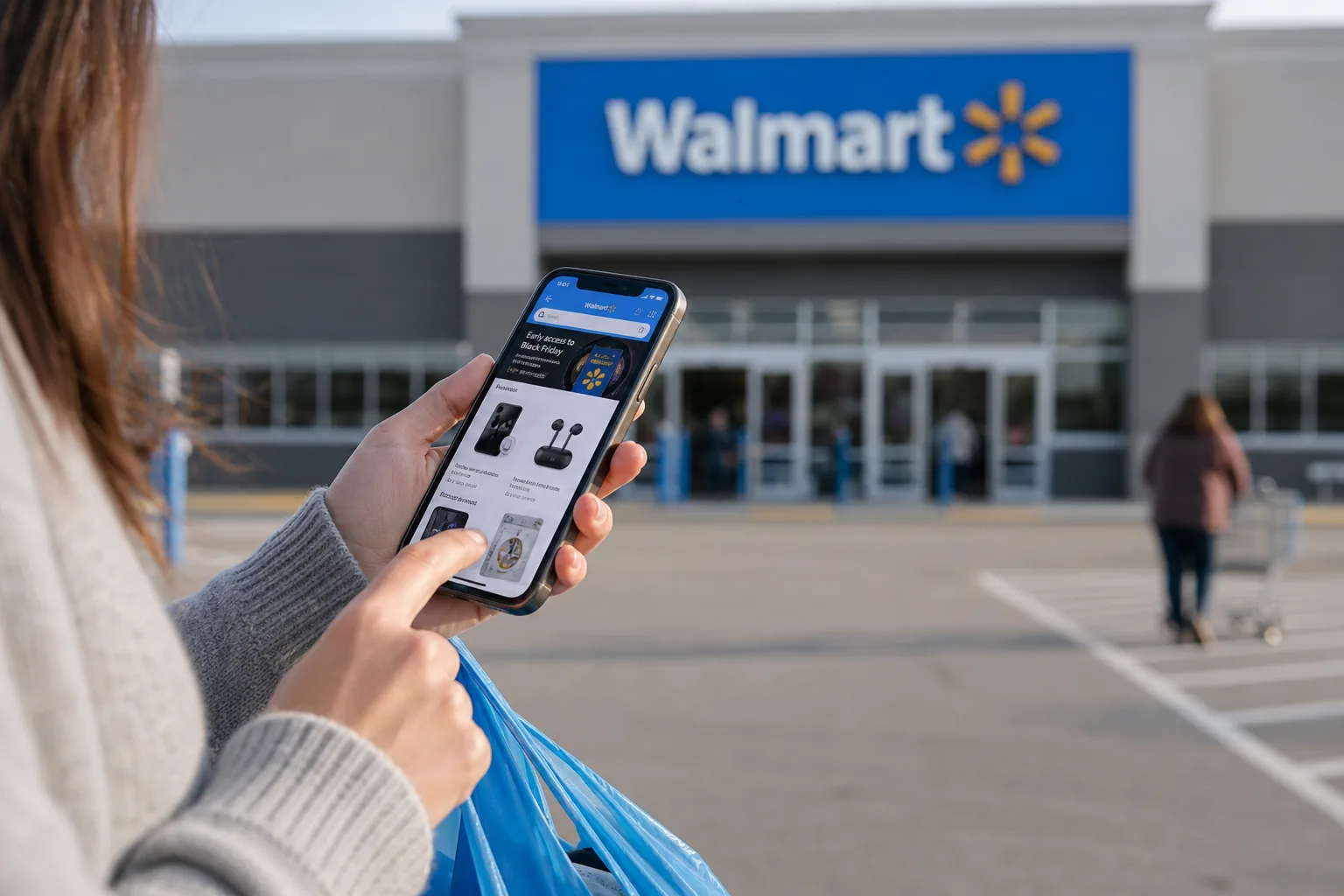
Amazon Prime Day has a habit of dominating the retail conversation every July, but this year Walmart is making a serious case that you don’t need to hand Jeff Bezos your loyalty — or your cash. The Walmart+ membership deal running right now through the Walmart Deals event cuts the annual subscription price in half, bringing it down to just $49 from the standard $98/year rate. That’s not a rounding error. That’s a meaningful saving that changes how the two services compare head-to-head.
- The Walmart+ membership deal drops the annual price to $49 — a 50% saving on the standard $98/year rate.
- Walmart+ membership deal perks include free delivery, fuel savings, and a choice of Peacock or Paramount+ streaming.
- The Walmart Deals event started June 22, giving Walmart+ members early access before the general public.
- At $49, the Walmart+ membership deal is significantly cheaper than Amazon Prime’s standard annual rate.
Table of Contents
What the Walmart+ Membership Deal Actually Gets You
Before writing this off as a hollow discount on a second-tier service, it’s worth looking at what the Walmart+ membership deal actually covers. Free delivery from your local Walmart store. Free shipping with no order minimum — which is the kind of thing that sounds small until you’re halfway through checking out and realise you need to add $10 of random stuff to qualify. Fuel savings of 10 cents per gallon at over 13,000 stations nationwide, including Exxon, Mobil, Walmart fuel centres, and Murphy stations. And a free streaming subscription — your choice of Peacock or Paramount+.
That streaming inclusion is more interesting than it first appears. Peacock carries NFL games, Premier League football, and a growing slate of originals. Paramount+ has Star Trek, Yellowstone spin-offs, and CBS live content. Neither is Netflix, but both are legitimate streaming platforms that people pay separately for every month. Bundling either into a $49/year membership starts to make the value proposition genuinely compelling.

How the Walmart+ Membership Deal Stacks Up Against Amazon Prime
Amazon Prime carries a substantially higher annual price than the current Walmart+ membership deal. Even at the standard $98/year, Walmart+ was already the cheaper option. At $49, the gap is almost embarrassing for Amazon.
To be fair, Prime has a deeper ecosystem. Prime Video is a genuine streaming platform with original series, live sports including Thursday Night Football, and a film library that Walmart’s streaming partnerships can’t fully match. Prime Gaming throws in free games and in-game content. Prime Reading, Prime Wardrobe, Prime Photos — Amazon has spent years stacking perks onto the membership to justify that price creep. And it’s worked: Prime has over 200 million global subscribers, with the US base hovering around 170 million.
But here’s the thing — most people don’t use most of those perks. The core draws of Prime are free shipping and Prime Video. Walmart+ matches the shipping, adds fuel discounts that Prime doesn’t offer at all, and covers the streaming gap with Peacock or Paramount+. For a large chunk of shoppers, that’s plenty. And at $49 versus a significantly higher Prime annual fee, the Walmart+ membership deal doesn’t need to win on features — it just needs to be good enough, at a fraction of the price.
The Walmart Deals Event: Timing and Access
Walmart kicked off its Deals event on June 22, with existing Walmart+ members getting first access — a move that mirrors Amazon’s own playbook of using Prime Day as both a shopping event and a Prime membership driver. It’s a smart strategy: give subscribers early entry, create urgency, and remind non-members what they’re missing.
The 50% discount on the Walmart+ membership deal is clearly designed to convert fence-sitters during a period when Amazon is already top of mind for millions of shoppers. If Prime Day pulls consumer attention toward Amazon, Walmart’s counter-move is to undercut the membership price so aggressively that comparison shopping becomes unavoidable.
This isn’t Walmart’s first attempt to position Walmart+ as a direct Prime alternative. The service launched in 2020 and has been steadily building its benefits portfolio since. But pricing events like this one — timed specifically to coincide with Prime Day — signal that Walmart is no longer just playing defence. The retailer is actively trying to peel subscribers away from Amazon during the one week of the year when shoppers are most likely to think about which membership they actually need.
Why the Fuel Discount Is More Valuable Than You Think
The 10-cents-per-gallon saving at 13,000+ fuel stations is easy to overlook in a list of membership perks, but it deserves more attention. The average American drives around 14,000 miles per year and, depending on vehicle efficiency, fills up somewhere between 25 and 50 times annually. At 10 cents per gallon and an average tank of 12 gallons, that’s $1.20 saved per fill-up — or roughly $30–$60/year just on fuel, for a membership that currently costs $49 total.
In other words, if you drive regularly and have a compatible fuel station nearby, the Walmart+ membership deal essentially pays for itself on fuel savings alone, before you factor in a single delivery or a month of streaming. Amazon Prime offers no equivalent benefit. That’s a concrete, recurring advantage that Walmart hasn’t talked about loudly enough — and one that resonates particularly hard in a moment when fuel prices remain a live concern for most households.
The Bigger Picture: Retail Membership Wars Are Heating Up
The Walmart+ membership deal doesn’t exist in isolation. It’s part of a broader shift happening across retail, where membership programs have become the primary battleground for consumer loyalty. Costco’s membership model is famously the foundation of its entire business. Target Circle has been expanding its paid tier. Sam’s Club — also running competing deals this week — is leaning harder into its Plus membership. And Amazon continues to use Prime Day as the centrepiece of its annual membership pitch.
What’s different now is the intensity. These events used to be spread out across the calendar. Now they’re converging, with multiple retailers running simultaneous ‘anti-Prime Day’ promotions specifically designed to capture the consumer attention that Amazon generates — and redirect it elsewhere. Walmart’s $49 offer is the sharpest example of that strategy in action this cycle.
The question going forward is whether Walmart can retain those new subscribers once the promotional pricing expires and the standard $98/year rate kicks in. Membership stickiness depends on habit formation — how often someone uses the free delivery, whether they actually watch Peacock, whether the fuel stations are convenient enough to bother. If Walmart can convert enough July sign-ups into year-round users, this promotion will have done exactly what it was designed to do. If not, it’s a one-time discount that buys short-term attention without lasting loyalty. Either way, Amazon’s stranglehold on the paid membership market just got a little more contested.
Frequently Asked Questions
What does the Walmart+ membership deal include?
The Walmart+ membership deal includes free delivery from your local store, free shipping with no order minimum, 10 cents off per gallon at 13,000+ fuel stations including Exxon, Mobil, and Murphy, plus a free streaming subscription — either Peacock or Paramount+.
How long is the Walmart+ $49/year deal available?
The discounted rate is tied to Walmart’s Deals event, which kicked off on June 22 for existing Walmart+ members. Exact end dates haven’t been officially confirmed, so it’s worth acting quickly if you’re considering signing up.
Is Walmart+ worth it compared to Amazon Prime?
At $49 versus Amazon Prime’s regular price, Walmart+ costs significantly less while offering overlapping perks like free shipping and streaming. For grocery delivery and fuel savings in particular, Walmart+ can be a strong alternative.
Which fuel stations accept Walmart+ discounts?
Walmart+ members save 10 cents per gallon at more than 13,000 fuel locations across the US, including Exxon, Mobil, Walmart fuel centres, and Murphy stations.

