

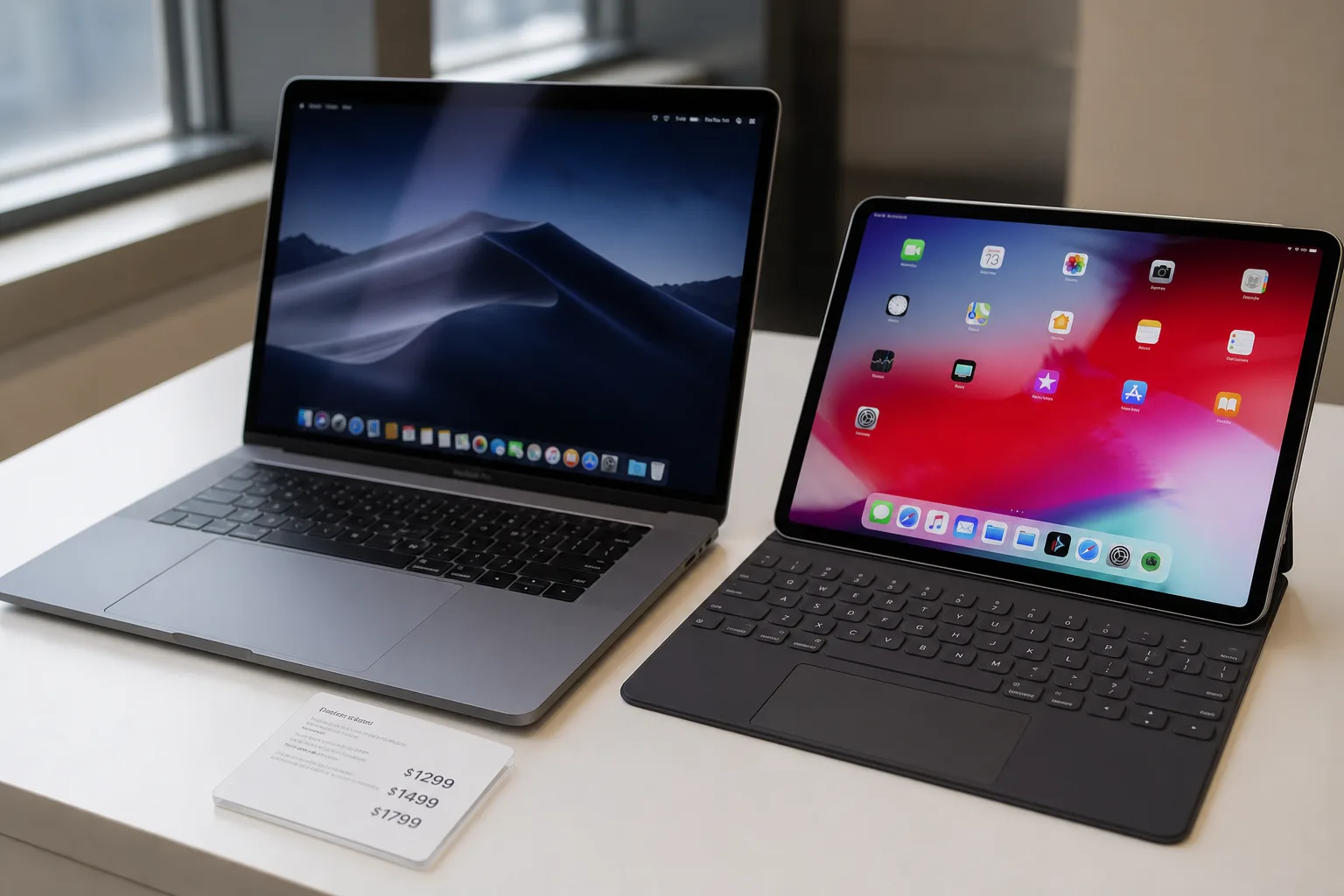
Apple price increases are now a reality for millions of customers in 2026. MacBooks, iPads, and a range of other products have seen their prices climb, and the company is openly acknowledging that a component shortage is at least partly to blame. This is one of the most significant shifts in Apple’s pricing strategy in years — and it’s happening at exactly the wrong moment for consumers already stretched thin by broader economic pressures.
- Apple price increases are now hitting MacBooks, iPads, and several other product lines across the board in 2026.
- Apple says it’s working tirelessly on a component shortage that’s partly driving the Apple price increases.
- Not every Apple product has gone up yet — a full breakdown reveals which devices are still holding their original price.
- A leaker claims Apple has an ‘iRing’ wearable in development, adding to a growing lineup of body-worn devices.
Table of Contents
The Apple Price Increases: What We Know So Far
The scope of the Apple price increases is wide. MacBooks and iPads are both confirmed, and the adjustments are described as significant — not the kind of marginal $50 bumps Apple has occasionally slipped in during product refreshes. These are meaningful increases that buyers will notice at checkout.
That said, not every product in Apple’s lineup has been touched. Apple still has devices sitting at their existing price points — for now. Whether those holdouts stay put or quietly follow the rest of the range upward over the coming months is the obvious next question. History suggests the latter is more likely than not.
What makes this round of Apple price increases particularly interesting is Apple’s public posture around it. The company has said it’s ‘working tirelessly’ to find solutions to a component shortage — an unusually transparent admission from a company that typically says very little about supply chain mechanics. Reading between the lines, Apple is essentially telling customers: this is the situation, the costs are real, and prices reflect that. It’s a subtle form of expectation management, but it’s notable coming from a brand that normally projects frictionless control over its supply chain.
Component Shortages and the Broader Industry Context
Apple price increases don’t exist in a vacuum — Apple isn’t the only company dealing with supply chain headaches, but it does tend to absorb those costs longer than most. Apple’s margins are famously thick, and the company has historically shielded consumers from short-term supply disruptions by eating some of the cost internally. When Apple starts passing those increases on, it usually means the pressure has become difficult to ignore even at the scale Apple operates.
The semiconductor industry has been through a wild few years. The post-pandemic chip crunch eased more gradually than analysts expected, and while supply normalised in many segments, specialised components — particularly those Apple designs or sources exclusively — remain subject to constraints. Apple’s own silicon push, which accelerated with the M-series chips, has reduced some dependencies on third parties, but it hasn’t eliminated them entirely. Packaging, memory, display panels, and other components still flow through a complex global network.
For context, Bloomberg has reported extensively on Apple’s supply chain diversification efforts, particularly its push into India and Vietnam as alternatives to China-based manufacturing. Those transitions take years, not quarters. In the meantime, cost pressures don’t wait — and Apple price increases are the visible result of that reality.
What Hasn’t Gone Up — and Why That Matters
The flipside of the Apple price increases story is the list of products that haven’t moved yet. Apple’s full product matrix is large — iPhones, Apple Watches, AirPods, HomePods, accessories, software subscriptions, and more. At the time of writing, certain products are still sitting at pre-hike prices, and that gap tells its own story.
It could mean Apple is staggering the increases deliberately, spacing them out to avoid a single news cycle that screams ‘everything costs more now.’ It could also reflect genuine differences in where component cost pressure is landing hardest. iPad and Mac production involves larger, more complex display assemblies and higher-end chips than something like AirPods — so the margin squeeze is probably more acute there first.
iPhone pricing is the one everyone will be watching. The iPhone is Apple’s revenue engine, accounting for around half of the company’s total sales in most quarters. If Apple price increases migrate to the iPhone lineup — especially ahead of the expected iPhone 18 series — the fallout will be much louder than anything MacBook or iPad-related.
The iRing: Apple’s Next Wearable Bet
Buried underneath the pricing news is a genuinely interesting product leak: a leaker is claiming Apple has an ‘iRing’ wearable in development. Smart rings have been quietly gaining traction — Samsung’s Galaxy Ring launched in 2024 and found a real audience, and smaller players like Oura have built loyal followings among health-focused consumers. Apple entering this space would be a natural extension of its existing health platform, which already spans the Apple Watch, Health app, and a growing suite of biosensors.
The iRing, if real, would likely focus on passive health tracking — heart rate, blood oxygen, sleep, and potentially new metrics Apple hasn’t surfaced on the Watch yet. The ring form factor has one significant advantage over a watch: people never take it off. Sleep tracking on an Apple Watch is functional but slightly awkward; a ring sits more naturally through the night. Apple clearly knows this, which is presumably why the category is on its radar.
Leaks at this stage should always be treated with appropriate scepticism. Apple has products in various stages of development that never ship, and a single leaker’s claim doesn’t mean an iRing is imminent. But the broader direction — Apple building out its wearables ecosystem well beyond the wrist — is entirely credible.
Apple Invites Gets a Cohosting Feature
On the software side, Apple’s event-planning app Invites picked up three changes in its latest update. The headline addition is a cohosting feature, which lets multiple people share administrative control over a single event. It’s a practical update — anyone who’s tried to co-ordinate a shared event through a single account knows the friction involved — and it brings Apple Invites closer to what more established event tools have offered for some time.
Invites hasn’t made huge waves since its launch, but Apple has been quietly iterating on it. Whether it ever becomes a mainstream alternative to something like Google Calendar’s event sharing or Facebook Events depends on how aggressively Apple pushes it across platforms. Right now it’s still very much an Apple-ecosystem tool, which limits its ceiling.
A Pricing Inflection Point for Apple
The Apple price increases of 2026 might end up being a minor footnote, or they might mark the beginning of a longer repricing of Apple’s product line that takes years to fully play out. Apple has always commanded premium prices, but part of its brand promise has been that those prices stay relatively stable — you know roughly what an iPad costs, and it doesn’t dramatically change year over year. That predictability is part of the trust Apple has built with buyers.
Breaking that predictability, even with valid justifications around component costs and supply chain pressures, carries real risks. Consumers have more alternatives than ever — Windows laptops have closed the quality gap significantly, Android tablets are increasingly competitive, and services like iCloud can be replaced if switching costs drop far enough. Apple price increases of this scale put that brand trust to the test in a way smaller adjustments never have. Apple’s pricing power is real, but it isn’t infinite. How this plays out over the next two to three product cycles will say a lot about where the ceiling actually sits.
Frequently Asked Questions
Which Apple products are affected by the Apple price increases in 2026?
MacBooks and iPads are among the confirmed products affected by the Apple price increases. However, not every Apple product has gone up — some devices are still holding their previous pricing, at least for now.
Why is Apple raising prices in 2026?
Apple has pointed to a component shortage as a key factor, saying it’s working tirelessly to find solutions. Supply chain pressure appears to be driving the decision.
What is the Apple iRing?
The iRing is an unannounced Apple wearable product referenced by a leaker. No official details have been confirmed about what the device will do or how it fits into Apple’s product lineup.
What new features did Apple Invites get in the latest update?
Apple Invites received three changes in its latest update, the most notable being a new cohosting feature. This addition is aimed at improving shared event management.

