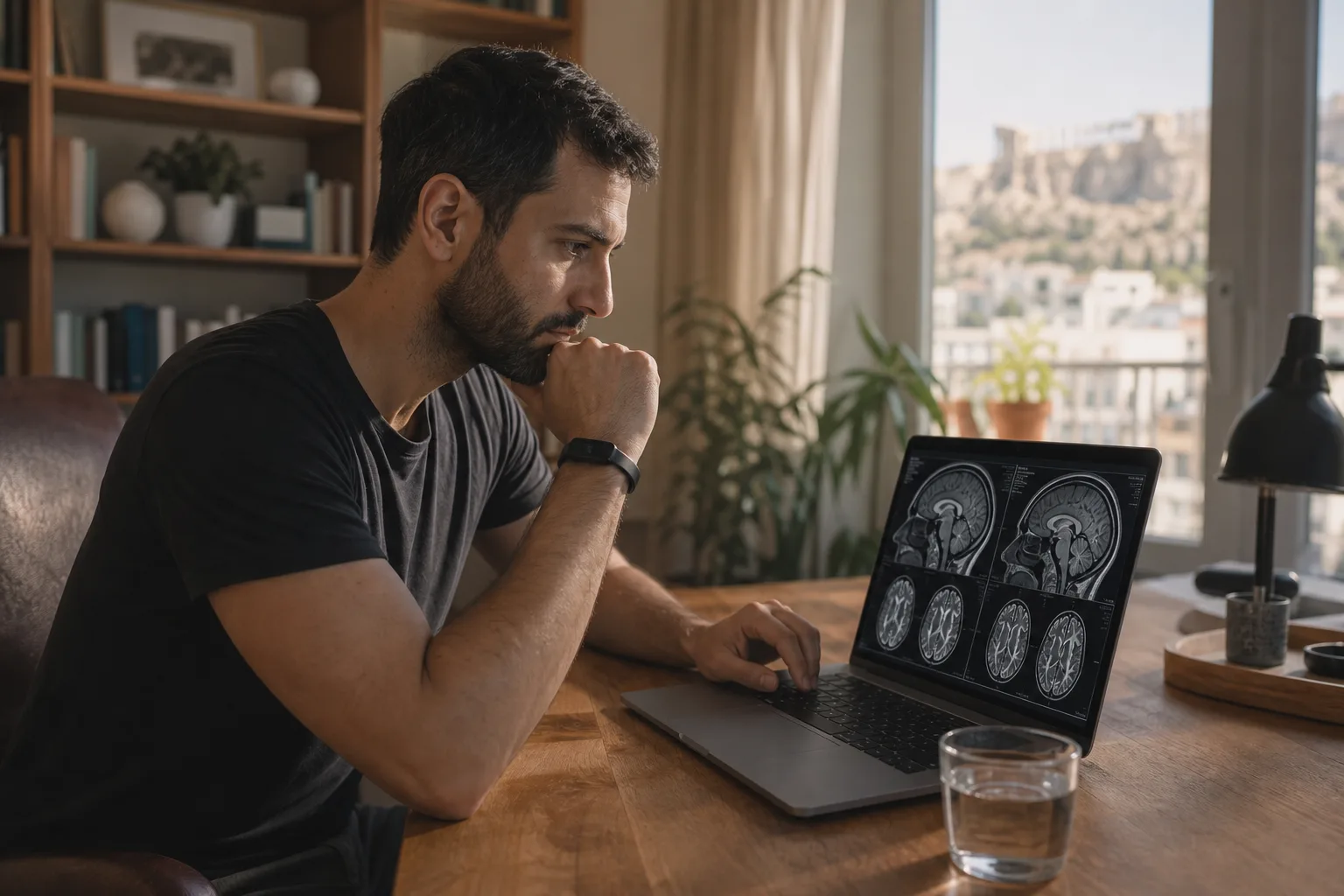
When Conno Christou’s final scan came back ambiguous — and his oncologist started talking about radiotherapy near his heart — the 35-year-old founder did what he’d been doing throughout six months of chemotherapy. He opened Claude. What followed is one of the clearest, most consequential examples yet of AI cancer diagnosis support changing the trajectory of a patient’s care. Not replacing doctors. Not pretending to be a clinical tool. Just doing something the medical system, stretched thin and siloed, often can’t: connecting the dots across an enormous volume of literature, fast.
- AI cancer diagnosis tools helped founder Conno Christou identify a 60% false-positive PET scan rate his oncologist missed.
- Christou used Claude for AI cancer diagnosis support, feeding in scan data and blood results across six months of chemotherapy.
- Two world-class oncologists gave diametrically opposite treatment recommendations — Christou sought 12 opinions before deciding.
- A Whoop wearable accurately predicted his immune system’s lowest points during chemo, sometimes before symptoms appeared.
Table of Contents
The Founder Who Tracked Everything — and Still Didn’t See It Coming
Christou isn’t the kind of person who ignores his health. He wears a Whoop band and cross-references it with an Oura ring. He gets close to 100 biomarkers checked annually, a practice he’d kept up for four consecutive years following the protocols popularised by longevity researchers like Peter Attia and Rhonda Patrick. Sleep, circadian rhythm, protein intake, supplements — all of it optimised. His last check-up, in 2025, was the best he’d had in years.
Then his arm swelled after a workout. He waited a week before seeing a doctor, who found two blood clots and scheduled surgery. Pre-op imaging changed everything. ‘We see an 11-by-11-by-8 centimeter mass behind your sternum,’ a doctor told him. A biopsy confirmed it: an aggressive, fast-growing form of non-Hodgkin’s lymphoma — a diagnosis affecting roughly one in 420,000 people, caused by a random genetic mutation with no connection to lifestyle, diet, or stress. The tumour had existed for approximately three months. In three more weeks, it would have reached stage four.
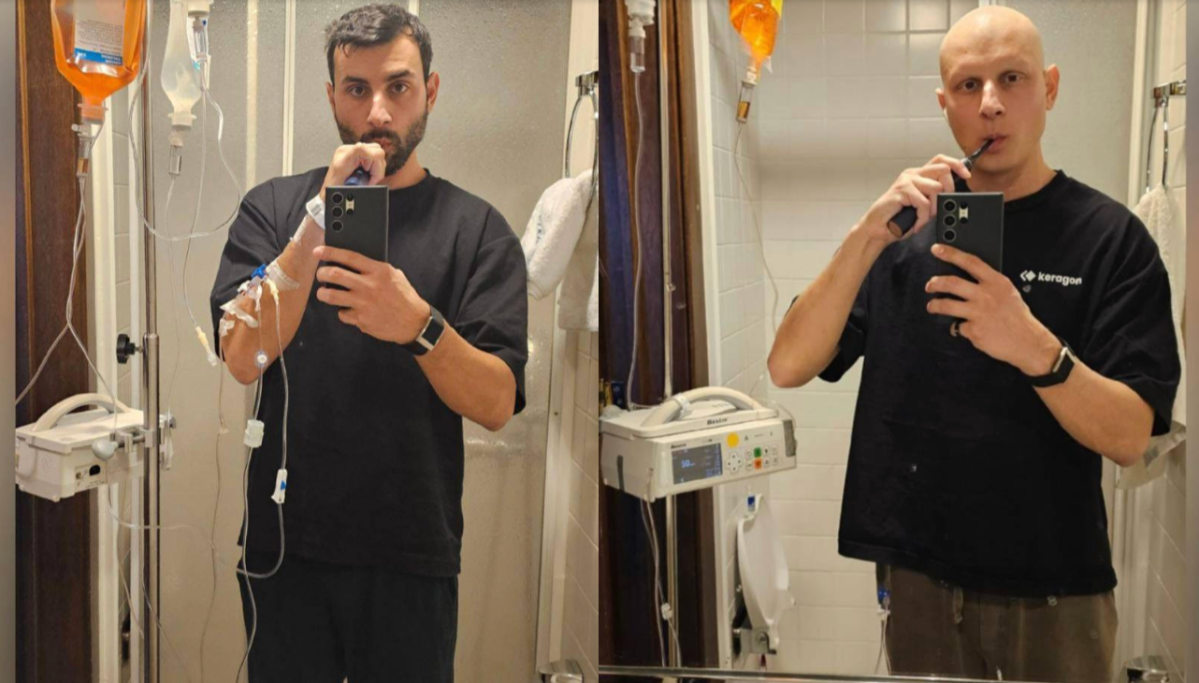
‘Lucky in my unluckiness,’ Christou told this editor from his home in Athens, where he lives part time. The mass was only discovered because he went in for something entirely unrelated. It’s the kind of brutal irony that no amount of biometric optimisation could have prevented — and a reminder that the quantified-self movement, for all its genuine value, has hard limits when confronted with rare, randomly mutating cancers. It also explains why AI cancer diagnosis research has become so personally meaningful to patients navigating similarly rare presentations.
Twelve Opinions, One Decision
Christou’s first oncologist — a renowned specialist — recommended the lighter of two available chemotherapy regimens. The first infusion was booked for three days out. Then, the night before, he sought a second opinion. That doctor recommended the harder path without hesitation: continuous in-hospital infusion, cycling every three weeks across six months. The difference wasn’t trivial. The lighter regimen carried roughly a 60% success rate for his specific presentation. The aggressive one brought it to around 85%.
Two world-class physicians. Completely opposite recommendations. For most patients, that fork in the road would be paralysing. Christou treated it like a founding decision. ‘As founders, we hold the wheel,’ he said. ‘You hear many things. You don’t have to follow the first advice.’ Over the next two days, he pulled in 12 opinions — hematologists and oncologists in the US and abroad, professional contacts, every favour he could call in. Eleven of twelve recommended the harder regimen. He took it.
It’s worth pausing on what that process actually required: a professional network spanning multiple countries, the confidence to push back on senior specialists, and the time and cognitive bandwidth to coordinate it all while facing a cancer diagnosis. Most patients have none of those things. Christou did — and he used every bit of it. For those without equivalent resources, AI cancer diagnosis support is increasingly filling that research gap.
Six Months of Chemo, Managed Like a Startup Sprint
He approached treatment the way he approaches building a company: as a marathon of sprints, each cycle finite, each week dense with data points. Christou had completed a mandatory 25-month military service in Cyprus at 18, and he drew on that, too. Trust the process. Six cycles. Get through it.
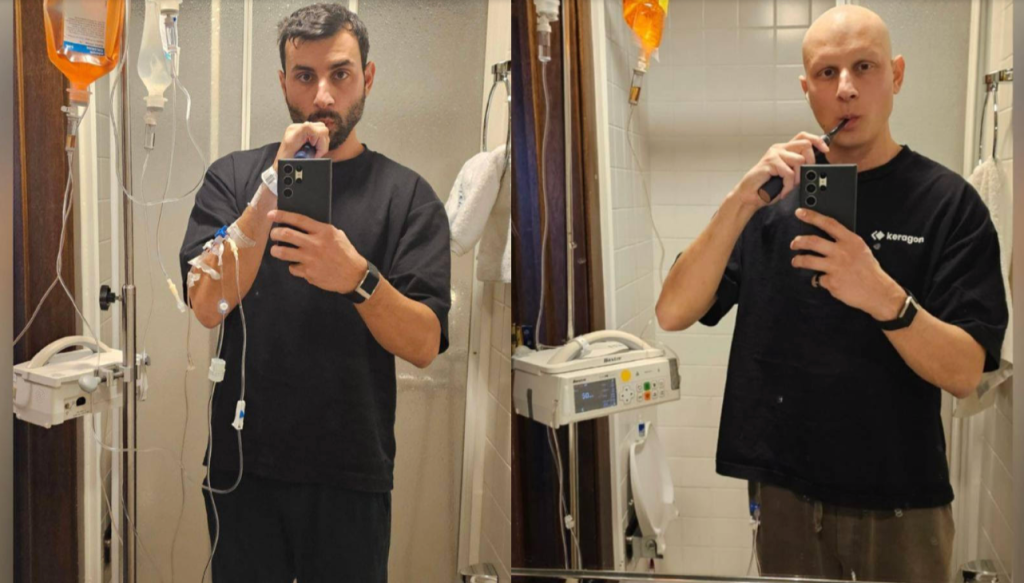
His Whoop band, worn throughout treatment, proved remarkably accurate at predicting the days his immune system would bottom out — sometimes flagging the dip before symptoms appeared. He kept a detailed symptom journal using voice transcription, logging every side effect, every medication and counter-medication, every shift in how he felt. He narrowed his focus to three variables: sleep, nutrition, and psychology. On that last one, he’s emphatic. ‘It moves the needle more than anything,’ he said. ‘I never asked “why me” — not once. That question has no useful answer.’
All of it — blood results, scan data, wearable output, journal entries — went into Claude. That’s where the AI cancer diagnosis conversation gets genuinely interesting. Christou isn’t an outlier in turning to AI for health guidance; a public opinion poll released in March found that a third of American adults now use chatbots for health information and advice. But most of those users are Googling symptoms or asking about common medications. Christou was feeding a rare-cancer treatment log into one of the most capable large language models available and asking it to reason across the literature. In that sense, his use of AI cancer diagnosis tools was categorically more demanding than anything a typical patient brings to a chatbot.
The Scan That Could Have Led to the Wrong Treatment
The critical moment came at the end of treatment. His final PET scan — the gold-standard imaging for detecting active disease — came back ambiguous. His oncologist began discussing a second line of therapy: potentially radiotherapy, positioned near his heart and lungs. It was alarming. Christou went back to his research.
He found that for his specific lymphoma, the false-positive rate on end-of-treatment PET scans sits at around 60%. ‘It’s 2026,’ he said. ‘Sixty percent.’ He fed all three of his PET scans and his MRI into Claude. The model flagged a known but easily overlooked phenomenon: in patients under 40 recovering from this type of lymphoma, the thymus gland can reactivate after chemotherapy, producing imaging that looks indistinguishable from active disease. Given Christou’s age and his specific scan characteristics, the AI cancer diagnosis model put the probability of thymus rebound — rather than residual cancer — at roughly 90%.
He sought three more specialist opinions. The fourth doctor confirmed it: thymus rebound. No active disease. No radiotherapy needed. He was clear. It is a striking illustration of how AI cancer diagnosis support, used carefully alongside specialist input, can surface findings that might otherwise be overlooked under time pressure.
What This Actually Tells Us About AI and Medicine
It would be easy to frame this as an AI triumph — and in a narrow sense, it is. But Christou himself is careful about the framing. ‘It didn’t replace the doctors,’ he says, but it ‘helped me ask the right questions.’ That’s a distinction that matters. Danielle Bitterman, clinical lead for data science and AI at Mass General Brigham, has told the New York Times in recent months that general-purpose chatbots are frequently wrong and ‘have not been thoroughly evaluated’ for personalised diagnoses. She’s right. Claude isn’t a FDA-cleared medical device. It hasn’t been validated in clinical trials for oncology decision support. It can and does make errors. No AI cancer diagnosis tool should be treated as a substitute for qualified clinical judgement.
What it can do — and what Christou’s case illustrates vividly — is act as an unusually capable research partner for a patient who already knows how to evaluate evidence. For a condition as rare as his, one an oncologist might see once a year, the ability to query a model trained on the full body of medical literature is categorically different from a Google search. The model doesn’t panic. It doesn’t have 15 minutes. It doesn’t need to be called after hours. In that narrow but important sense, AI cancer diagnosis assistance gives informed patients a kind of on-demand second-layer research capability that simply didn’t exist a decade ago.
The deeper story here isn’t really about AI cancer diagnosis tools at all — it’s about the structural gaps in medical care that make those tools feel necessary. Two leading oncologists disagreed completely on treatment. A 60% false-positive rate on a standard end-of-treatment scan nearly sent a cancer-free patient toward radiotherapy. These aren’t edge-case failures. They’re features of a system under pressure, dealing with rare diseases, making judgements with imperfect information.
Christou was unusually equipped to navigate all of it: network, resources, data literacy, the psychological discipline to stay analytical under extreme stress. The harder question — the one the tech industry will need to sit with as AI cancer diagnosis tools go mainstream — is what happens when patients without those advantages try to do the same thing, and the model gets it wrong.
Frequently Asked Questions
How did AI cancer diagnosis tools help Conno Christou during treatment?
Christou fed blood results, PET scan data, MRI images, and wearable output into Claude. The model flagged a known phenomenon — thymus rebound in under-40 patients — that explained an ambiguous final scan, helping him avoid potentially unnecessary radiotherapy near his heart and lungs.
What type of cancer did Conno Christou have?
He was diagnosed with an aggressive, fast-growing form of non-Hodgkin’s lymphoma. It’s a rare diagnosis affecting roughly one in 420,000 people, caused by a random genetic mutation with no link to lifestyle, diet, or stress. The tumour had existed for only about three months before discovery.
Is it safe to use AI chatbots like Claude for medical advice?
Experts urge caution. Danielle Bitterman, clinical lead for data science and AI at Mass General Brigham, has said that general-purpose chatbots are frequently wrong and have not been thoroughly evaluated for personalised diagnoses. Christou himself says AI didn’t replace his doctors — it helped him ask better questions.
Why does a PET scan produce false positives in lymphoma patients?
In patients under 40 recovering from certain lymphomas, the thymus gland can reactivate after chemotherapy and show up on imaging as apparent active disease. For Christou’s specific lymphoma, the false-positive rate on end-of-treatment PET scans is around 60%, a statistic he found astonishing.