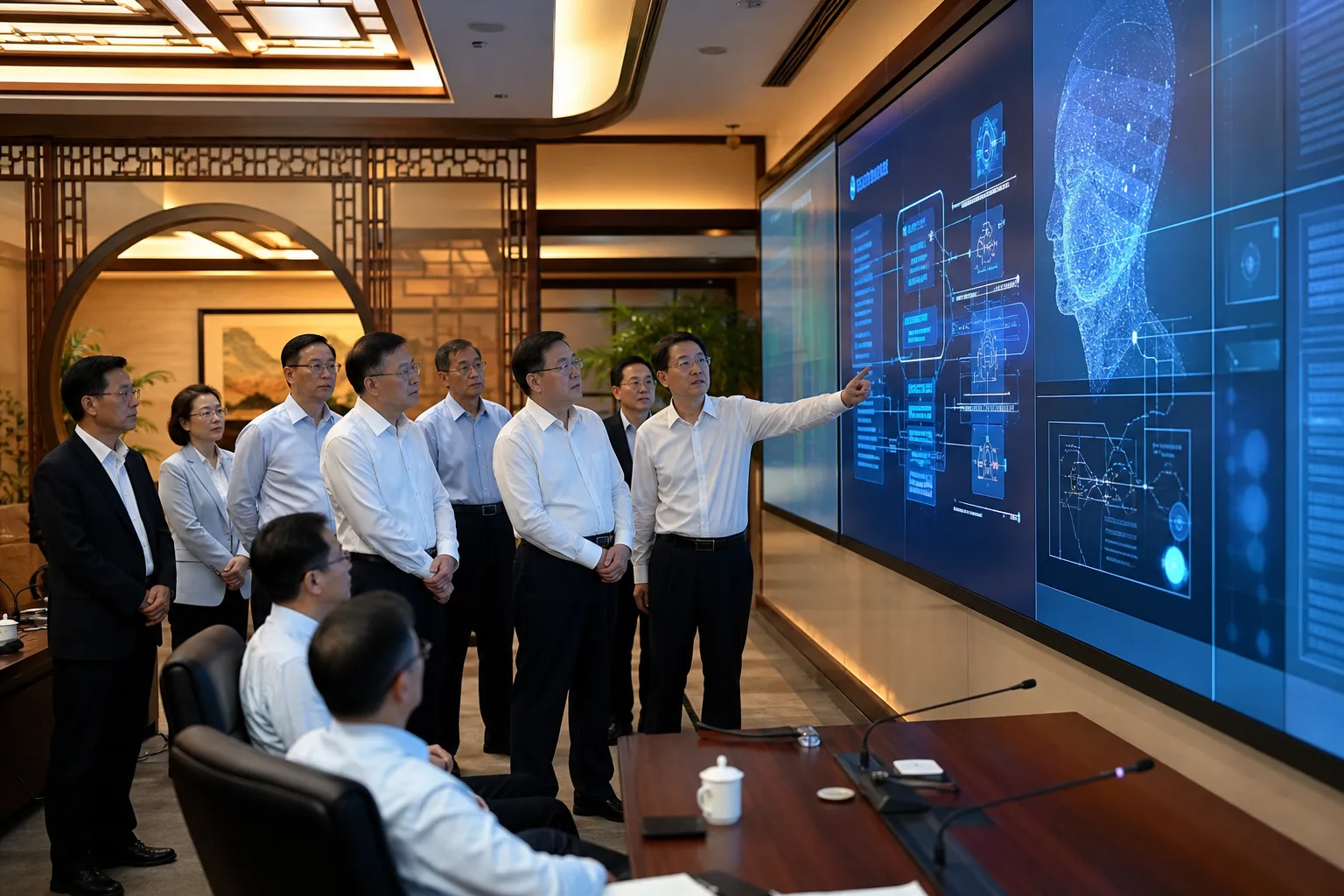
China has been quietly building one of the most extensive AI regulatory architectures on the planet. Since last year, the country has developed and released more than 40 China AI standards at the national level — a pace that has no real equivalent anywhere else in the world. If you thought the global AI governance conversation was being dominated by Brussels and Washington, this is a useful reality check.
- China AI standards now number more than 40 national frameworks released in just over a year, covering safety, data, and ethics.
- The China AI standards push signals Beijing’s intent to set the global baseline for how AI systems are built and governed.
- No single Western country has matched this pace of formal AI standardisation at the national level.
- The standards affect everything from AI model transparency to data labelling requirements, with clear implications for foreign firms operating in China.
Table of Contents
Why China AI Standards Matter More Than You Think
It’s easy to dismiss regulatory standards as dry bureaucratic paperwork. They’re not. Standards define how products are built, tested, and certified. When a country sets 40-plus of them in a single year, it’s not just doing administrative housekeeping — it’s staking out technical and political territory. China AI standards shape what ‘safe AI’ means, what ‘transparent AI’ looks like, and ultimately what any company hoping to sell or operate in the world’s largest internet market has to do to qualify.
China’s Standardization Administration of China (SAC) coordinates this work through technical committees that pull in government agencies, state-backed research institutions, and major domestic tech firms. Baidu, Alibaba, Huawei, and Tencent all have a seat at the table. That’s significant: these are companies building large language models, autonomous driving systems, and AI-powered cloud infrastructure at scale. Their involvement means the standards aren’t purely theoretical — they reflect what’s actually being deployed.
What the 40+ Standards Actually Cover
The China AI standards released over the past year aren’t all about one thing. They span a wide range of domains, which tells you something about how seriously Beijing is approaching this. Among the areas covered:
- AI safety and risk classification — frameworks for categorising AI systems by potential harm level, similar in spirit (if not in detail) to the EU AI Act’s risk tiers.
- Data quality and labelling — standards that govern how training data must be collected, annotated, and audited, directly relevant to anyone building or fine-tuning models in China.
- Algorithm transparency — requirements around how AI systems must be able to explain their decisions, particularly in high-stakes sectors like finance, healthcare, and public services.
- AI ethics guidelines — broader principles addressing bias, fairness, and accountability, though these tend to be less prescriptive than the technical standards.
- Terminology and definitions — foundational standards that establish a common vocabulary, which sounds mundane but is essential for legal and contractual clarity.
That’s a genuinely broad remit. And the speed of release — dozens of standards in roughly 12 months — suggests this isn’t a slow-burn academic exercise. It’s a deliberate sprint.
China vs. the West: A Different Playbook
Compare China’s approach to what’s happening elsewhere. The EU’s AI Act is the most comparable Western effort: binding, risk-based, and thorough. But it took years of negotiation, lobbying, and political compromise before it finally passed into law in 2024. The US, meanwhile, has largely relied on voluntary frameworks — the NIST AI Risk Management Framework being the most prominent — with executive orders adding some teeth but no comprehensive legislation yet in sight.
China’s model is top-down and fast. China AI standards don’t emerge from multi-year legislative processes. They come from centralised technical committees that can move quickly when there’s political will to do so. Right now, there clearly is. Beijing has made AI a national strategic priority, and standardisation is a key tool for ensuring that domestic development stays coordinated and that foreign competitors face a clearly defined compliance environment.
This isn’t unique to AI. China has used standardisation strategy effectively in sectors like electric vehicles, 5G, and semiconductors. Setting the standards early means setting the terms of competition later. It’s a well-worn playbook, and it works.
What This Means for Foreign Companies
If you’re a non-Chinese company operating in or hoping to enter China’s AI market, these China AI standards are not optional reading. Compliance is a condition of market access. That’s always been true to some extent in China’s tech sector, but the sheer volume and specificity of what’s been released in the past year raises the stakes considerably.
Multinationals with AI products or services in China — think enterprise software vendors, cloud providers with local joint ventures, or hardware makers whose devices run AI features — will need dedicated compliance teams who understand not just the letter of these standards but their likely trajectory. Standards bodies don’t stop at 40. They keep going.
There’s also a subtler implication: if Chinese firms build their products to align with China AI standards, and then export those products globally, those standards start to travel. Huawei has already demonstrated this dynamic in telecoms. The same logic applies to AI hardware, AI-powered cameras, recommendation systems, and any number of other AI-adjacent products that Chinese manufacturers sell internationally.
The Bigger Picture: A Standards Race Is Underway
The global AI governance conversation has tended to focus on laws, bans, and executive orders. But the quieter, more technical battle over China AI standards and their international equivalents may prove just as consequential. Whoever’s definitions, testing methods, and compliance requirements become the global norm will have enormous influence over how AI is built and used for decades.
China has form here. Its involvement in international standards bodies like ISO and the ITU has grown substantially over the past decade, and domestic standards often serve as the foundation for Chinese delegations’ positions in those forums. Releasing 40-plus national AI standards in a year isn’t just about domestic regulation — it’s about showing up to the international table with a full hand.
The US and EU are both aware of this. The EU is actively working to export its AI Act framework as a model for third countries, much as it did with GDPR. American standards bodies like NIST are engaging more seriously with international counterparts. But right now, on sheer volume and velocity, China AI standards are setting a pace that Western regulators are still catching up to. How that gap closes — or doesn’t — will be one of the defining dynamics of the AI decade ahead.
Frequently Asked Questions
What do China AI standards actually cover?
The China AI standards span a broad range of areas, though the source does not detail specific topics covered. They’re designed to create a consistent regulatory baseline within China’s AI sector.
How does China’s approach to AI standardisation compare to the EU or US?
China has released more than 40 national AI standards since last year, reflecting a high-volume approach to rule-setting. The source does not provide a direct comparison with the EU or US approaches.
Do China AI standards apply to foreign companies?
The source does not specify whether these standards apply to foreign companies or name any particular firms. It notes that mainland China has developed and released more than 40 national AI standards, but does not detail their scope of applicability.
Who develops China’s national AI standards?
The source does not specify which bodies or companies are involved in developing China’s national AI standards. It notes only that mainland China has developed and released more than 40 such standards since last year.